

New seabed geology maps to enable long term conservation around Ascension Island
BGS deliver the first marine geology and habitat maps for one of the world’s largest marine protected areas.
01/04/2025 By BGS Press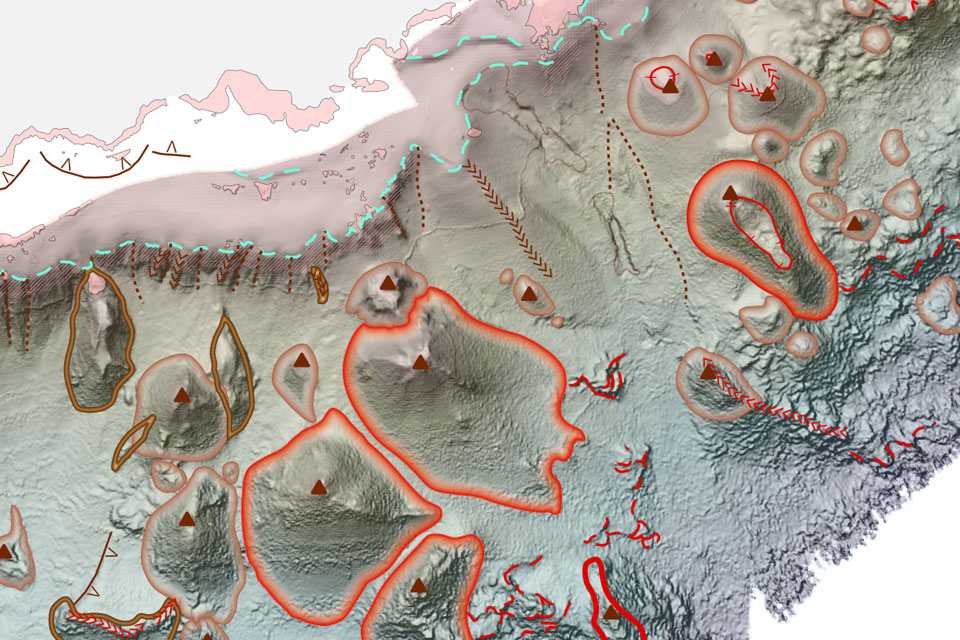

The Ascension Island Marine Protected Area (MPA) is one of the largest areas of protected ocean in the world and safeguards a unique ecosystem in the South Atlantic Ocean. It supports many species that are found nowhere else on earth, a mixture of deep sea and open ocean habitats that remain largely untouched and unexplored, whilst the island itself is home to thousands of nesting turtles and seabirds.
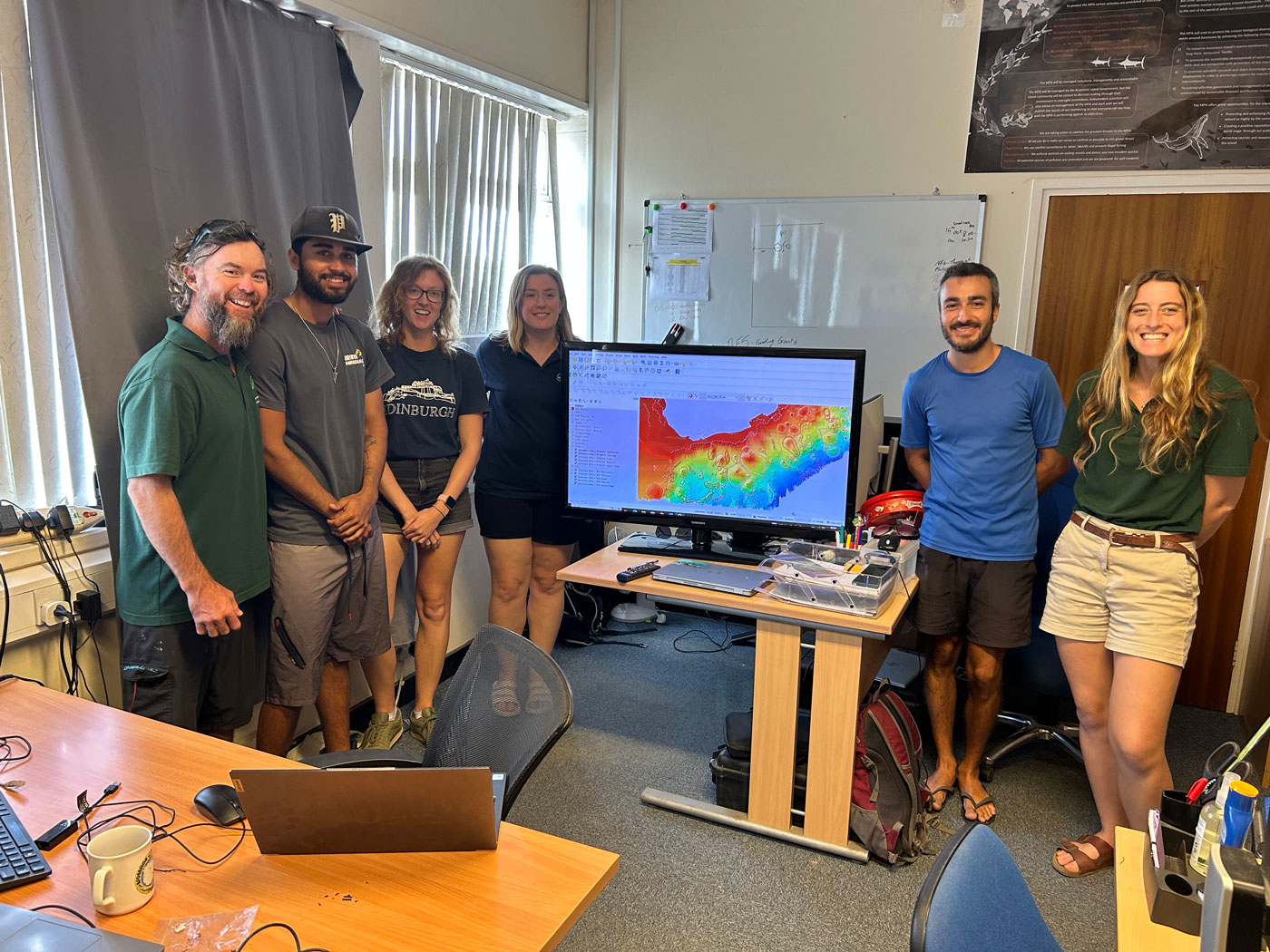
BGS Marine Geoscientist, Catriona MacDonald delivering a lesson in geomorphology to the Ascension Island Government Conservation Team. Source: BGS © UKRI
The British Geological Survey (BGS) recently completed a programme of high-resolution bathymetry surveys and drop-camera sampling within the nearshore areas of the Island. The survey team even managed to collect data where no other survey had ever been undertaken, which in addition to supporting conservation efforts, will also enable safer navigation in future.
The project was funded by the UK Government and utilised both BGS and Royal Navy bathymetry (depth), backscatter (seabed composition), ground-truth sampling (underwater video footage) and many other derived data layers to create the suite of bespoke geological outputs.
The maps, which include seabed geology (substrate and geomorphology) and habitat, are the first to be created for the Island and determine the character, distribution and extent of the nearshore habitats of the MPA.
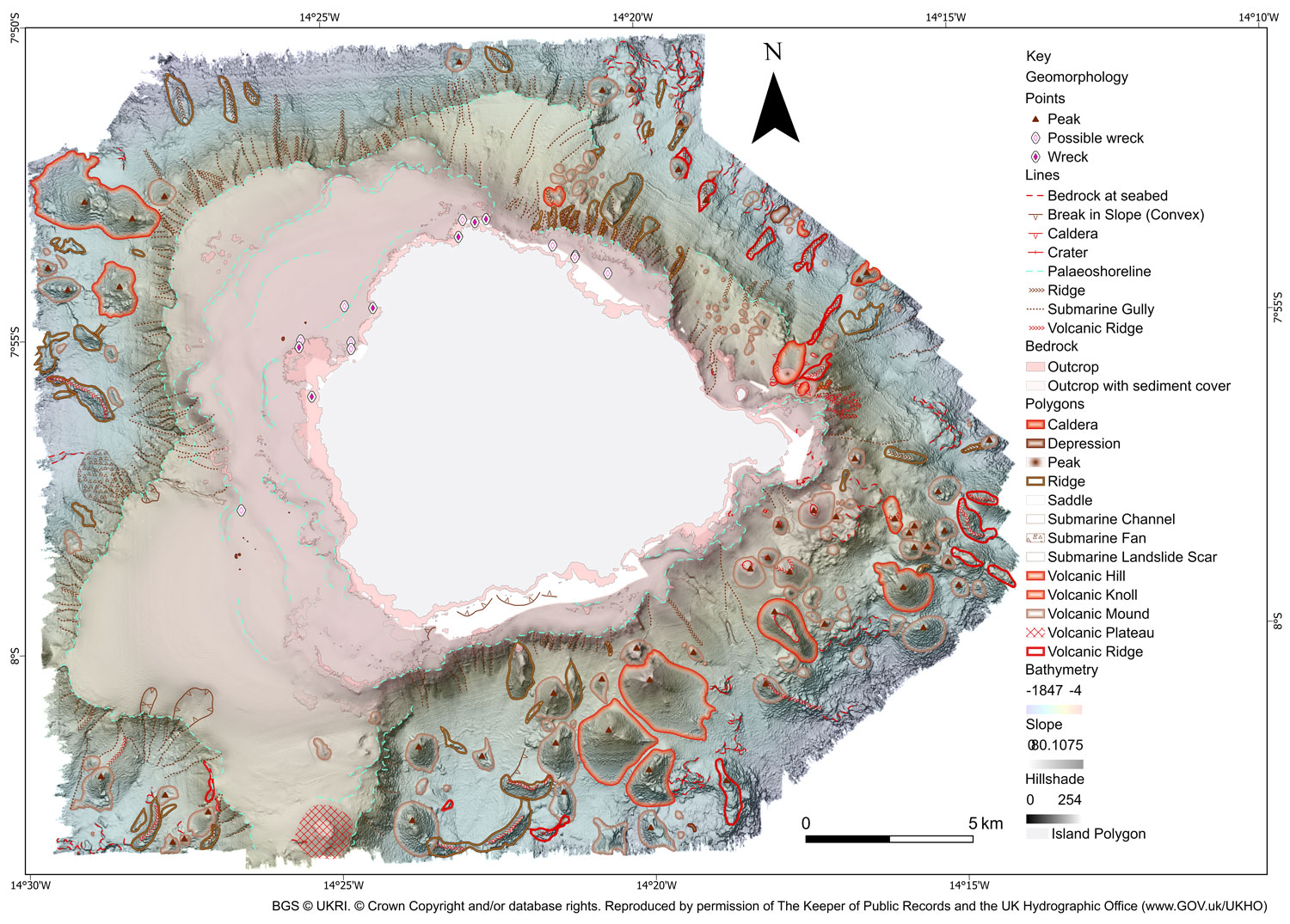
BGS 1:50 000 Geomorphology map of the seabed around Ascension Island. BGS © UKRI. © Crown Copyright and/or database rights. Reproduced by permission of The Keeper of Public Records and the UK Hydrographic Office (www.GOV.uk/UKHO)
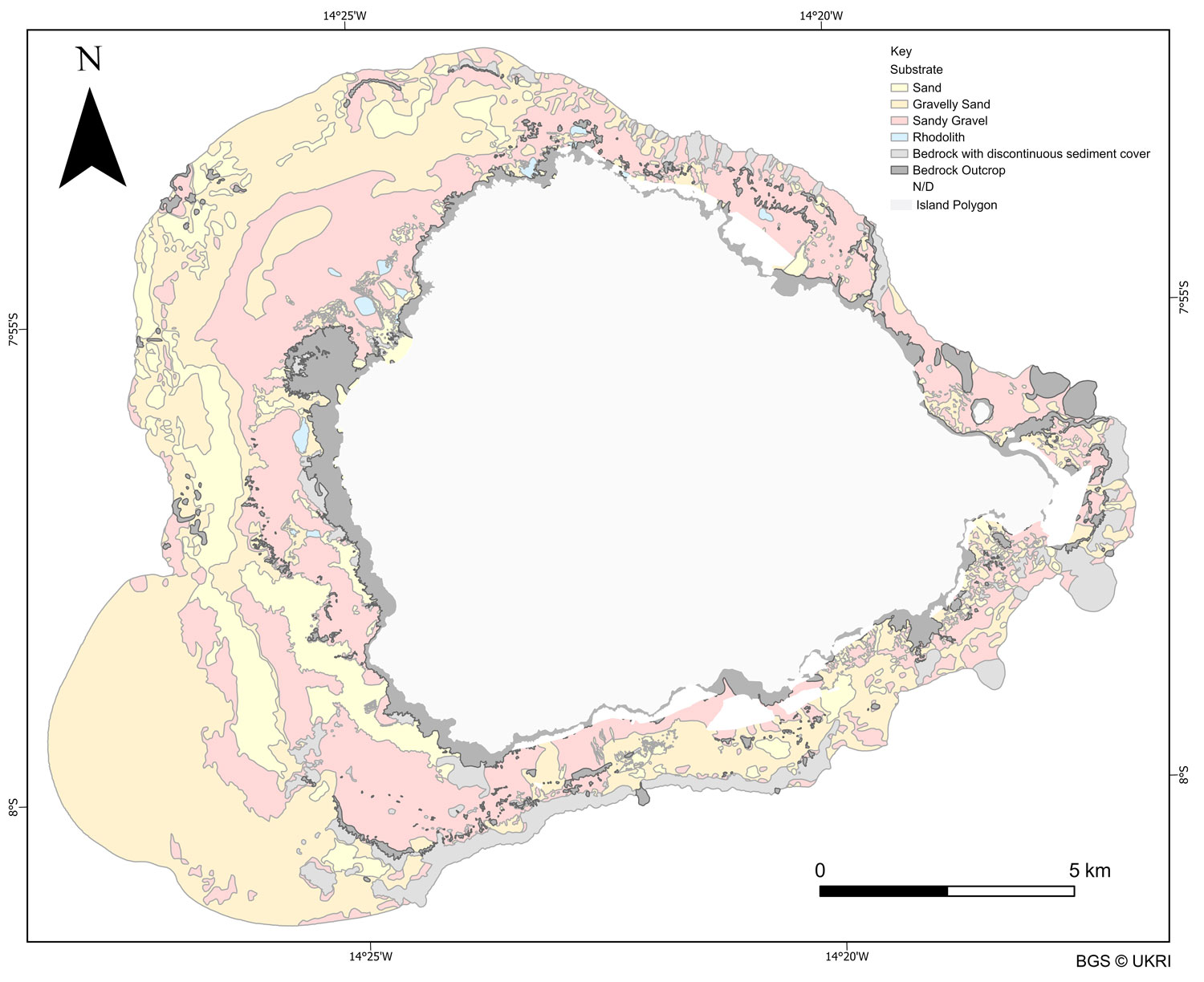
BGS substrate map around Ascension Island, which one of the essential input layers to derive habitat management zones. BGS © UKRI
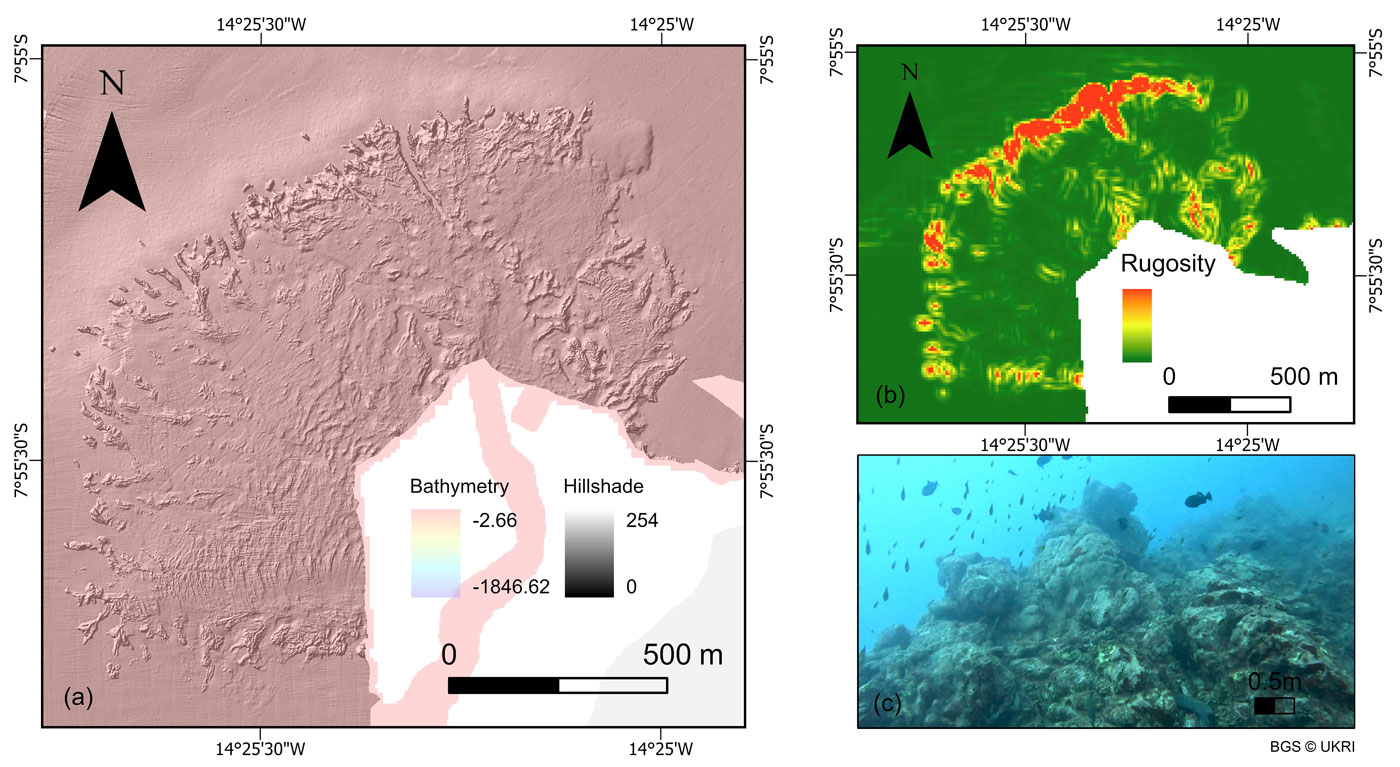
Example bathymetry data and a derived layer (slope) and ground truth footage used to create seabed maps. BGS © UKRI
The geomorphological map revealed a collection of previously unmapped volcanic, erosion-depositional and coastal features including seamounts, submerged lava flows, ridges, submarine landslides and channels. Whilst the substrate map focused on the nearshore areas, composed of sandy sediments and rocky outcrops which are fundamental habitats for the marine communities. Both maps have enhanced the understanding of seabed processes and geological processes occurring around Ascension Island and enabled the creation of seabed habitat maps which provide unprecedented insight into the diverse ecosystems present in the surrounding waters.
As part of the project, the BGS Marine team provided training to the Ascension Island Government (AIG) in how to effectively use GIS software to view, edit, query and manipulate the data. The intention is for AIG to modify these maps as new data and knowledge becomes available and the management requirements of the protected area changes. Although the region is rich in biodiversity it is one of the habitats most at risk from anthropogenic development and climate change. The maps and data will be a vital resource for the AIG Conservation team as they continue to manage and safeguard the region.

“Collecting data in such a remote and exposed location was a challenge, but an absolute privilege and pleasure. BGS had to adapt existing technology to work with the available survey platform within the limits of Ascension’s wonderfully varied and unpredictable operating environment.”
Rhys Cooper, BGS Project Manager and Senior Surveyor
“The collection of new high-resolution datasets around Ascension Island allowed us to map the seafloor geology in unprecedented detail, uncovering critical geological features and habitats that support a rich diversity of marine life, and marks a significant milestone in our understanding of Ascension Island’s marine environment.”
Catriona Macdonald, BGS Marine Geoscientist
“AIG are excited to have access to such high-quality bathymetry and habitat maps. They will be transformative in our nearshore research and monitoring and allow for much more evidence based conservation management.”
Tiffany Simpson, Director of Conservation and Fisheries, Ascension Island Government
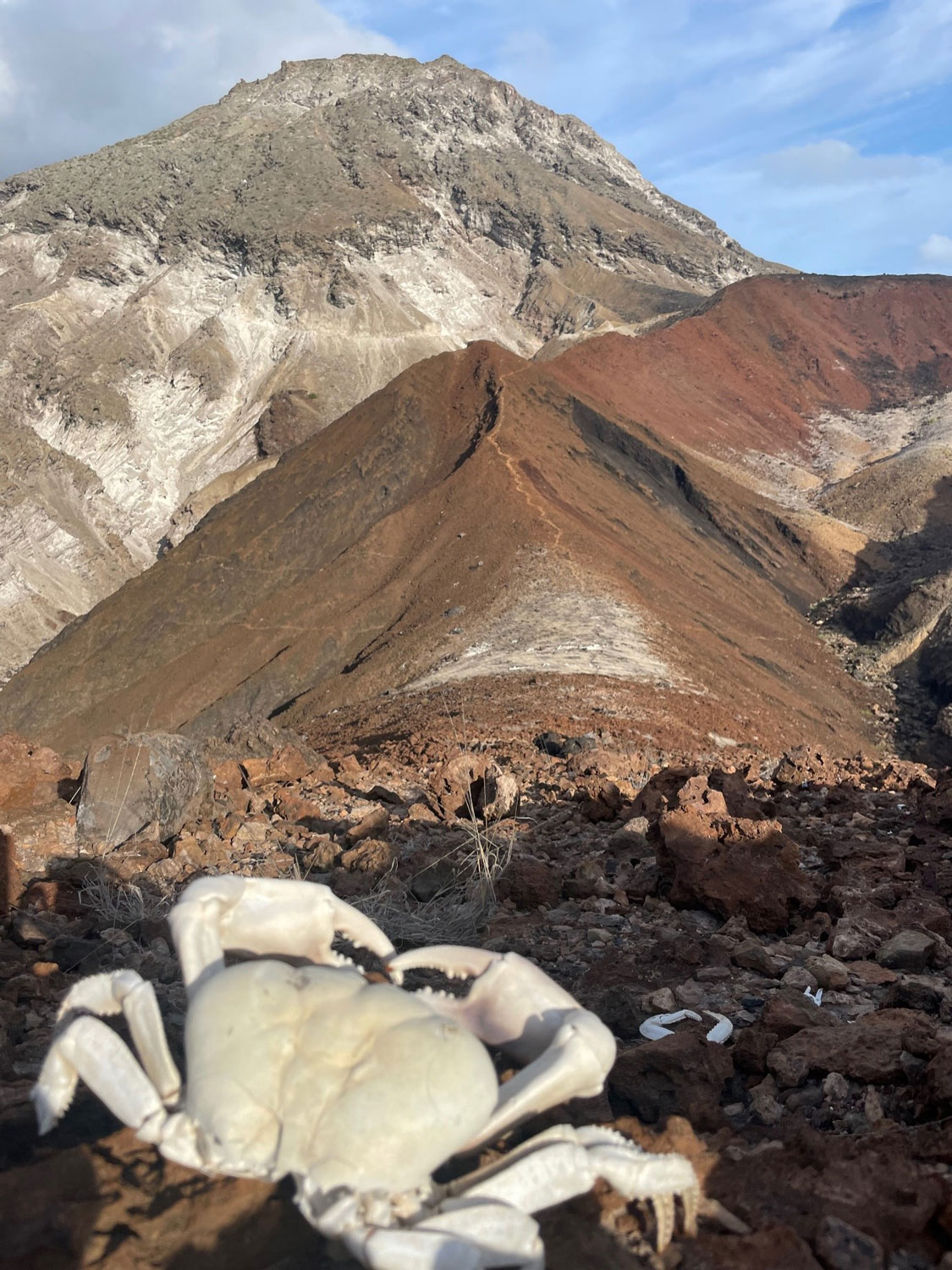
Land crabs (Johngarthia lagostoma) on the approach to White Hill, Ascension Island. BGS © UKRI
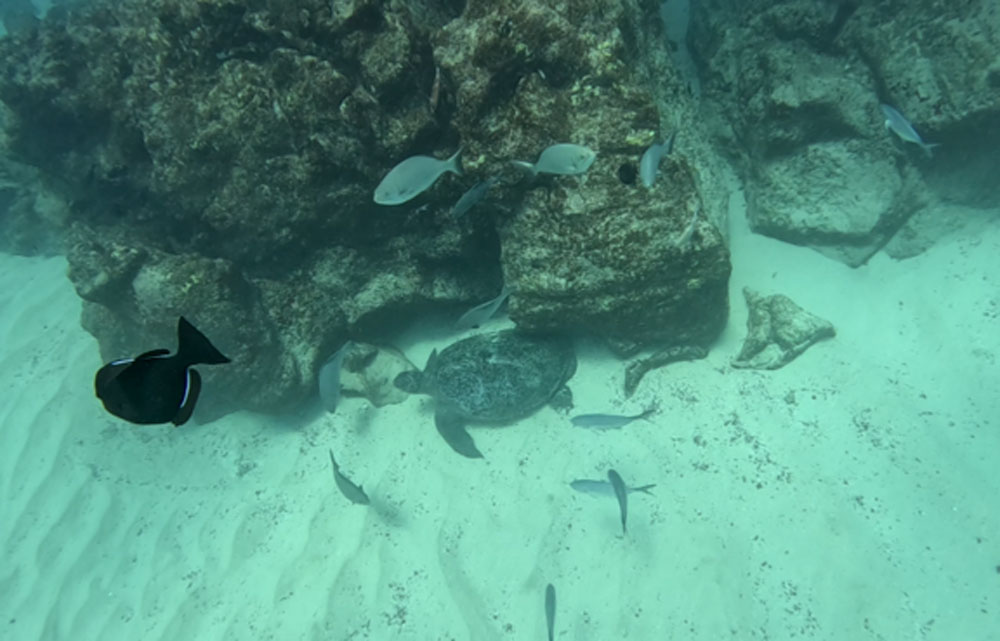
Marine life filmed as part of the video transect work around the coast of Ascension Island. BGS © UKRI
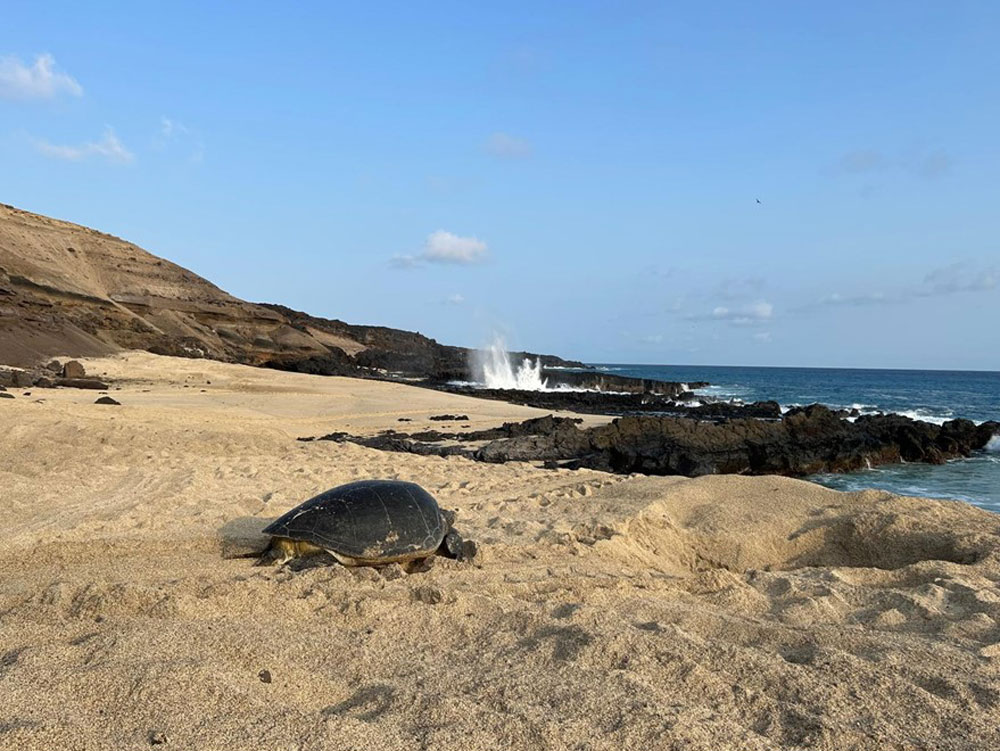
A green turtle (Chelonia mydas) returning to the sea after nesting on North East Beach, Ascension Island. BGS © UKRI
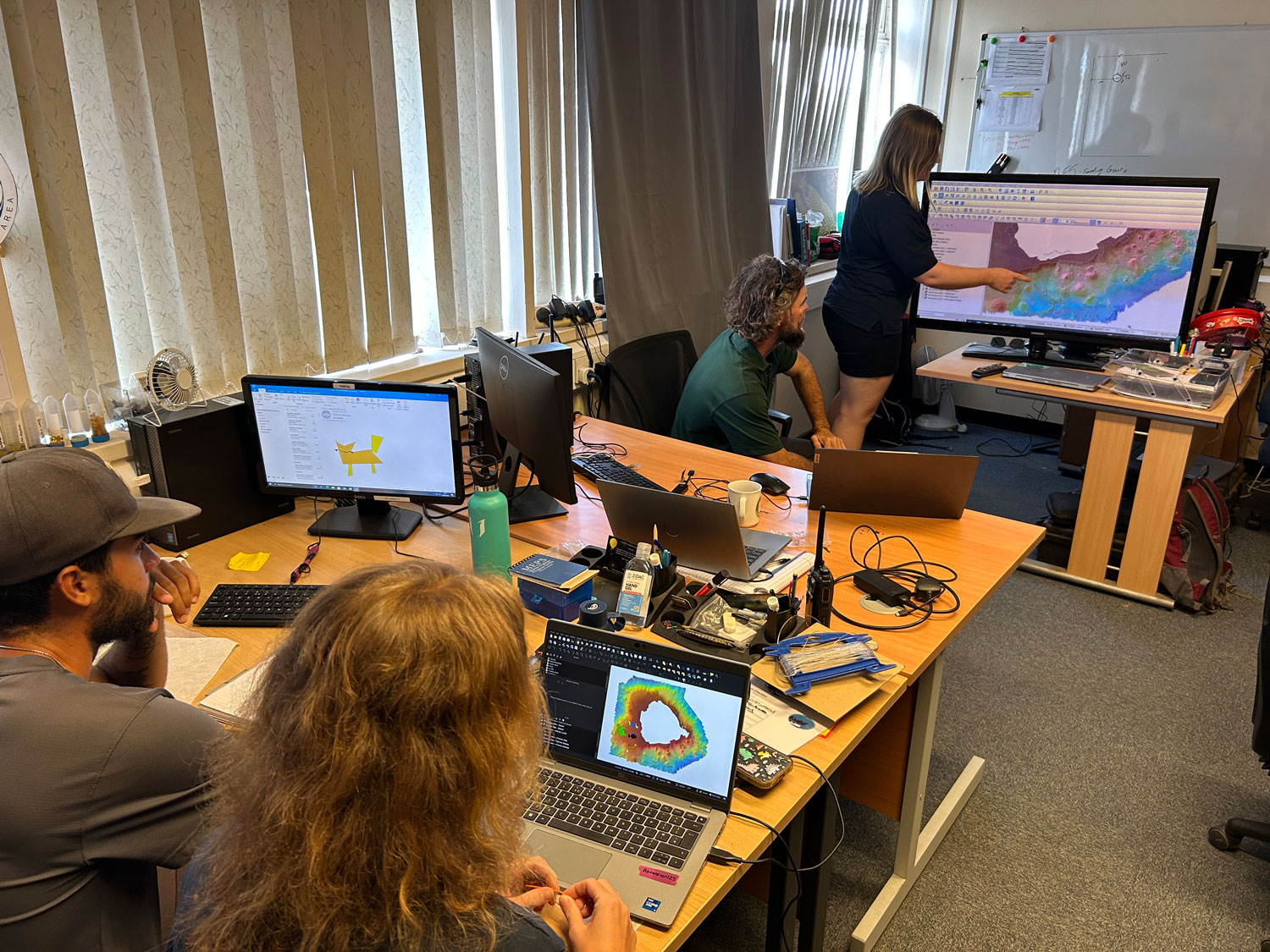
In depth training in QGIS and how to interpret the maps with the Ascension Island Government Conservation Team. BGS © UKRI
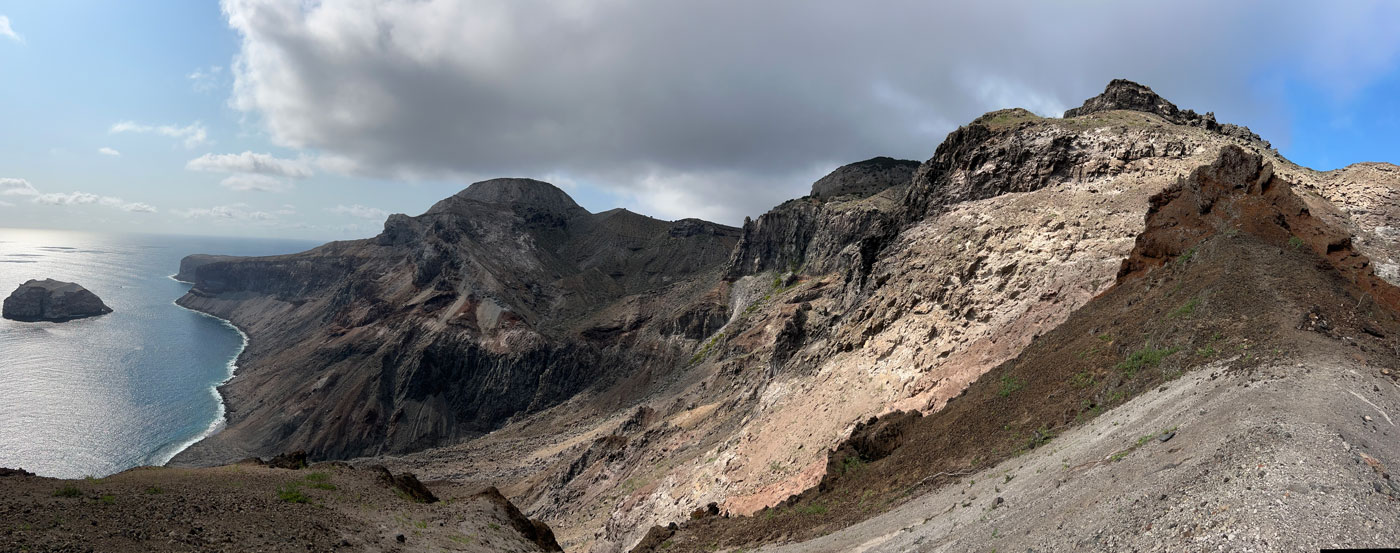
View down to Spire Beach from one of the world-famous letterbox walks. BGS © UKRI
The final maps were delivered by BGS to the Ascension Island Government’s Department of Conservation in February 2025 and will be used by the team to manage the marine environment for future generations.
Further information
Ascension Island Marine Protected Area Website
BGS completes first mapping expedition to Ascension Island
In photos: Marine surveying a remote volcanic island
Report of survey : Ascension Island multibeam & video transects
This project is funded by the UK Government through Darwin Plus.

Relative topics
Related news
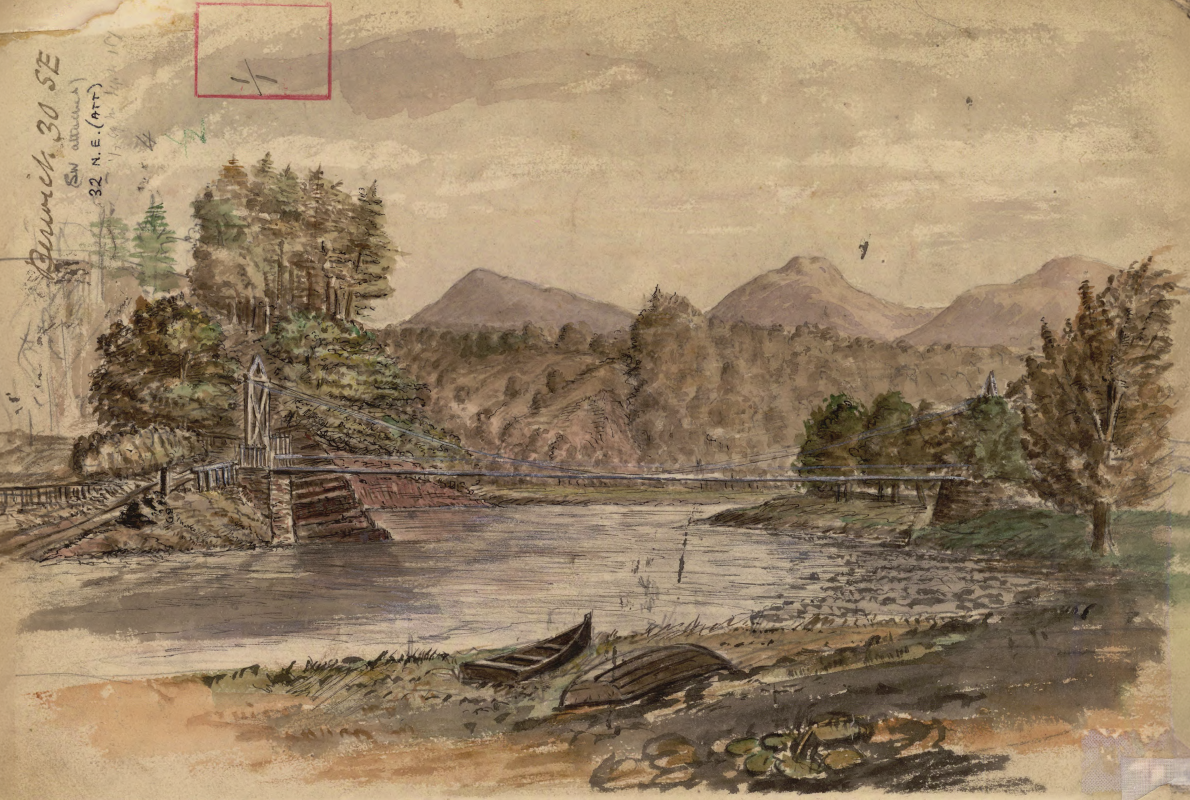
Historic watercolour unearthed on back of Dryburgh geological field map
05/10/2026
A 150-year-old painting of Dryburgh Suspension Bridge and the River Tweed offers an insight into the Scottish Borders landmark shortly after it was built in the 1870s.
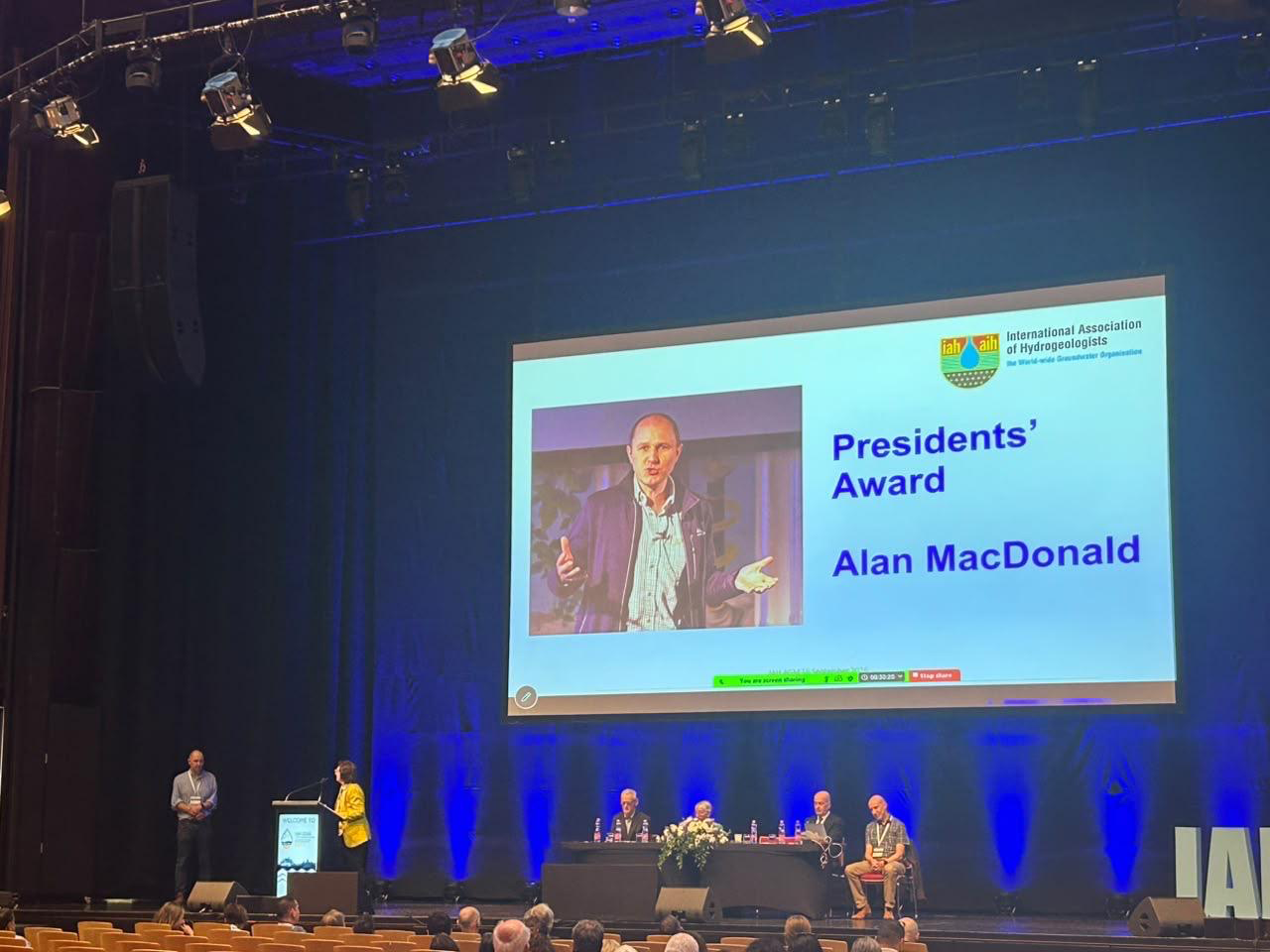
Professor Alan MacDonald presented with Presidents’ Award at 2026 World Groundwater Congress
21/09/2026
The BGS Head of Groundwater has been recognised with this prestigious award by the International Association of Hydrogeologists for his extensive contributions to groundwater science.
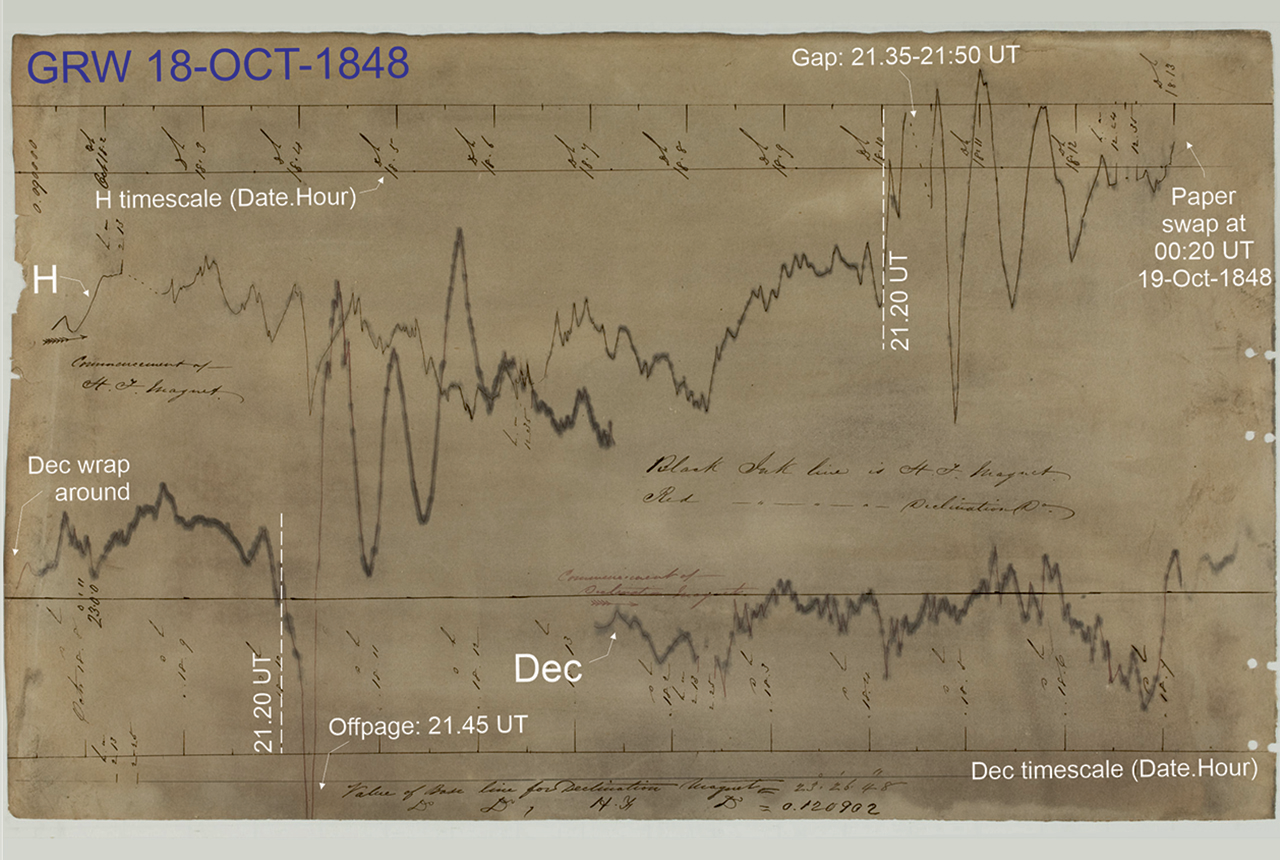
Mystery of one of the earliest recorded space weather impacts solved
17/09/2026
BGS scientists were part of an international team that has solved a 178-year-old mystery surrounding one of the earliest recorded examples of space weather affecting technology.
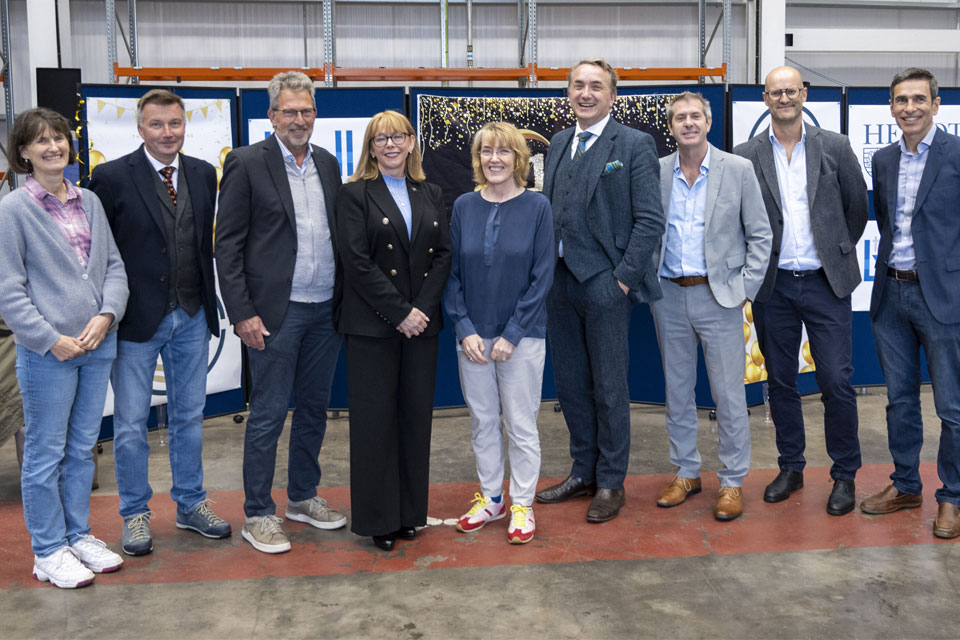
The Lyell Centre celebrates 10 years of world-leading earth and marine science research
07/09/2026
The Lyell Centre for Earth and Marine Sciences, a strategic partnership between Heriot-Watt University and BGS, is celebrating its 10th anniversary, marking a decade of world-leading research, innovation and collaboration in earth and marine sciences.

Demand for data centres presents challenges and opportunities for UK critical mineral supply chains
02/09/2026
Government-backed research finds that vulnerabilities in raw material supply chains must be addressed to secure the critical minerals needed to expand the UK’s digital infrastructure and boost economic growth.

What lies beneath Europe’s sinking ground?
01/09/2026
Land subsidence is becoming increasingly visible across Europe. New research examines how better monitoring, shared data and a deeper understanding of the subsurface can help assess and manage its impacts.
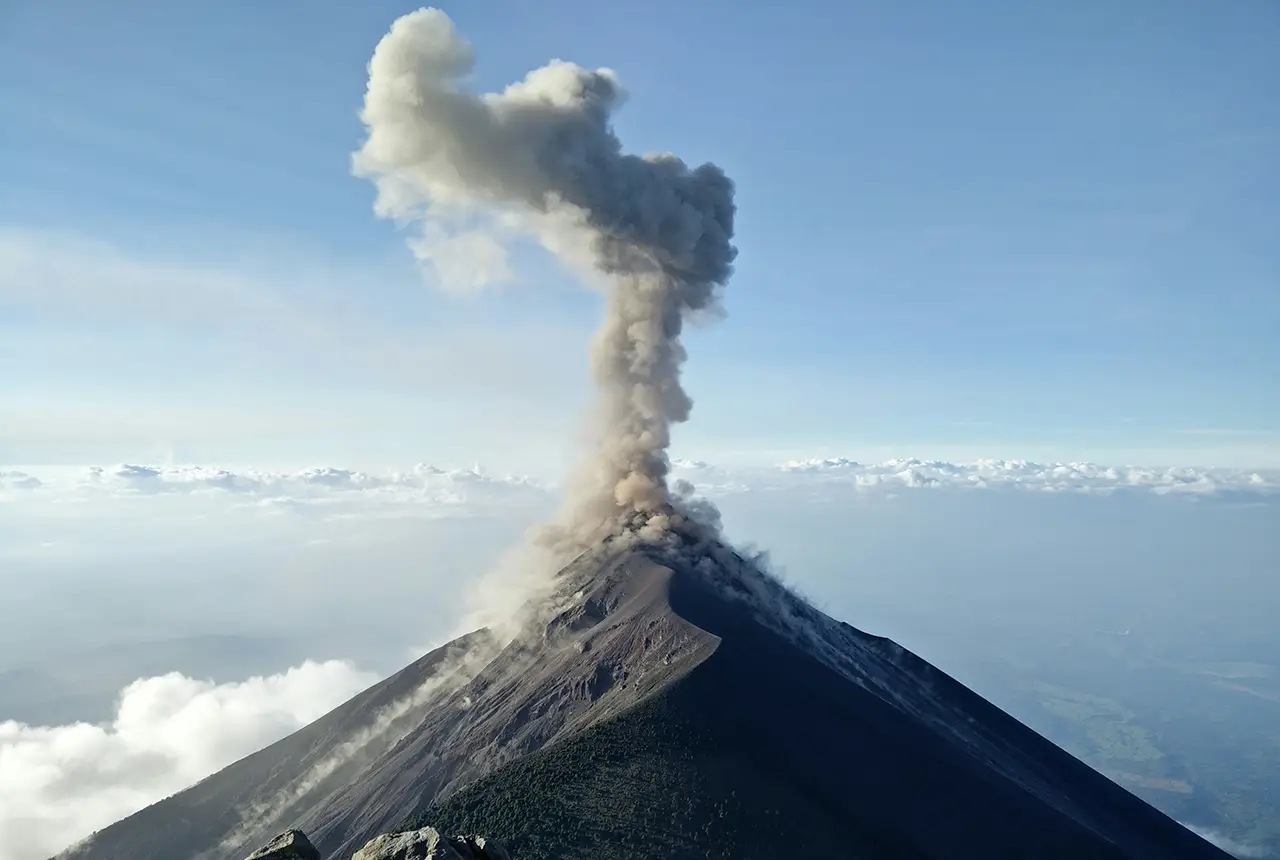
Secrets of an ancient supervolcano uncovered that change our understanding of England’s geological past
28/08/2026
Scientists have found evidence of a long-hidden link between an ancient buried ash layer in Scandinavia and a concealed supervolcano in eastern England.
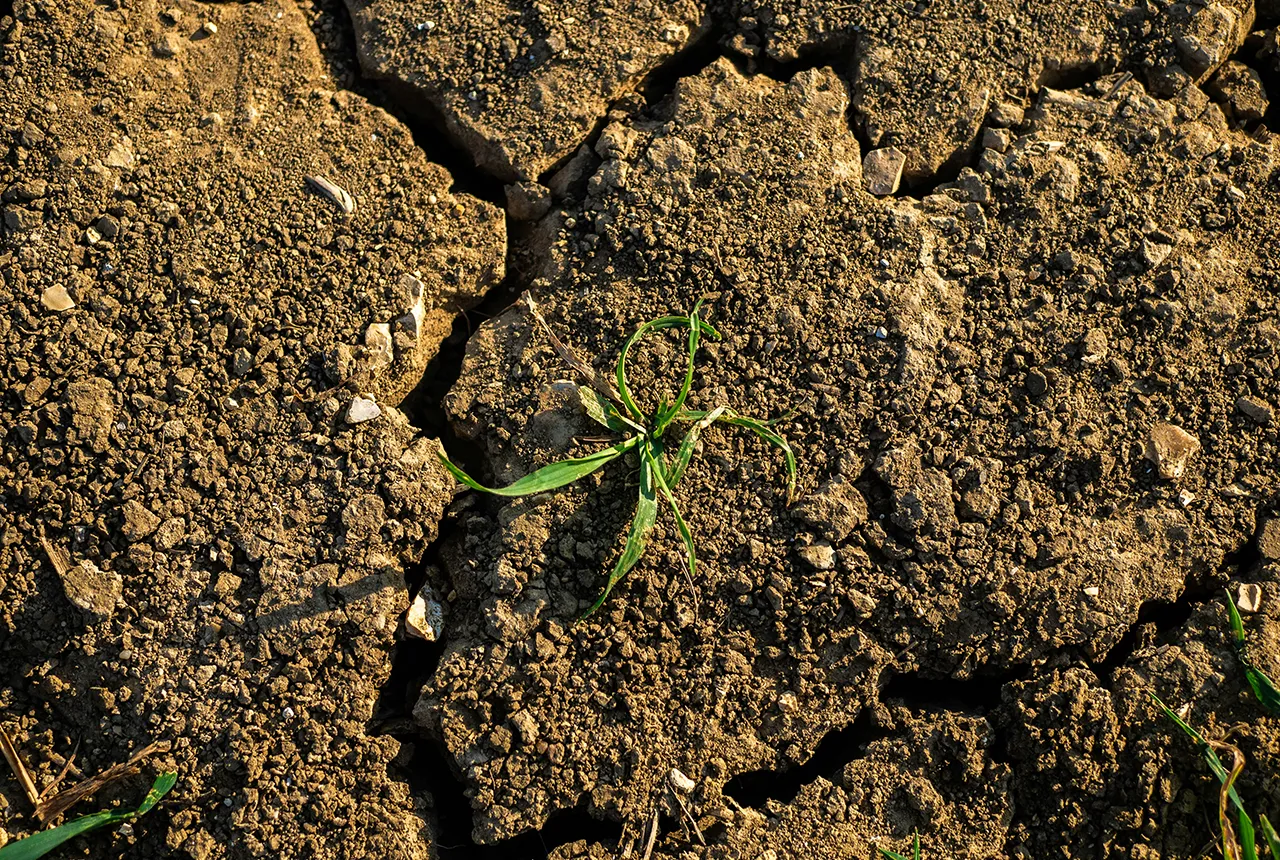
BGS research into drought-exposed soils wins award
26/08/2026
A research paper investigating how temperate soils respond to drought has been announced as the winner of the Land Best Paper Award.
UK aquifers robust despite driest July on record
16/08/2026
In a summer experiencing widespread drought, groundwater levels around the country are showing resilience, demonstrating their value as a crucial resource and indicating they could play a more significant role in mitigating the impacts of extreme weather.
New NERC-funded project empowers young people to engage with environmental science
23/07/2026
BGS is part of a new, collaborative project, funded through NERC’s ‘Opening up the environment’ programme, helping the environmental research community become more accessible.
Delving deep into mountains for future water security
16/07/2026
A BGS-led project is using new water-tracing investigation methods, geophysics and modelling to understand how water moves from mountains to the lowlands, helping to improve water security for billions of people.
Updated national 3D model will determine the depth to the solid bedrock beneath our feet
13/07/2026
The BGS Superficial Deposit Thickness Model now includes an elevation model of geological rockhead for the first time, providing important data for civil engineers, geoscientists and environmental scientists.