

Shortage of end-of-life materials presents challenge to UK critical minerals security
A new report by the UK Critical Minerals Intelligence Centre reveals insufficient end-of-life material stocks present a supply risk over the coming decade, but offer significant long-term potential to meet critical mineral demand through recycling.
17/06/2026 By BGS Press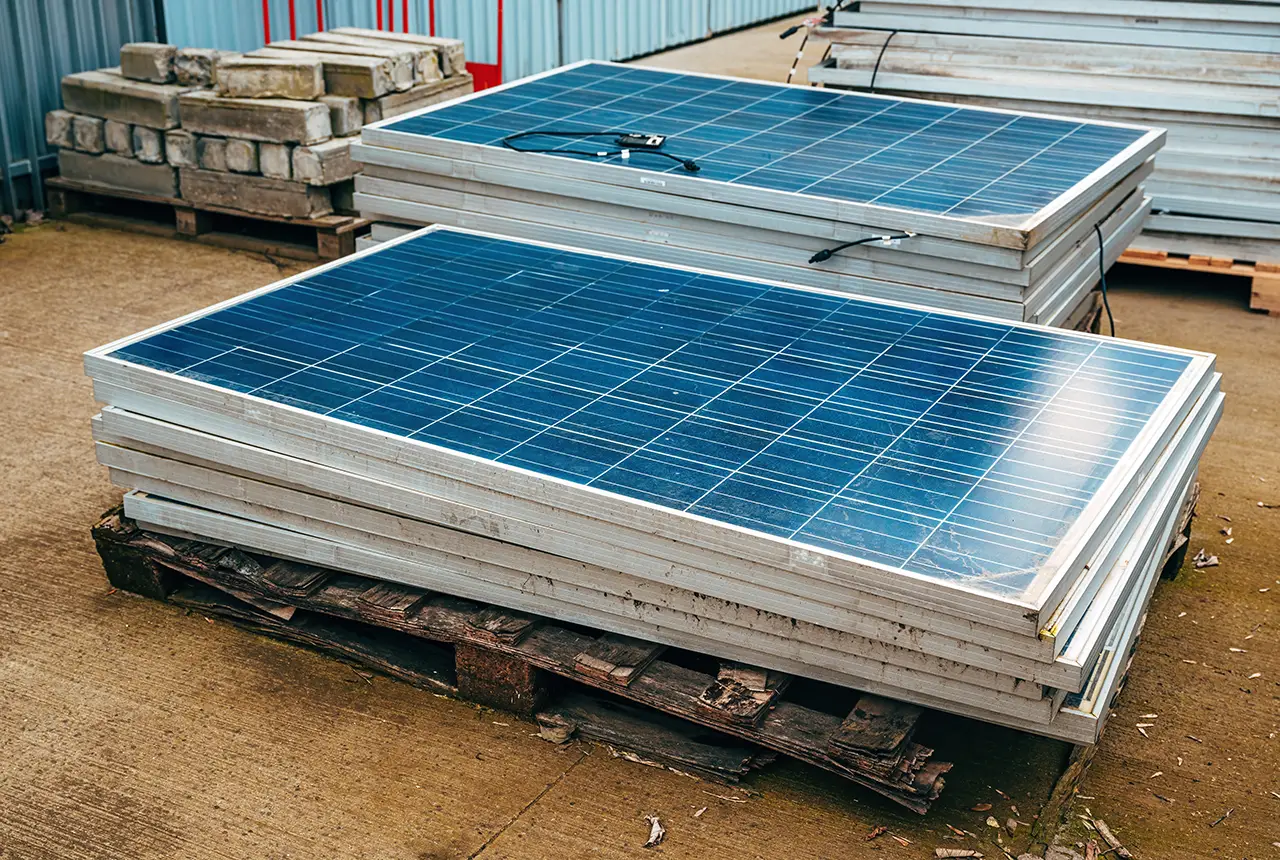

Demand for critical minerals is rapidly increasing in response to the global transition to net zero, with UK demand for lithium predicted to quadruple by 2050. To secure future supply, the UK has set ambitious recycling targets for critical minerals.
New analysis from the UK Critical Minerals Intelligence Centre (CMIC), hosted by the British Geological Survey (BGS), provides a detailed assessment of the UK’s future demand and secondary supply availability for the key technology metals that are required for green energy technologies and electric transportation.
By 2035, the Government aims to meet 20 per cent of annual critical mineral demand through recycling and recovery of critical minerals, also known as secondary supply or the circular economy. However, the new research also highlights that, within this timeframe, only a small number of critical minerals used in photovoltaic technologies are expected to be found in sufficient quantities to theoretically reach or exceed this ambition. The prospects improve dramatically, however, when the timescale is extended out to 2050, as increasing availability of end-of-life material is forecast to meet or exceed domestic demand for several critical minerals.
The assessment found that, between 2040 and 2050, ‘secondary’ raw material availability could provide:
- more than 60 per cent of the cumulative demand for battery metals
- more than 85 per cent of the cumulative demand for the rare earth elements (REEs) used in magnets (neodymium, praseodymium and dysprosium)
- more than 90 per cent of the cumulative demand for silver and 75 per cent for tin used in photovoltaics (solar panels)
Although secondary supply has the potential to offset primary demand after 2040, the rapid growth of electric vehicles, wind turbines and photovoltaics means that, in the short term, primary supply (that is extracted directly from the ground) will remain essential to meet growth sectors, fill supply gaps and account for unavoidable material losses or non-recovery. This includes continued reliance on imports of lithium, nickel, cobalt, manganese, copper and REEs, and highlights the importance of supply chain diversification, responsible sourcing and strategic international partnerships.
The report highlights that investment, capacity building, development of reverse supply chains and further data supporting the circular economy will be required to support the UK’s transition toward secure, resilient supplies of critical minerals and technology metals and to realise the long-term supply potential available through recovery and recycling.

This study demonstrates that secondary supply of technology metals has the potential to become a major contributor to UK material security. Our research shows that several elements will approach or exceed anticipated domestic demand by mid-century.
However, realising this potential will depend on several factors, including clear policy direction on technology metals recovery, investment in recycling and refining infrastructure and the development of integrated reverse supply chains and skilled labour.
Primary supply will remain essential but, with timely and coordinated action, the UK can build a more resilient, circular and secure critical materials system capable of supporting its 2050 net zero ambitions.
Dr Evi Petavratzi, principal mineral commodity expert at BGS.
The report ‘Future material demand and secondary supply potential for UK net zero technologies’ is available to download from the UK Critical Minerals Intelligence Centre website.
Relative topics
Related news

Demand for data centres presents challenges and opportunities for UK critical mineral supply chains
02/09/2026
Government-backed research finds that vulnerabilities in raw material supply chains must be addressed to secure the critical minerals needed to expand the UK’s digital infrastructure and boost economic growth.

Measuring the environmental impacts of carbon fibre: life cycle assessment
01/09/2026
Undergraduate student Phoebe Brown visited BGS to understand the life cycle of carbon fibre, from primary production to recycling.
Cheshire Geoenergy Observatory releases key geological datasets for UK thermal energy storage scheme design
09/07/2026
A new report and data packs from BGS will provide a unique resource for scientists working on the geology and hydrogeology of the Sherwood Sandstone Formation, an important aquifer and reservoir rock.
UK Critical Minerals Intelligence Centre makes recommendations for the next UK criticality assessment
01/07/2026
CMIC has outlined the enhancements made to the next assessment update to ensure it is better tailored to the structure of the UK economy.

From archive to discovery: historical mineral reports support gold exploration in Scotland
25/06/2026
Digitised geological records show potential to unlock untapped mineral resources in Ardlochan, Argyllshire.

UK and Philippines scientists investigate natural hydrogen generation processes at atomic scale
22/06/2026
BGS researchers were granted access to use the Diamond Light Source facility in order to study hydrogen in light brighter than the sun.
Shortage of end-of-life materials presents challenge to UK critical minerals security
17/06/2026
A new report by the UK Critical Minerals Intelligence Centre reveals insufficient end-of-life material stocks present a supply risk over the coming decade, but offer significant long-term potential to meet critical mineral demand through recycling.
UK geothermal catalogue receives update
16/06/2026
BGS releases the second digital version of the UK geothermal catalogue of subsurface temperature and rock thermal conductivity measurements and heat flow calculations.

Ukraine and the UK strengthen their commitment to geological cooperation
10/06/2026
A new Memorandum of Understanding reaffirms the UK’s support of Ukraine’s ambitions to develop its critical mineral resources, paving the way for collaboration through capacity-building programmes.

Extractive Industry Geology (EIG) Conference 2026
Event from 08/09/2026 to 11/09/2026
University of Liverpool
Latest data on world mineral production now available
25/05/2026
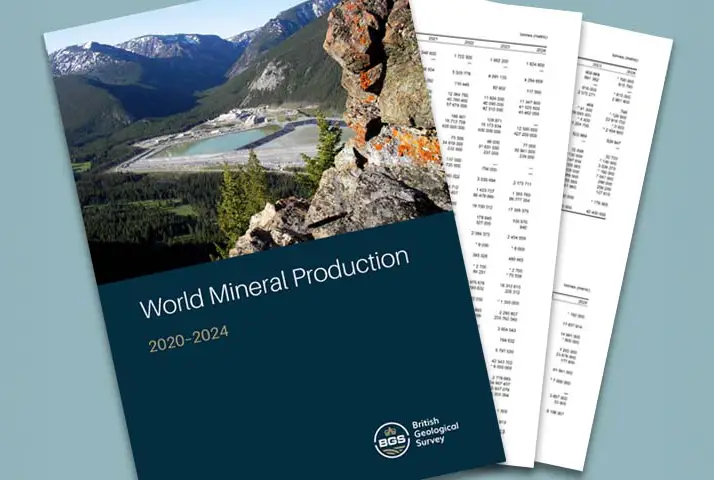
BGS has released the updated statistics on the global production of over 70 commodities between 2020 and 2024.
Natural hydrogen research
Understanding aspects of the natural hydrogen value chain on a national and international level.