

Artificial intelligence helps scientists identify 3000 moving slopes potentially at risk of landslide
A new approach that combines AI and satellite data has been used by scientists to detect actively moving landslides at a national scale.
25/09/2025 By BGS Press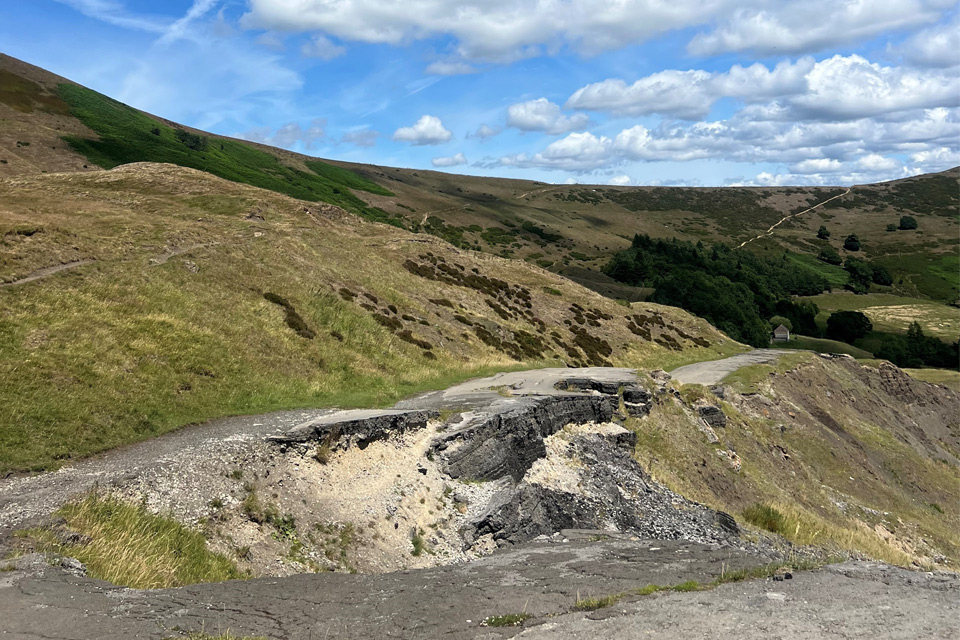

Landslides cause significant disruption to the road and rail network across Great Britain and can lead to fatalities. Identifying active slope failure is a difficult task, as monitoring is costly and time consuming, especially at a national scale.
In collaboration with the University of Florence in Italy, BGS has used a new, semi-automated method that uses artificial intelligence (AI) to identify the slopes that are actively moving, highlighting areas potentially at risk.
Previously, BGS has used interferometric synthetic aperture radar, or InSAR, for monitoring landslides. One of the benefits of InSAR is the large amount of information available, especially at a national scale; but analysing all these data present a challenge for scientists. To help tackle this problem, we have developed a semi-automated method that combines a type of AI called machine learning with clustering tools. The benefit of this approach is that we can analyse data for the whole of Great Britain, which wouldn’t have been possible before.
Results from this recent analysis highlighted around 3000 slopes that showed consistent movement of over 2.5 mm per year between 2018 and 2022. These actively moving slopes affect approximately 14 000 km of road and 360 km of railway — 2.4 per cent and 1 per cent of the entire national network, respectively.
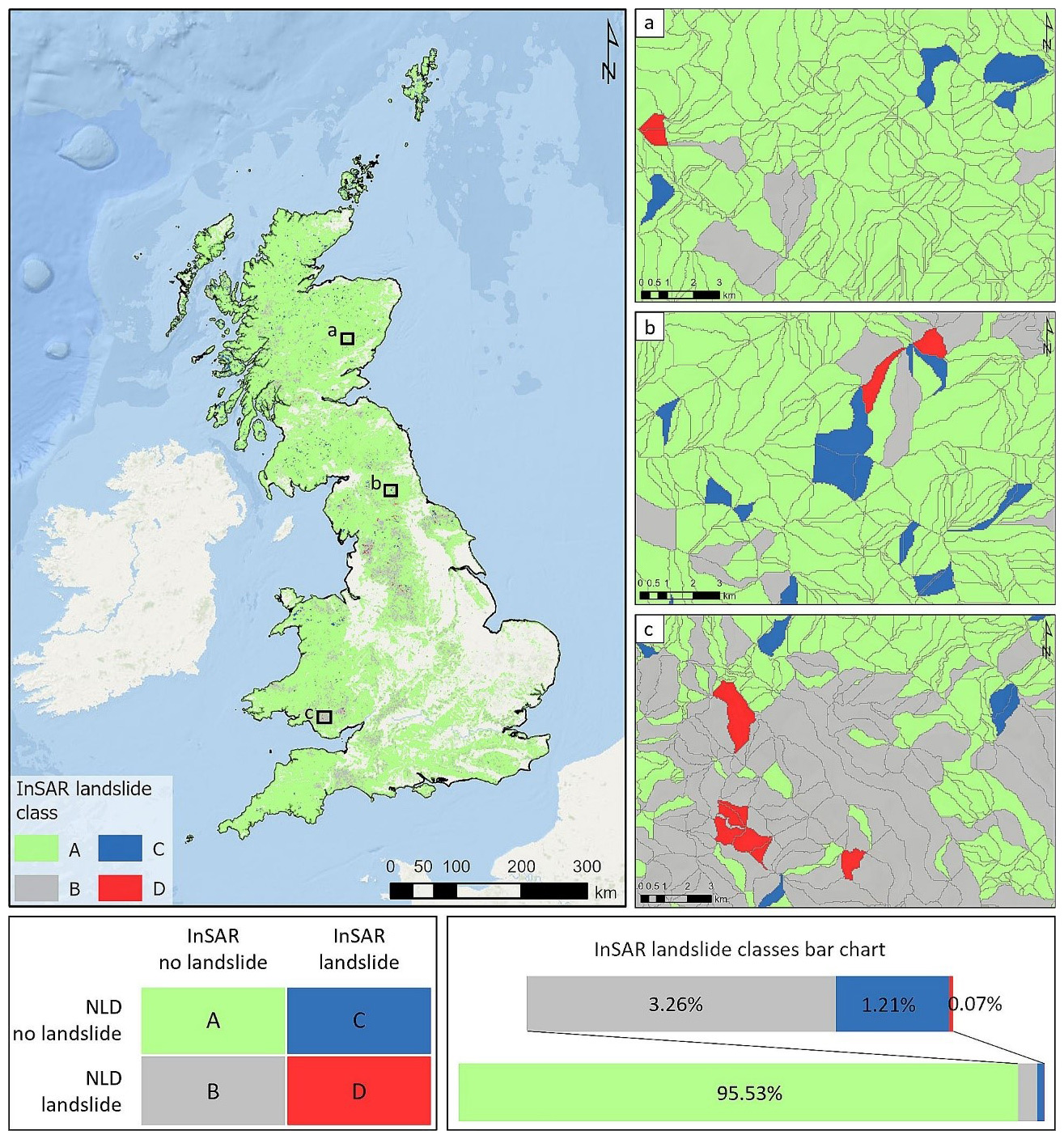
InSAR landslide inventory map with associated matrix and the InSAR landslide classes bar chart. Additionally, three zooms of the map from (a) Scotland; (b) England; (c) Wales. NLD: BGS National Landslide Database. © Medici et al. (2025).
The slopes deemed unstable are not all linked to landslides. Rather, they show the areas that should be focused on not only for future landslide research and mapping but also for the effect on local infrastructure, such as buildings and roads.

Our new, semi-automated approach supports the work of landslide specialists and provides a practical solution for large-scale geohazard management. The tool has helped to classify more than 300 000 slopes around the UK and has highlighted 3000 slopes that have moved in a four-year period.
Satellite InSAR data has enormous potential for understanding ground deformation, but its complexity and the volume of data require advanced automated tools to extract meaningful information. Our semi-automated method helps bridge this gap by identifying the most critical areas to focus on, enabling efficient monitoring and helping to prevent serious damage.
Dr Alessandro Novellino, BGS remote sensing geologist
This approach already provides a powerful disaster-management tool, allowing decision makers to quickly identify areas that are currently at risk from ground motion. By highlighting these vulnerable areas, it supports smarter prioritisation of detailed field surveys, maintenance, and mitigation strategies, reducing costs and improving safety.
Next steps will focus on refining this national-scale analysis by integrating more detailed topographical data, to move from identifying unstable slopes to automatically mapping individual landslides within those slopes. This will enable more precise classification of landslide types and extents and the likely triggering mechanisms. The results will be shared with key stakeholders, including local authorities, infrastructure owners and the Natural Hazards Partnership.
Camilla Medici, postdoctoral researcher at the University of Florence
The research paper, Machine learning and clustering for supporting the identification of active landslides at national scale, is now available to read.
Related news

New project mapping UK Continental Shelf provides boost to offshore infrastructure and development
22/10/2026
BGS is leading a three-year project funded by The Crown Estate to develop a new suite of seabed geology datasets and reports, providing crucial information for offshore developers about the seabed around the UK.
BGS one of the UK’s first specialist research institutes to receive Race Equality award
20/10/2026
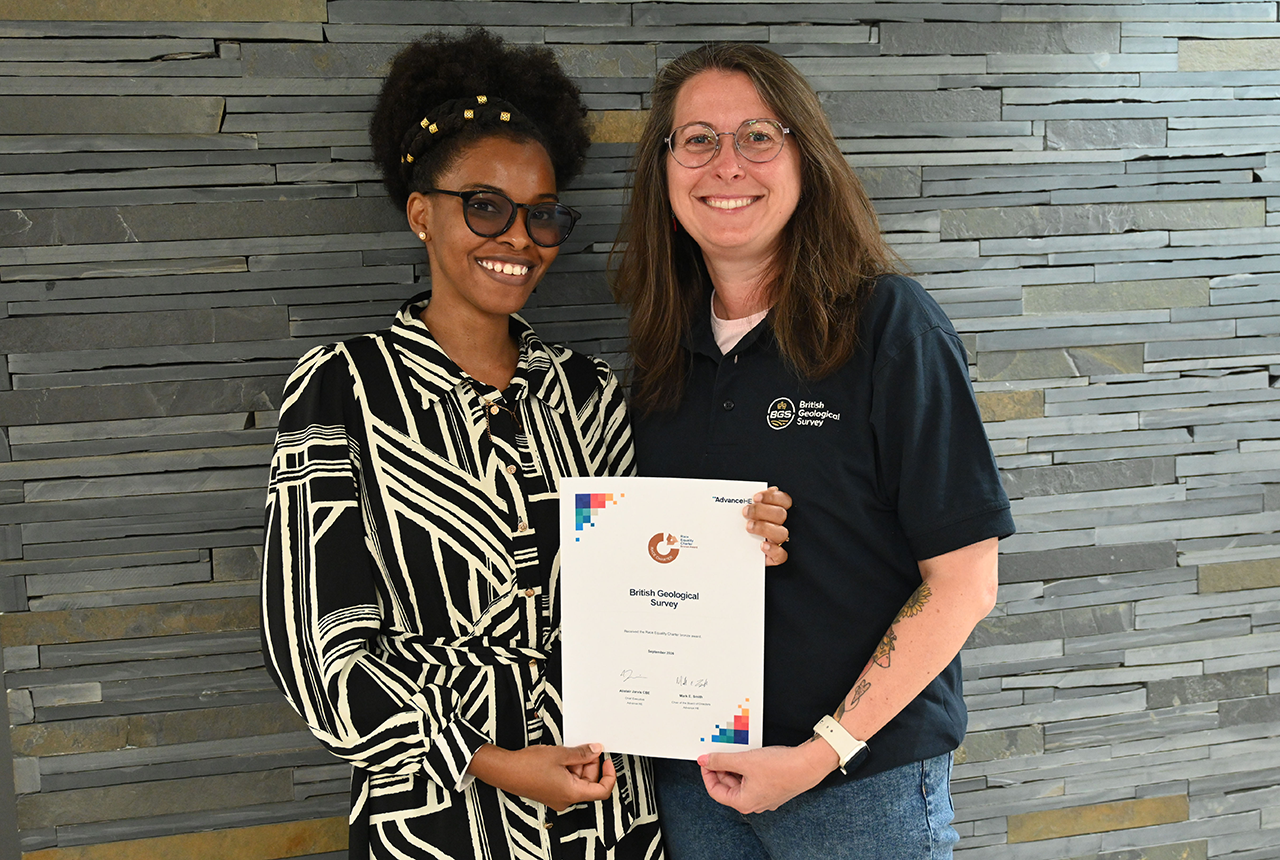
BGS has secured Bronze accreditation under the Advance HE Race Equality Charter framework, recognising its commitment to identifying and addressing race equality issues in the geosciences.
British and French geological surveys strengthen collaboration through new agreement
14/10/2026
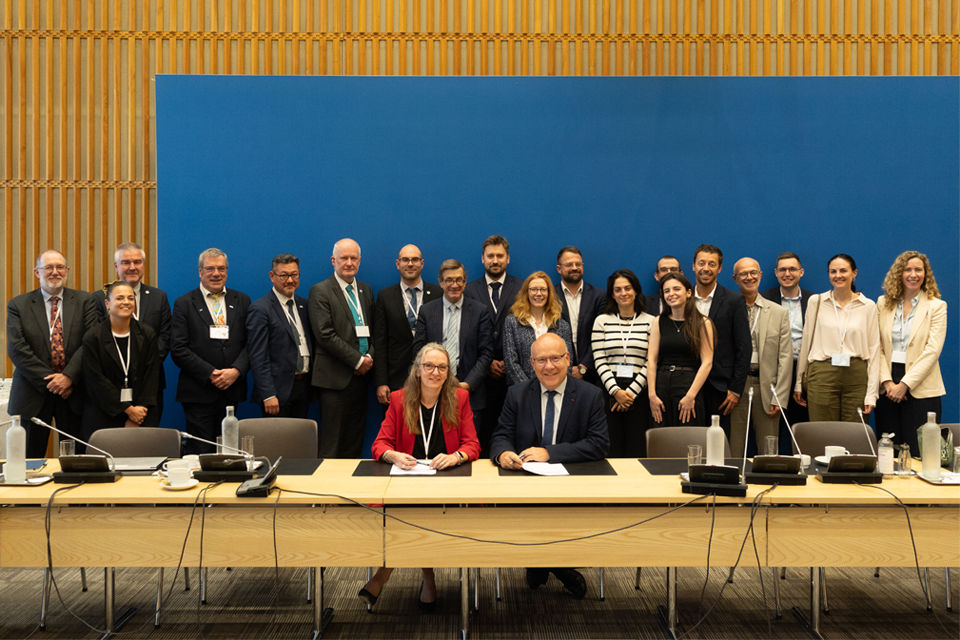
Two of Europe’s leading geological surveys have signed a Memorandum of Understanding to strengthen collaboration on key geoscientific challenges.
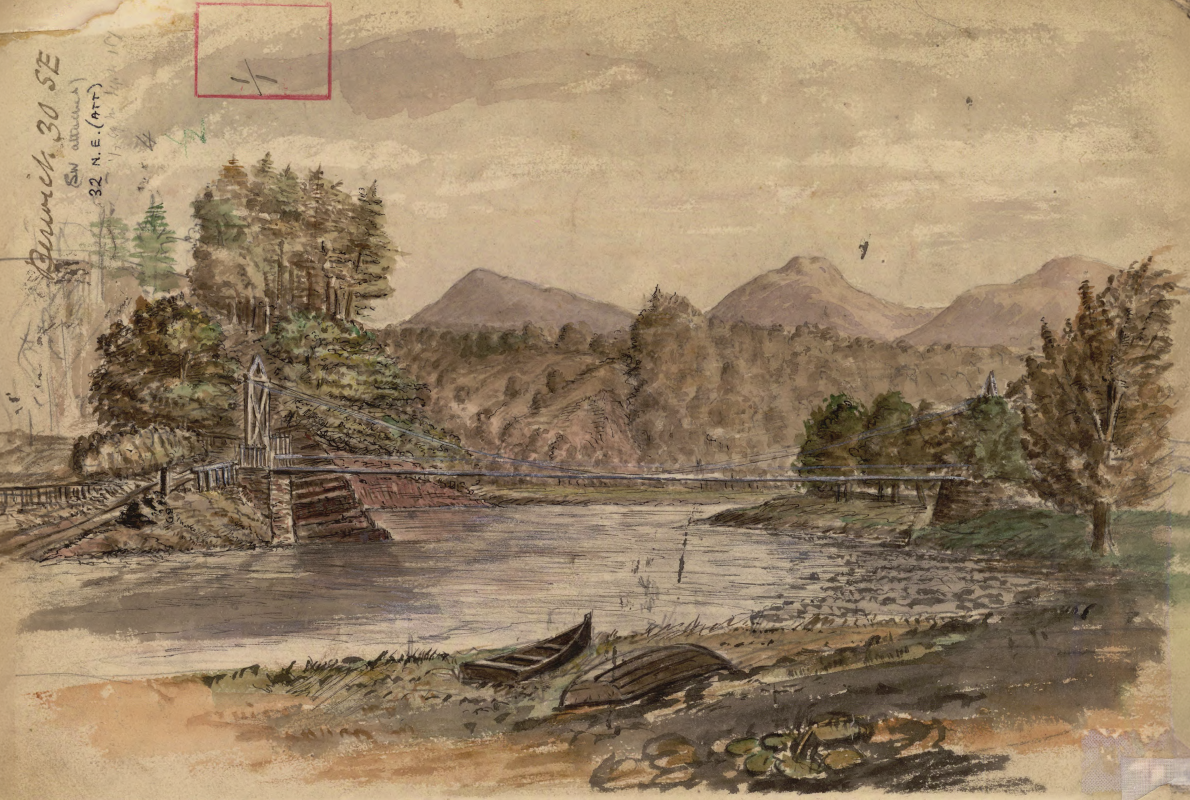
Historic watercolour unearthed on back of Dryburgh geological field map
05/10/2026
A 150-year-old painting of Dryburgh Suspension Bridge and the River Tweed offers an insight into the Scottish Borders landmark shortly after it was built in the 1870s.

Professor Alan MacDonald presented with Presidents’ Award at 2026 World Groundwater Congress
21/09/2026
The BGS Head of Groundwater has been recognised with this prestigious award by the International Association of Hydrogeologists for his extensive contributions to groundwater science.
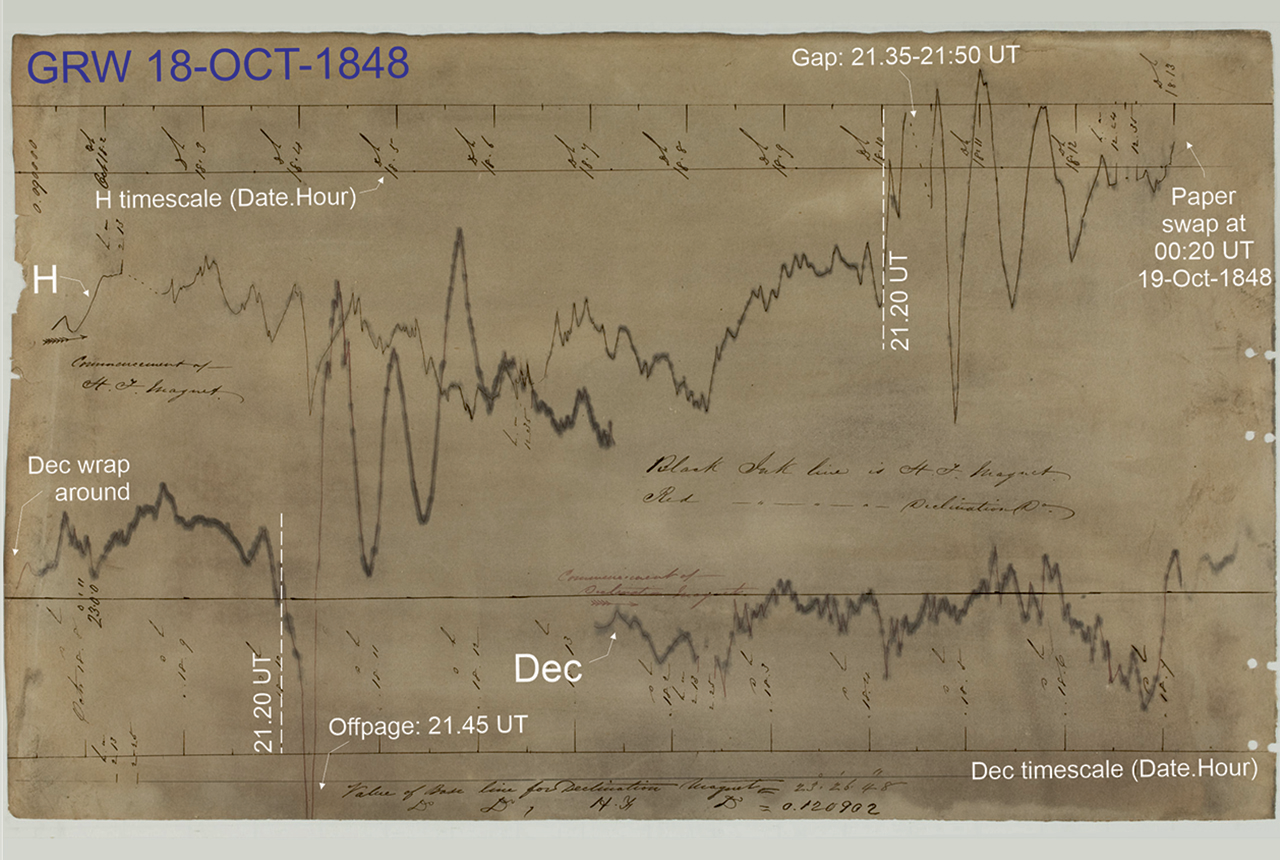
Mystery of one of the earliest recorded space weather impacts solved
17/09/2026
BGS scientists were part of an international team that has solved a 178-year-old mystery surrounding one of the earliest recorded examples of space weather affecting technology.

The Lyell Centre celebrates 10 years of world-leading earth and marine science research
07/09/2026
The Lyell Centre for Earth and Marine Sciences, a strategic partnership between Heriot-Watt University and BGS, is celebrating its 10th anniversary, marking a decade of world-leading research, innovation and collaboration in earth and marine sciences.

Demand for data centres presents challenges and opportunities for UK critical mineral supply chains
02/09/2026
Government-backed research finds that vulnerabilities in raw material supply chains must be addressed to secure the critical minerals needed to expand the UK’s digital infrastructure and boost economic growth.

What lies beneath Europe’s sinking ground?
01/09/2026
Land subsidence is becoming increasingly visible across Europe. New research examines how better monitoring, shared data and a deeper understanding of the subsurface can help assess and manage its impacts.

Secrets of an ancient supervolcano uncovered that change our understanding of England’s geological past
28/08/2026
Scientists have found evidence of a long-hidden link between an ancient buried ash layer in Scandinavia and a concealed supervolcano in eastern England.

BGS research into drought-exposed soils wins award
26/08/2026
A research paper investigating how temperate soils respond to drought has been announced as the winner of the Land Best Paper Award.
UK aquifers robust despite driest July on record
16/08/2026
In a summer experiencing widespread drought, groundwater levels around the country are showing resilience, demonstrating their value as a crucial resource and indicating they could play a more significant role in mitigating the impacts of extreme weather.