

New seabed geology maps for offshore Yorkshire
Offshore Yorkshire is the latest map to be released in BGS's series of fine-scale digital seabed maps.
14/03/2023 By BGS Press

BGS has initiated a new programme of mapping the seabed geology of the UK’s continental shelf, the first effort to consistently characterise the geology of the seabed in over 25 years.
The latest map offers new fine-scale digital maps featuring the seabed of offshore Yorkshire that contain combined bedrock, sediment, bedrock structure and geomorphology data. This is the third in a series of new, fine-scale maps to be released by BGS, with maps for offshore Anglesey and the Bristol Channel already available online.
The seabed geology maps are intended to support a diverse range of offshore activities and applications, including scientific research, offshore development, conservation efforts and marine management. It is part of a drive by BGS to develop new, fit-for-purpose geospatial products that, combined with the availability of new high-resolution data, can better meet current and future decarbonisation and marine science challenges. The maps are expected to be of interest to developers looking to deploy technology and infrastructure to create renewable energy.
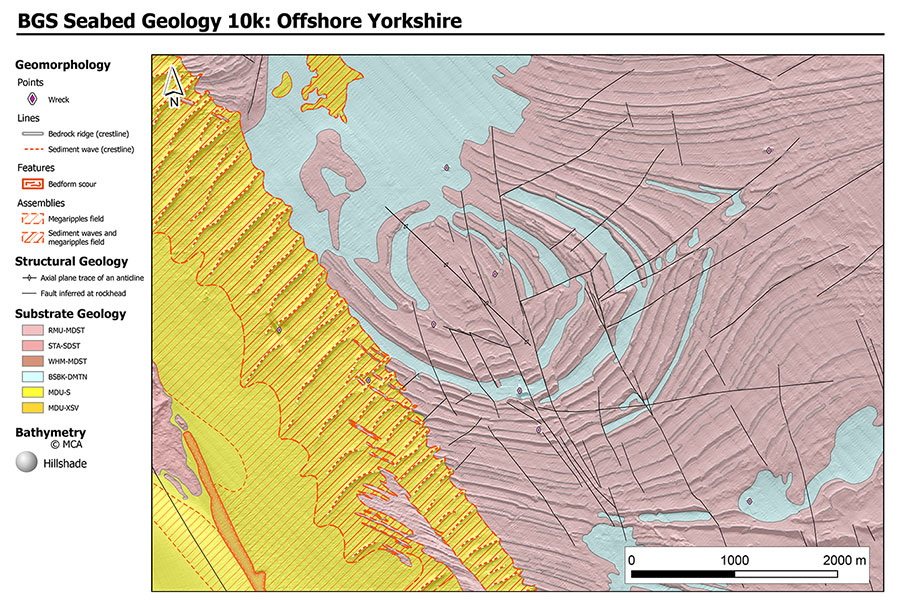
BGS Seabed Geology 10K: offshore Yorkshire. BGS © UKRI.
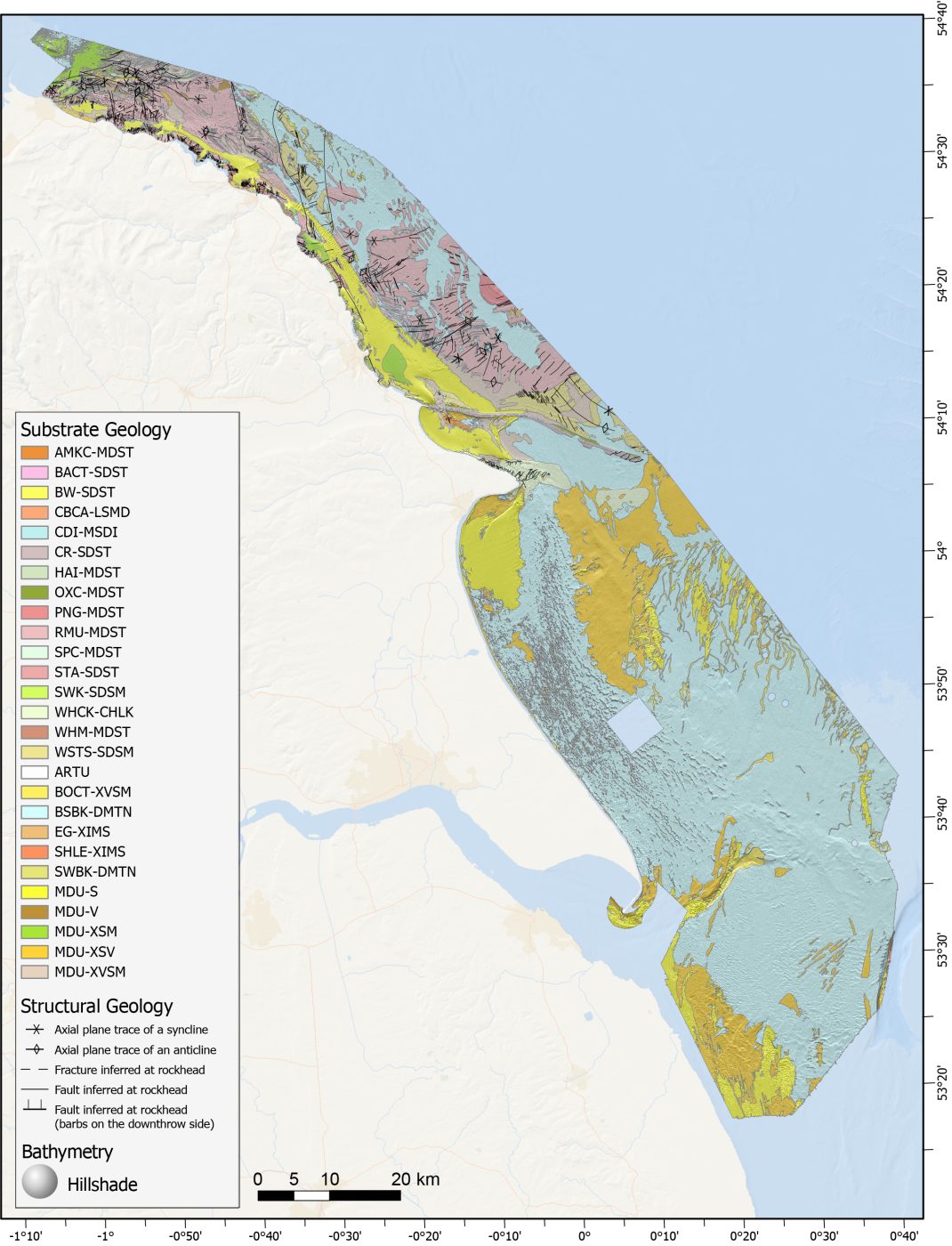
Substrate and structural geology from the full offshore Yorkshire map area. BGS © UKRI.
The maps are based primarily on high-resolution bathymetry data collected through the Maritime and Coastguard Agency’s UK Civil Hydrography Programme. They are further informed by acoustic backscatter data, sediment cores and grab samples, seismic data, and existing onshore and offshore map products (both BGS mapsand publicly available academic and industry products).

The geological character of the seabed and shallow subsurface is often complex, but is not well captured by currently available resources.
By applying a consistent approach nationally, incorporating both classical and innovative mapping approaches, these map products offer a unique resource, providing an excellent insight into complex geology, as well as active environmental processes.
Dayton Dove, BGS Marine Geoscientist.
BGS is among other public and government organisations to have joined the UK Centre for Seabed Mapping (UK CSM), helping to boost marine data and mapping standards. Improved geospatial resources will also provide important evidence for policy and decision makers, who need to consider the increasing demands placed on the marine environment from recreation, marine conservation and protection, resource development, and fisheries.
As well as providing important baseline datasets that can underpin efficiency in marine infrastructure projects, such as siting offshore renewables, the analysis and mapping process also leads to interesting new findings, providing the potential for genuine discovery.
Dayton Dove, BGS Marine Geoscientist.
The maps are available from BGS under the fine-scale maps section of the Offshore GeoIndex and are designed to be viewed at 1:10 000 scale, or offline as downloadable shapefiles.
Other areas to be added as the mapping programme progresses include offshore Orkney, East Anglia, and further areas of offshore Wales.
Other maps in this series:
Relative topics
Related news

New project mapping UK Continental Shelf provides boost to offshore infrastructure and development
22/10/2026
BGS is leading a three-year project funded by The Crown Estate to develop a new suite of seabed geology datasets and reports, providing crucial information for offshore developers about the seabed around the UK.
BGS one of the UK’s first specialist research institutes to receive Race Equality award
20/10/2026
BGS has secured Bronze accreditation under the Advance HE Race Equality Charter framework, recognising its commitment to identifying and addressing race equality issues in the geosciences.
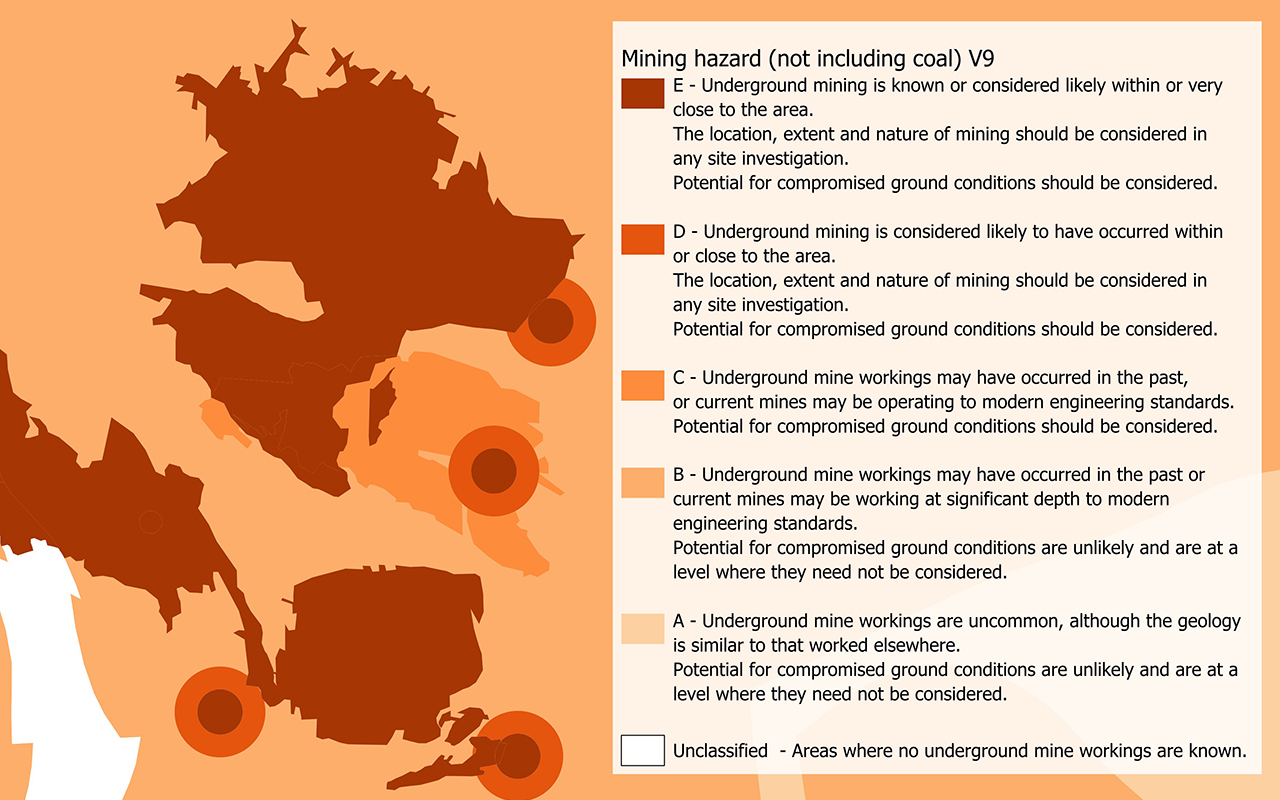
Mining hazard (not including coal)
The mining hazard dataset provides essential information for planners and developers building in areas of former shallow underground mine workings.

Improving bioaccessibility testing for contaminated soils
15/10/2026
BGS has been trialling a novel bioaccessibility tracing technique to ascertain if it offers more analytical precision over traditional methods of detecting chemicals in contaminated soils.
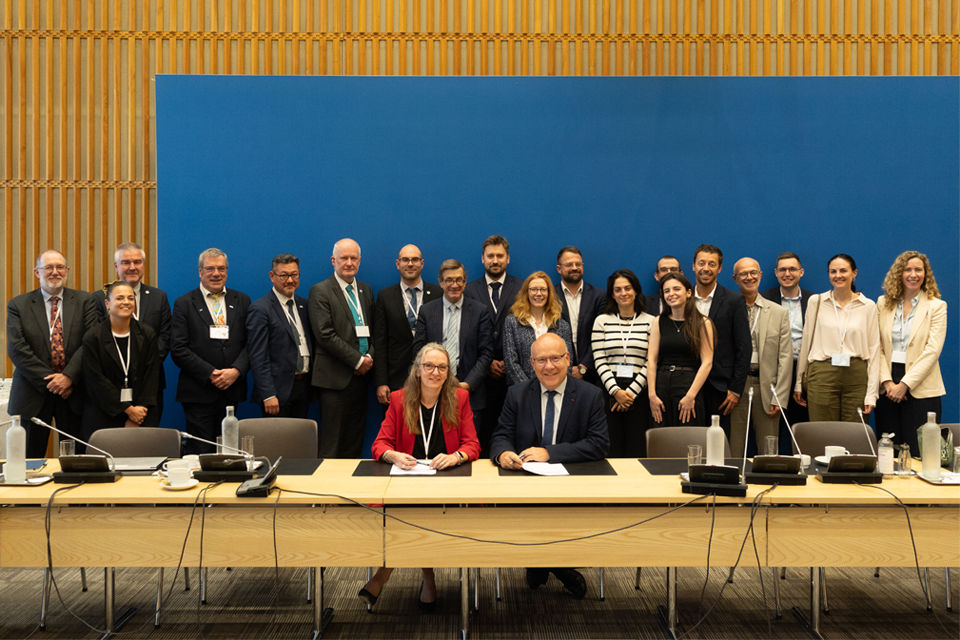
British and French geological surveys strengthen collaboration through new agreement
14/10/2026
Two of Europe’s leading geological surveys have signed a Memorandum of Understanding to strengthen collaboration on key geoscientific challenges.
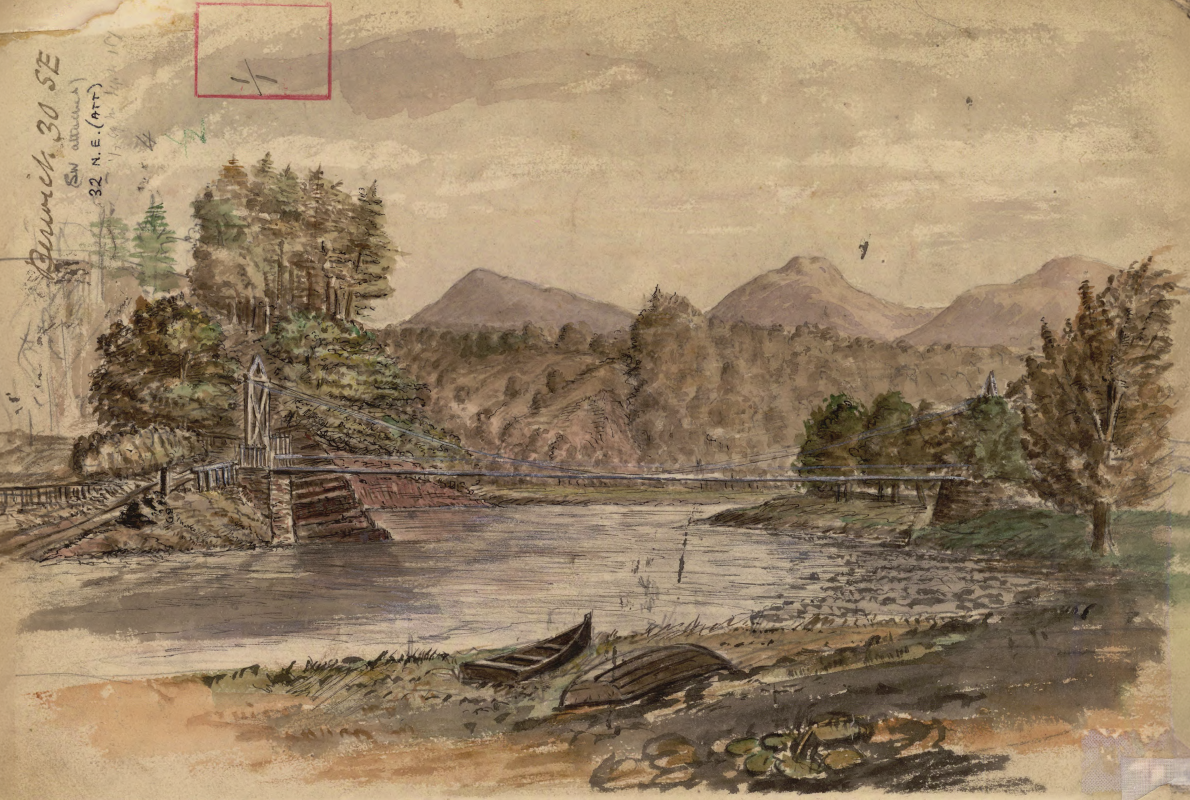
Historic watercolour unearthed on back of Dryburgh geological field map
05/10/2026
A 150-year-old painting of Dryburgh Suspension Bridge and the River Tweed offers an insight into the Scottish Borders landmark shortly after it was built in the 1870s.
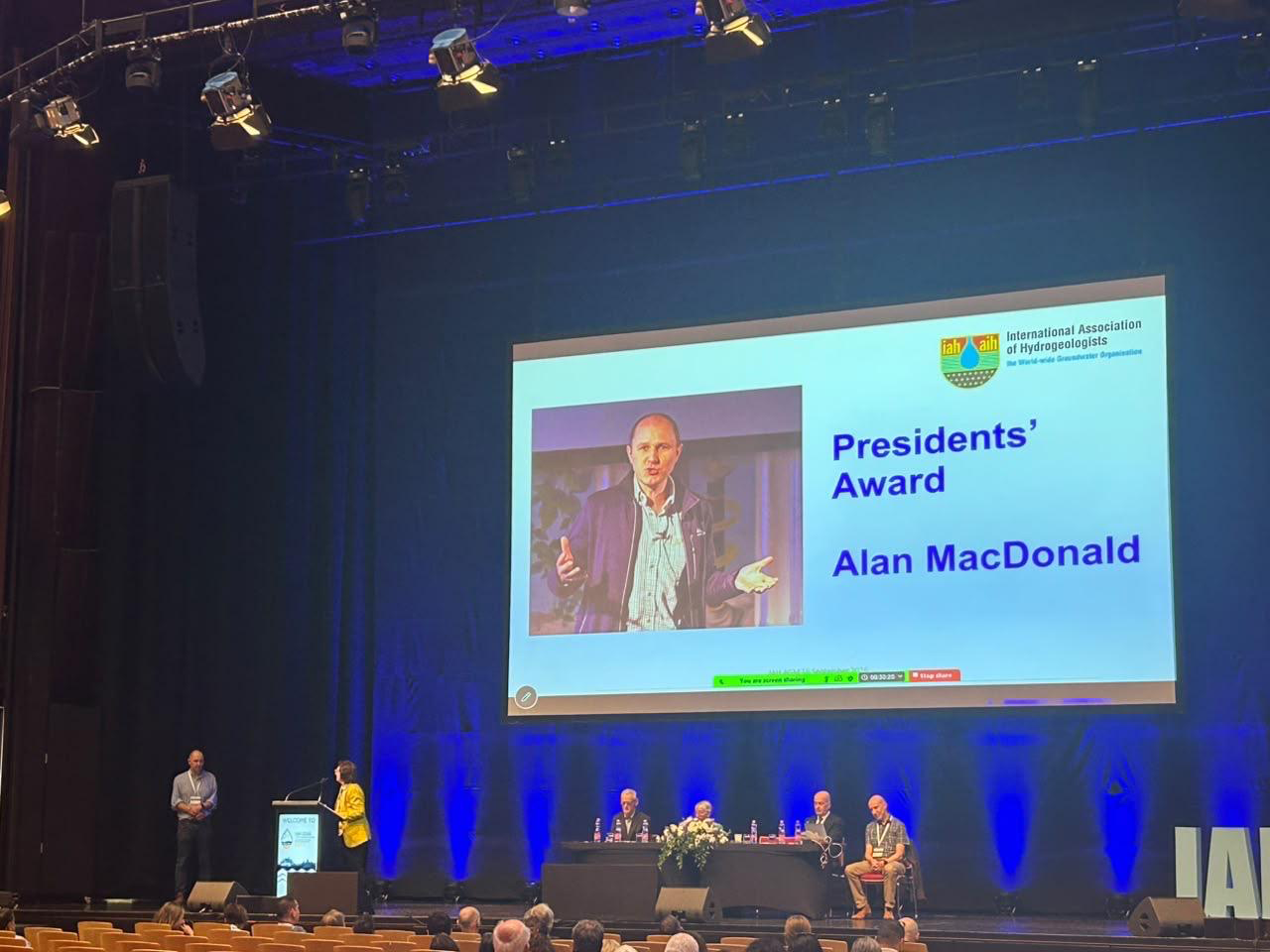
Professor Alan MacDonald presented with Presidents’ Award at 2026 World Groundwater Congress
21/09/2026
The BGS Head of Groundwater has been recognised with this prestigious award by the International Association of Hydrogeologists for his extensive contributions to groundwater science.
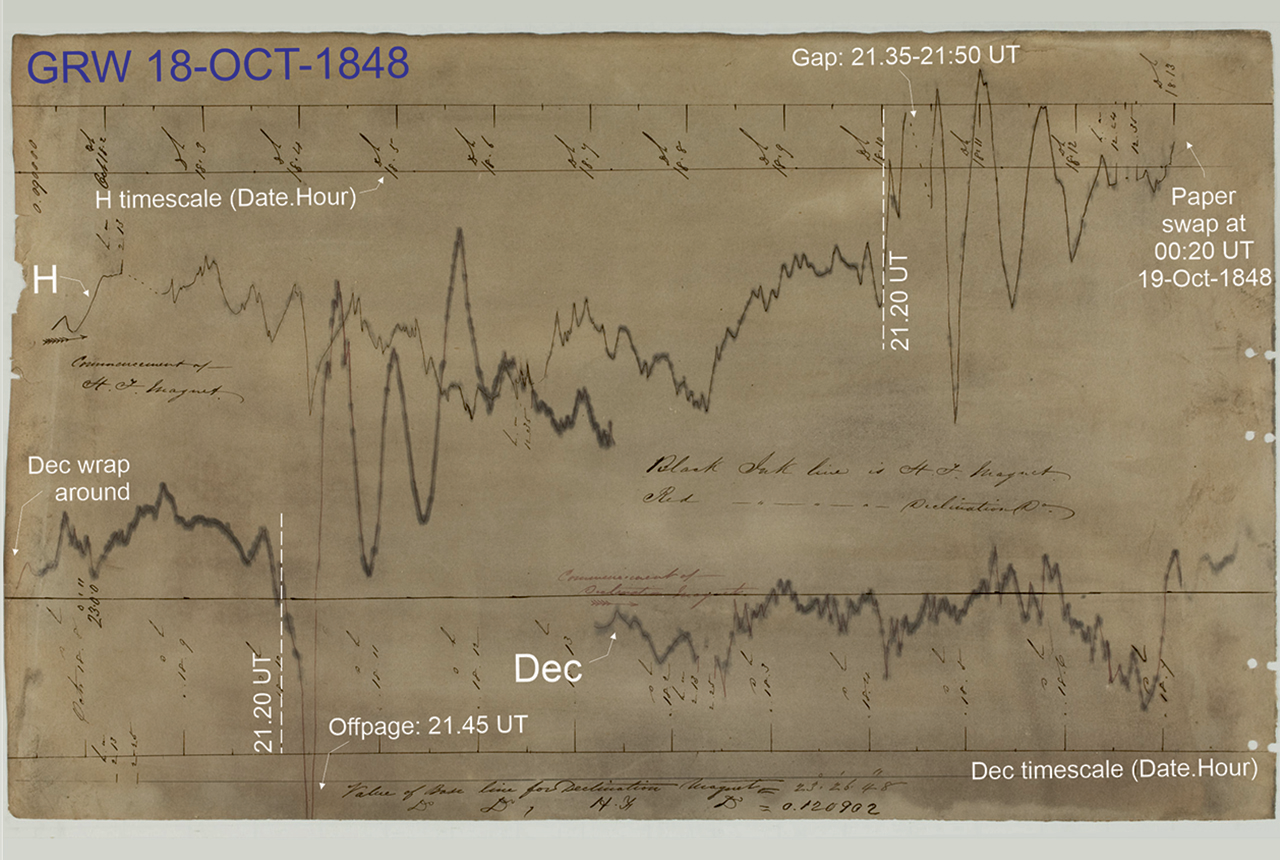
Mystery of one of the earliest recorded space weather impacts solved
17/09/2026
BGS scientists were part of an international team that has solved a 178-year-old mystery surrounding one of the earliest recorded examples of space weather affecting technology.
The Lyell Centre celebrates 10 years of world-leading earth and marine science research
07/09/2026
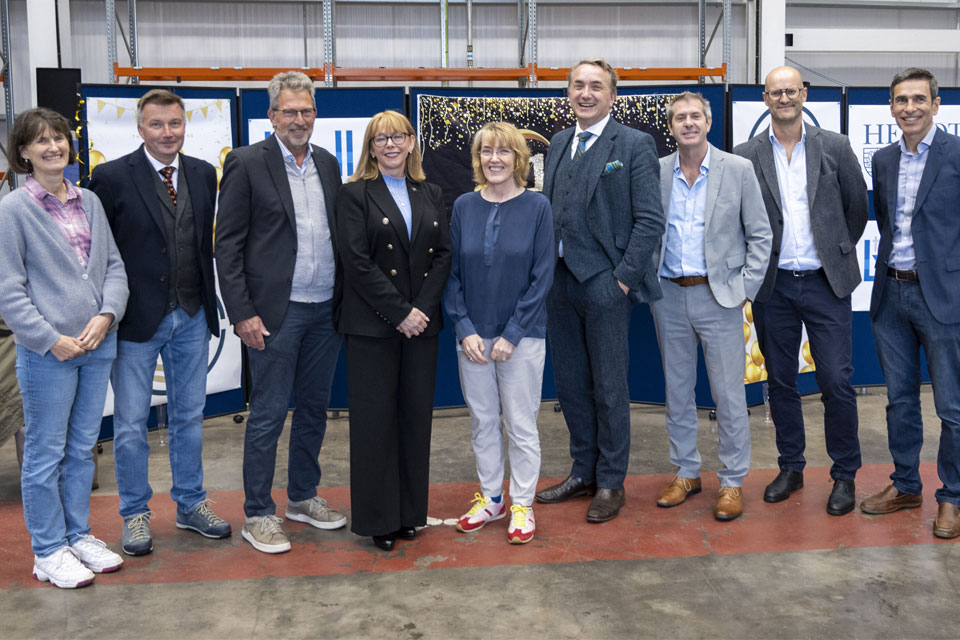
The Lyell Centre for Earth and Marine Sciences, a strategic partnership between Heriot-Watt University and BGS, is celebrating its 10th anniversary, marking a decade of world-leading research, innovation and collaboration in earth and marine sciences.

Demand for data centres presents challenges and opportunities for UK critical mineral supply chains
02/09/2026
Government-backed research finds that vulnerabilities in raw material supply chains must be addressed to secure the critical minerals needed to expand the UK’s digital infrastructure and boost economic growth.

What lies beneath Europe’s sinking ground?
01/09/2026
Land subsidence is becoming increasingly visible across Europe. New research examines how better monitoring, shared data and a deeper understanding of the subsurface can help assess and manage its impacts.

Measuring the environmental impacts of carbon fibre: life cycle assessment
01/09/2026
Undergraduate student Phoebe Brown visited BGS to understand the life cycle of carbon fibre, from primary production to recycling.