

Kamchatka earthquake highlights the advances in tsunami early warning systems
The response to the 8.8 magnitude earthquake in Russia has emphasised how far scientific understanding of tsunamis has come over the last two decades, and the improved mitigation measures that are now in place.
31/07/2025 By BGS Press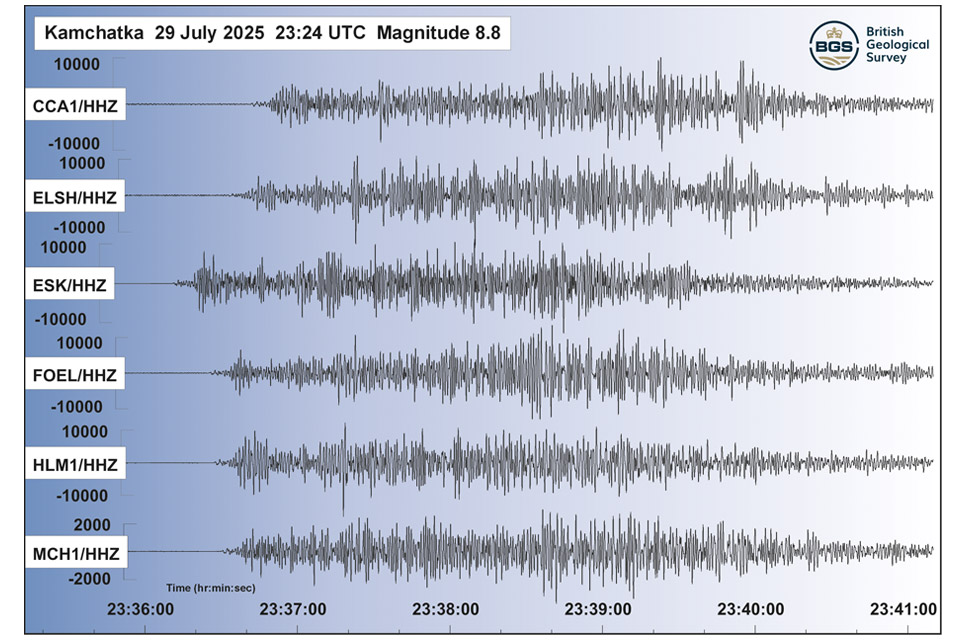

On 29 July 2025, global monitoring systems detected a large earthquake offshore of the Kamchatka Peninsula, Russia, and widespread tsunami warnings were issued across the Pacific region. With a magnitude of 8.8, it was all too easy to think back to the 9.0 to 9.1 magnitude event that devastated Japan in 2011, or the 9.2 to 9.3 magnitude event on Boxing Day in 2004. Thankfully, on this occasion, the impact is believed to be relatively small by comparison.
However, the Kamchatka event did reveal impact of a different nature. Almost as soon as news broke of the earthquake, tsunami warnings were issued and millions of people were told to evacuate across locations at risk, 2 million in Japan alone. This was the result of two decades of research on hazard mitigation following the Boxing Day earthquake in 2004, which claimed the lives of more than 220 000 people in one of the largest disasters, in terms of loss of life, in modern history.
Immediately after the Indian Ocean event in 2004, BGS scientists participated in responsive marine research expeditions that resulted in increased knowledge of sea-bed deformation resulting from the earthquake. Longer-term responses resulted in major advances in understanding earthquake tsunami mechanisms, which have further contributed to disaster risk reduction efforts.
Most significant, in terms of public safety, has been the installation of improved tsunami warnings for coastal communities. Tsunami early warning systems (TEWS) are based on identifying earthquake magnitudes (usually larger than magnitude 7 to 8) that could result in hazardous tsunamis. The Indian Ocean tsunami took two hours to reach the coasts of India, Sri Lanka and Thailand, where around 80 000 people lost their lives. Many of them could potentially have been saved if there had been an operational TEWS in place.
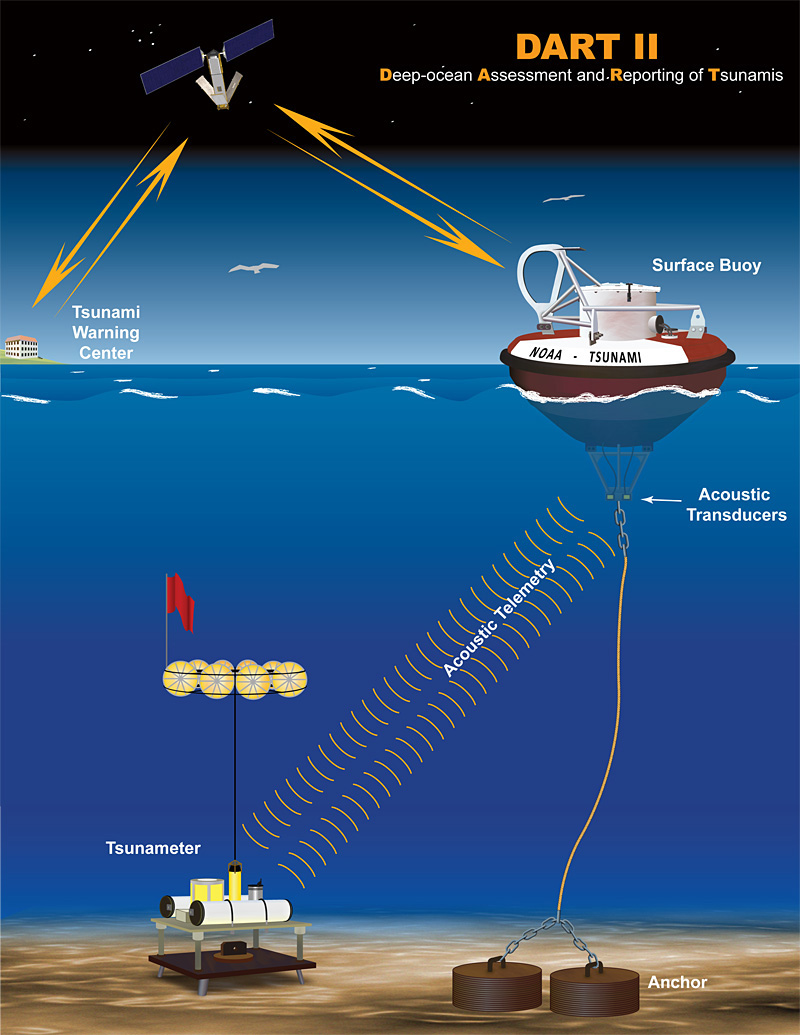
How tsunami wave information in the deep ocean is transmitted to tsunami warning centers. Source: NOAA
In the wake of the catastrophic 2011 Great East Japan Earthquake and Tsunami, further advancements were made in our understanding of tsunami mechanisms, which ultimately led to improved mitigation measures around the world.

Our knowledge base today to plan for and respond to tsunamis is far beyond anything considered possible before the turn of the century.
Following the devastating events of 2004, research has allowed us to be more prepared than ever before to mitigate the threat of this formidable phenomenon. This was highlighted during the Kamchatka earthquake and subsequent tsunamis. TEWS were activated, which led to the evacuation of millions to safety and has ultimately led to a relatively minimal impact being reported.
Prof David Tappin, BGS marine geologist and leading tsunami expert.
Whilst warning systems for earthquake tsunamis are now effectively implemented for major events, there is still the major challenge of designing warning systems for other tsunami mechanisms, such as landslides and volcanic eruptions. Hopefully, with new approaches potentially available through applications such as artificial intelligence, these will become a reality.
Relative topics
Related news
Historic watercolour unearthed on back of Dryburgh geological field map
05/10/2026
A 150-year-old painting of Dryburgh Suspension Bridge and the River Tweed offers an insight into the Scottish Borders landmark shortly after it was built in the 1870s.
Professor Alan MacDonald presented with Presidents’ Award at 2026 World Groundwater Congress
21/09/2026
The BGS Head of Groundwater has been recognised with this prestigious award by the International Association of Hydrogeologists for his extensive contributions to groundwater science.
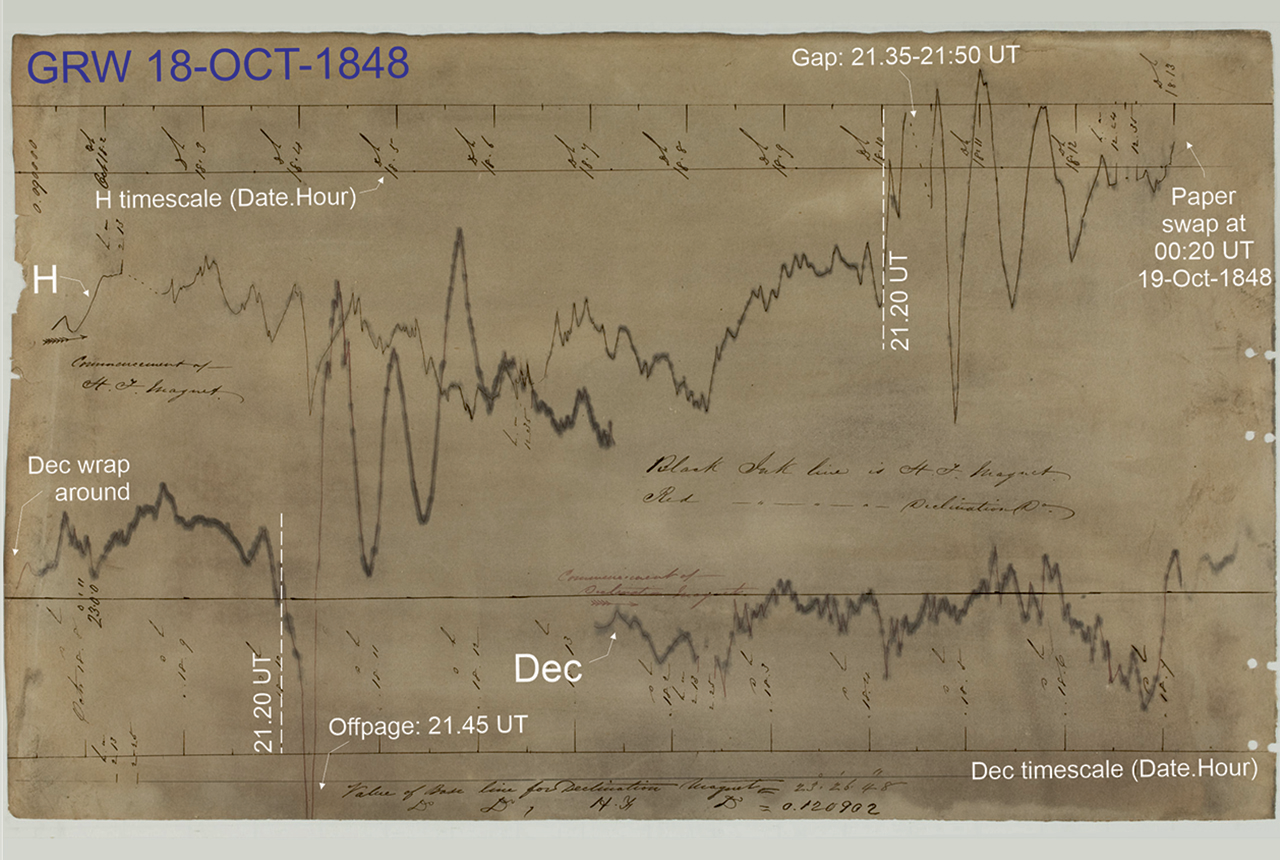
Mystery of one of the earliest recorded space weather impacts solved
17/09/2026
BGS scientists were part of an international team that has solved a 178-year-old mystery surrounding one of the earliest recorded examples of space weather affecting technology.

The Lyell Centre celebrates 10 years of world-leading earth and marine science research
07/09/2026
The Lyell Centre for Earth and Marine Sciences, a strategic partnership between Heriot-Watt University and BGS, is celebrating its 10th anniversary, marking a decade of world-leading research, innovation and collaboration in earth and marine sciences.

Demand for data centres presents challenges and opportunities for UK critical mineral supply chains
02/09/2026
Government-backed research finds that vulnerabilities in raw material supply chains must be addressed to secure the critical minerals needed to expand the UK’s digital infrastructure and boost economic growth.

What lies beneath Europe’s sinking ground?
01/09/2026
Land subsidence is becoming increasingly visible across Europe. New research examines how better monitoring, shared data and a deeper understanding of the subsurface can help assess and manage its impacts.
Secrets of an ancient supervolcano uncovered that change our understanding of England’s geological past
28/08/2026
Scientists have found evidence of a long-hidden link between an ancient buried ash layer in Scandinavia and a concealed supervolcano in eastern England.
BGS research into drought-exposed soils wins award
26/08/2026
A research paper investigating how temperate soils respond to drought has been announced as the winner of the Land Best Paper Award.

UK aquifers robust despite driest July on record
16/08/2026
In a summer experiencing widespread drought, groundwater levels around the country are showing resilience, demonstrating their value as a crucial resource and indicating they could play a more significant role in mitigating the impacts of extreme weather.
New NERC-funded project empowers young people to engage with environmental science
23/07/2026
BGS is part of a new, collaborative project, funded through NERC’s ‘Opening up the environment’ programme, helping the environmental research community become more accessible.
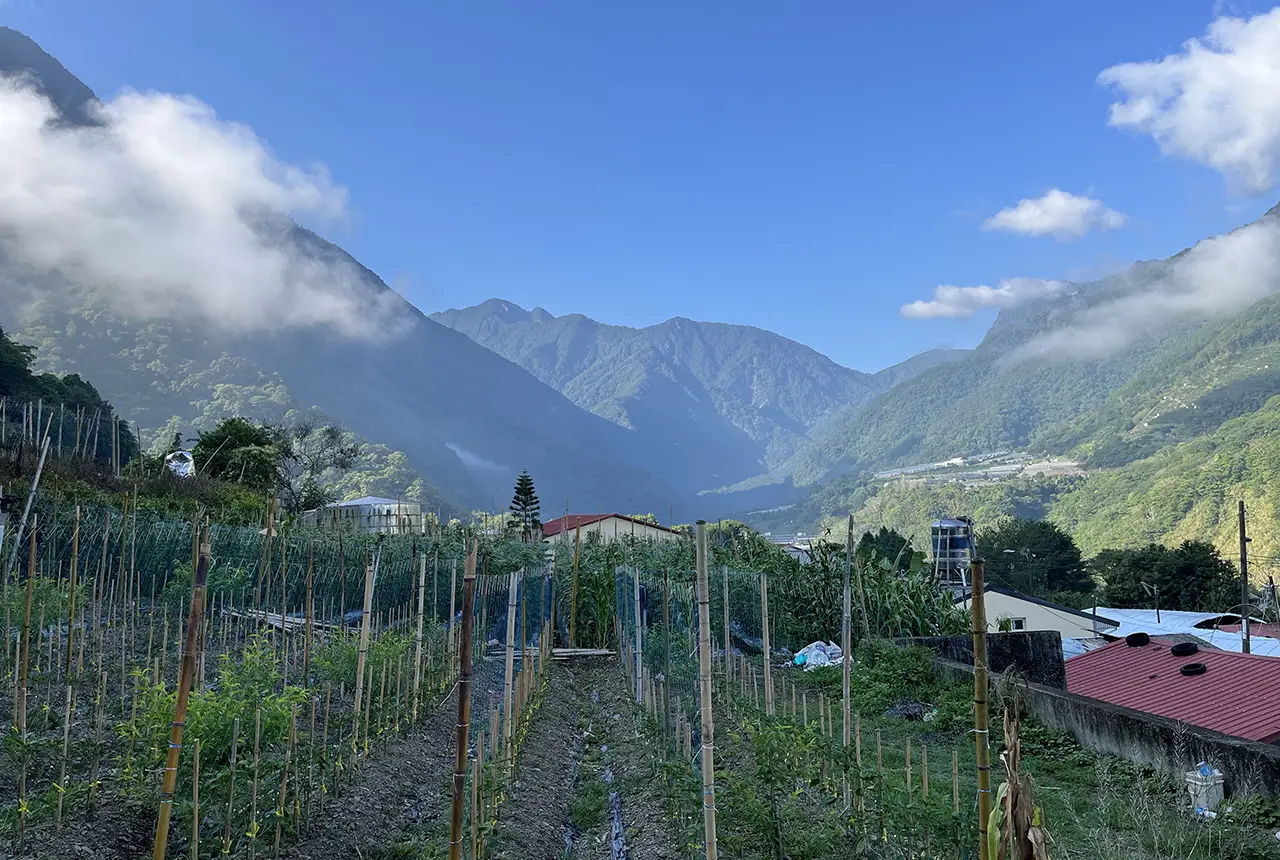
Delving deep into mountains for future water security
16/07/2026
A BGS-led project is using new water-tracing investigation methods, geophysics and modelling to understand how water moves from mountains to the lowlands, helping to improve water security for billions of people.
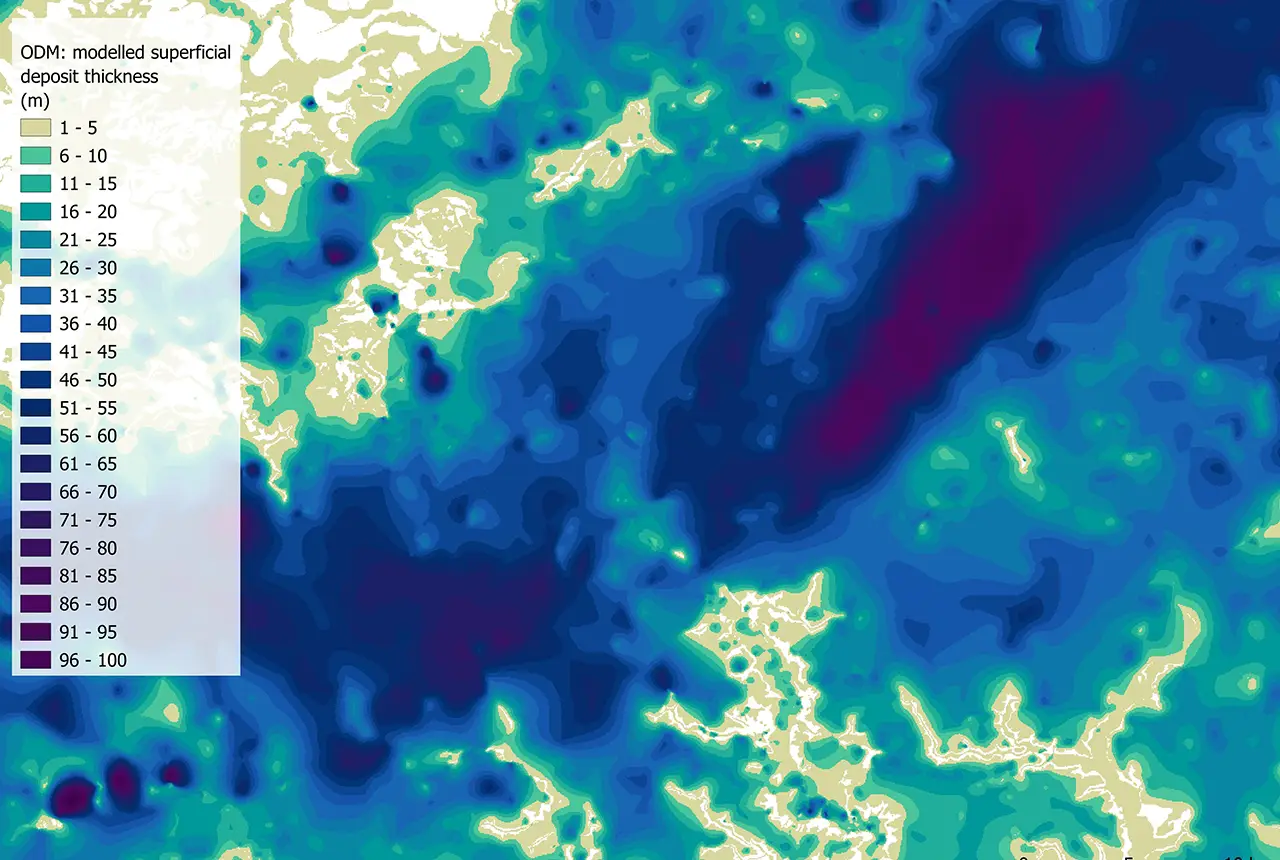
Updated national 3D model will determine the depth to the solid bedrock beneath our feet
13/07/2026
The BGS Superficial Deposit Thickness Model now includes an elevation model of geological rockhead for the first time, providing important data for civil engineers, geoscientists and environmental scientists.