

New research demonstrates stability of phosphate oxygen isotope in lake sediments
The discovery could boost research into past environmental conditions, tracking nutrient pollution and examining the impacts of freshwater management.
29/10/2026 By BGS Press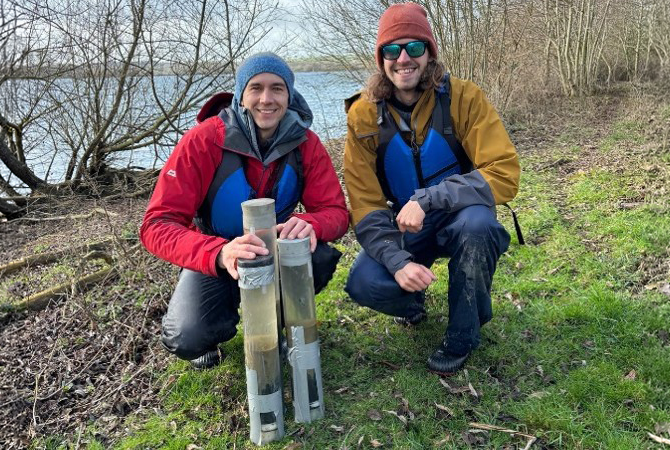

Phosphorus is essential for all living organisms and plays a vital role in global food production. However, too much phosphorus from agriculture, waste water and industry can pollute lakes and rivers, contributing to harmful algal blooms and poor water quality.
Scientists use the phosphate oxygen isotope signature, δ¹⁸O-PO₄, to track how phosphorus moves through ecosystems. Normally, the bonds between phosphorus and oxygen in phosphate ions (PO43-) are very stable and don’t break down easily. This means that the oxygen isotopes within PO43- remain unchanged, unless biological processes are involved. Enzyme-driven reactions can break these bonds and allow oxygen isotope exchange with the surrounding water.
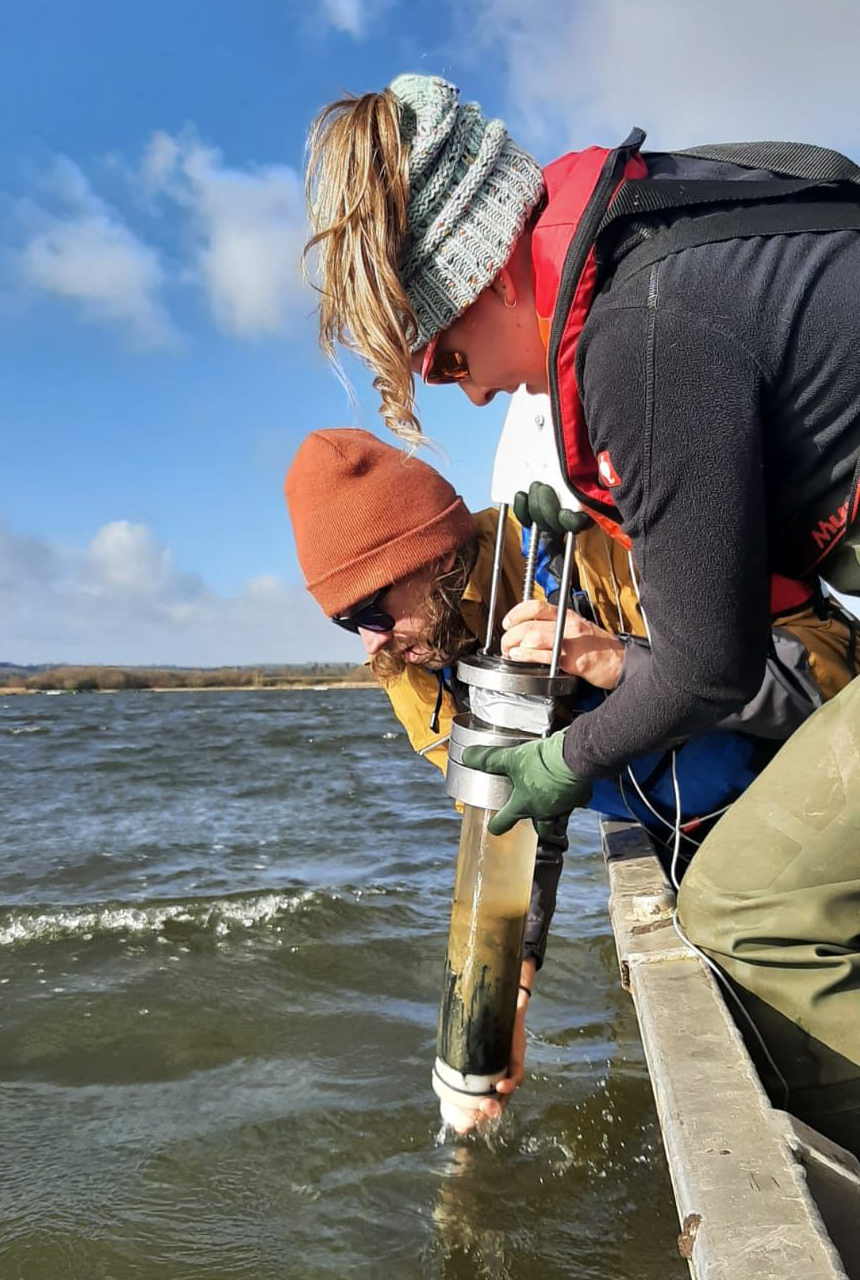
Chris Bengt and PhD mentor Dr Savannah Worne of Loughborough University collecting lake sediment core. BGS © UKRI.
Until now, it has been unclear whether this isotope fingerprint remains stable in lake sediments over long periods of time. Researchers from BGS, Lancaster University, Loughborough University and the University of Copenhagen tested three sediment cores collected from one of the lagoons at Anglian Water’s Rutland Water Nature Reserve, with support from the Leicestershire and Rutland Wildlife Trust. One core was left untreated as a control, while the other two were stored for six months in water with a distinct oxygen isotope value at temperatures of 4 to 7 °C, to test whether δ¹⁸O-PO₄ is stable over time and therefore whether it can be used to reconstruct past phosphorus dynamics in freshwater lakes.
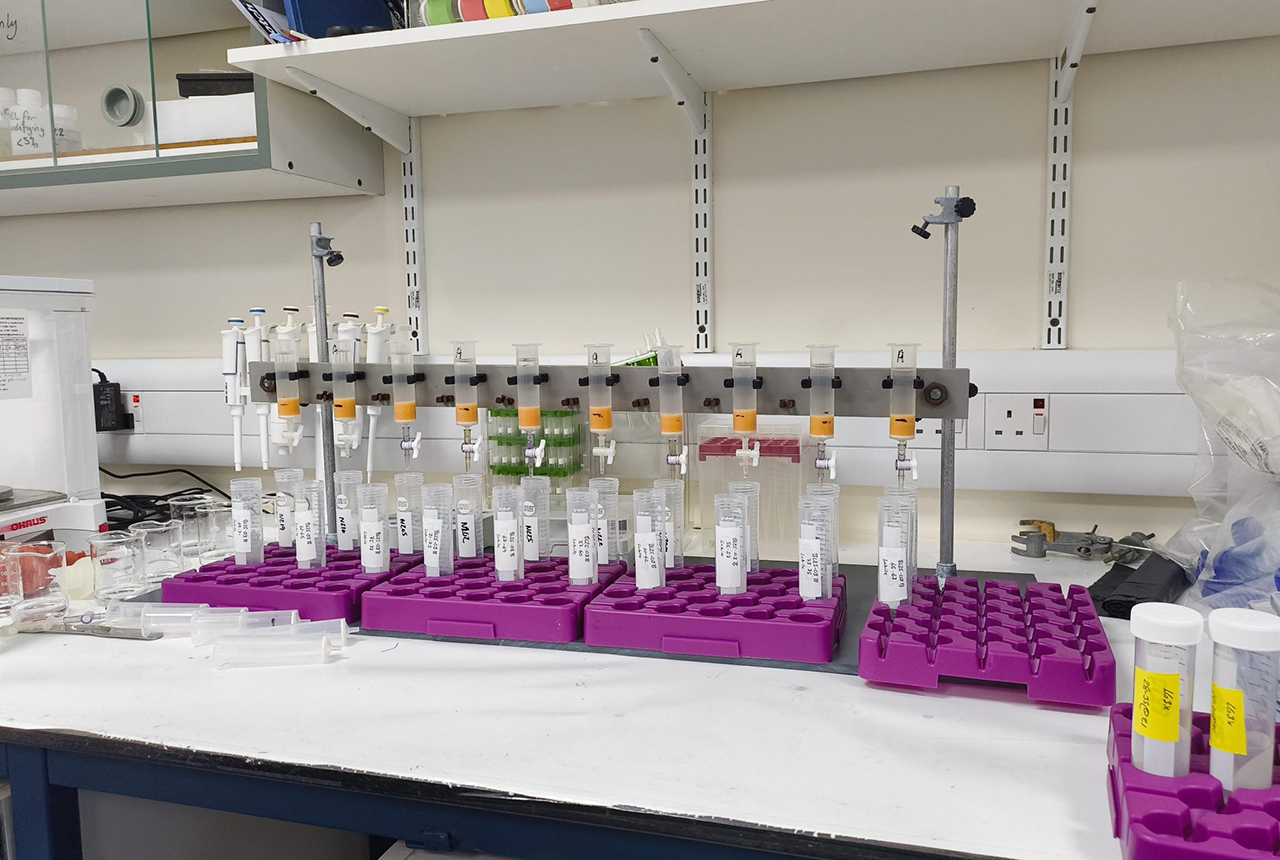
Lake sediment samples undergoing purification ready for isotopic analysis. BGS © UKRI.
The results showed for the first time that δ¹⁸O-PO₄ signatures are preserved in lake sediments, even under conditions designed to encourage phosphorus cycling. The study gives scientists greater confidence that this technique can be used to reconstruct past environmental conditions, track nutrient pollution and support freshwater management.

Understanding how phosphorus has moved through lake ecosystems in the past is essential if we’re to understand these environments effectively in the future. Our results show that phosphate oxygen isotopes can preserve environmental information within lake sediments, which allows us to use this technique to reconstruct past nutrient dynamics and assess long-term environmental change.
Christopher Bengt, BGS-hosted PhD researcher who led the research.
The research paper, ‘Phosphate oxygen isotopes in lake sediments: stability and application for assessing palaeo-nutrient dynamics’, is now available to read.
This work was supported by the Natural Environment Research Council (grant number: NE/S007423/1), with Christopher Bengt’s studentship through the ENVISION Doctoral Training Partnership and the BGS University Funding Initiative.
Relative topics
Related news
New research demonstrates stability of phosphate oxygen isotope in lake sediments
29/10/2026
The discovery could boost research into past environmental conditions, tracking nutrient pollution and examining the impacts of freshwater management.

Measuring the environmental impacts of carbon fibre: life cycle assessment
01/09/2026
Undergraduate student Phoebe Brown visited BGS to understand the life cycle of carbon fibre, from primary production to recycling.
BGS research into drought-exposed soils wins award
26/08/2026
A research paper investigating how temperate soils respond to drought has been announced as the winner of the Land Best Paper Award.

Latest research emphasises climate-related subsidence risk to millions of British homes
11/06/2026
New data from BGS highlights the projected future impact of warmer, drier summers and underlines the need for mitigation measures in susceptible regions.

GeoClimate Shrink–Swell
GeoClimate clay shrink-swell provides information on the projected future change in susceptibility of clay shrink–swell across Great Britain due to climate change.

International science consortium to survey the health, economic value and social importance of Lake Victoria
22/05/2026
The project will replicate the 1927 survey to assess changes in the lake’s health, economic value and social importance.
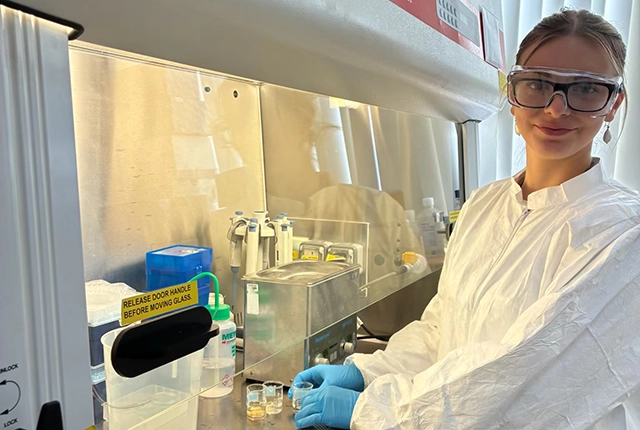
Isotopes and science: my student placement at BGS
08/04/2026
Industrial placements at BGS for undergraduate students give real-life experience of working in laboratories and learning different analytical techniques.
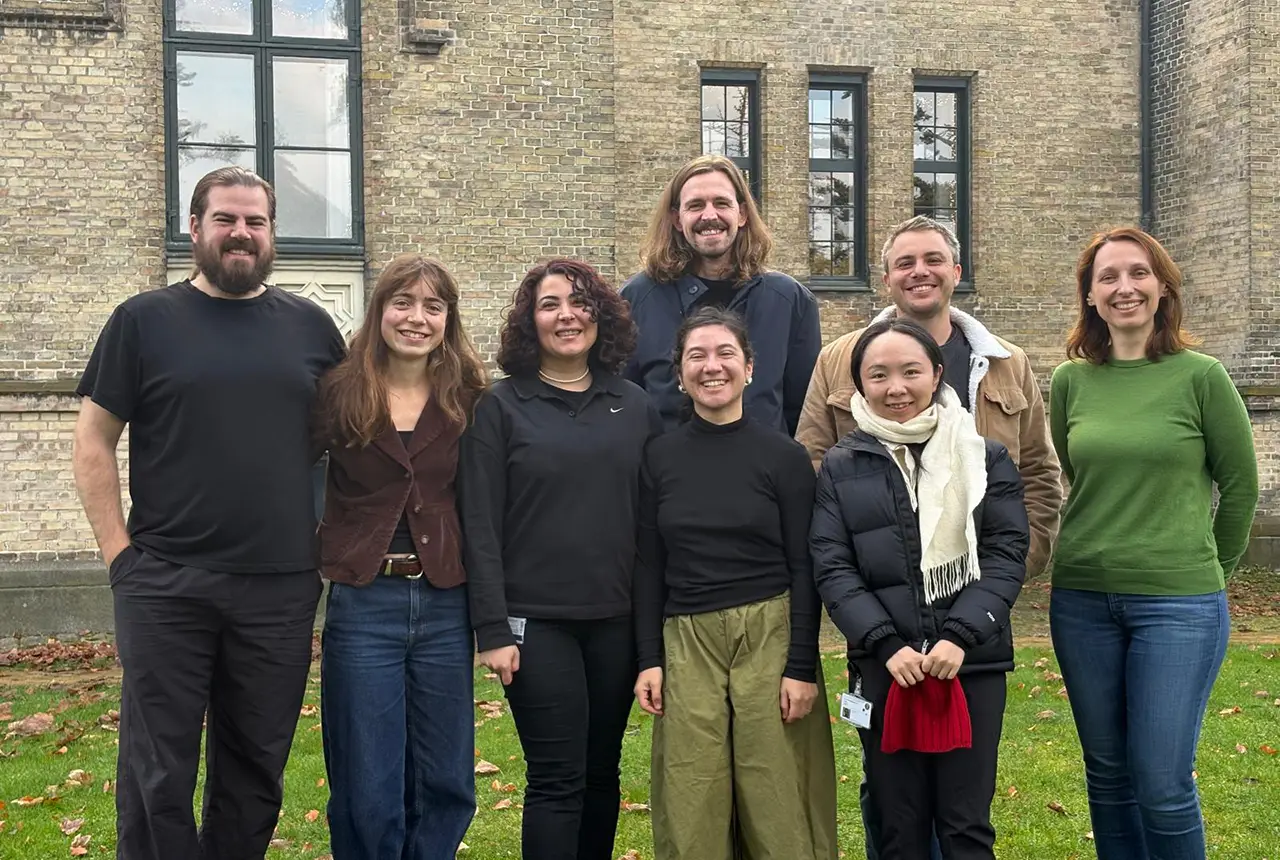
PhD adventures in Copenhagen, Denmark: revealing past recovery processes of tropical forest systems through ancient environmental DNA
12/03/2026
PhD student Chris Bengt visited the University of Copenhagen to carry out very delicate extraction of aeDNA from lake-sediment cores, in the hopes of unlocking the secrets of past volcanic eruptions.

MARC Conference 2025: highlighting the importance of conferences to PhD students
16/02/2026
BGS and University of Nottingham PhD student Paulina Baranowska shares her experience presenting her research on nuclear forensics at her first international conference.

Hole-y c*@p! How bat excrement is sculpting Borneo’s hidden caves
23/12/2025
BGS researchers have delved into Borneo’s underworld to learn more about how guano deposited by bats and cave-dwelling birds is shaping the subsurface.

Esthwaite Water: applying novel approaches to understand lake-water nutrient pollution
19/09/2025
Andi Smith (BGS) and Savannah Worne (Loughborough University) embarked on fieldwork in the Lake District, applying a novel stable isotope method for tracing phosphorus sources.

Scientists uncover secrets of Stonehenge’s mysterious cattle
20/08/2025
Cutting-edge analysis of a Neolithic cow tooth dating back to the construction of the famous landmark provides evidence of Welsh origins.