

Forties at 56: the North Sea discovery that’s informing the energy transition five decades later
Geological samples recovered from the UK’s first giant oil field in the 1970s continue to inform industry and researchers aiming to support the UK’s energy security needs.
26/10/2026 By BGS Press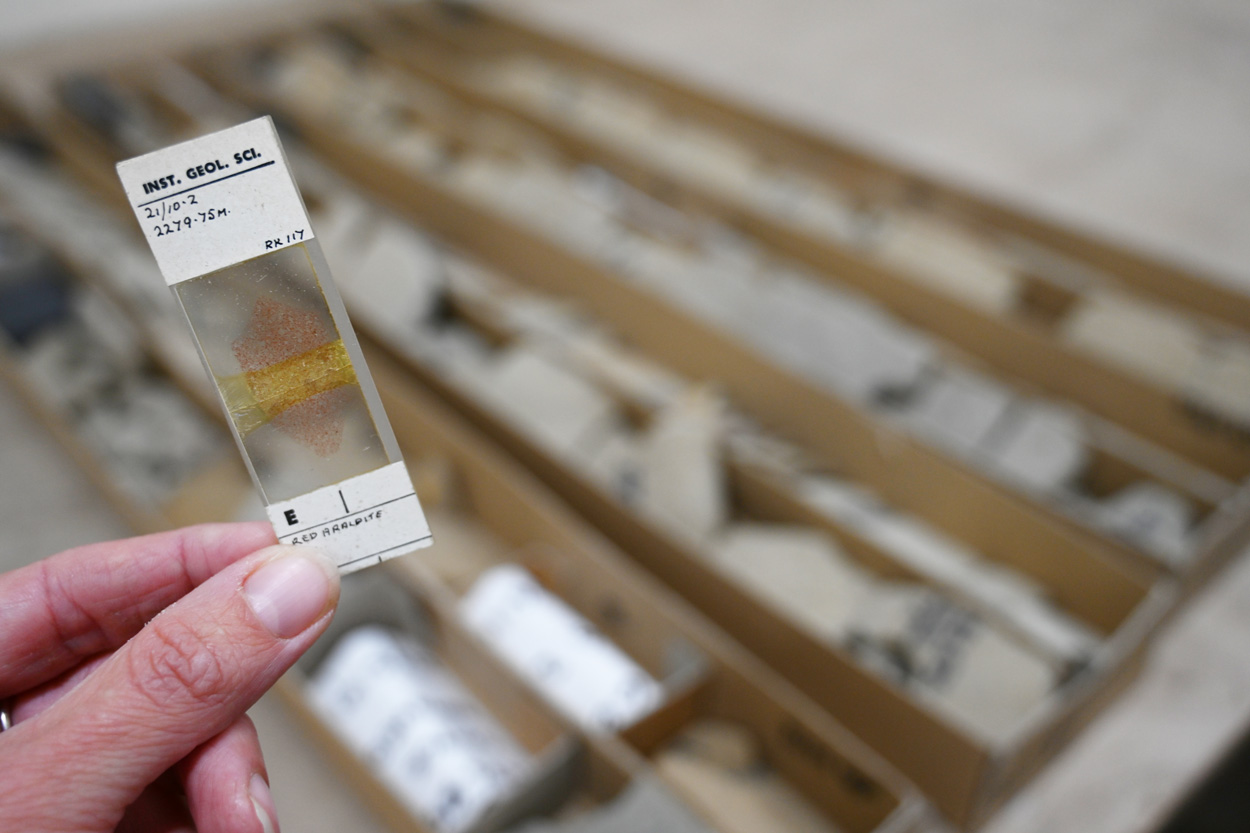

October 1970 represents a landmark moment in the history of the North Sea energy industry, when BP well 21/10- 1 found oil approximately 2135 m deep in Paleocene sandstones around 177 km (110 miles) east of Aberdeen. More than five decades and almost 3 billion barrels of oil later, the Forties field is firmly established as one of the UK’s most significant offshore discoveries, not only because of the hydrocarbons it produced, but also because it acted as a gateway to greater understanding of the geology across the North Sea. The same geology that produced huge amounts of oil in past decades is now being used to support the energy transition and inform offshore infrastructure development.
Exploration and production activity conducted at Forties provided valuable insights into the scale, complexity and economic potential of the subsurface of the North Sea. As exploration activity expanded in subsequent years, geologists, engineers and scientists built a detailed understanding of the North Sea’s sedimentary basins. This included the geological processes that shaped the development of the subsurface alongside its rocks and the fluids they contain. Among the most important of these formations is the Forties Sandstone Member, a thick reservoir sequence formed from sediments eroded from ancient Scottish landscapes and transported into the North Sea millions of years ago.

The multi-role offshore support vessel MS Polar Queen during a Walk to Work service for the riser platform Forties Unity at the Forties pipeline system. Wikimedia Commons.
Much of the knowledge developed during the exploration, appraisal and production of the Forties field was built on physical geological evidence. Core samples, cuttings, borehole records and microscope slides provide direct information about the character of the ancient deep-water marine sediment systems, which were deposited during the Paleocene and Eocene epochs between 40 and 66 million years ago. These samples and associated information have become essential resources for scientific study. Today, many of these materials are preserved within the BGS’s National Geological Repository (NGR) near Nottingham.
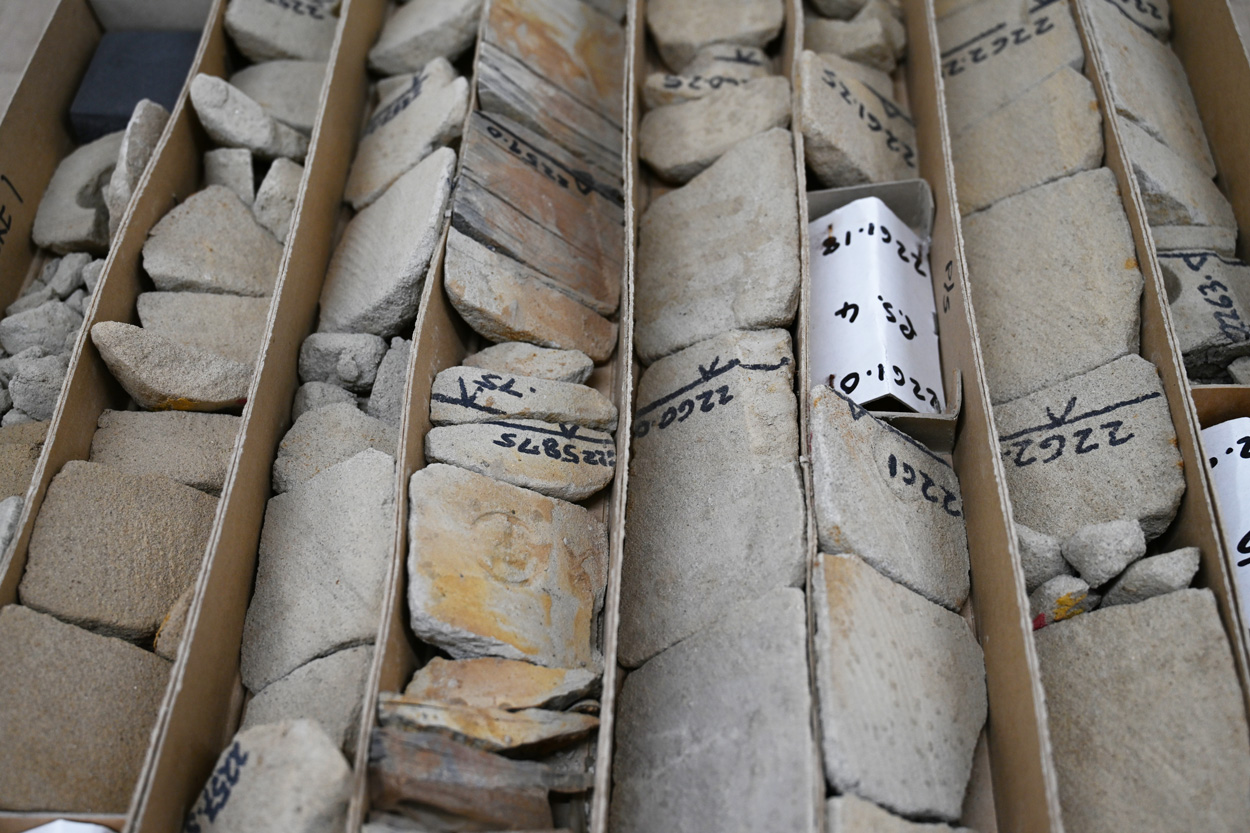
Borehole core in the NGR recovered from BP well 21/10- 6 in 1976. BGS © UKRI 2026.
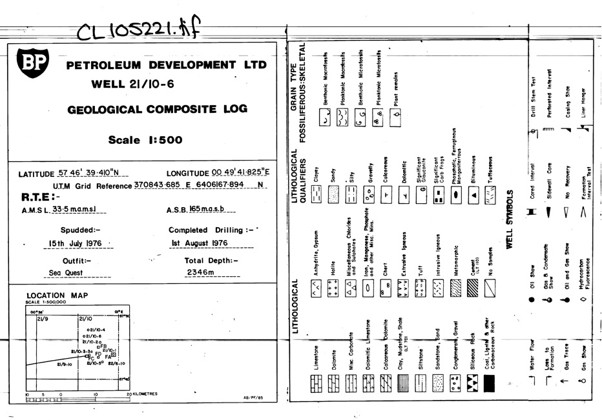
Associated geological composite log for BP well 21/10- 6. BGS © UKRI 2026.
The National Geological Repository
The NGR includes material from wells drilled into the Forties field throughout its history, from the initial ‘discovery’ well 21/10- 1, drilled in 1970, through to more recent infill and late-life production wells drilled to extend the field’s lifespan. These physical materials are stored alongside data and samples from thousands of other offshore and onshore boreholes in the NGR. Collectively, they form part of BGS’s nationally important collection of geological data and physical samples. Today, this value of this collection extends far beyond hydrocarbons, supporting research, offshore infrastructure and evidence-based decision making across the UK Continental Shelf.
In total, the NGR collection holds around 16 million specimens, including over 600 km of onshore and offshore geological drillcore from the UK and its continental shelf. The NGR also includes examination facilities and analytical laboratories such as core scanning, allowing physical material to be used extensively by industry and research, whilst also supporting university teaching. The advanced understanding underpinned by the NGR collections provides an invaluable window into the geology beneath the UK and its surrounding seas. The value of these collections has increased with age, and enhanced through the application of modern characterisation technologies and research techniques. A recent economic study found that the NGR had saved the UK economy £1.5 billion in avoided drilling and analysis costs for major energy and infrastructure projects over the last 20 years alone. Researchers continue to study the cores and samples to improve their understanding of how rocks store and transmit fluids, how reservoirs evolve through time and how subsurface systems can be characterised with greater confidence.
Societal and economic demands of the subsurface have also evolved over time. Geological data acquired during the early decades of North Sea exploration are now being used to support a wide range of contemporary challenges and are increasingly relevant to a growing range of subsurface technologies that support the energy transition. As an example of the enduring value of these samples, the NGR has received requests from industry and academia to access drillcore from Forties field wells in every decade since they were first made available through the national collection.
Future use of the Forties field
The Forties sandstone reservoir forms part of a regional saline aquifer system and its highpermeability and porosity mean that it has long been identified as a possible carbon capture and storage site. Indeed, the Forties field area was offered for licencing in the North Sea Transition Authority’s second carbon storage licencing round in December 2025. If a carbon storage licence is issued at the Forties field, detailed technical studies will be undertaken to assess its suitability for storage of carbon dioxide (CO2). The process would lead to an eventual transition from oil production to CO2 storage in support of the UK’s net zero targets. Further research has also indicated that the wider North Sea oil fields could provide national-scale green hydrogen storage potential. So whilst the long-term future of oil extraction from the Forties field may be uncertain, it is clear that this important geological site still has a crucial role to play in the supporting the UK’s future energy security needs.

The National Geological Repository is one of the UK’s most valuable scientific assets, providing a vast library of geological information collected over generations. These collections help unlock solutions to some of society’s biggest challenges, from energy security and sustainable water resources to climate resilience and infrastructure development. Forties field is a clear example of the evolving, yet enduring, importance of the subsurface to society. The NGR collections continue to provide an opportunity for research and industry to uncover future scientific discoveries and innovations as new digital technologies, analytical techniques and data-driven approaches emerge, for the benefit of generations to come.
Emma Bee, Head of the BGS National Geological Data Centre.
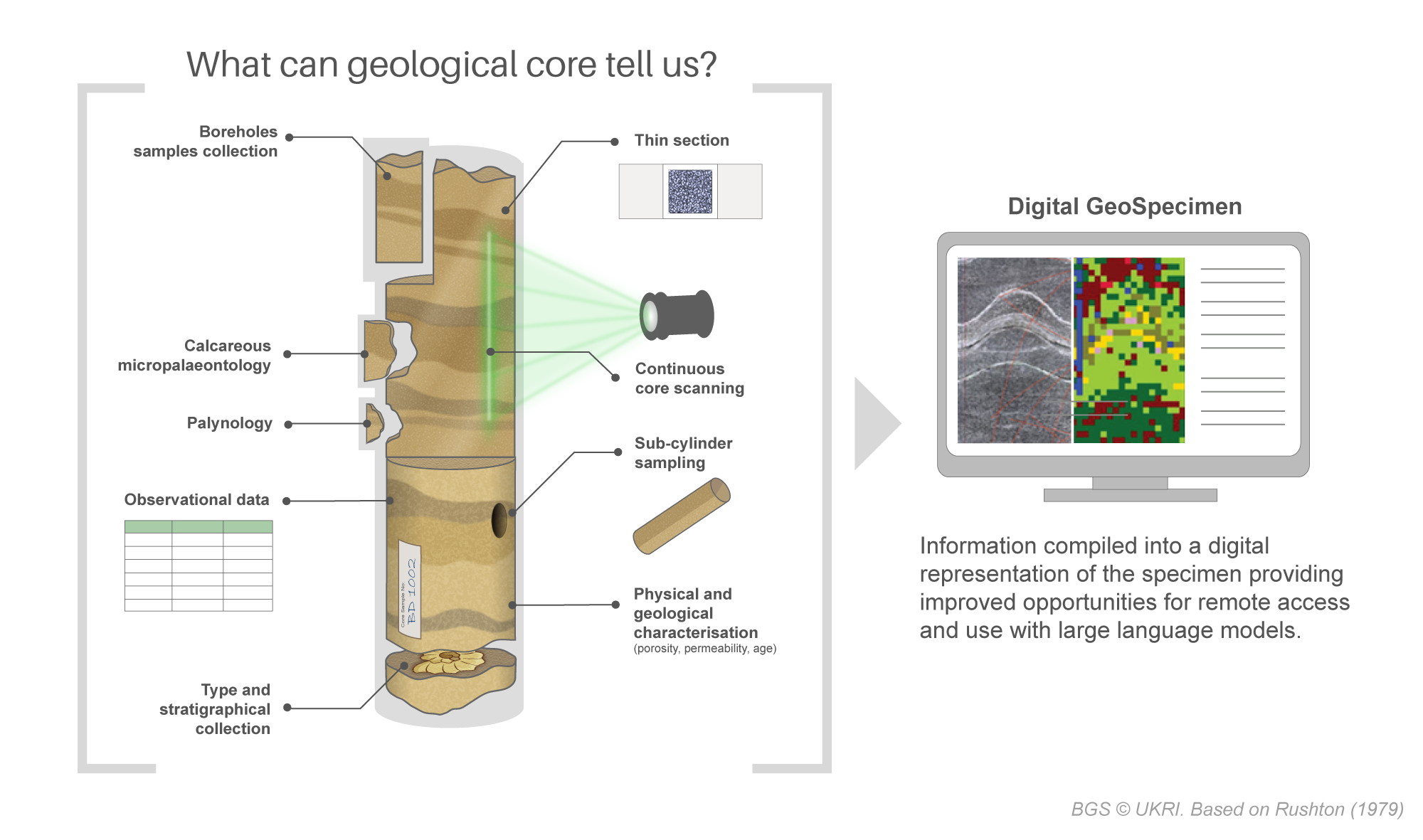
What can geological core tell us? BGS © UKRI. Based on Rushton (1979)
The North Sea’s legacy
Data, knowledge and expertise provided by BGS support research and assessment activities related to carbon storage, underground hydrogen storage, compressed-air energy storage and the repurposing of depleted hydrocarbon fields for natural gas storage. Geological information is also fundamental to long-term investigations into the safe geological disposal of radioactive waste, where a detailed understanding of rock properties and geological history is essential. The NGR’s collections are today being used to address challenges that could not have been foreseen when many of the materials were initially acquired.
In this way, the legacy of Forties and data from across the North Sea extends far beyond the oil and gas fields themselves. The samples and records collected during their discovery and development have become part of a re-usable national asset that continues to support science, industry and Government decision making across multiple sectors. History suggests that our societal needs will continue to evolve in the decades ahead. Given the expense of onshore and offshore drilling, this underlines the critical importance of maintaining a national collection like that held in the NGR.
More than 50 years after geologists first encountered the Forties reservoir beneath the North Sea, the field remains a powerful reminder that the value of geological information spans generations. While the technologies and research questions may change, the importance of high-quality geological data endures, helping future users unlock new insights from the same rocks that transformed our understanding of the North Sea more than half a century ago.
Further information
Find more information about the NGR and accessing the collection.
Related news
Forties at 56: the North Sea discovery that’s informing the energy transition five decades later
26/10/2026
Geological samples recovered from the UK’s first giant oil field in the 1970s continue to inform industry and researchers aiming to support the UK’s energy security needs.

New project mapping UK Continental Shelf provides boost to offshore infrastructure and development
22/10/2026
BGS is leading a three-year project funded by The Crown Estate to develop a new suite of seabed geology datasets and reports, providing crucial information for offshore developers about the seabed around the UK.
Historic watercolour unearthed on back of Dryburgh geological field map
05/10/2026
A 150-year-old painting of Dryburgh Suspension Bridge and the River Tweed offers an insight into the Scottish Borders landmark shortly after it was built in the 1870s.

Demand for data centres presents challenges and opportunities for UK critical mineral supply chains
02/09/2026
Government-backed research finds that vulnerabilities in raw material supply chains must be addressed to secure the critical minerals needed to expand the UK’s digital infrastructure and boost economic growth.
Coastal retreat in the past: the legacy of truncated drumlins
07/08/2026
The UK’s coasts have been responding to changing sea levels for thousands of years, but some of the best evidence of those changes now lies hidden beneath the waves.

BGS strengthens scientific links with Icelandic partners through Research and Innovation Scotland initiative
06/08/2026
BGS researchers recently visited Iceland as part of a project developing international partnerships and identifying opportunities for future collaborative research.
Cheshire Geoenergy Observatory releases key geological datasets for UK thermal energy storage scheme design
09/07/2026
A new report and data packs from BGS will provide a unique resource for scientists working on the geology and hydrogeology of the Sherwood Sandstone Formation, an important aquifer and reservoir rock.

Geological research in North Sea helping to safeguard subsea cables
06/07/2026
Subsea power and telecommunications cables are critical to the UK’s energy infrastructure and global connectivity, yet they remain vulnerable to damage from ship anchors, fishing activity and natural hazards.
UK and Philippines scientists investigate natural hydrogen generation processes at atomic scale
22/06/2026
BGS researchers were granted access to use the Diamond Light Source facility in order to study hydrogen in light brighter than the sun.

Shortage of end-of-life materials presents challenge to UK critical minerals security
17/06/2026
A new report by the UK Critical Minerals Intelligence Centre reveals insufficient end-of-life material stocks present a supply risk over the coming decade, but offer significant long-term potential to meet critical mineral demand through recycling.
UK geothermal catalogue receives update
16/06/2026
BGS releases the second digital version of the UK geothermal catalogue of subsurface temperature and rock thermal conductivity measurements and heat flow calculations.
Scientists make new discovery in the history of the Giant’s Causeway
15/06/2026
New research is changing our scientific understanding of the formation of one of the UK’s most iconic landmarks and has revealed that Northern Ireland’s volcanic past occurred over a much shorter period than previously thought.