

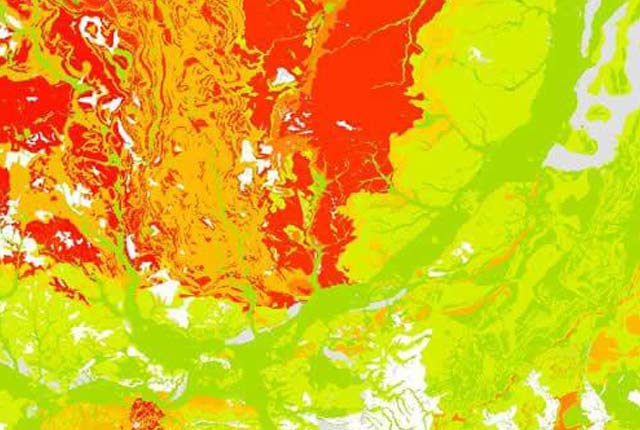
BGS Civils: strength
- 1:50 000
- Great Britain
- Premium
The BGS Civils strength theme provides information on zones of rock strength and the local factors controlling it as part of a suite of GIS layers for different engineering parameters. The strength of rock material depends on composition, density, the strength of individual components within the rock and how these components are bound together. The strength of the rock mass is affected by mechanical discontinuities such as fissures, joints, shears and faults.

Key information
- Scale:
- 1:50 000
- Coverage:
- Great Britain
- Availability:
- Premium
- Price:
BGS Civils bundle (all eight layers) £0.58 per km2
BGS Civils individual layers £0.35 per km2
Subject to number of users, licence fee and data preparation fee.
- Format:
- GIS line and polygon data. (ESRI, MapInfo, others available by request.)
- Uses:
- Local-level use
- Themes:
- Built environment, Engineering geology
- Sector:
- Construction and planning, Infrastructure
BGS Civils is a suite of national maps of engineering properties based on geological data and the digital 1:50 000-scale geological map — BGS Geology 50K.
It comprises eight layers:
- bulking volume
- corrosivity (ferrous)
- discontinuities
- engineered fill
- excavatability
- foundation conditions
- strength
- sulfate/sulfide
The primary goal of the product is to provide the key engineering characteristics of the geology of Great Britain to professional users who need simple and rapid access to such information. You might be planning pipeline routes avoiding difficult ground conditions, calculating tender costs for trench excavation or you might need knowledge of ground properties in order to plan your daily activities.
The data is provided as GIS shapefiles that are available to licence individually or as a bundle to meet your own requirements.
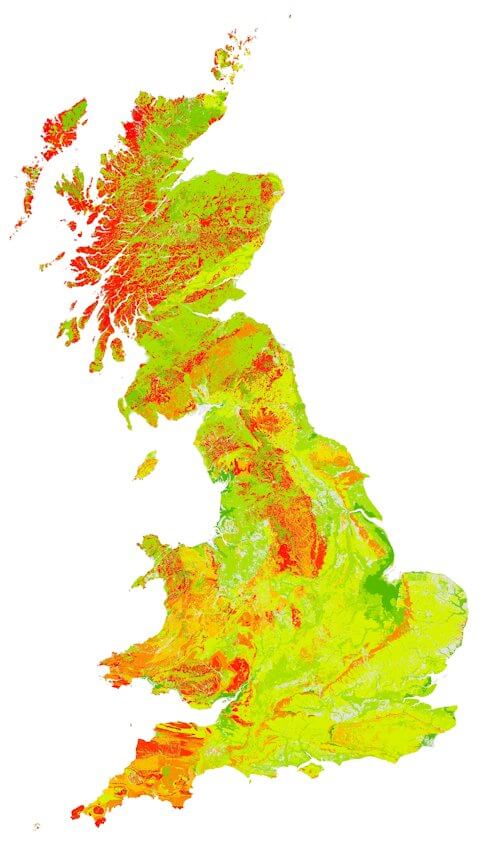

BGS Civils: strength coverage. BGS © UKRI – Contains OS data © Crown copyright 2020
This dataset
This theme provides information on zones of rock strength and the local factors controlling it as part of a suite of GIS layers for different engineering parameters.
The spatial model covers England, Scotland and Wales at 1:50 000 scale and is based upon archive data of engineering soil strength from the National Geotechnical Properties Database coupled with the BGS Geology 50K dataset.
What is strength?
The strength of rocks and soils is an important factor in all engineering activities.
The strength of rock material depends on composition, density, the strength of individual components within the rock and how these components are bound together (i.e. interlocking grains or cementation). The strength of the rock mass is affected by mechanical discontinuities such as fissures, joints, shears and faults.
Alteration, such as weathering of the material and mass, also causes changes in strength, usually weakening the material. However, weathering can also lead to the formation of ‘hardpans’, which strengthen the soil or rock. The presence of water and any increased pore-water pressures would also change the strength of the rock.
Definition
The description and classification of strength depends on the type of deposit. In engineering geology, earth materials are split into two groups: soils and rocks.
Soil
Soil is an aggregate of mineral grains or organic material that can be separated by gentle means such as agitation in water. Soil behaviour is determined by the particulate nature (specifically the particle size, shape and mineralogy), water content and material density. The mass properties of a soil are largely influenced by its material characteristics.
The principal soil types are clay, silt (fine soils), sand, gravel (coarse soils), cobble and boulder (very coarse soils). Whether the soil is classified principally as fine or coarse is dependent upon the behaviour of the material. Discontinuities affect the mass strength of some soils, primarily clay and silt.
Rock
Rock is an aggregation of minerals connected by strong and permanent forces. The behaviour of the rock material depends on the material characteristics. The behaviour of the rock mass depends on a combination of the material characteristics and the discontinuities including spacing, roughness, persistence, filling, orientation and the number of sets.
Classification
Definitions of the engineering strength of rocks and fine soils are provided as minimum, maximum and typical strengths; definitions of the engineering strength of coarse soils are provided as minimum, maximum and typical densities. This tri-fold classification allows for the wide range of variation encountered within some stratigraphic units. The classification used in the dataset is based upon the British Standard 5930 (1999) code of practice for site investigation (modified 2003 and 2009).
You may also be interested in
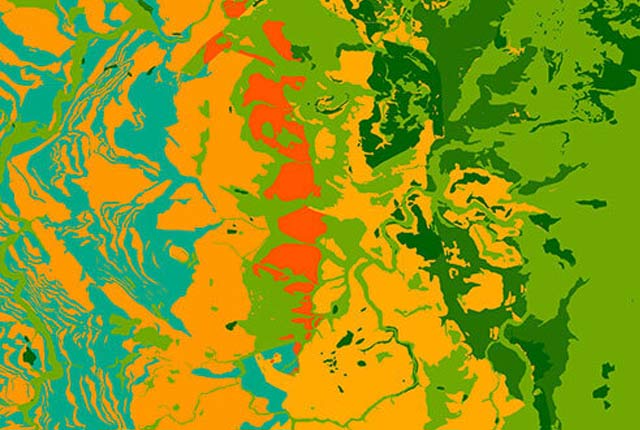
BGS Civils: bulking volume
BGS Civils is a suite of national maps of engineering properties based on geological data and the digital 1:50 000 scale geological map – BGS Geology 50k.
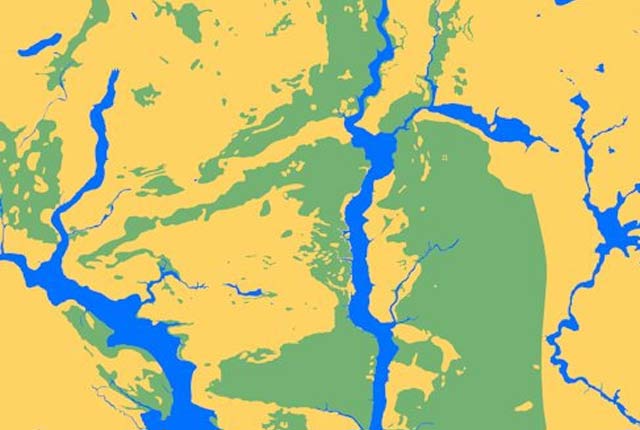
BGS Civils: corrosivity (ferrous)
The BGS corrosivity dataset is a GIS layer supporting the management of underground iron assets that has been created in response to the growing awareness of the cost of maintenance of structures such as pipelines and building foundations.
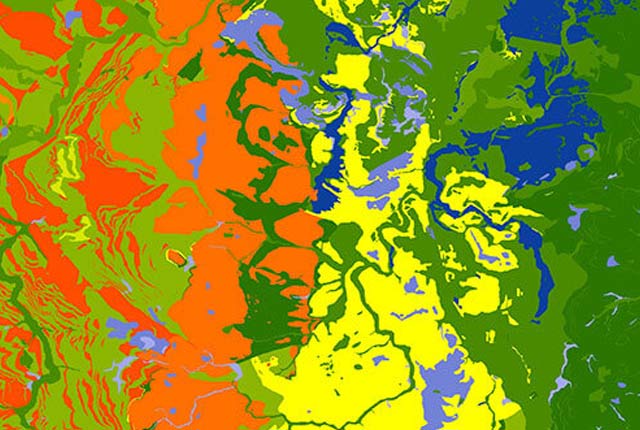
BGS Civils: discontinuities
This theme provides information on the discontinuities in bedrock and superficial deposits as part of a suite of GIS layers for different engineering parameters.
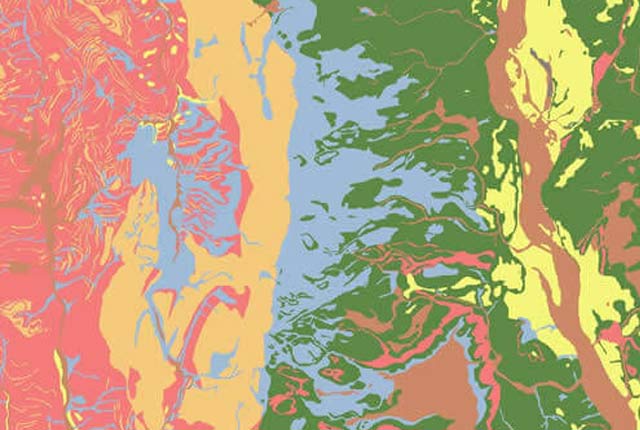
BGS Civils: engineered fill
This theme provides information on the suitability of a geological material to be used as engineered fill.
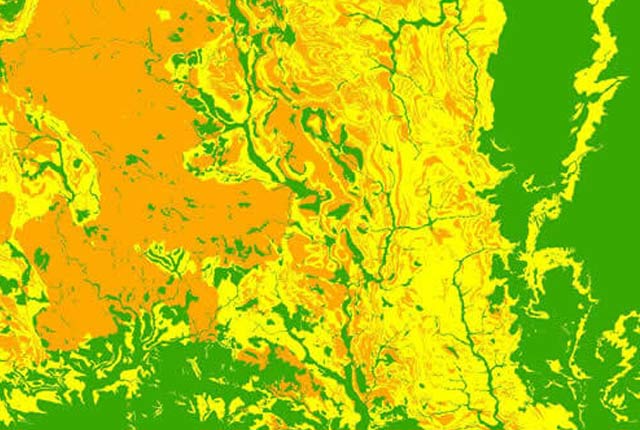
BGS Civils: excavatability
This theme provides information on the excavatability of geological deposits at surface.
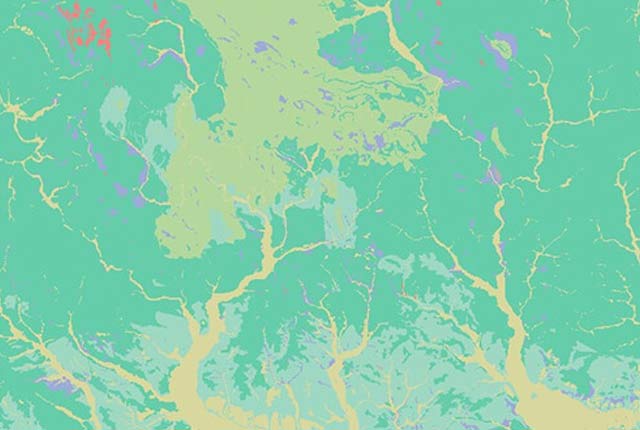
BGS Civils: foundation conditions
This theme provides information on the suitability of a geological material for foundations as part of a suite of GIS layers for different engineering parameters.
BGS Civils: sulfate/sulfide potential
The BGS Civils: sulfates and sulfides dataset is a GIS layer that supports the management of underground assets
Infiltration SuDS map
The BGS Infiltration SuDS map dataset is suitable for those involved in the design of sustainable drainage systems and approving SuDS planning applications.
Superficial deposit thickness model
The superficial deposit thickness model shows the depth of the bedrock surface below unconsolidated deposits

Permeability
Permeability data is often used in studies of groundwater. Our permeability information is based on BGS Geology 50K data.