

New research highlights significant earthquake potential in Indonesia’s capital city
Research reveals that a fault cutting through the subsurface of Jakarta could generate a damaging earthquake of high magnitude.
04/11/2025 By BGS Press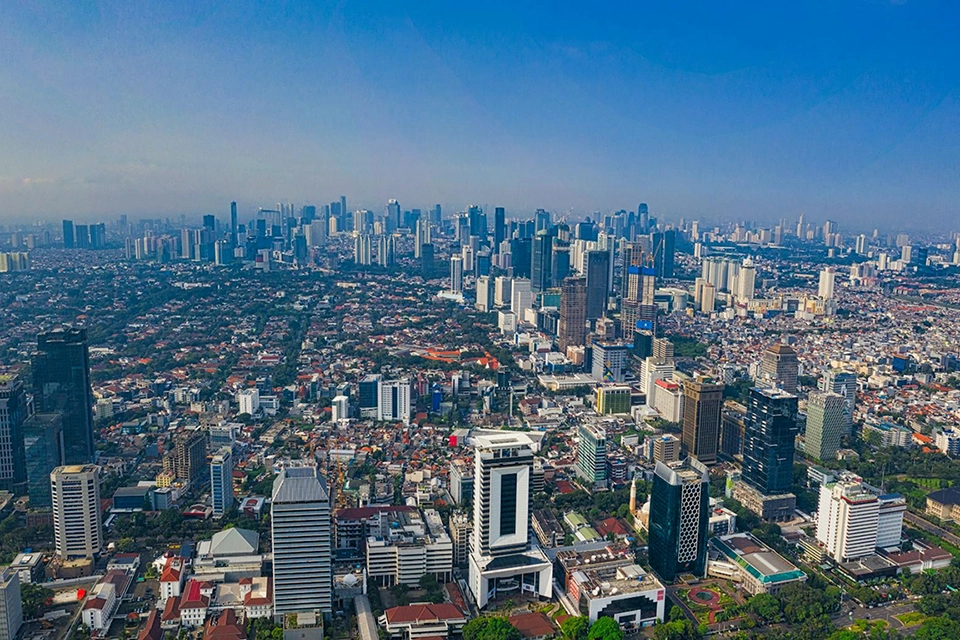

The Jakarta Fault runs beneath the southern part of the capital city of Indonesia, Jakarta. Jakarta is one of the largest cities in the world, with a population exceeding 30 million in the metropolitan area. New research by BGS and Indonesian colleagues shows that this fault could generate a magnitude 6.5 earthquake, which would expose a large number of people as well as significantly important economic infrastructure to strong ground shaking.
Between 2019 and 2023, Indonesian scientists from the Institut Teknologi Bandung (ITB), National Research and Innovation Agency (BRIN) and the Geospatial Information Agency (BIG) collected ground movement data across the Jakarta Fault from a dense network of global navigation satellite systems (GNSS). These measurements revealed slow, millimetre-scale changes in ground movement occurring across the fault, which indicated energy accumulating that will need to be released, potentially in a future earthquake.
Geophysical modelling shows that ground movement is accruing on the fault at 3.2 mm per year, with the fault locked or ‘stuck’ down to at least 7.2 km. This accumulation has been happening for at least 210 years, which means that releasing it all now would result in a magnitude 6.5 earthquake.

While magnitude 6.5 earthquakes are not uncommon in Indonesia, they mostly occur under the ocean. The danger here is that the earthquake could occur in the middle of a densely built-up area like Jakarta, which means a much higher level of risk to life and infrastructure.
Dr Ekbal Hussain, remote sensing geoscientist at BGS and research co-leader.
The Jakarta Fault is a relatively newly recognised major tectonic fault on the Indonesian island of Java. It is a part of a broader fault system that cuts across most of Java, which, with a population of 157 million people, is the most densely populated island on Earth. Geophysical surveys conducted by BGS in the 1970s and 1980s, in collaboration with the Indonesian Geological Research and Development Center, helped identify this major tectonic structure for the first time, but its earthquake potential has remained unclear until now.
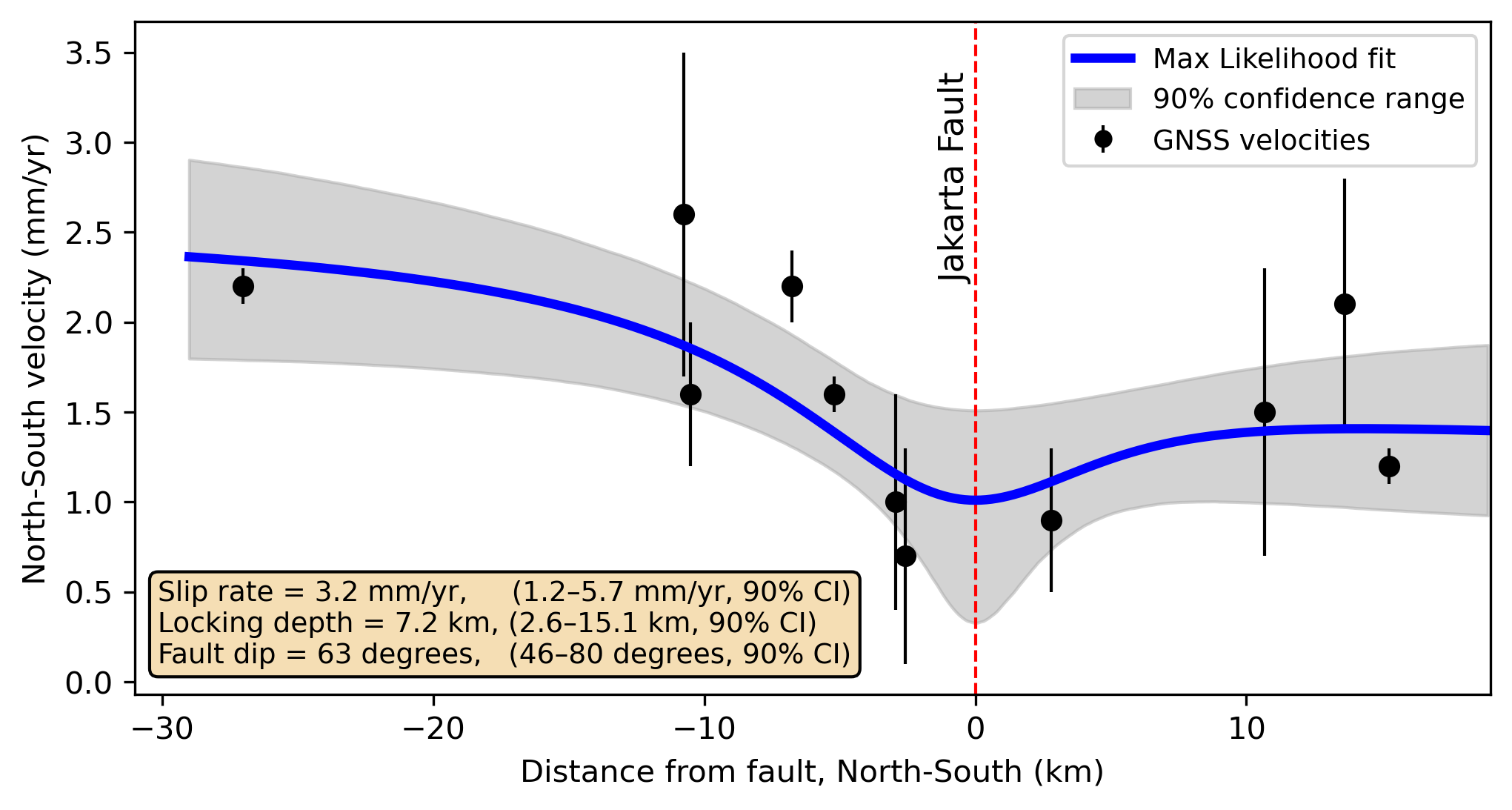
The ground movements across the Jakarta Fault were modelled to estimate the energy storage rate (slip rate) on the fault. Source: Gunawan et al., 2025.
This research forms part of strategic UK/Indonesia research partnerships on geological hazard solutions, as outlined in a recently published White Paper, UK/Indonesia partnerships for advancing geohazard science for disaster risk assessment in Indonesia. The paper, co-developed by key Indonesian and UK hazard experts, presents a strategic roadmap to significantly reducing the impacts of geological hazards in the country. Importantly, it highlights the strength of UK and Indonesian science partnerships for delivering the best disaster resilience science.
More information
Access the full paper: GNSS constraints on the Jakarta Fault, Indonesia: resolving slip rate and seismic hazard potential
Funding
This is work is funded by the UKRI National Capability Geoscience to tackle global environmental challenges programme. The BGS and Indonesian researchers involved in this study are continuing their engagement with local government to address the hazard challenges raised in this work.
Related news

New project mapping UK Continental Shelf provides boost to offshore infrastructure and development
22/10/2026
BGS is leading a three-year project funded by The Crown Estate to develop a new suite of seabed geology datasets and reports, providing crucial information for offshore developers about the seabed around the UK.
BGS one of the UK’s first specialist research institutes to receive Race Equality award
20/10/2026
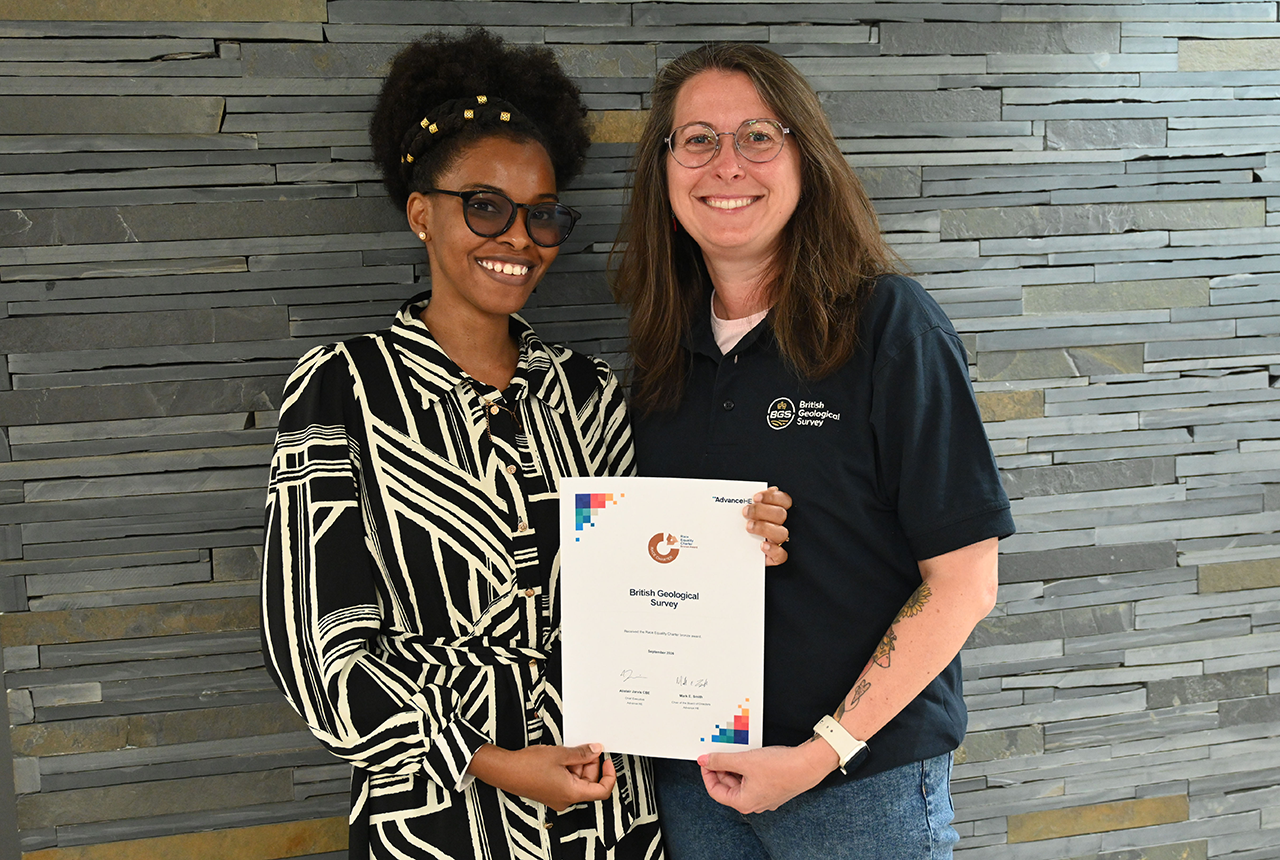
BGS has secured Bronze accreditation under the Advance HE Race Equality Charter framework, recognising its commitment to identifying and addressing race equality issues in the geosciences.
British and French geological surveys strengthen collaboration through new agreement
14/10/2026
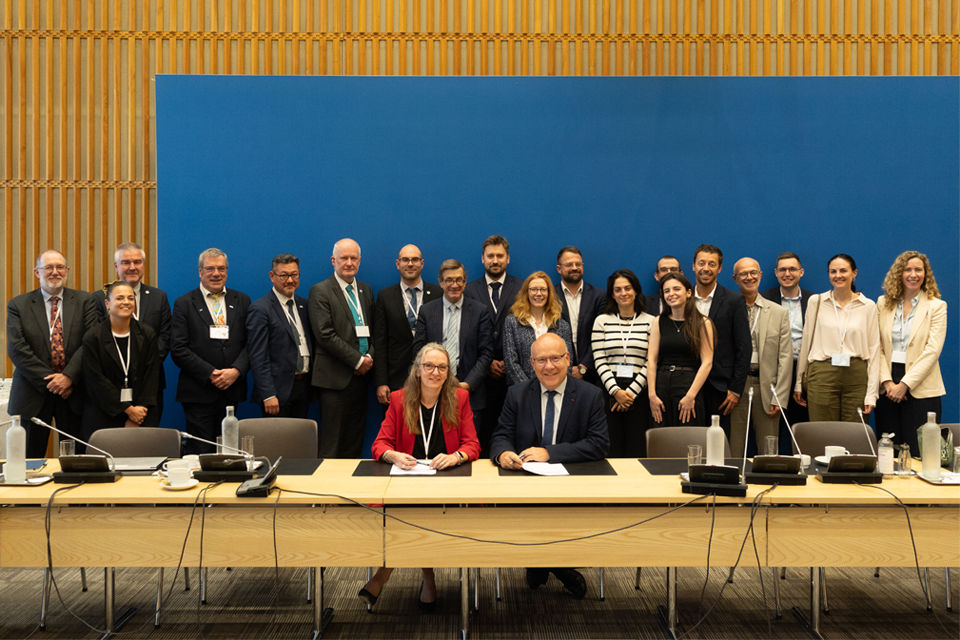
Two of Europe’s leading geological surveys have signed a Memorandum of Understanding to strengthen collaboration on key geoscientific challenges.
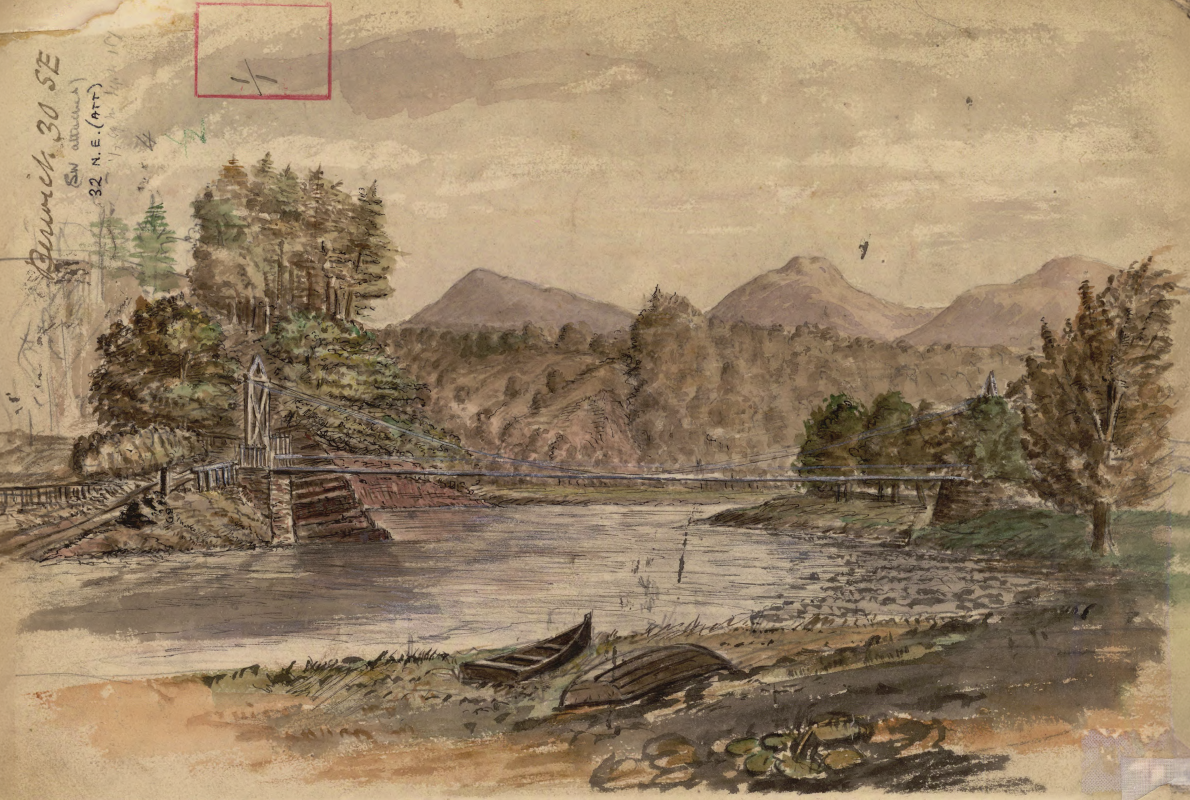
Historic watercolour unearthed on back of Dryburgh geological field map
05/10/2026
A 150-year-old painting of Dryburgh Suspension Bridge and the River Tweed offers an insight into the Scottish Borders landmark shortly after it was built in the 1870s.
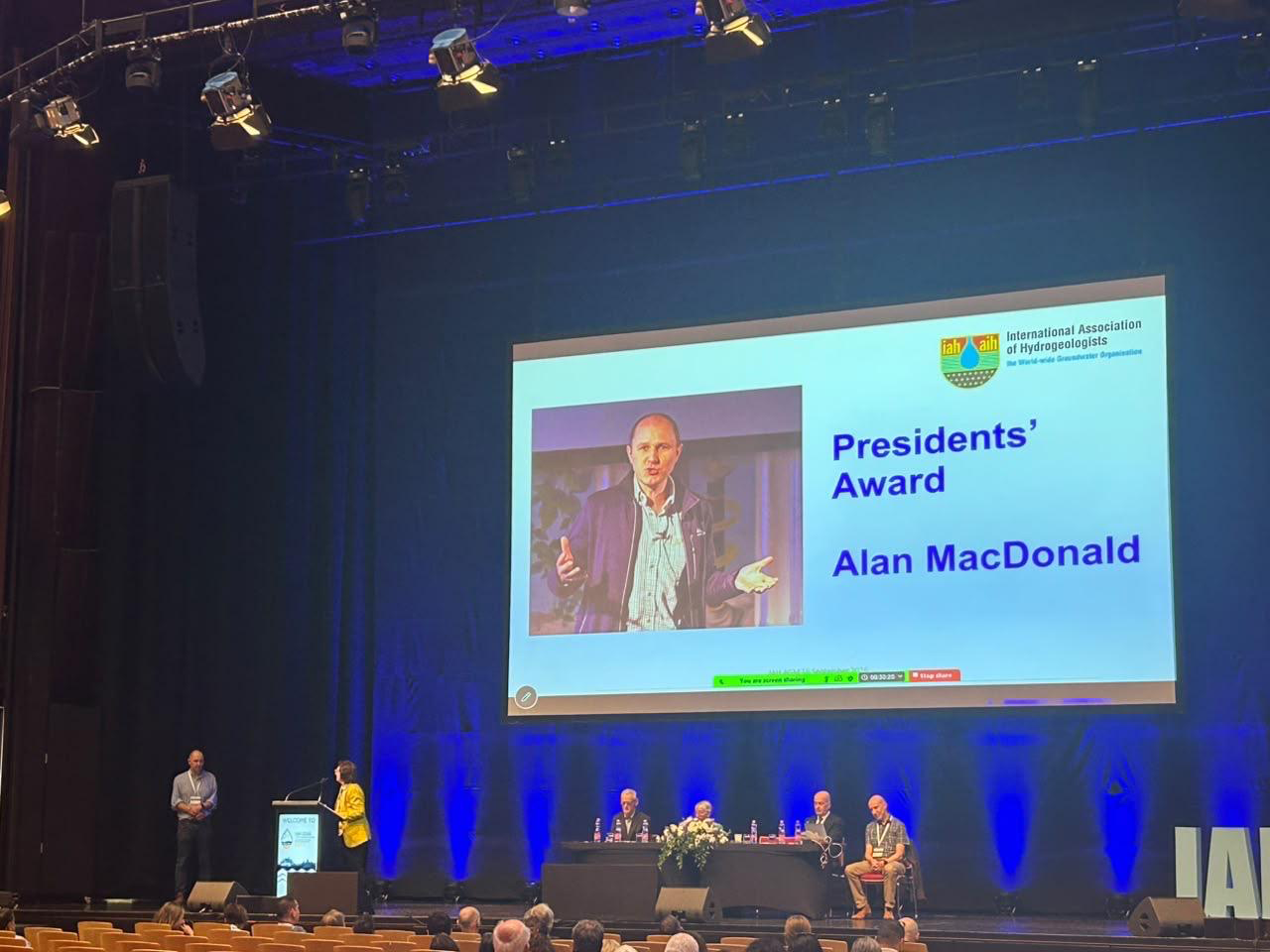
Professor Alan MacDonald presented with Presidents’ Award at 2026 World Groundwater Congress
21/09/2026
The BGS Head of Groundwater has been recognised with this prestigious award by the International Association of Hydrogeologists for his extensive contributions to groundwater science.
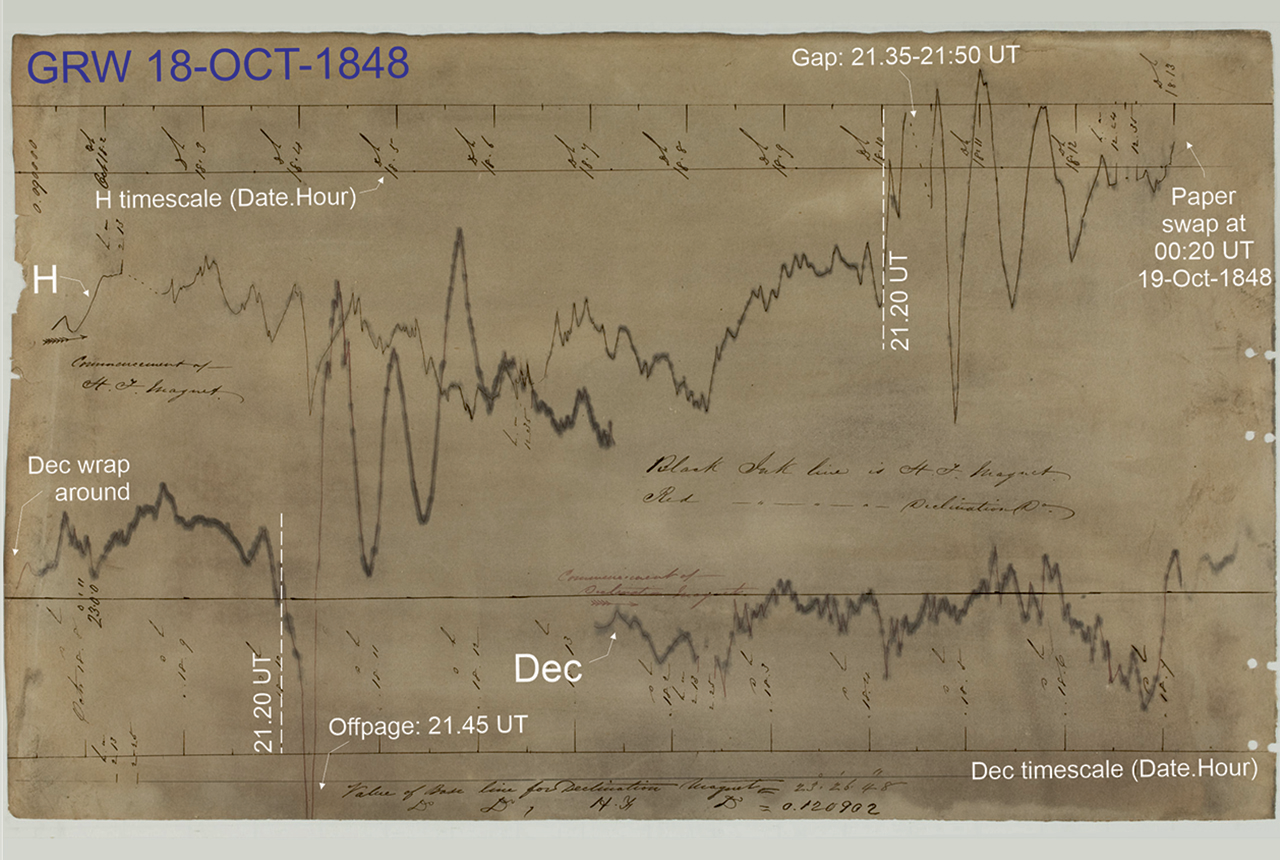
Mystery of one of the earliest recorded space weather impacts solved
17/09/2026
BGS scientists were part of an international team that has solved a 178-year-old mystery surrounding one of the earliest recorded examples of space weather affecting technology.
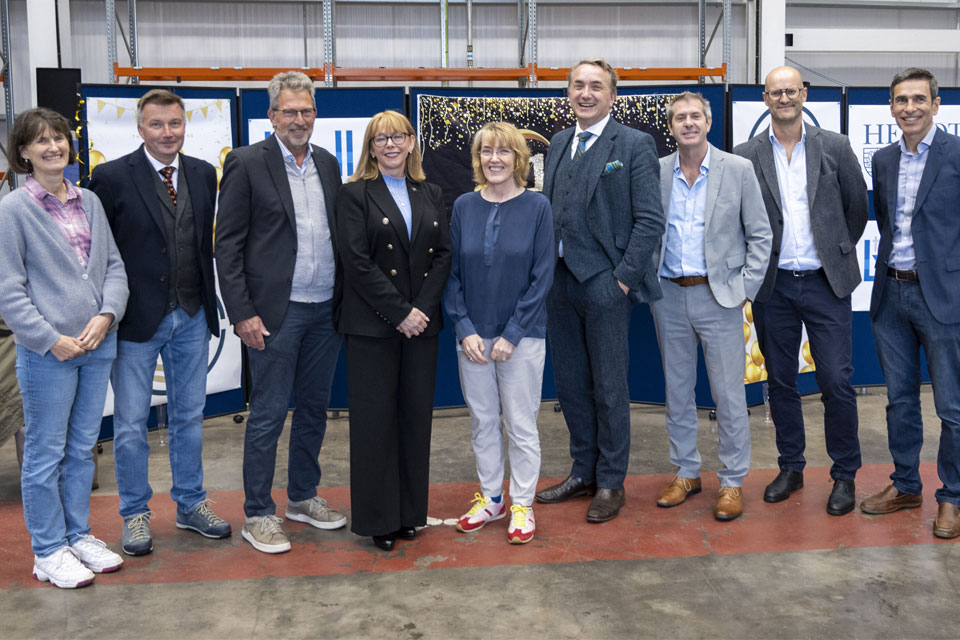
The Lyell Centre celebrates 10 years of world-leading earth and marine science research
07/09/2026
The Lyell Centre for Earth and Marine Sciences, a strategic partnership between Heriot-Watt University and BGS, is celebrating its 10th anniversary, marking a decade of world-leading research, innovation and collaboration in earth and marine sciences.

Demand for data centres presents challenges and opportunities for UK critical mineral supply chains
02/09/2026
Government-backed research finds that vulnerabilities in raw material supply chains must be addressed to secure the critical minerals needed to expand the UK’s digital infrastructure and boost economic growth.

What lies beneath Europe’s sinking ground?
01/09/2026
Land subsidence is becoming increasingly visible across Europe. New research examines how better monitoring, shared data and a deeper understanding of the subsurface can help assess and manage its impacts.
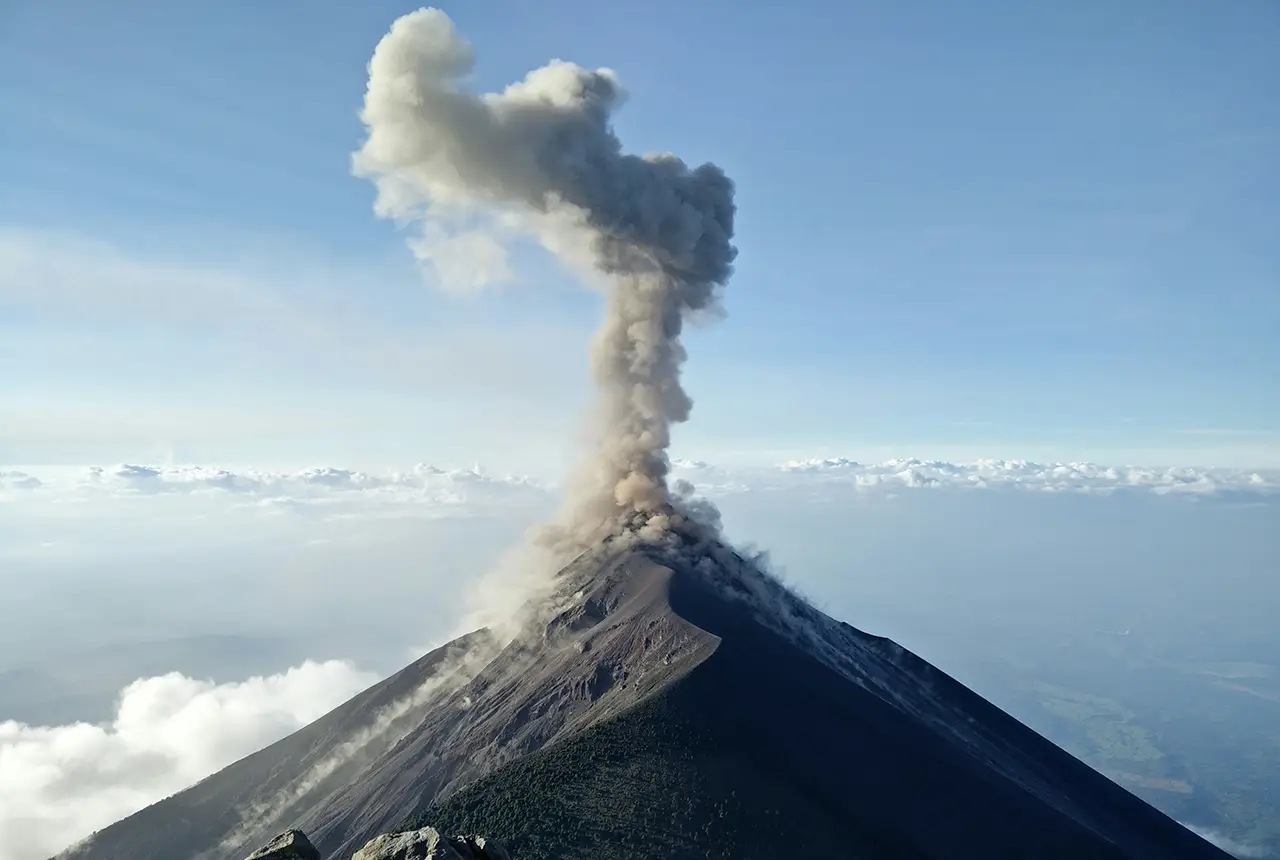
Secrets of an ancient supervolcano uncovered that change our understanding of England’s geological past
28/08/2026
Scientists have found evidence of a long-hidden link between an ancient buried ash layer in Scandinavia and a concealed supervolcano in eastern England.
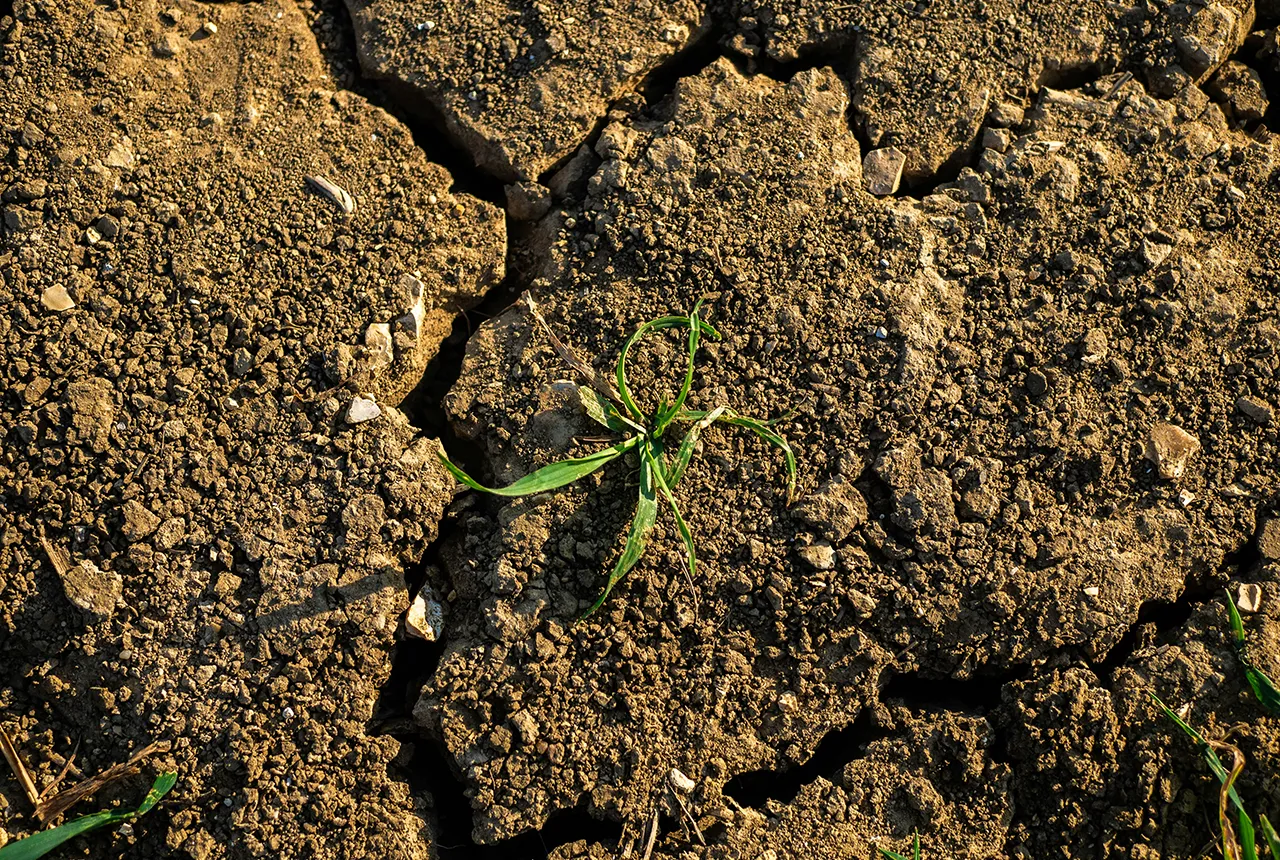
BGS research into drought-exposed soils wins award
26/08/2026
A research paper investigating how temperate soils respond to drought has been announced as the winner of the Land Best Paper Award.
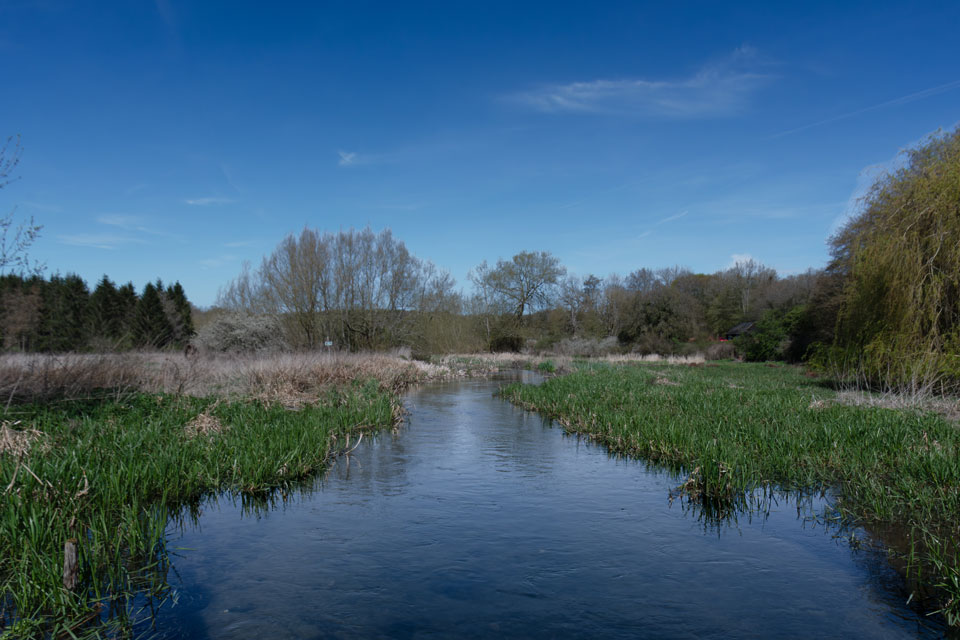
UK aquifers robust despite driest July on record
16/08/2026
In a summer experiencing widespread drought, groundwater levels around the country are showing resilience, demonstrating their value as a crucial resource and indicating they could play a more significant role in mitigating the impacts of extreme weather.