

The art of boreholes: Essex artists visit the BGS to be inspired by our library of geological core
Two UK-based artists visitors aim to turn art and earth science into a collaborative experience that facilitates discussion on land usage.
02/11/2023 By BGS Press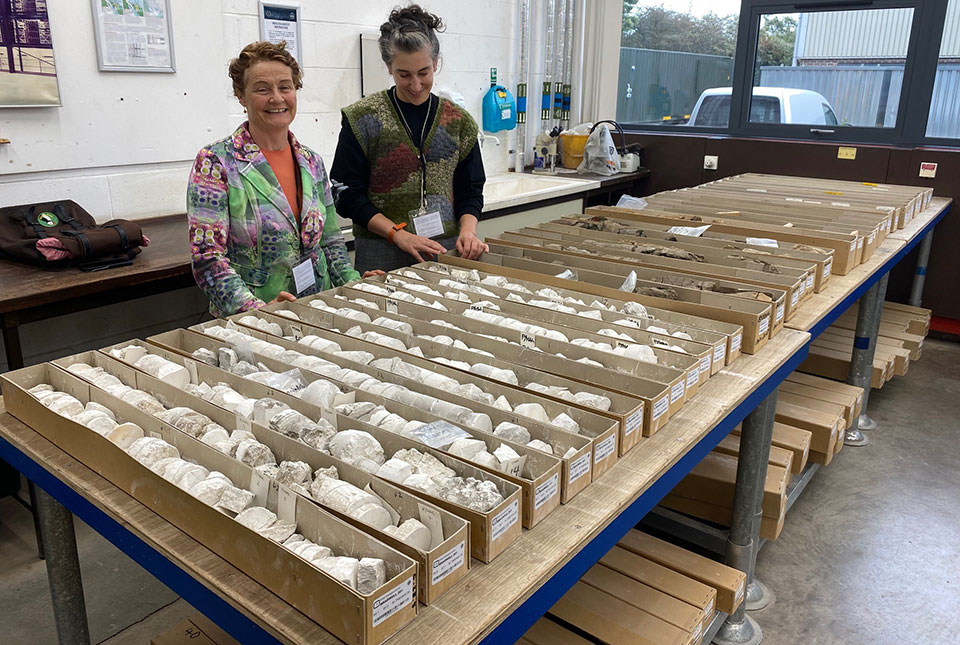

October 2023 saw BGS’s National Geological Repository (NGR) welcome two UK-based artists who were visiting the collections as part of their individual projects focused on the Blackwater Estuary in Essex. Nastassja Simenski and Angenita Teekens visited the repository to view core samples from around Bradwell A, a Magnox-design nuclear power station located on the Dengie peninsula at the mouth of the River Blackwater in Essex. The power station has been in long-term decommissioned management since 2019.
The landscape of the Blackwater Estuary
Nastassja Simenski, artist and researcher at University College London, is studying for her PhD on the potential of collaborative fieldwork between artists and archaeologists. She is particularly focused on how the development of place-specific and collaborative methods ‘in the field’ enable new ways of highlighting current conversations around energy production in the Blackwater Estuary.

Visiting the BGS repository and seeing the core samples from the Bradwell and Blackwater Estuary helped me to get a sense of how the geology of the area has shaped the landscape over time and, in turn, impacted the types of human production and interaction here over long durations […] for instance, the core samples from Bradwell are a starting point from which we can think about how a seemingly remote part of the Essex coast is implicated in wider contexts like managed realignment and climate change mitigation, agricultural policy, natural and cultural heritage, and the development of new forms of energy production.
Nastassja Simenski
Natassja’s research includes place-based art practices and considers how specific scientific research and data such as BGS core samples can be used creatively to tell bigger stories that move across long time periods and wider geographies. The issues explored in her research are mediated through art including the potential to use data, historical records and interviews to inform musical scores, live performances and films that get shown in situ or in galleries, broadcast on radio and screened at film festivals. Natassja’s research includes place-based art practices and considers how specific scientific research and data such as BGS core samples can be used creatively to tell bigger stories that move across long time periods and wider geographies. The issues explored in her research are mediated through art including the potential to use data, historical records and interviews to inform musical scores, live performances and films that get shown in situ or in galleries, broadcast on radio and screened at film festivals.
Earthworks: boreholes and dorodangos
Angenita Teekens is an established artist with 25 years of experience in facilitating environmental community art projects. Her most recent project, ‘Earthworks’, is a community inquiry about bore samples, extraction, disposal and the energy transition. The project will see members of the Othona community, as well as community groups in Essex, creating 260 dorodangos, which will be twinned with bore samples taken from fields adjacent to Bradwell, which are currently stored at BGS.
The Japanese dorodango artform consists of a small sample of clay rolled into a sphere by human hands within human time, as part of a slow meditative practice.
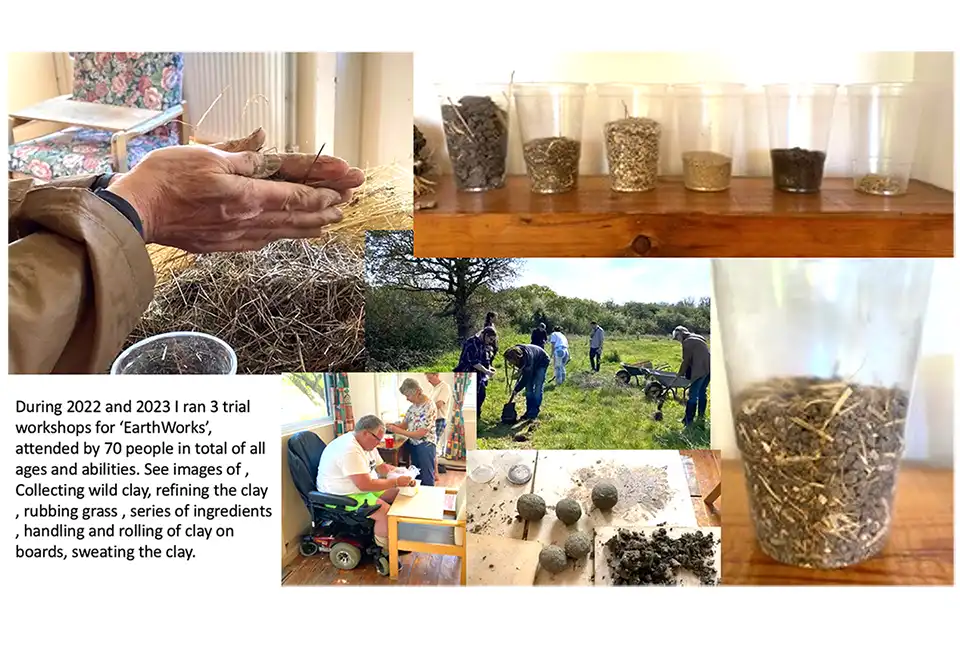
Dorodango-making workshops. ©Angenita Teekens.
Accessing the BGS collections is a vital source of information for the creation of a borehole catalogue as part of Angenita’s project. The inclusion of visual materials such as borehole logs, along with sketches, drawings and writing, will help to guide participants in their creation of the dorodangos, whilst questioning land use, energy production, geological and human time and human impact on land.
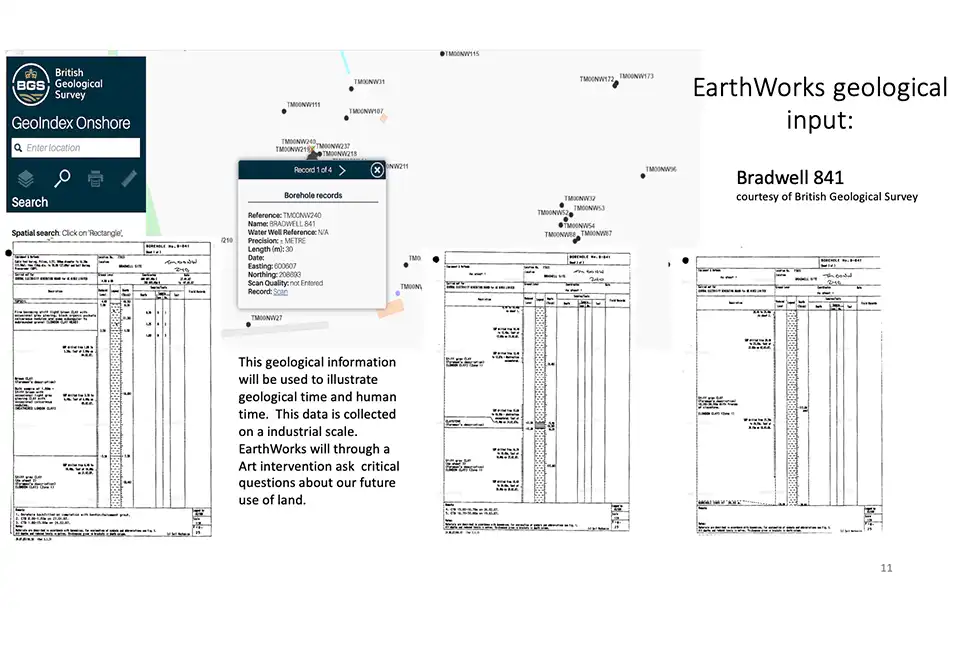
Examples of BGS data used in the projects. BGS © UKRI.
The National Geological Repository at BGS
The National Geological Repository (NGR) is a UKRI national science facility and the largest collection of geoscience samples from the UK. It forms an integral part of BGS (part of UKRI’s Natural Environment Research Council) and is located at the BGS’s headquarters in Nottinghamshire.
NGR’s unique collections are used extensively by industry, in research and to support university teaching. It has the UK’s largest core storage and examination facility, with the Core Store and records collections at its centre. The collections include:
- borehole cores and samples
- fossils, rocks and other samples
- related subsurface information from the UK landmass and continental shelf
About the artists
Harper, W, and Simensky, N. 2023. Care and maintenance in perpetuity: the nuclear landscape of the Blackwater Estuary. Chapter 14 in St Peter-On-The-Wall: Landscape and Heritage on the Essex Coast. Dale, J (editor). (London, UK: University College London Press.) ISBN: 9781800084353
Relative topics
Related news
The Lyell Centre celebrates 10 years of world-leading earth and marine science research
07/09/2026
The Lyell Centre for Earth and Marine Sciences, a strategic partnership between Heriot-Watt University and BGS, is celebrating its 10th anniversary, marking a decade of world-leading research, innovation and collaboration in earth and marine sciences.
Demand for data centres presents challenges and opportunities for UK critical mineral supply chains
02/09/2026
Government-backed research finds that vulnerabilities in raw material supply chains must be addressed to secure the critical minerals needed to expand the UK’s digital infrastructure and boost economic growth.

What lies beneath Europe’s sinking ground?
01/09/2026
Land subsidence is becoming increasingly visible across Europe. New research examines how better monitoring, shared data and a deeper understanding of the subsurface can help assess and manage its impacts.

Measuring the environmental impacts of carbon fibre: life cycle assessment
01/09/2026
Undergraduate student Phoebe Brown visited BGS to understand the life cycle of carbon fibre, from primary production to recycling.
Secrets of an ancient supervolcano uncovered that change our understanding of England’s geological past
28/08/2026
Scientists have found evidence of a long-hidden link between an ancient buried ash layer in Scandinavia and a concealed supervolcano in eastern England.
MaxStoreUK hydrogen geological storage policy roundtable
Event on 08/10/2026
Storage operators, regulators, licensor and Government stakeholders are invited to join our roundtable discussion of hydrogen geological storage policy.
BGS research into drought-exposed soils wins award
26/08/2026
A research paper investigating how temperate soils respond to drought has been announced as the winner of the Land Best Paper Award.
Experiences from our Commonwealth Fellowship at the British Geological Survey
24/08/2026
Scientific fellowships foster professional growth, international collaboration and exposure to world-class research environments. A group of visiting Commonwealth Fellowship researchers share their experience of being hosted at the BGS Inorganic Geochemistry Facility.
UK aquifers robust despite driest July on record
16/08/2026
In a summer experiencing widespread drought, groundwater levels around the country are showing resilience, demonstrating their value as a crucial resource and indicating they could play a more significant role in mitigating the impacts of extreme weather.
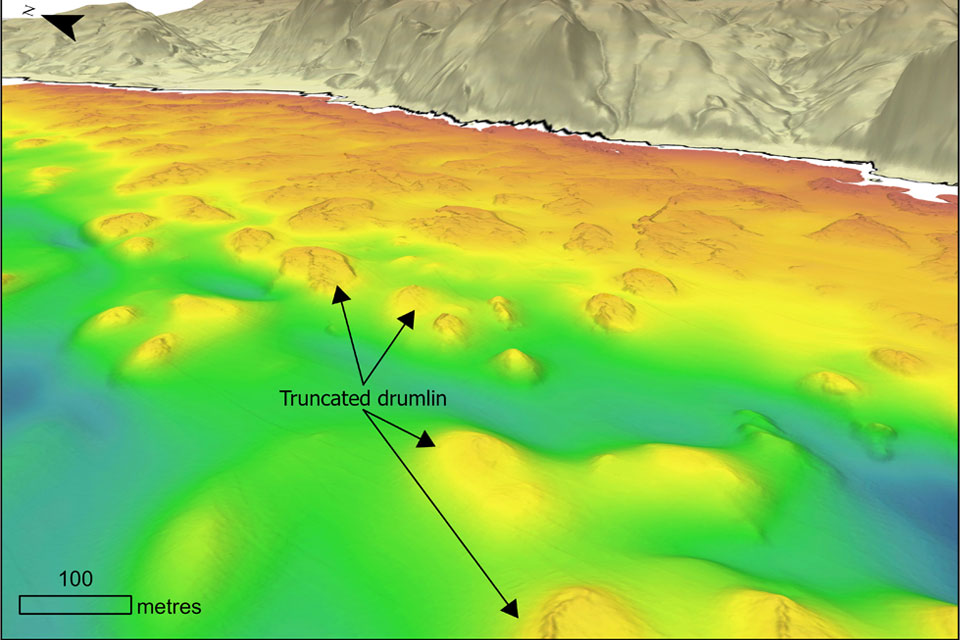
Coastal retreat in the past: the legacy of truncated drumlins
07/08/2026
The UK’s coasts have been responding to changing sea levels for thousands of years, but some of the best evidence of those changes now lies hidden beneath the waves.
BGS strengthens scientific links with Icelandic partners through Research and Innovation Scotland initiative
06/08/2026
BGS researchers recently visited Iceland as part of a project developing international partnerships and identifying opportunities for future collaborative research.
New NERC-funded project empowers young people to engage with environmental science
23/07/2026
BGS is part of a new, collaborative project, funded through NERC’s ‘Opening up the environment’ programme, helping the environmental research community become more accessible.