

Next stage of funding awarded for project on hydrogen storage potential in the East Midlands
BGS will conduct essential studies on hydrogen behaviour in the subsurface to predict, measure and monitor underground hydrogen storage.
17/10/2024 By BGS Press

Following a successful bid, the East Midlands Storage (EMStor) consortium has been awarded strategic innovation funding from Ofgem, building on work delivered during the earlier discovery phase. In this alpha phase, the consortium includes the original partners Cadent (lead partner), BGS, Edinburgh University and Star Energy Group, now joined by Centrica Storage, Uniper and National Gas.
The discovery phase assessed a range of different geological storage options in the East Midlands. Storage in repurposed onshore hydrocarbon fields was identified as the leading hydrogen storage option. The discovery phase also showed that hydrogen storage is a vital component to any future hydrogen system in the East Midlands to ensure energy security, resilience and affordability. The development of hydrogen storage in repurposed hydrocarbon fields must be done in tandem with the development of hydrogen production, such as at Uniper’s Ratcliffe-on-Soar power station and Cadent’s hydrogen network.
The EMStor alpha phase will further develop knowledge by advancing understanding of:
- decisions on next steps and future phasing
- public perception of hydrogen storage
- technical aspects of underground hydrogen storage, such as geological feasibility and well-integrity assessment
- approaches to regulatory, permitting and planning for potential demonstration
A dissemination event will be held in spring 2025 to detail findings and outline next steps.

We’re delighted to have secured this funding so that we can continue to break new ground in onshore hydrogen storage. The ultimate aim is to increase the technology readiness level of storage of hydrogen in disused hydrocarbon fields by demonstrating that it works, by 2030. Local geological stores of hydrogen in the East Midlands will allow a much more rapid deployment of our hydrogen pipeline network and mean that more customers can switch away from natural gas and decarbonise more quickly.
Sally Brewis, head of regional development, Cadent.
BGS will conduct essential tests on how the hydrogen may behave in the subsurface, including how hydrogen interacts with the environment and reservoir rock, so that we can more accurately predict, measure and monitor underground hydrogen storage.
BGS is excited to be working with our EMStor partners on developing underground hydrogen storage in the East Midlands. Underground hydrogen storage will help provide energy security and ensure the supply of renewable and low-carbon energy to local businesses throughout the energy transition.
Through Project EMStor, we hope that to raise the technology readiness level and prove the scientific case for underground hydrogen storage in porous rocks.
Edward Hough, research lead in underground energy storage, BGS.
Relative topics
Related news
British and French geological surveys strengthen collaboration through new agreement
14/10/2026
Two of Europe’s leading geological surveys have signed a Memorandum of Understanding to strengthen collaboration on key geoscientific challenges.

Historic watercolour unearthed on back of Dryburgh geological field map
05/10/2026
A 150-year-old painting of Dryburgh Suspension Bridge and the River Tweed offers an insight into the Scottish Borders landmark shortly after it was built in the 1870s.
Professor Alan MacDonald presented with Presidents’ Award at 2026 World Groundwater Congress
21/09/2026
The BGS Head of Groundwater has been recognised with this prestigious award by the International Association of Hydrogeologists for his extensive contributions to groundwater science.
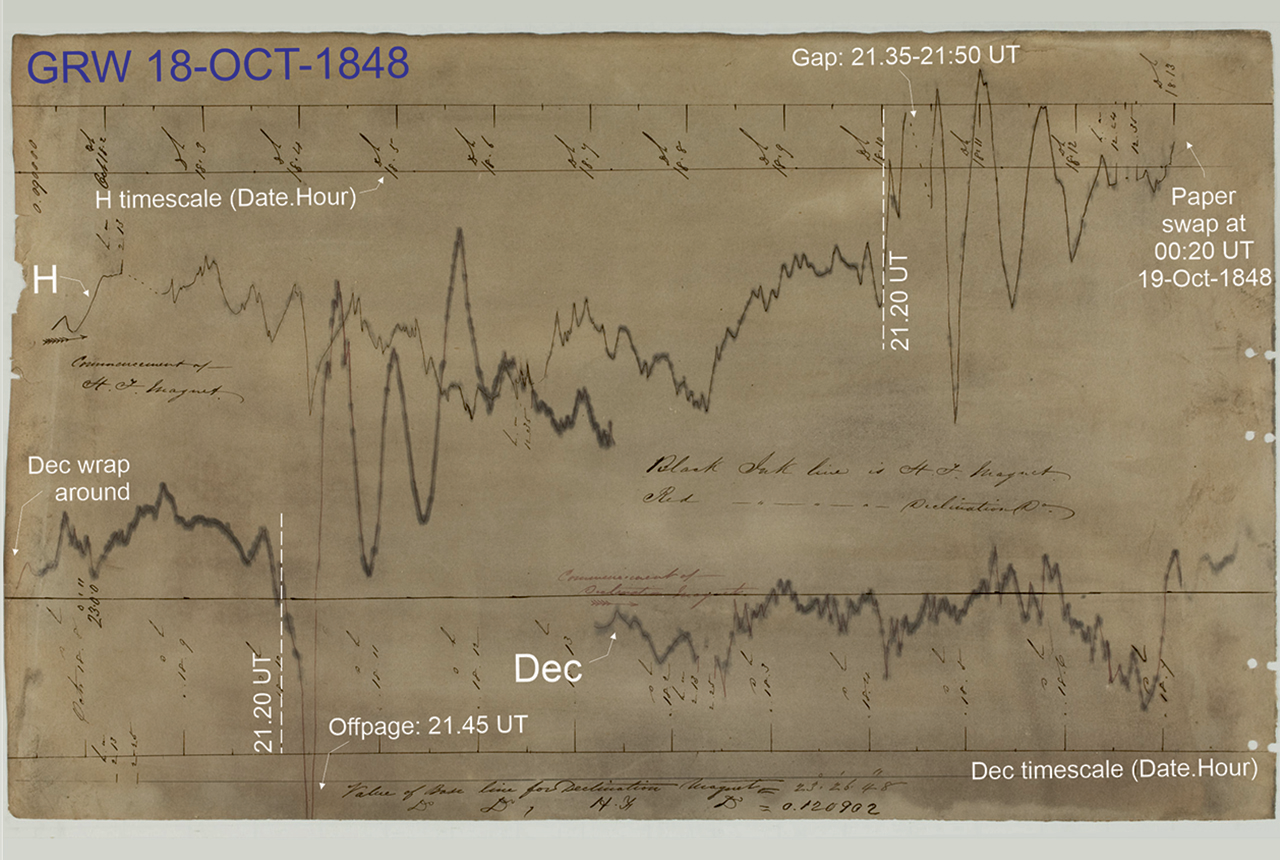
Mystery of one of the earliest recorded space weather impacts solved
17/09/2026
BGS scientists were part of an international team that has solved a 178-year-old mystery surrounding one of the earliest recorded examples of space weather affecting technology.
The Lyell Centre celebrates 10 years of world-leading earth and marine science research
07/09/2026
The Lyell Centre for Earth and Marine Sciences, a strategic partnership between Heriot-Watt University and BGS, is celebrating its 10th anniversary, marking a decade of world-leading research, innovation and collaboration in earth and marine sciences.

Demand for data centres presents challenges and opportunities for UK critical mineral supply chains
02/09/2026
Government-backed research finds that vulnerabilities in raw material supply chains must be addressed to secure the critical minerals needed to expand the UK’s digital infrastructure and boost economic growth.

What lies beneath Europe’s sinking ground?
01/09/2026
Land subsidence is becoming increasingly visible across Europe. New research examines how better monitoring, shared data and a deeper understanding of the subsurface can help assess and manage its impacts.

Secrets of an ancient supervolcano uncovered that change our understanding of England’s geological past
28/08/2026
Scientists have found evidence of a long-hidden link between an ancient buried ash layer in Scandinavia and a concealed supervolcano in eastern England.

BGS research into drought-exposed soils wins award
26/08/2026
A research paper investigating how temperate soils respond to drought has been announced as the winner of the Land Best Paper Award.
UK aquifers robust despite driest July on record
16/08/2026
In a summer experiencing widespread drought, groundwater levels around the country are showing resilience, demonstrating their value as a crucial resource and indicating they could play a more significant role in mitigating the impacts of extreme weather.
New NERC-funded project empowers young people to engage with environmental science
23/07/2026
BGS is part of a new, collaborative project, funded through NERC’s ‘Opening up the environment’ programme, helping the environmental research community become more accessible.
Delving deep into mountains for future water security
16/07/2026
A BGS-led project is using new water-tracing investigation methods, geophysics and modelling to understand how water moves from mountains to the lowlands, helping to improve water security for billions of people.