

‘Significant opportunity’ for engineering geologists to increase influence on global sustainable development
Engineering geologists have an essential role to play in meeting the UN's Sustainable Development Goals (SDGs).
15/03/2022 By BGS Press

Engineering geologists do not just bridge the gap between earth sciences and engineering but have an essential role to play in meeting the UN’s Sustainable Development Goals (SDGs), a new study by geologists at Arup and BGS highlights.
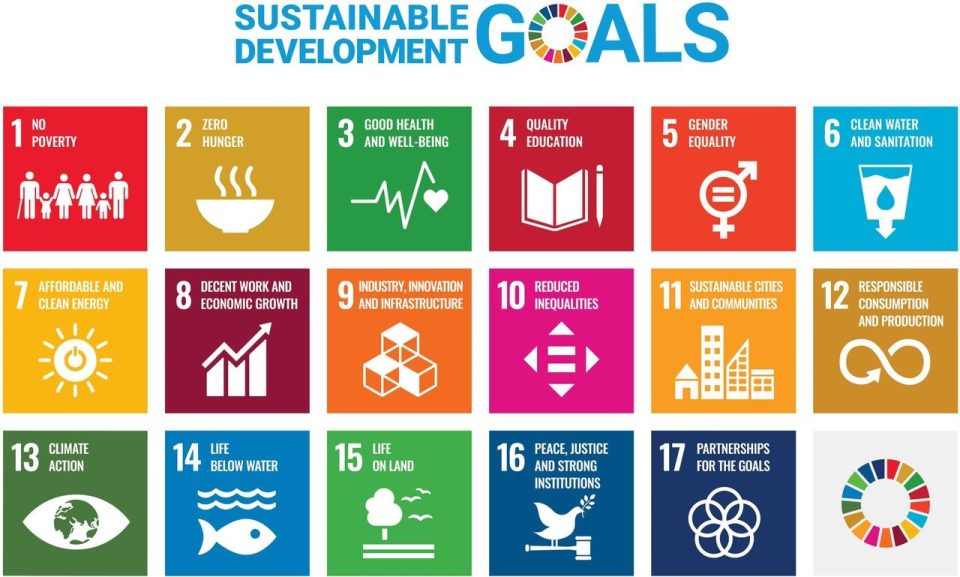
The UN’s 17 Sustaianable Development Goals. © United Nations 2022.
Crucially, their knowledge, skills and understanding around the interfaces between science and engineering and the natural and built environments past, present and future mean that engineering geologists offer a unique perspective to help build resilience to natural hazards, solve environmental problems caused by human activities and reduce the cost and risk of building and infrastructure construction.

Engineering geologists and, more broadly, geoscientists possess deep domain knowledge of natural systems and processes that makes them very well placed to tackle both environmental and socio-economic challenges covered by the UN SDGs.
Despite their unique skills and knowledge, geoscientists have historically been underrepresented in the global debate on sustainable development.
A significant opportunity therefore exists for geoscientists and engineering geologists especially to increase their influence and enhance their impact.
Marcus Dobbs, senior engineering geologist at BGS and contributor to the study.
To fully understand the current contribution of engineering geologists to the UN SDGs and where this could be enhanced, scientists at Arup and BGS undertook a mapping exercise to systematically review all 169 SDG targets and related indicators against typical engineering geology knowledge, skills and activities.
They concluded that engineering geology knowledge, skills and activities can be linked (directly or indirectly) to 107 of the 169 targets (63 per cent).
Engineering geology makes the strongest overall contribution to 5 of the 17 SDGs:
- SDG 7 (affordable and clean energy): linked to 100 per cent of targets
- SDG 9 (industry, innovation and infrastructure): linked to 88 per cent of targets
- SDG 12 (responsible consumption and production): linked to 82 per cent of targets
- SDG 11 (sustainable cities and communities): linked to 80 per cent of targets
- SDG 13 (climate action): linked to 80 per cent of targets
The mapping exercise shows that engineering geologists clearly have an important role to play in achieving sustainable development globally, primarily through their role in infrastructure development, building resilience and disaster risk reduction and environmental protection as well as in building equitable communities and through collaborative and strong partnerships.
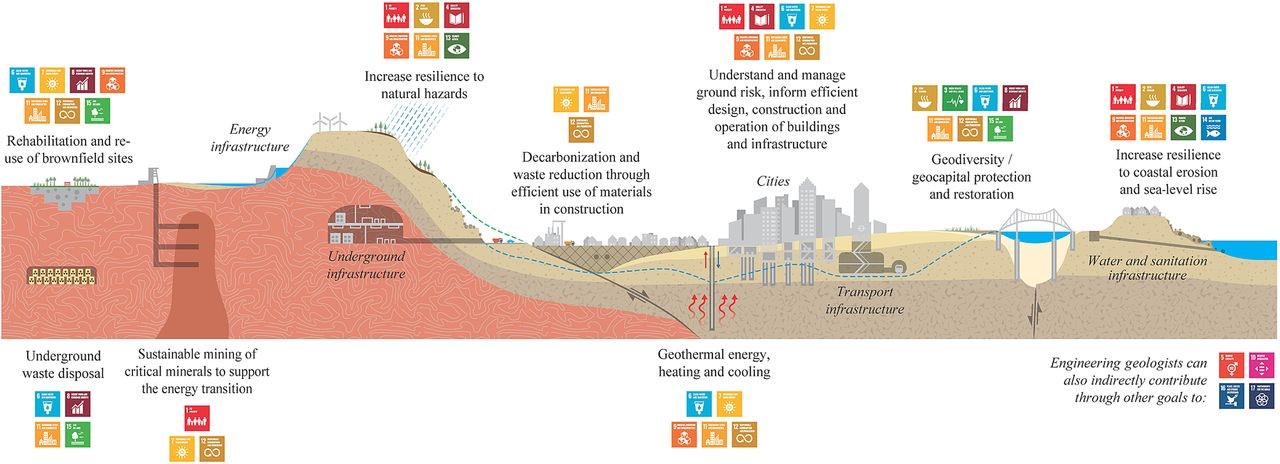
Conceptual ground model showing the contributions of engineering geology to sustainable development. © BGS/ARUP from Lagesse et al., 2022. CC-BY 4.0
For over 20 years, BGS engineering geology research has:
- generated a wealth of data and information on the properties and behaviour of geological formations that are strategically important to critical infrastructure development in the UK
- undertaken research to enhance societal resilience to shallow geohazards by developing and communicating a better understanding of their distribution, character, susceptibility and triggering, and potential impacts, with much of this research specifically focused on landslides and landslide processes both in the UK and internationally
- made significant advances in the field of urban geoscience to specifically support decision makers in the planning and construction sector to optimise the use of the subsurface to make cities and communities inclusive, safe, resilient and sustainable
- contributed to the developed national-scale engineering geology and geohazard datasets to support sustainable and resilient land use, planning and development
In addition to the existing contribution of engineering geology to the SDGs, the Arup and BGS study also identified opportunities for engineering geologists to strengthen contribution to all 17 of the UN SDGs, with the greatest of these being to:
- SDG 7 (affordable and clean energy): 100 per cent of targets were identified;
- SDG 12 (responsible consumption and production): 55 per cent of targets were identified
- SDG 16 (peace, justice and strong institutions): 50 per cent of targets were identified
- SDG 17 (partnerships for the goals): 41 per cent of targets were identified
These opportunities include:
- extending influence across the project life cycle and to policymaking
- greater consideration of options for decarbonisation
- the impacts of climate change
- the value of geocapital and geodiversity
- training in geoethics
- a greater emphasis on diversity, inclusion and equity within the profession
- increased collaboration and knowledge sharing globally through cross- and multidisciplinary partnerships, and between industry and academia
In recent years, engineering geologists within BGS have been engaged in a range of multidisciplinary research studies to address some of these challenges, including:
- building multidisciplinary, international partnerships to improve the characterisation of multi-hazard relationships and help inform risk management in the context of sustainable development
- exploring the application of shallow geothermal energy technologies for both heating and cooling
- the potential for fault reactivation in deep geothermal reservoirs
- assessing potential viability of reusing depleted oil reservoirs for carbon capture and sequestration
- examining the physical properties and behaviour of geological materials to inform the development of the safe subsurface disposal of radioactive waste
- identifying and characterising marine geohazards and marine geohazard processes to support the development of large-scale offshore wind-farms
- working with industry and academia, through the Engineering Group of the Geological Society, to document and publicise good working practice for offshore exploration, survey and development
We hope these findings will enable and empower engineering geologists globally to better communicate the value of their contribution to society, the environment and the economy and identify opportunities to increase that impact.
Marcus Dobbs.
BGS is keen to broaden its research partnerships to include a greater diversity of collaborators and stakeholders from government, academia, industry and the not-for-profit sectors. Anyone interested in working with BGS on sustainable engineering geology research can contact Marcus Dobbs.
Gill, J C, Malamud, B D, Barillas, E M, and Noriega, A G. 2020. Construction of regional multi-hazard interaction frameworks, with an application to Guatemalaional multi-hazard interaction frameworks. Natural Hazards and Earth System Sciences, Vol. 20(1), 149–180.
Tomorrow’s Cities — an interdisciplinary research hub working globally to bring multi-hazard disaster risk management to the centre of urban policy and practice.
Relative topics
Related news
The Lyell Centre celebrates 10 years of world-leading earth and marine science research
07/09/2026
The Lyell Centre for Earth and Marine Sciences, a strategic partnership between Heriot-Watt University and BGS, is celebrating its 10th anniversary, marking a decade of world-leading research, innovation and collaboration in earth and marine sciences.

Demand for data centres presents challenges and opportunities for UK critical mineral supply chains
02/09/2026
Government-backed research finds that vulnerabilities in raw material supply chains must be addressed to secure the critical minerals needed to expand the UK’s digital infrastructure and boost economic growth.

What lies beneath Europe’s sinking ground?
01/09/2026
Land subsidence is becoming increasingly visible across Europe. New research examines how better monitoring, shared data and a deeper understanding of the subsurface can help assess and manage its impacts.
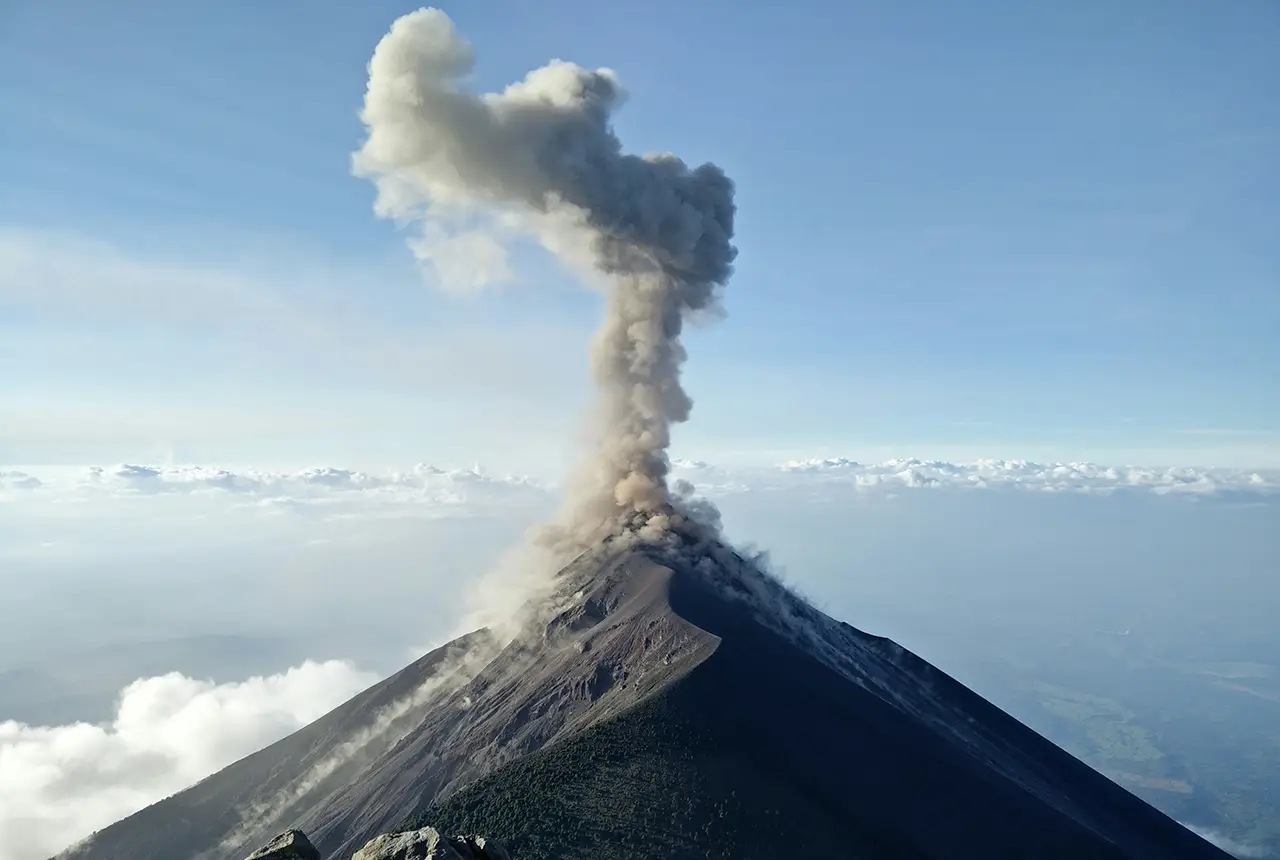
Secrets of an ancient supervolcano uncovered that change our understanding of England’s geological past
28/08/2026
Scientists have found evidence of a long-hidden link between an ancient buried ash layer in Scandinavia and a concealed supervolcano in eastern England.
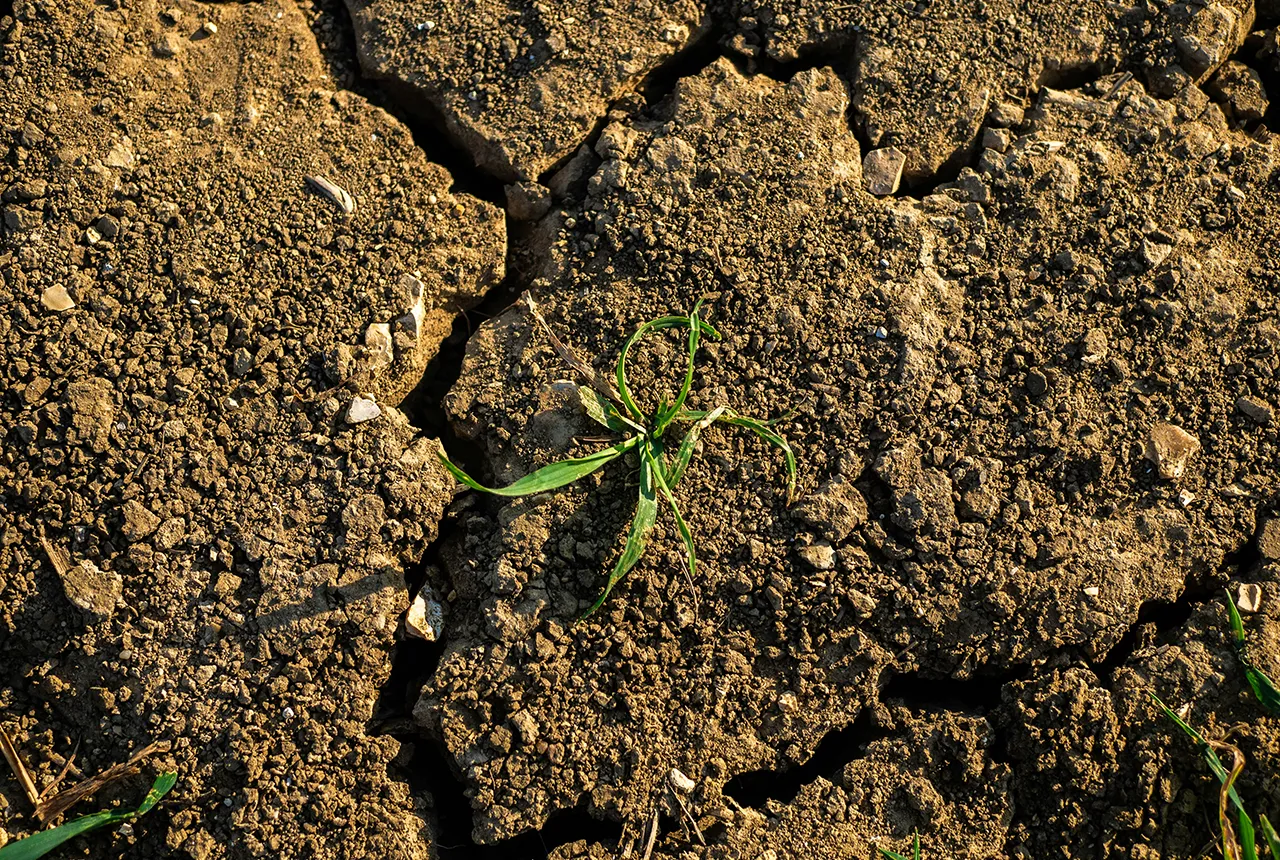
BGS research into drought-exposed soils wins award
26/08/2026
A research paper investigating how temperate soils respond to drought has been announced as the winner of the Land Best Paper Award.
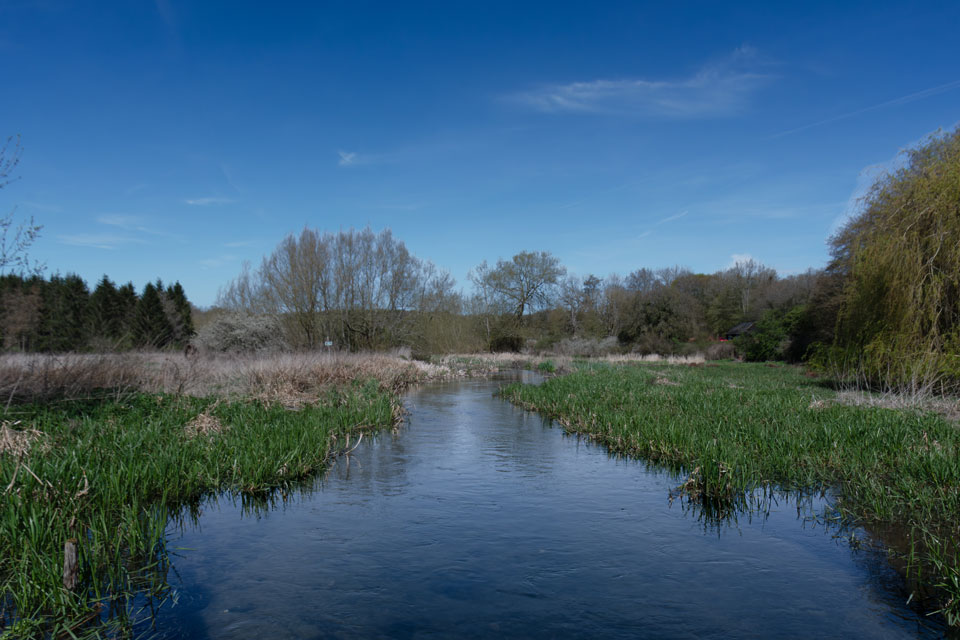
UK aquifers robust despite driest July on record
16/08/2026
In a summer experiencing widespread drought, groundwater levels around the country are showing resilience, demonstrating their value as a crucial resource and indicating they could play a more significant role in mitigating the impacts of extreme weather.
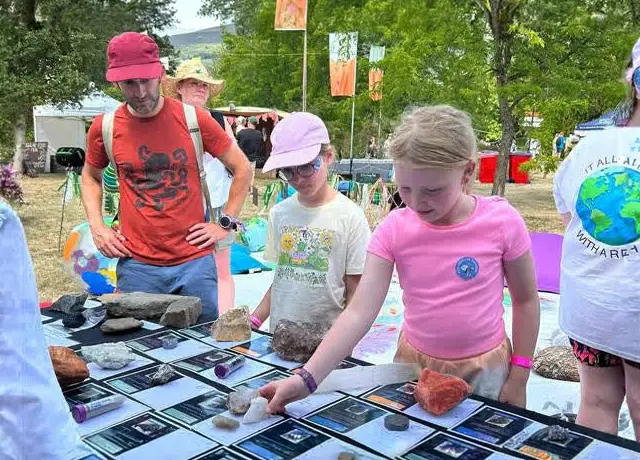
New NERC-funded project empowers young people to engage with environmental science
23/07/2026
BGS is part of a new, collaborative project, funded through NERC’s ‘Opening up the environment’ programme, helping the environmental research community become more accessible.
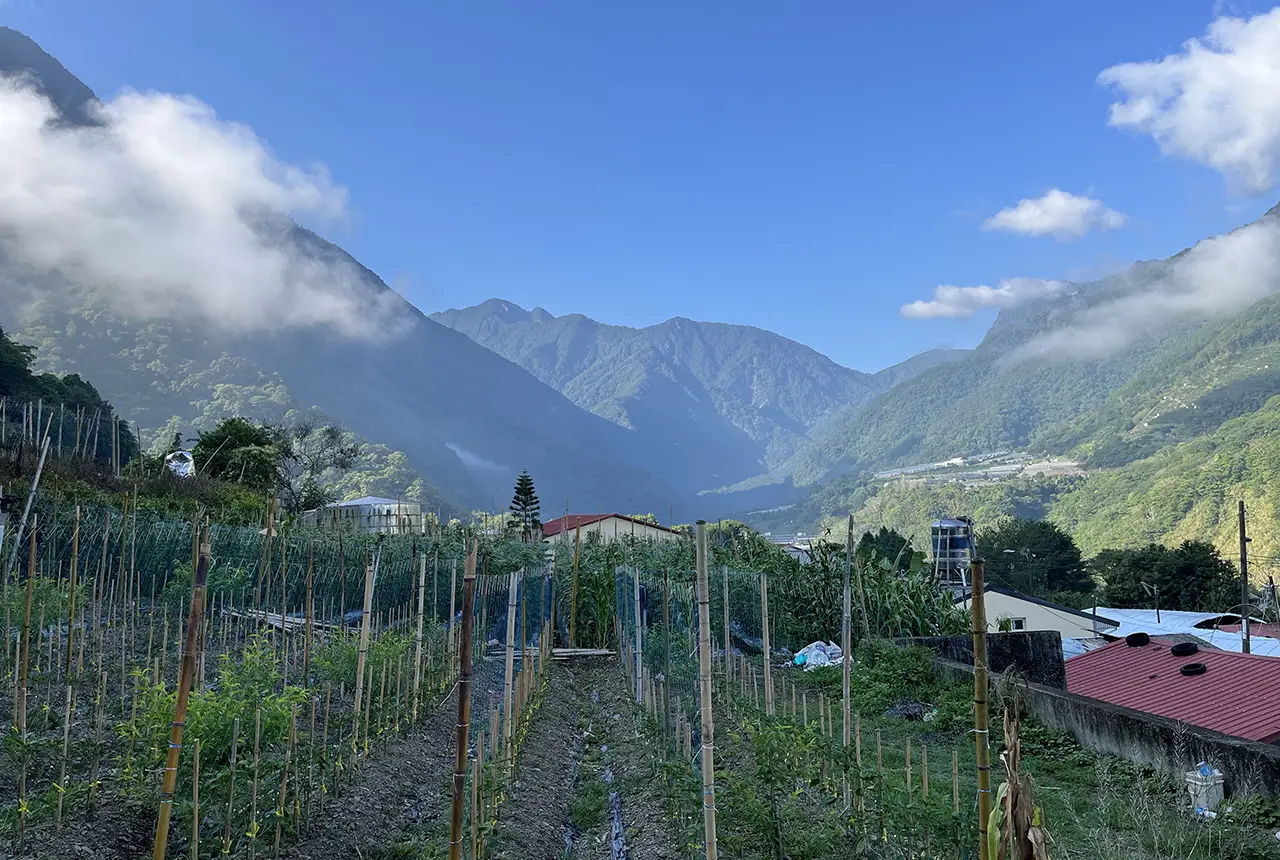
Delving deep into mountains for future water security
16/07/2026
A BGS-led project is using new water-tracing investigation methods, geophysics and modelling to understand how water moves from mountains to the lowlands, helping to improve water security for billions of people.
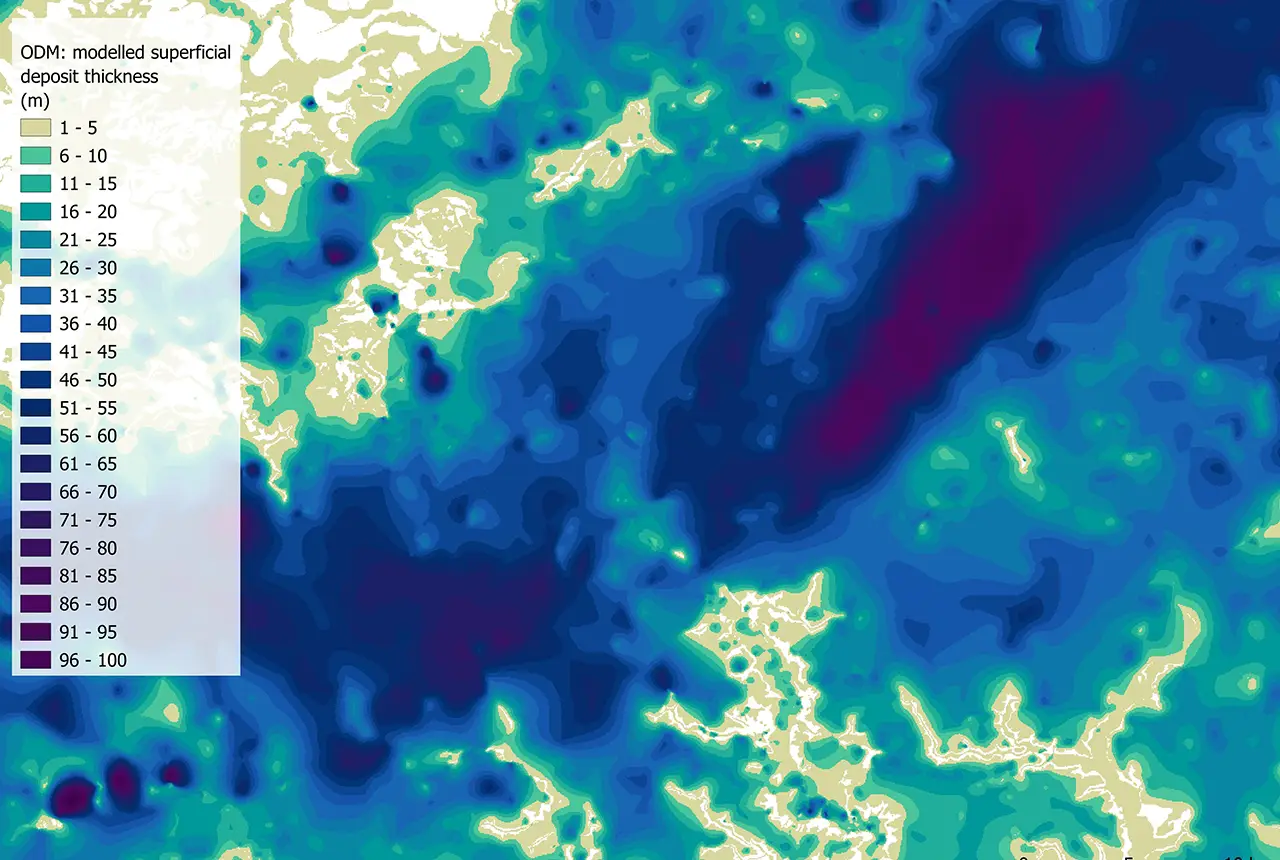
Updated national 3D model will determine the depth to the solid bedrock beneath our feet
13/07/2026
The BGS Superficial Deposit Thickness Model now includes an elevation model of geological rockhead for the first time, providing important data for civil engineers, geoscientists and environmental scientists.
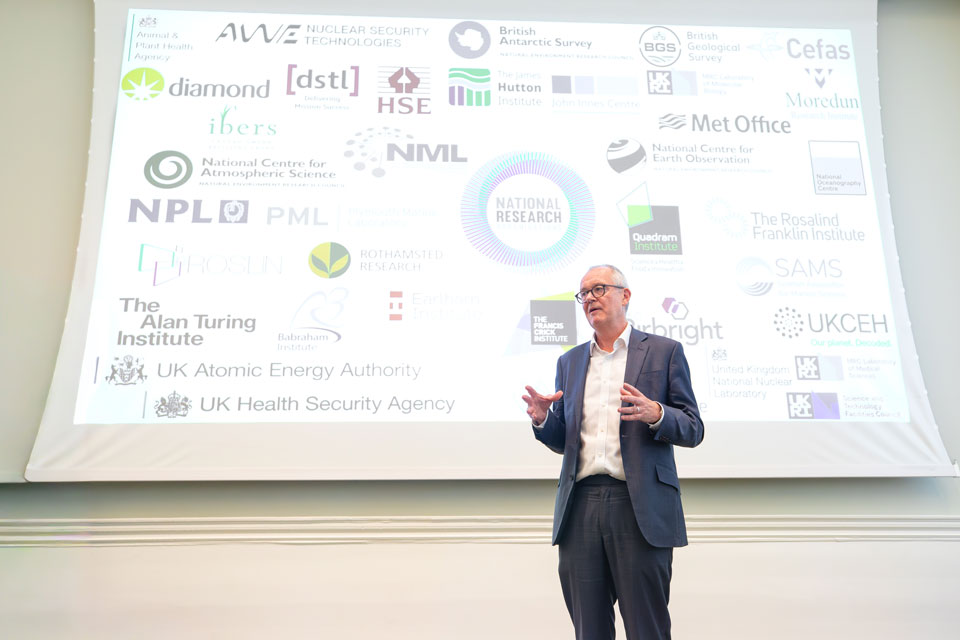
UK’s world-class research organisations launch new collective
10/07/2026
The launch of the National Research Organisations Group brings together more than 100 science leaders to provide an authorativive voice on science, research policy and long-term investment.
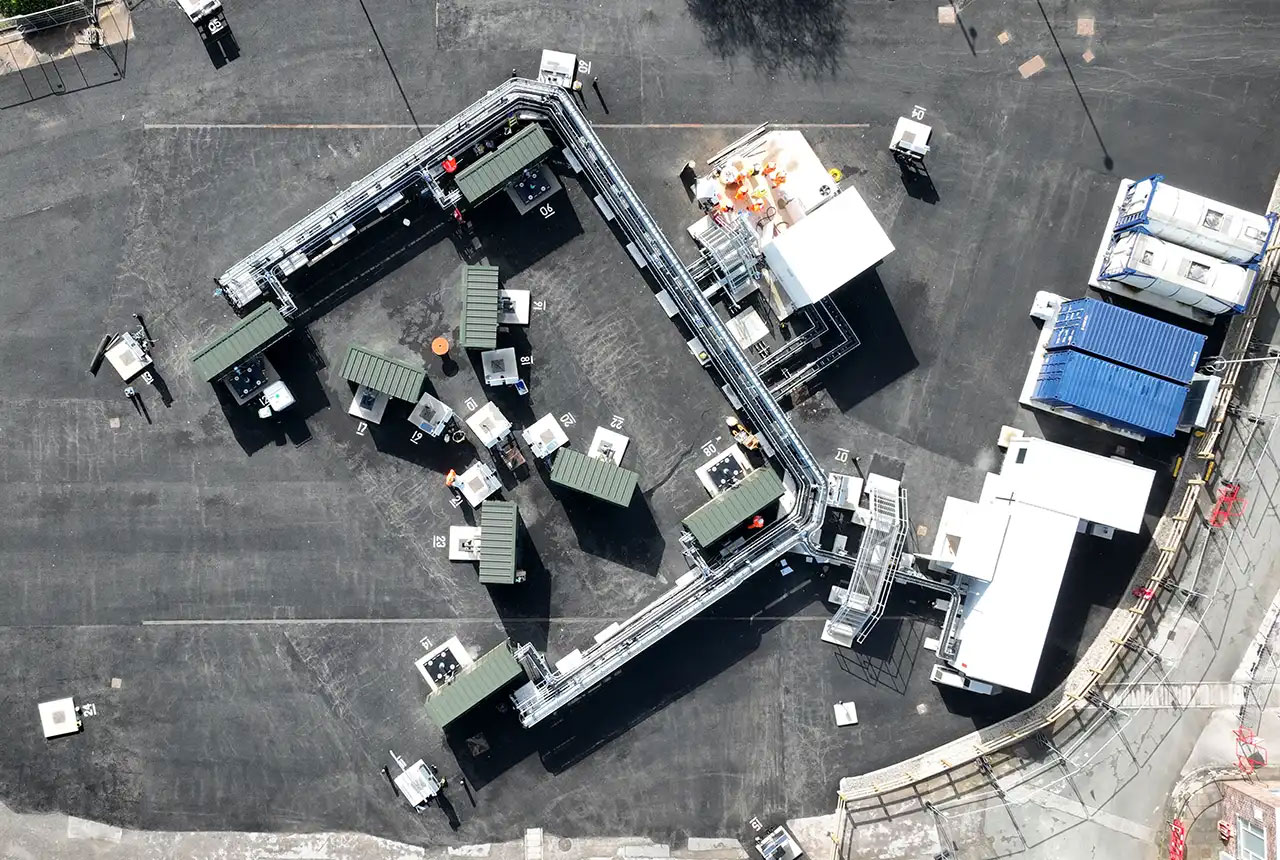
Cheshire Geoenergy Observatory releases key geological datasets for UK thermal energy storage scheme design
09/07/2026
A new report and data packs from BGS will provide a unique resource for scientists working on the geology and hydrogeology of the Sherwood Sandstone Formation, an important aquifer and reservoir rock.
New geological mapping underway to help manage flooding along the River Tweed
08/07/2026
Scientists are surveying the Tweed catchment for the first time in over 100 years to enhance understanding of localised groundwater and improve flood forecasting.