

BGS completes first mapping expedition to Ascension Island
BGS marine geoscientists travelled to Ascension Island to support its government with an ongoing, conservation-driven mapping programme.
11/12/2023 By BGS Press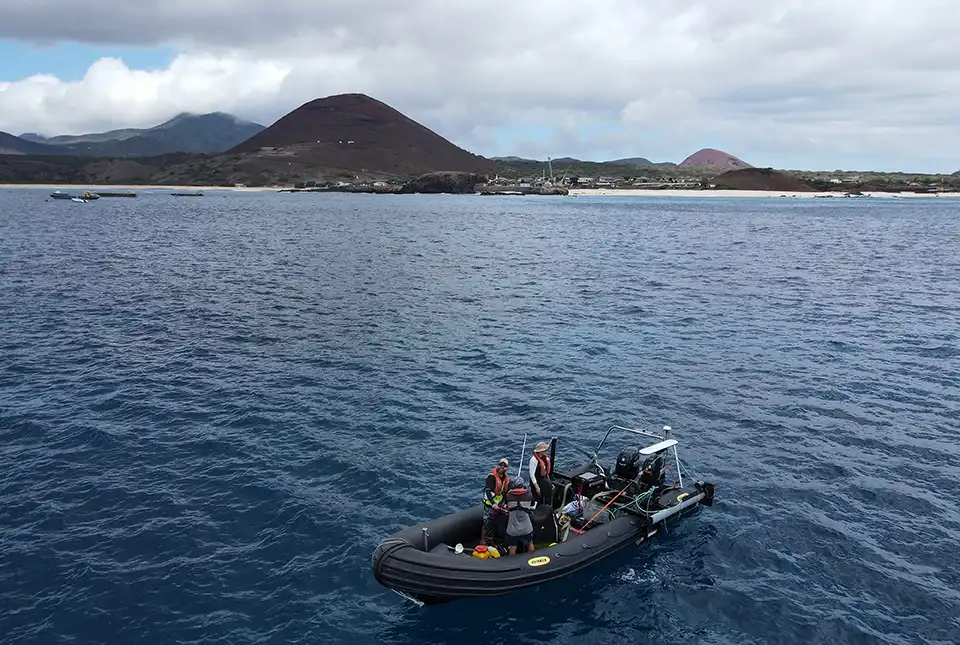

On 30 October 2023, BGS project manager and senior surveyor Rhys Cooper and marine geoscientist Catriona Macdonald took the 4000-mile journey to Ascension Island, an isolated volcanic island in the Atlantic Ocean, to undertake the first stage of a UK Government-funded project.
In 2019, BGS was awarded funding from the UK Government through Darwin Initiative, a grant scheme by the Department for Environment, Food and Rural Affairs (Defra) that funds projects aiming to protect unique biodiversity and improve resilience to climate change within the UK Overseas Territories. Following a four-year delay due to COVID-19, the project is now underway. The first expedition focused on mapping the shallow waters surrounding Ascension Island, including an area of the island that has never been mapped or surveyed before.
Working with the Ascension Island Government, this BGS-led project will determine the character, distribution and extent of the nearshore habitats of the Ascension Island Marine Protected Area (AI-MPA) through an integrated programme of surveys. The AI-MPA is rich in biodiversity; however, protected areas such as this are most at risk from anthropogenic development and climate change.
We've had a fantastic couple of weeks working with Rhys and Catriona from the @BritGeoSurvey !
The duo spent 10 days mapping #Asi's shallow waters on board the Moray with our team – no easy feat given Ascension's choppy waters!#smallislandBIGVISION
🎶:https://t.co/EUchP4ZcyO pic.twitter.com/aolJyuMgO3— Ascension Island MPA (@AscensionMPA) November 16, 2023
Resulting sea-floor habitat maps will provide the Ascension Island Government with urgently needed tools to better monitor and protect marine ecosystems, as well as underpin the evidence-based management of the AI-MPA. The data will be merged with an existing dataset collected by the Royal Navy UK Hydrographic Office (UKHO) in 2021, which has already enabled the deployment of an array of sensors to monitor the movement of sharks. The combined datasets will also allow the first detailed geomorphology, substrate and habitat maps to be produced for the island, down to a maximum depth of 1000 m.

Ascension Island is a remote location and therefore presents many unique challenges that need to be overcome if we are to be successful. We have had numerous delays that proved fortuitous: the Royal Navy completed a survey around Ascension Island during COVID-19 lockdowns, which significantly reduced the amount of data we needed to collect, lowering costs and enabling us to refine and focus our survey campaigns.
The Ascension Island Government owns a boat that was made available to the project. This simplified logistics but required a totally different methodology for deploying the survey equipment. An appropriate solution was found and trialled in the UK before shipping the equipment to Ascension Island. This ‘warm-up’ survey allowed us to check it worked, was safe to operate and ensured we had all the equipment needed.
Rhys Cooper, project manager and senior surveyor.
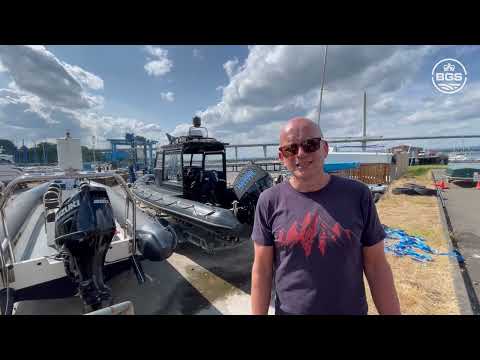

Ascension Island expedition preparation in Port Edgar. BGS © UKRI
The team is set to return to Ascension Island in January 2024 to complete the next stage of the project, which will focus on seabed sampling. A high-definition drop camera with laser scaling will be deployed to enable accurate mapping of the sea floor. The project is expected to be completed in April 2024.
This project is funded by the UK Government through Darwin Plus.

Relative topics
Related news

Demand for data centres presents challenges and opportunities for UK critical mineral supply chains
02/09/2026
Government-backed research finds that vulnerabilities in raw material supply chains must be addressed to secure the critical minerals needed to expand the UK’s digital infrastructure and boost economic growth.
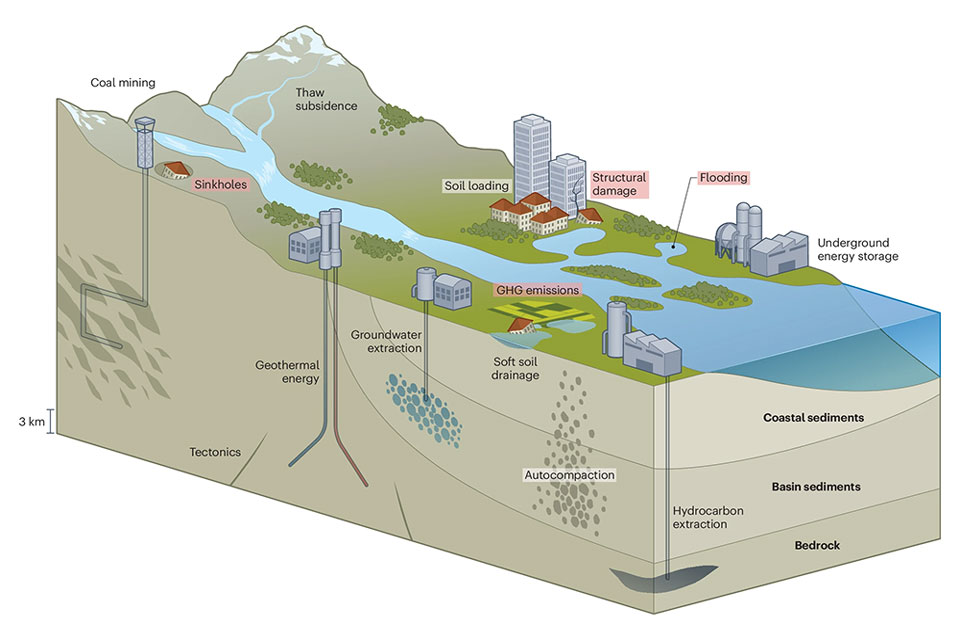
What lies beneath Europe’s sinking ground?
01/09/2026
Land subsidence is becoming increasingly visible across Europe. New research examines how better monitoring, shared data and a deeper understanding of the subsurface can help assess and manage its impacts.

Measuring the environmental impacts of carbon fibre: life cycle assessment
01/09/2026
Undergraduate student Phoebe Brown visited BGS to understand the life cycle of carbon fibre, from primary production to recycling.
Secrets of an ancient supervolcano uncovered that change our understanding of England’s geological past
28/08/2026
Scientists have found evidence of a long-hidden link between an ancient buried ash layer in Scandinavia and a concealed supervolcano in eastern England.
MaxStoreUK hydrogen geological storage policy roundtable
Event on 08/10/2026
Storage operators, regulators, licensor and government stakeholders are invited to join our roundtable discussion of hydrogen geological storage policy.
BGS research into drought-exposed soils wins award
26/08/2026
A research paper investigating how temperate soils respond to drought has been announced as the winner of the Land Best Paper Award.
Experiences from our Commonwealth Fellowship at the British Geological Survey
24/08/2026
Scientific fellowships foster professional growth, international collaboration and exposure to world-class research environments. A group of visiting Commonwealth Fellowship researchers share their experience of being hosted at the BGS Inorganic Geochemistry Facility.
UK aquifers robust despite driest July on record
16/08/2026
In a summer experiencing widespread drought, groundwater levels around the country are showing resilience, demonstrating their value as a crucial resource and indicating they could play a more significant role in mitigating the impacts of extreme weather.
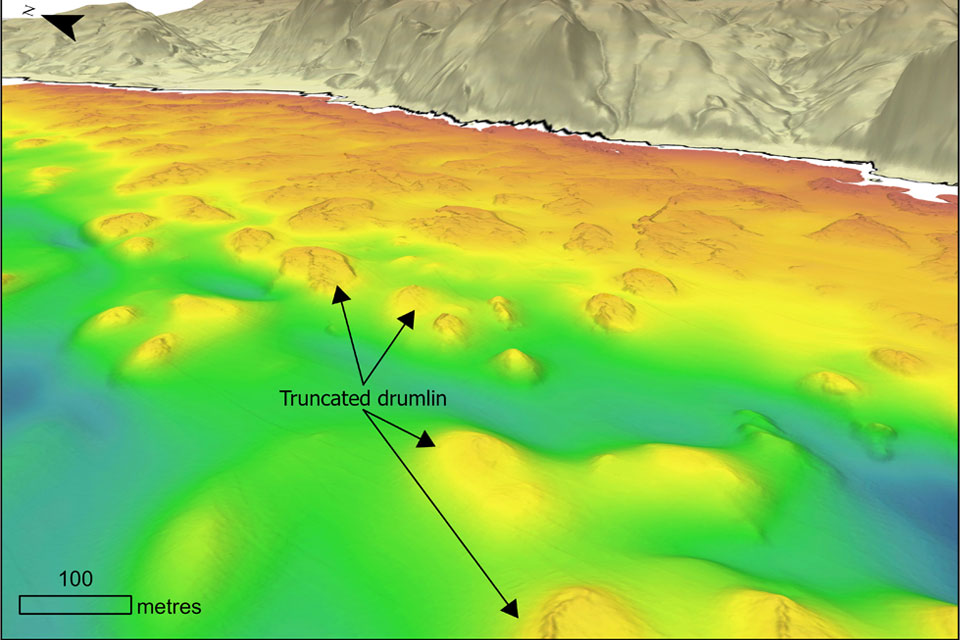
Coastal retreat in the past: the legacy of truncated drumlins
07/08/2026
The UK’s coasts have been responding to changing sea levels for thousands of years, but some of the best evidence of those changes now lies hidden beneath the waves.
BGS strengthens scientific links with Icelandic partners through Research and Innovation Scotland initiative
06/08/2026
BGS researchers recently visited Iceland as part of a project developing international partnerships and identifying opportunities for future collaborative research.
New NERC-funded project empowers young people to engage with environmental science
23/07/2026
BGS is part of a new, collaborative project, funded through NERC’s ‘Opening up the environment’ programme, helping the environmental research community become more accessible.