

New research could help provide a more reliable water supply for millions in rural Africa
A new BGS-led study has revealed crucial insights into the longstanding challenges affecting the reliability and performance of rural water supply infrastructure in sub-Saharan Africa.
24/03/2026 By BGS Press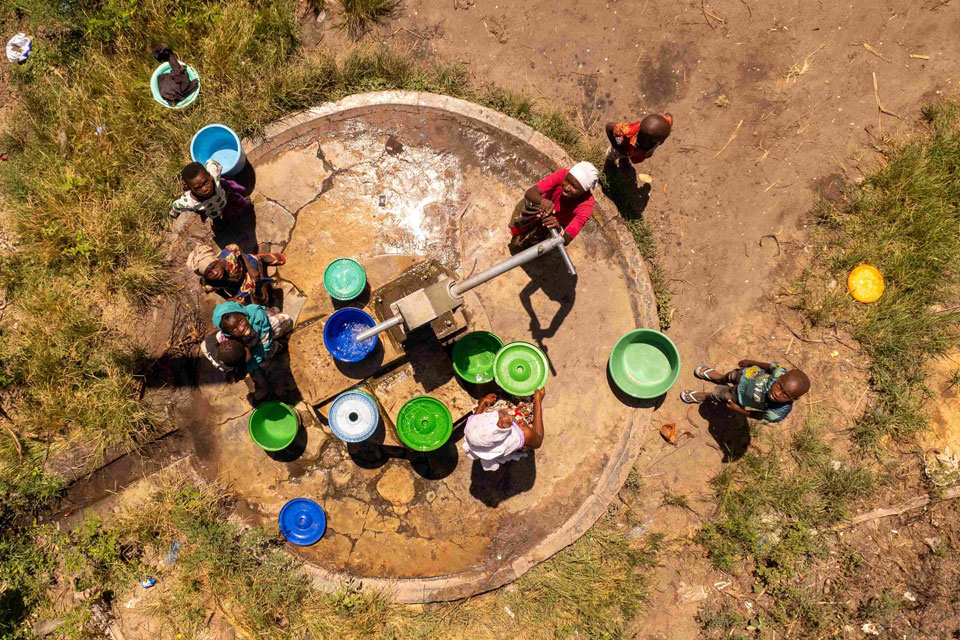

Millions of people in sub-Saharan Africa rely on hand-pumped boreholes (HPBs) for their water supply, but they are often unreliable, with frequent breakdowns and long repair times. Although there have been previous attempts to understand the difficulty of access to water in rural areas and the functionality of rural water supply systems, they have typically taken ‘siloed’ approaches and focused only on the technical or social factors that influence the supplies’ performance.
A recent paper by scientists at BGS in collaboration with WaterAid and local researchers in both Africa and the UK, shows that the failure of HPBs is not simply due to a single issue, such as a lack of water or a technical failure: it is the result of a combination of complex social, technical and physical interactions. The study provides crucial information for decision makers across governments, non-governmental organisations (NGOs) and communities aiming to make rural water access more reliable.
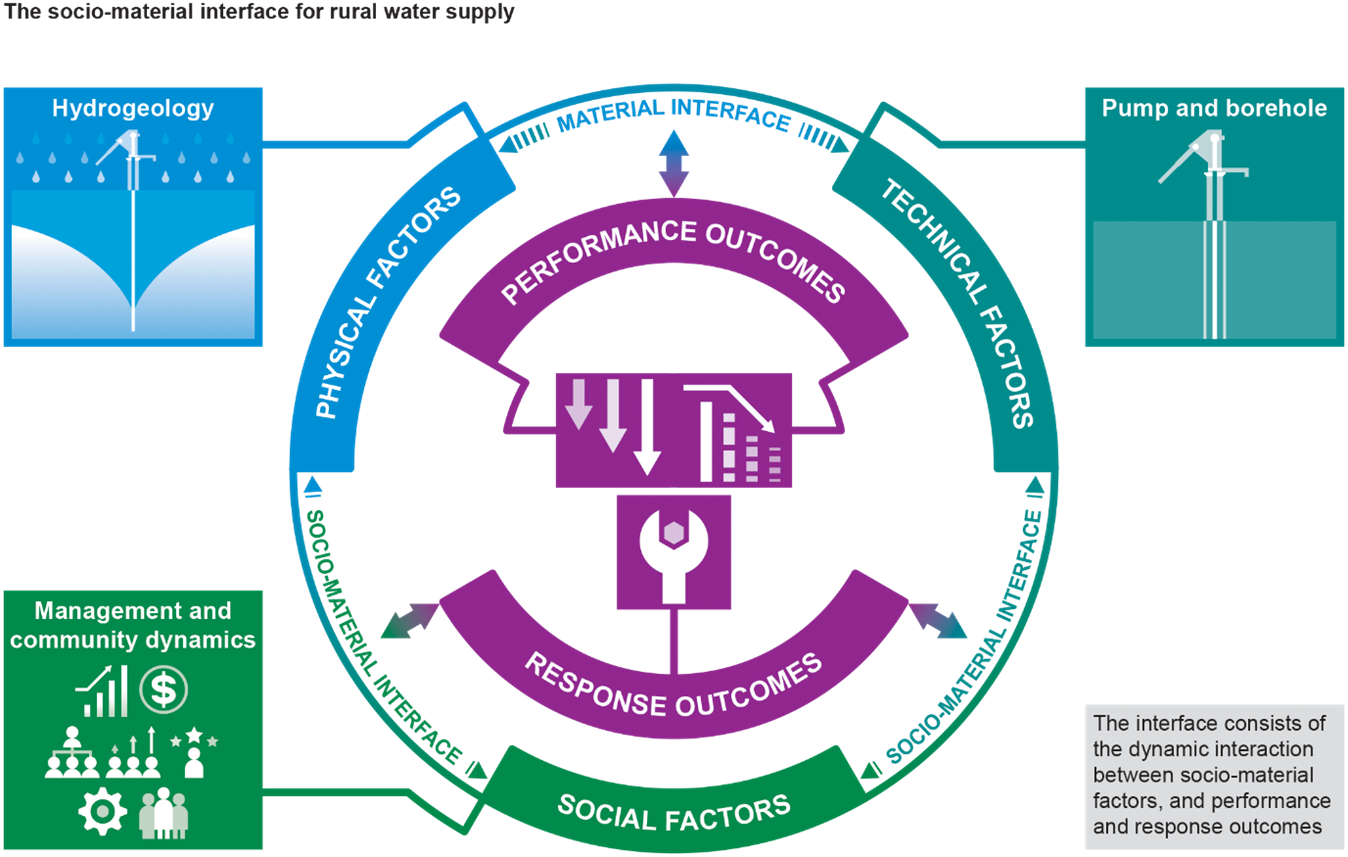
A conceptual model of the social, physical and technical factors that comprise the socio-material interface as it relates to rural HPBs. BGS © UKRI 2026
The research found that the probability of any failure occurring is dominated by physical and engineering factors: a combination of water levels, the condition of the pump, aquifer yields, and borehole construction and configuration. The length of time the pump was out of action was dominated by social factors including demand, access to spare parts and financing. The project team, led by BGS, tested current HPBs and facilitated interviews and participatory mapping events with water users and managers across Ethiopia, Malawi and Uganda. Combining statistical patterns of HPB failure with lived community experiences led to a new conceptual model that represents the diversity of real-world water-management arrangements.

This paper invites those working in rural water supply in sub-Saharan Africa to consider infrastructure performance through an interdisciplinary lens. These complex interactions can be understood by using frameworks like the one proposed in this study to improve rural water supply performance, which is especially important as rural water systems evolve towards more complex solar and piped technologies.
It’s hoped that understanding these complex interactions around rural water supplies will help governments, NGOs and communities make rural water access more reliable and fairer for all.
Dr Donald John MacAllister, BGS Senior Hydrogeologist the paper’s lead author
This research provides valuable insights into the interconnected drivers of water service downtime. Its findings come at a critical time as groundwater will continue to play a central role in meeting future water demand and strengthening drought resilience. Acting on these insights will be essential to enhance public and private sector support for water service provision through stronger regulation, improved planning, increased financing and enhanced service management.
Vincent Casey, WaterAid
The paper is now available online: Connecting narratives and numbers to investigate the interaction of social, physical and technical determinants of rural water supply performance
Relative topics
Related news
New research could help provide a more reliable water supply for millions in rural Africa
24/03/2026
A new BGS-led study has revealed crucial insights into the longstanding challenges affecting the reliability and performance of rural water supply infrastructure in sub-Saharan Africa.
Zambia’s first critical minerals guide supports the country’s potential in global clean energy transition
18/07/2025
A new guide to Zambia’s critical minerals highlights the country’s current and potential critical mineral resources, including cobalt and lithium.
Dynamics of land-to-lake transfers in the Lake Victoria Basin
09/12/2024
In June 2024, a UK/Kenya research team shared research findings from a collaborative, four-year field and experimental programme within Kenya.
UK–Philippine partnership to help tackle the challenges of future water security in the Philippines
07/11/2024
New ‘hydrological hub’ to foster research and provide essential national water management datasets and tools.
BGS Groundwater Flooding Susceptibility: helping mitigate one of the UK’s most costly hazards
25/09/2024
Groundwater flooding accounts for an estimated £530 million in damages per year; geoscientific data can help to minimise its impact.

Mining sand sustainably in The Gambia
17/09/2024
BGS geologists Tom Bide and Clive Mitchell travelled to The Gambia as part of our ongoing work aiming to reduce the impact of sand mining.
New £38 million project to reduce the impact of floods and droughts
02/09/2024
BGS will take a leading role in efforts to better predict the location and effects of extreme weather events.

New appointments to BGS Science Advisory Committee
29/08/2024
The appointments mark the latest step in the ongoing delivery of BGS’s essential geological expertise.
Warnings for Scottish farmers and distillers as new data indicates climate change may double number of droughts
23/07/2024
The agricultural and distilling sectors could face significant challenges after research finds the number of droughts in Scotland may double in the next 25 years.
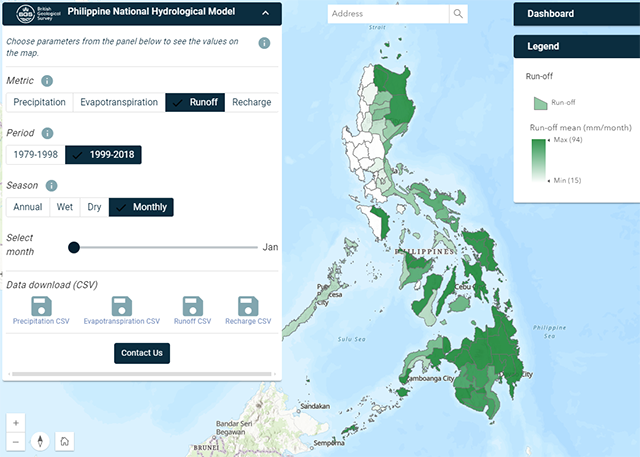
Philippine Hydrological Model
The first national-scale hydrological model of the Philippines.

Glacial, periglacial and permafrost modelling
Glacier ice and permafrost have important implications for global water security and energy infrastructure
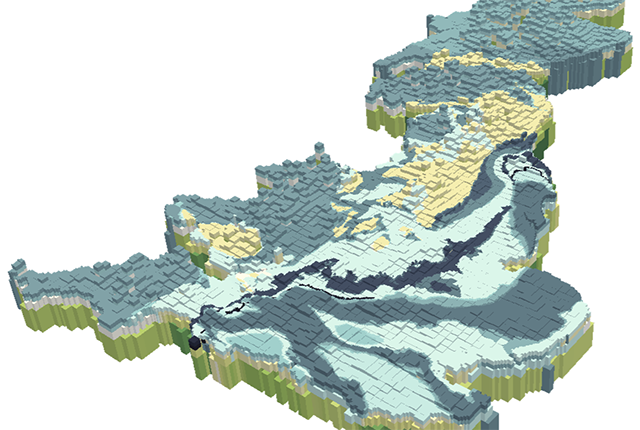
British Groundwater Model
A unique tool for simulating groundwater resources at the national scale.