

From archive to discovery: historical mineral reports support gold exploration in Scotland
Digitised geological records show potential to unlock untapped mineral resources in Ardlochan, Argyllshire.
25/06/2026 By BGS Press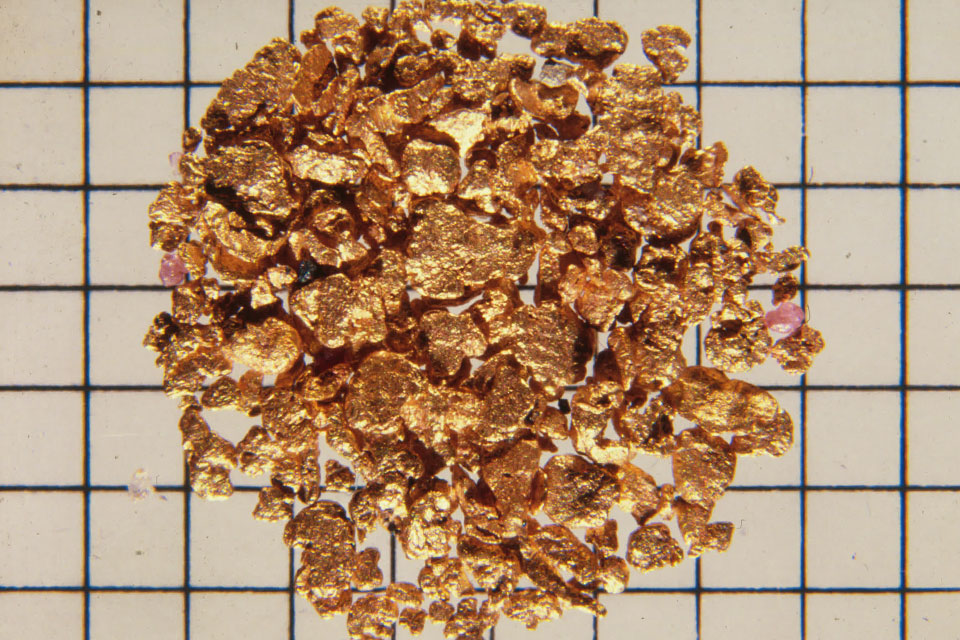

The Mineral Exploration and Investment Grants Act 1972 (MEIGA) provided a stimulus for mineral exploration in the UK. Under the Act, the Government’s Department of Trade and Industry gave grants for mineral exploration for non-ferrous metals, fluorspar, barium minerals and potash. Compiled largely during the 1970s and 1980s, reports detailing the exploration undertaken contain a rich variety of information, including geological mapping, soil and stream sediment geochemistry, geophysical surveys, drillcore logs and assay data.
Previously, these ‘MEIGA’ reports were only available to view in hard copy through BGS’s National Geoscience Data Centre (NGDC). In 2023, a digitisation programme, carried out in collaboration with the UK Critical Minerals Intelligence Centre (CMIC), released an initial batch of over 200 mineral exploration reports. A further release of digitised reports this year (2026) has meant that an additional 660 reports have been added to the accessible collection, ensuring that data collected over forty years ago is openly available and newly relevant for identifying critical and precious metal resource potential within the UK.
The significance of this release is already being demonstrated in the Ardlochan area of south-west Scotland. At the end of 2025, Western Gold Exploration completed a programme of shallow drilling in the area, which discovered a large, vertical tube of broken rock (a ‘breccia pipe’ system) that was at least 140 m wide and rich in gold. The company then drew on MEIGA materials, originally generated by exploration companies Noranda Mining Limited and Phelps Dodge in the 1970s and 1980s, to complement its own surveys and recent drilling in order to target other sites of interest.

The MEIGA dataset for Ardlochan is already playing a key role in refining a new generation of exploration targets, especially those associated with gold-rich porphyry–breccia systems. A major advantage of the datasets is that they capture Ardlochan at a time when the area was largely unforested. This allowed for far more detailed bedrock mapping than is possible today and provides a clearer geological framework from which to work.
Just as importantly, the reports offer insight into the exploration concepts and decision making used by major operators in the 1970s and 1980s. These companies invested heavily in systematic regional work, identifying features and prospects that were subsequently forgotten as corporate priorities shifted. Integrating these historic insights with modern techniques is enabling us to rebuild the geological story of Ardlochan and accelerate target development with a level of confidence that would not otherwise be possible.
Calum Lyell, Western Gold Exploration.
Exploration can be very expensive and uncertain, often requiring companies to repeat baseline surveys to establish context. By providing open access to MEIGA reports, BGS (through CMIC and the NGDC) is helping to reduce duplicate efforts, enabling more targeted investment. For smaller firms, this pre-competitive data supports innovation and lowers barriers to entry.
The digitisation of BGS archive documents is a major effort in valorising legacy datasets that can have a major impact at minimal cost for the exploration sector. We are continuously working towards refining accessibility to these documents, notably applying various machine learning methods to automate the extraction of data contained in these pages to make them publicly available, as well as developing large language models for personalised, one-to-one interaction with the archived volumes.
Pierre Josso, deputy director, CMIC.
For the National Geoscience Data Centre, the renewed impact of the MEIGA archive demonstrates exactly why long‑term stewardship of geoscience data matters. Historic materials only realise their full value when they are preserved, digitised and made accessible. Funding the systematic scanning of these legacy collections is essential not only to safeguard the record, but also to ensure that insights captured decades ago can actively inform modern exploration, reduce duplication of effort and unlock new scientific and economic opportunities. The success at Ardlochan shows that well‑curated archives don’t just tell the story of past work; they directly enable the discoveries of today.
Alison Steven, data operations and governance lead, NGDC at BGS.
Relative topics
Related news
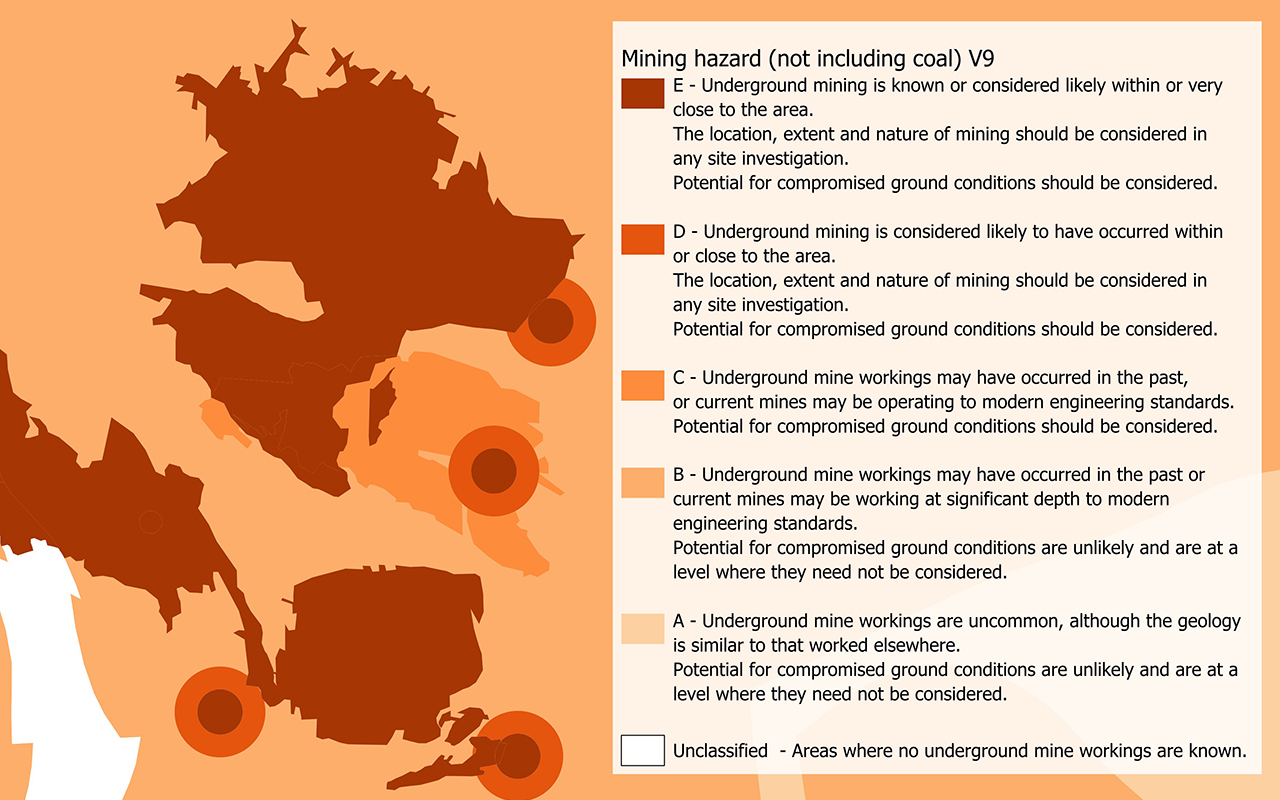
Mining hazard (not including coal)
The mining hazard dataset provides essential information for planners and developers building in areas of former shallow underground mine workings.

Demand for data centres presents challenges and opportunities for UK critical mineral supply chains
02/09/2026
Government-backed research finds that vulnerabilities in raw material supply chains must be addressed to secure the critical minerals needed to expand the UK’s digital infrastructure and boost economic growth.

Measuring the environmental impacts of carbon fibre: life cycle assessment
01/09/2026
Undergraduate student Phoebe Brown visited BGS to understand the life cycle of carbon fibre, from primary production to recycling.
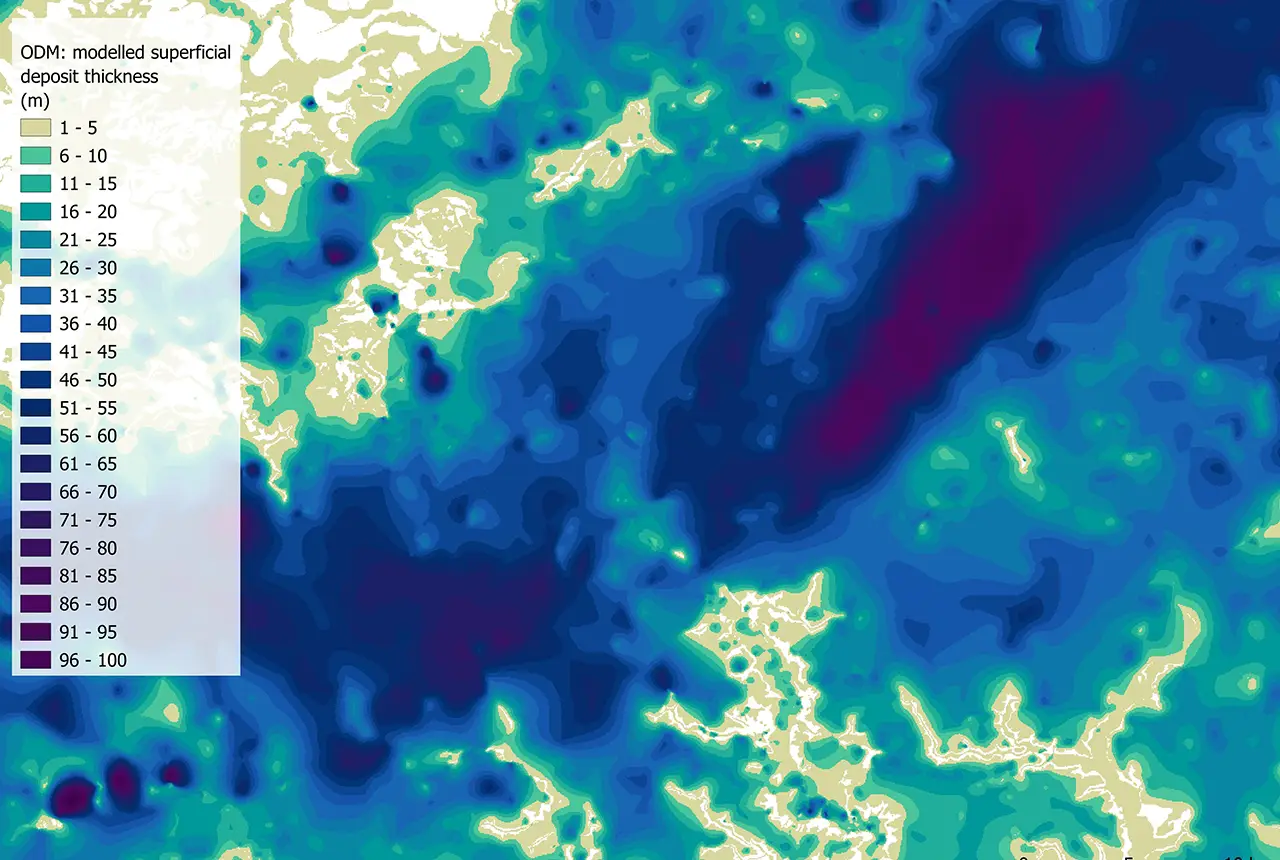
Updated national 3D model will determine the depth to the solid bedrock beneath our feet
13/07/2026
The BGS Superficial Deposit Thickness Model now includes an elevation model of geological rockhead for the first time, providing important data for civil engineers, geoscientists and environmental scientists.
UK Critical Minerals Intelligence Centre makes recommendations for the next UK criticality assessment
01/07/2026
CMIC has outlined the enhancements made to the next assessment update to ensure it is better tailored to the structure of the UK economy.
From archive to discovery: historical mineral reports support gold exploration in Scotland
25/06/2026
Digitised geological records show potential to unlock untapped mineral resources in Ardlochan, Argyllshire.

Shortage of end-of-life materials presents challenge to UK critical minerals security
17/06/2026
A new report by the UK Critical Minerals Intelligence Centre reveals insufficient end-of-life material stocks present a supply risk over the coming decade, but offer significant long-term potential to meet critical mineral demand through recycling.
Ukraine and the UK strengthen their commitment to geological cooperation
10/06/2026
A new Memorandum of Understanding reaffirms the UK’s support of Ukraine’s ambitions to develop its critical mineral resources, paving the way for collaboration through capacity-building programmes.
Newly released core could hold clues on potential mineral prospectivity in Perthshire
05/06/2026
A comprehensive collection of geological samples from the vicinity of a former mine in Scotland is now available to scientists for further research.
Latest data on world mineral production now available
25/05/2026
BGS has released the updated statistics on the global production of over 70 commodities between 2020 and 2024.

New geological maps of Berwick-upon-Tweed to help future-proof natural water supply
20/05/2026
Scientists have mapped the geology under the town to better understand the groundwater system to inform decisions around abstraction.

BGS contributes to UN sand and sustainability report
19/05/2026
The new report highlights the impact of poor governance and unsustainable sand mining practices, calling on policymakers to take action.