
Secrets of an ancient supervolcano uncovered that change our understanding of England’s geological past
Scientists have found evidence of a long-hidden link between an ancient buried ash layer in Scandinavia and a concealed supervolcano in eastern England.
28/08/2026 By BGS Press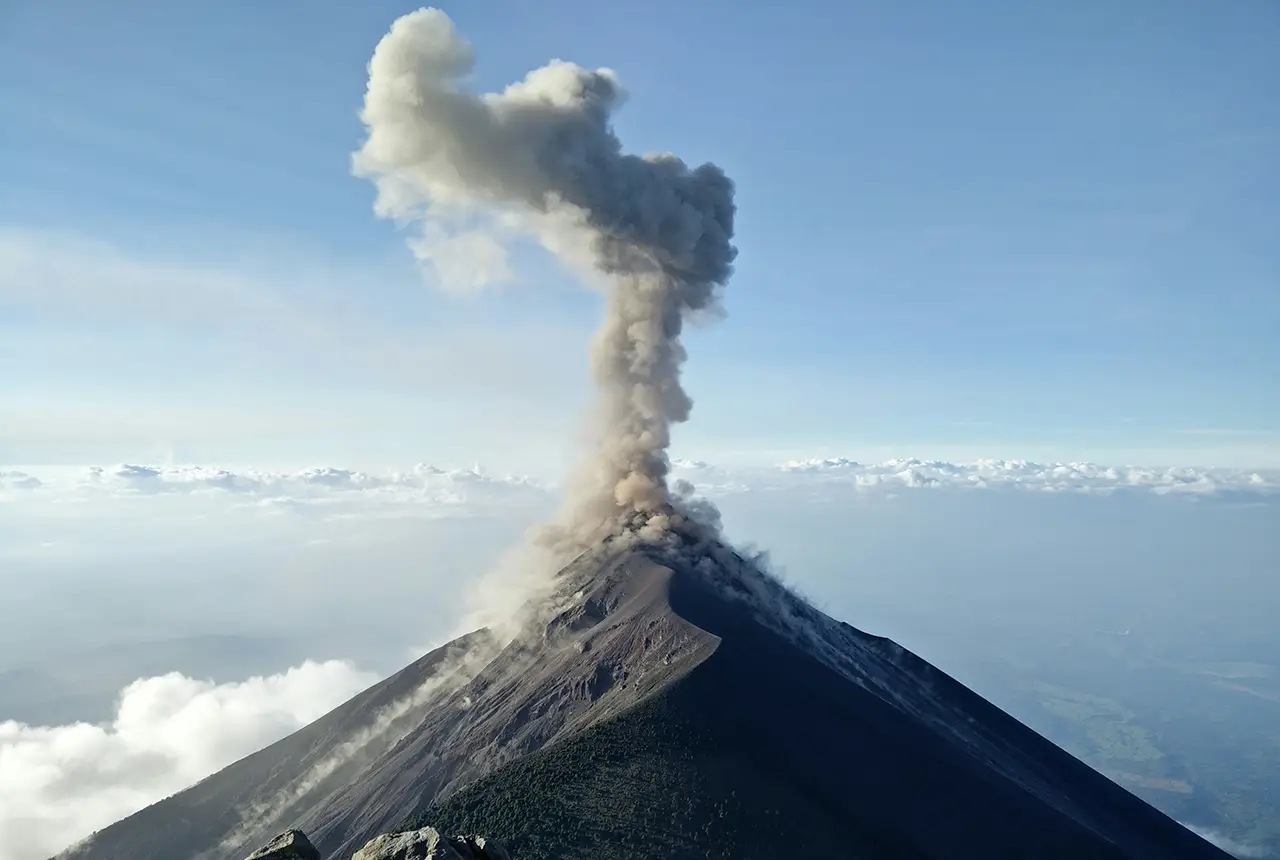

The origin of the Kinnekulle tephra, a huge volcanic ash layer spread across Norway, Sweden, the Baltic region, Belarus and Poland, has long been a mystery but new evidence may have uncovered the source of the ash for the first time.
Scientists at the British Geological Survey (BGS) and the University of Oslo have studied tiny crystals, smaller than the diameter of a human hair, extracted from boreholes 65 km apart in Lincolnshire and Norfolk. The analysis uncovered evidence of a 454 million year old supervolcano, now concealed beneath The Wash on the east coast of England.
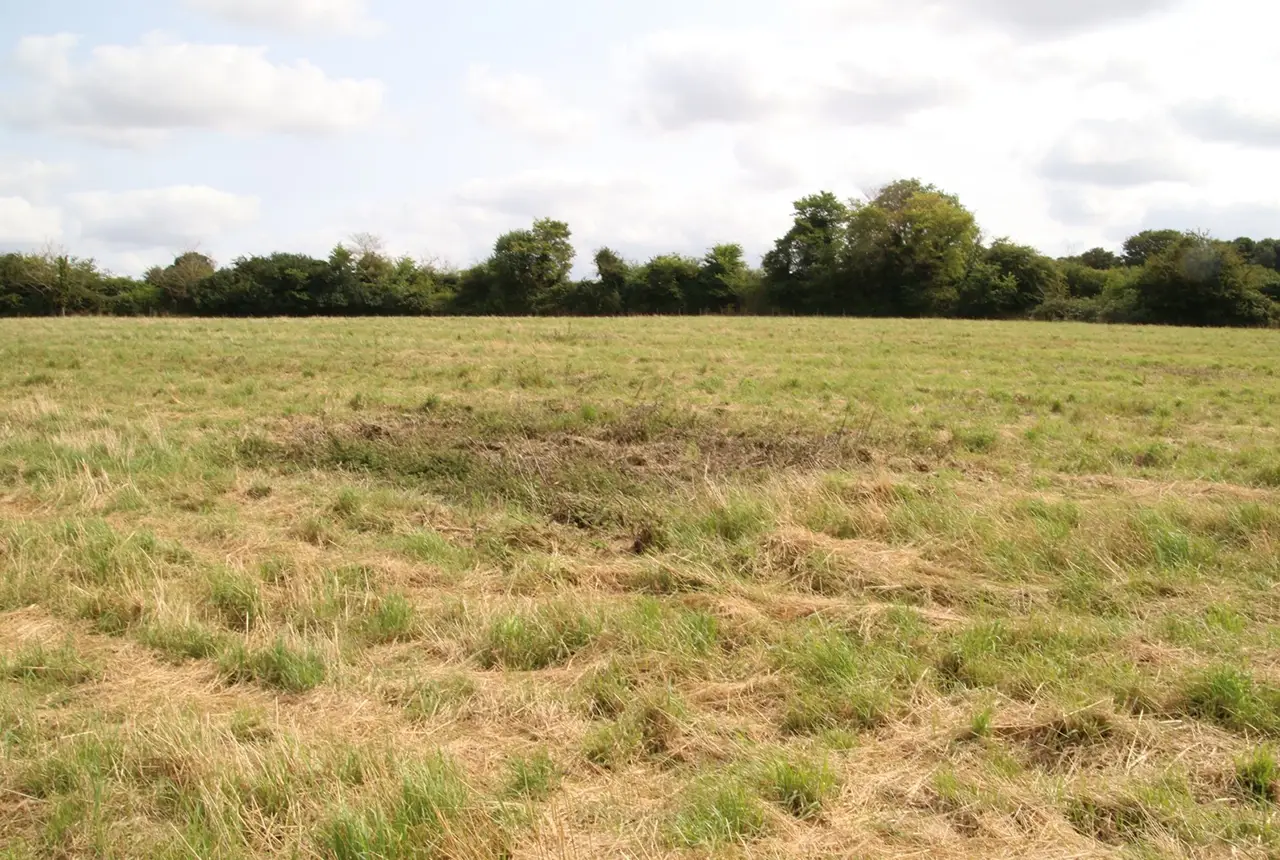
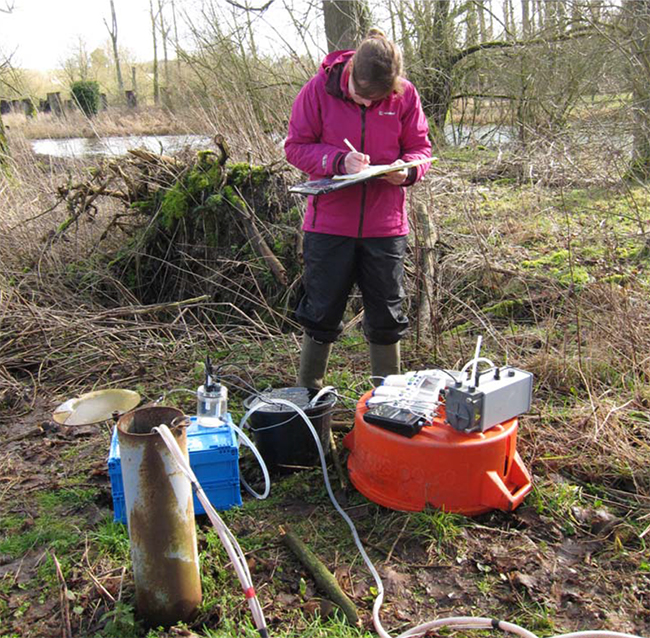
Location of one of the borehole samples studied, at North Creake in Norfolk. There is no evidence in this landscape of the former supervolcano concealed deep below. 454.45 million years ago several hundred to a thousand cubic kilometres of the Earth’s crust were thrown into the stratosphere by eruptions with a force equivalent to several thousand H-bombs, one of the largest eruptions in recorded Earth history. © Tim Pharaoh
Volcanic rocks of comparable age comprise the rugged topography of Eryri (Snowdonia) and the Lake District. A belt of arc volcanism extended from the Lake District towards Belgium in late Ordovician times, when England was separated from Scandinavia by an oceanic basin. The geography was probably comparable to the West Pacific region (Korea–Japan–Indonesia) today.
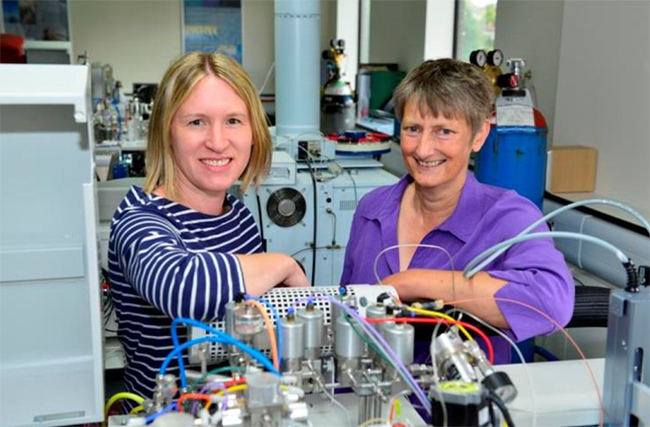
Using cutting-edge analytical techniques at BGS’s laboratories, scientists have been able to examine zircon crystals, which form within molten magma before a volcano erupts. Over time, uranium within the zircon slowly decays into lead isotopes, analysis of which enables the age of eruption to be precisely determined. The research reveals that the zircon crystals at both sites were formed at approximately the same time, about 454.4 million years ago. Researchers at the University of Oslo had previously obtained an almost identical age for the Kinnekulle tephra in the Oslo region.
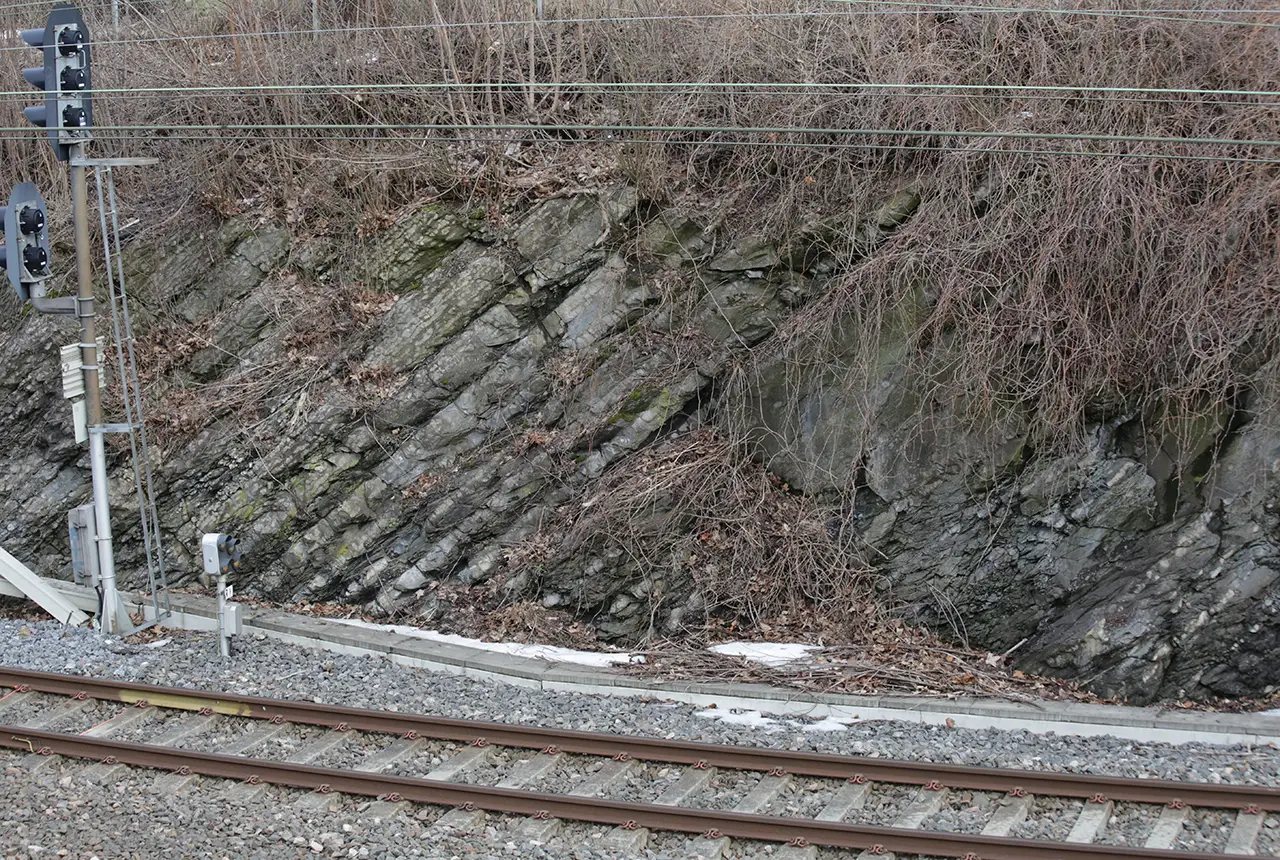
Embankment of the railway line north of Oslo, close to Sinsen station. Dipping strata of the Arnestad Formation (Sandbian Stage, Late Ordovician), comprise light grey coloured shales containing thin beds of grey-green altered volcanic ash (tephra) likely erupted from the ‘Wash Supervolcano’. The Kinnekulle tephra, here about 130 cm thick, lying close to the smaller snow patch, represents the ‘fall-out’ from an Ultra-plinian volcanic eruption in eastern England 454.45 million years ago. © Tim Pharaoh
The scientists believe that the near‑identical ages suggest that ash from the eruption plume in what is now eastern England was blown across the Tornquist Sea, which separated England and Scandinavia, and settled on the sea floor of ancient Scandinavia. Further support for this hypothesis is provided by chemical analysis of apatite crystals in both the proposed source and the tephra. During the highly explosive ‘super-Plinian’-type eruption, hundreds of cubic kilometres of rock were launched into the stratosphere by the force of the blast. One of the samples also contained younger zircon grains, dated to 453.70 million years, reflecting a further eruption associated with the collapse of the volcanic caldera.

More than 454 million years ago, a supervolcano now hidden beneath some of England’s flattest landscapes, produced some of the biggest eruptions in recorded Earth’s history. We believe that, thanks to cutting edge-analysis, we have been able to provide evidence that the source of the ash layer in Scandinavia originated from this supervolcano, reshaping our understanding of England’s deep geological past.
Tim Pharaoh, BGS, principal author of the paper.
The research paper, ‘The Wash Igneous Complex of eastern England: a candidate Avalonian source for Sandbian tephra in Baltoscandia and implications for closure of the Tornquist Sea’, is now available to read.
The analytical work for the the supervolcano project was funded by The National Environmental Isotope Facility (NEIF) is an integrated analytical platform funded by the Natural Environment Research Council (NERC), part of UK Research and Innovation (UKRI).
Relative topics
Related news
Tsunami sediments study and satellite mapping | Japan fieldwork 2011
24/06/2011
BGS scientists visited north-east Japan to study the area devastated by the tsunami caused by the Great Tohoku earthquake of 11 March 2011.