

BGS research facility gains international recognition
The National Geological Repository has been recognised as an International Geo-Collection, highlighting its importance in supporting industry, academia and Government policy.
11/11/2026 By BGS Press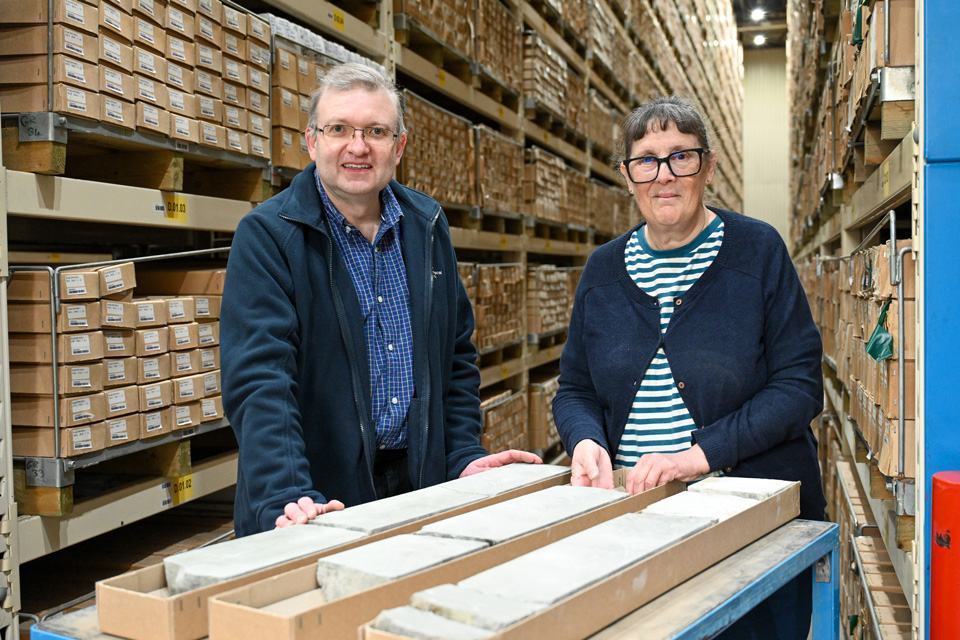

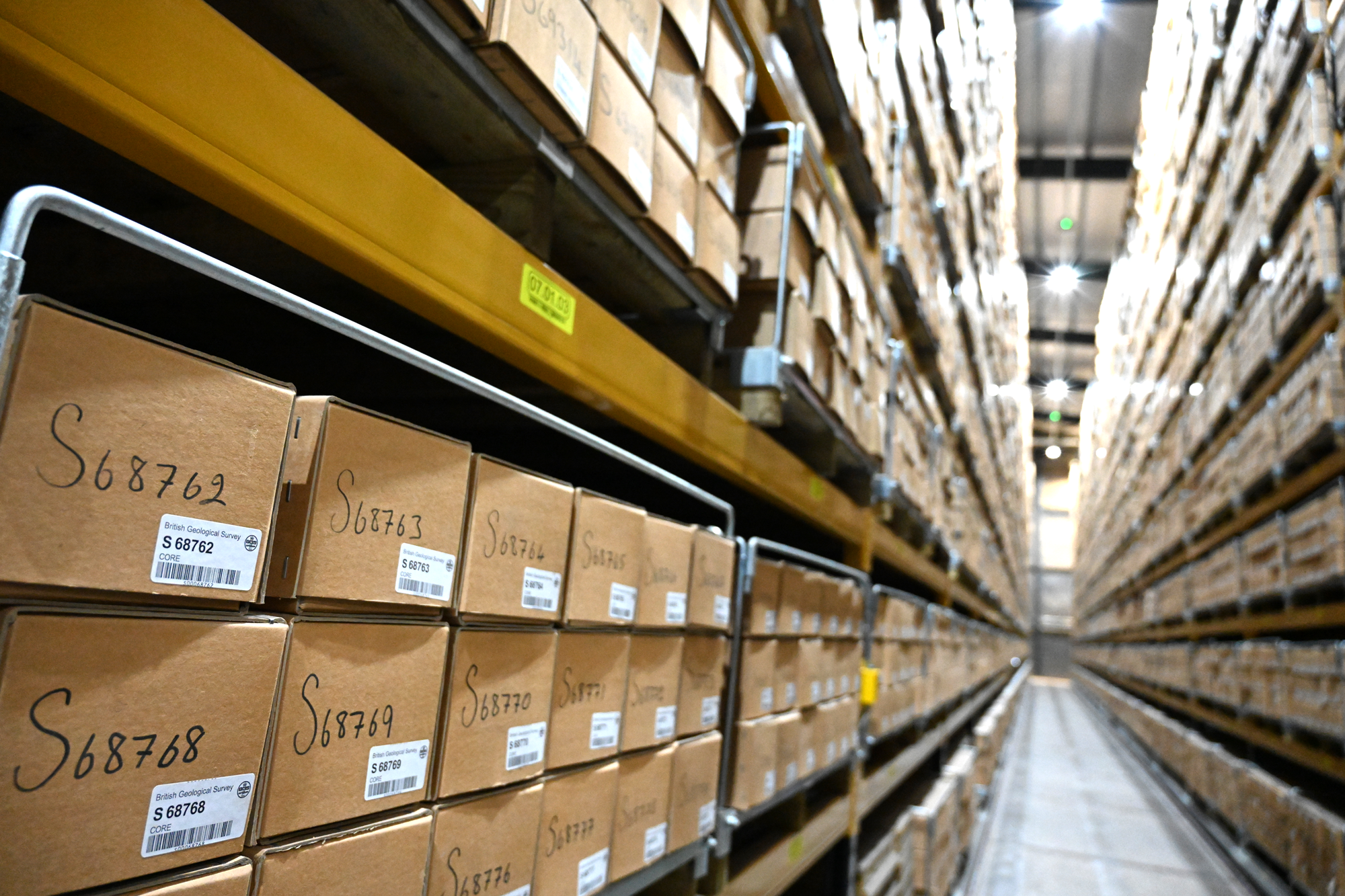
Located at BGS’s headquarters in Keyworth, Nottinghamshire, the National Geological Repository (NGR) is the UK’s most comprehensive collection of geological materials, consisting of over 600 km of drillcore and 16 million specimens from the UK and its continental shelf. The material, which has been collected over the last 200 years, represents around 500 million years of geological time and helps us to understand the evolution of the Earth.
The onshore component of the NGR’s drillcore collection, with 12 500 individual boreholes represented, 200 km of continuous drillcore and 1 million hand specimens, has been recognised by the International Union of Geological Sciences (IUGS) as a designated IUGS Geo-Collection — a museum collection of global importance because of its high scientific, historical or educational relevance for geological sciences.
The NGR is now one of 32 collections recognised globally by the IUGS. In total, the IUGS has designated 300 geological heritage sites across the globe since 2022. Alongside the heritage sites and collections, the IUGS has designated 65 ‘heritage stones’, building stones that are recognised for their cultural and architectural significance.
Geoscience is constantly evolving; however, physical core samples remain the only direct observation of the subsurface and their analysis is critical to the energy transition and associated technologies, such as carbon capture and subsurface storage. The NGR’s drillcore collection has underpinned research, informed policy and driven economic growth in the UK over the last eight decades. The collection is constantly growing and reflects changing subsurface policy and priorities. It also contributes to wider understanding of UK geology and BGS’s mapping programmes.
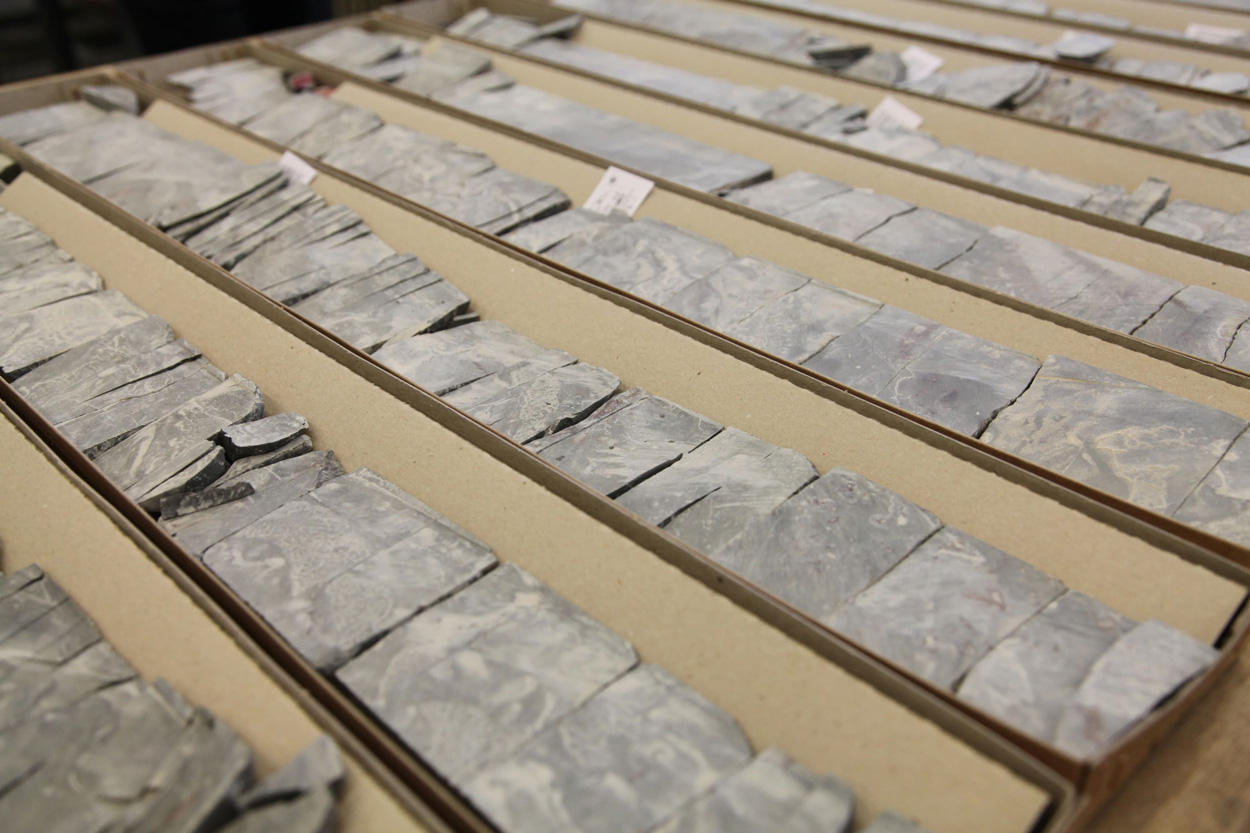
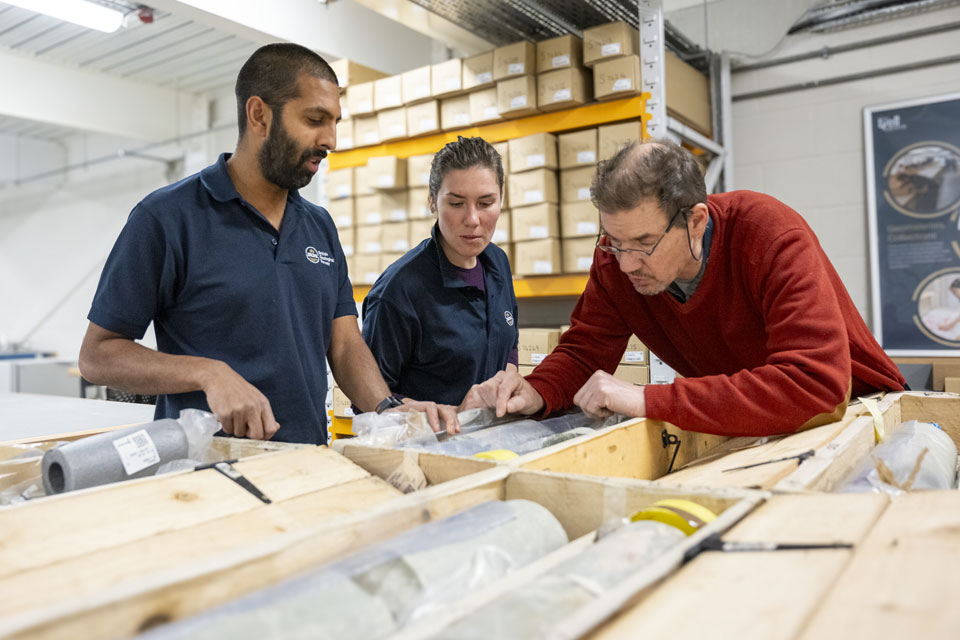
Drillcore samples laid out for examination in one of the NGR viewing labs. BGS © UKRI
In 2025, the NGR released a study that revealed its value to the UK economy. The economic analysis shows that the NGR saves major energy and infrastructure projects significant costs through access and re-use of pre-drilled rock core:
- £1.5 billion in avoided drilling and analysis costs for major energy and infrastructure projects over the last 20 years
- up to 36 times return on investment based on costs of maintaining the facility
- time savings of around three years per infrastructure project through access to legacy core samples

Our relationship with the subsurface is constantly changing. Areas previously explored for coal are now being considered for geothermal, whilst regions once prized for oil and gas are now potential locations for hydrogen or energy storage. Having long-term data and specimen holdings like the onshore drillcore collection, which can be re-interrogated repeatedly over time, is priceless.
We are delighted that the NGR onshore collection has been recognised by the IUGS and designated as an official Geo-Collection.
Simon Harris, collections conservation and digitisation manager at BGS.
The NGR was officially announced as an IUGS Geo-Collection at the Third 100 IUGS Geoheritage Event 2026, which took place in Algarve, Portugal, betweeen 4 to 8 November 2026.
Find out more about why we store geological core.
Relative topics
Related news
BGS research facility gains international recognition
11/11/2026
The National Geological Repository has been recognised as an International Geo-Collection, highlighting its importance in supporting industry, academia and Government policy.
BGS celebrates half a century in Keyworth
28/10/2026
2026 marks 50 years since BGS, the world’s oldest national geological survey, relocated to the site of our current headquarters, just outside Nottingham.
Forties at 56: the North Sea discovery that’s informing the energy transition five decades later
26/10/2026
Geological samples recovered from the UK’s first giant oil field in the 1970s continue to inform industry and researchers aiming to support the UK’s energy security needs.
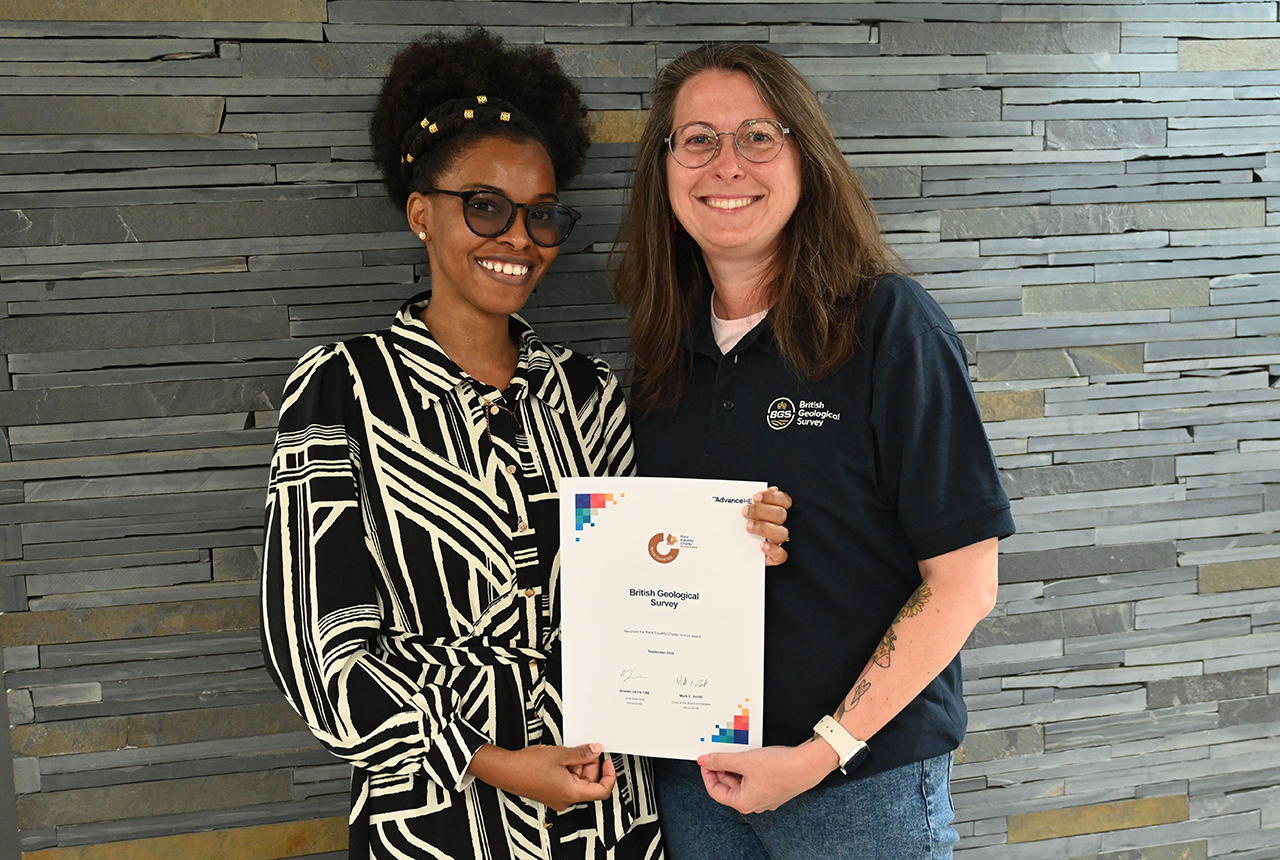
BGS one of the UK’s first specialist research institutes to receive Race Equality award
20/10/2026
BGS has secured Bronze accreditation under the Advance HE Race Equality Charter framework, recognising its commitment to identifying and addressing race equality issues in the geosciences.
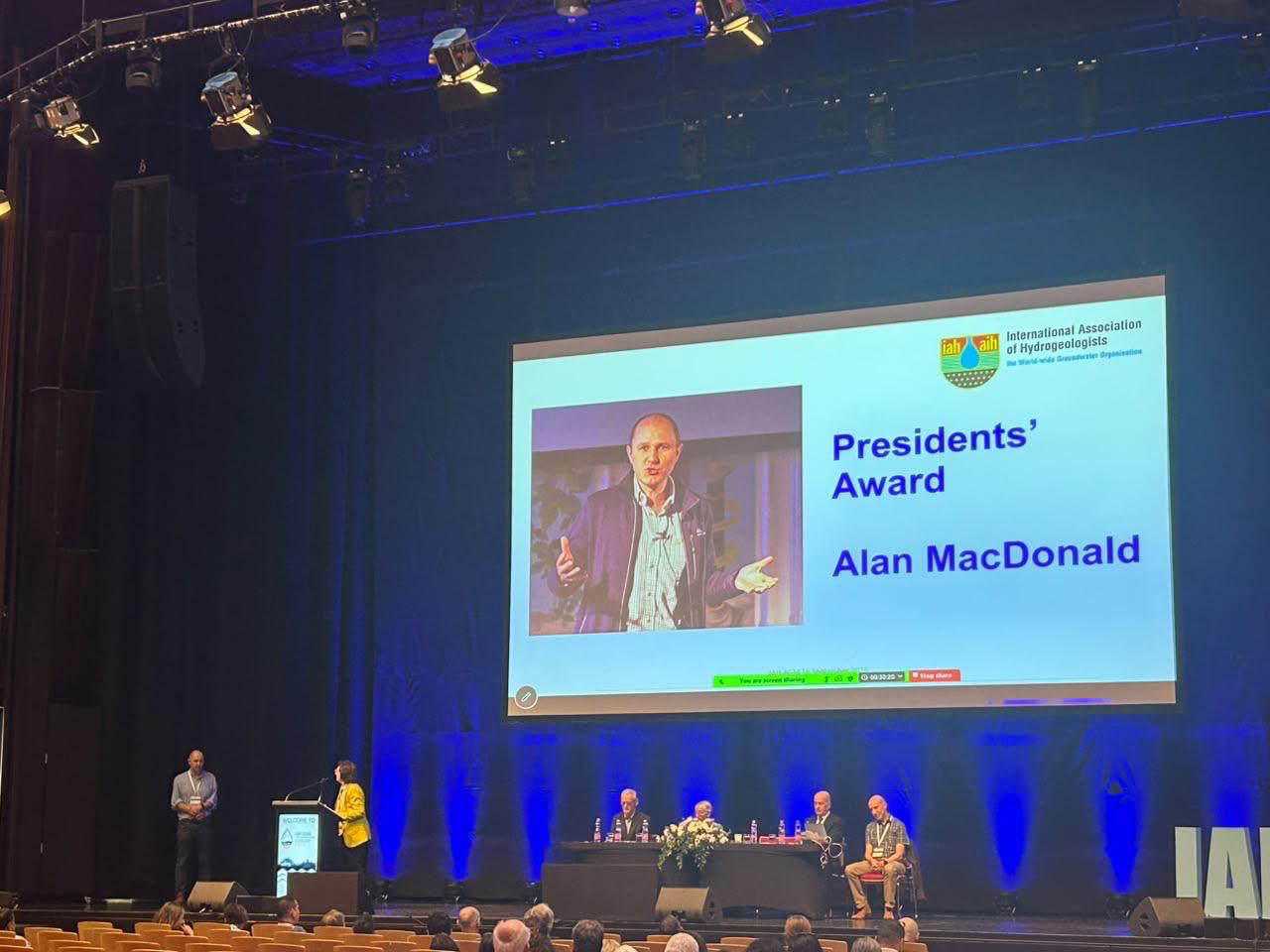
Professor Alan MacDonald presented with Presidents’ Award at 2026 World Groundwater Congress
21/09/2026
The BGS Head of Groundwater has been recognised with this prestigious award by the International Association of Hydrogeologists for his extensive contributions to groundwater science.
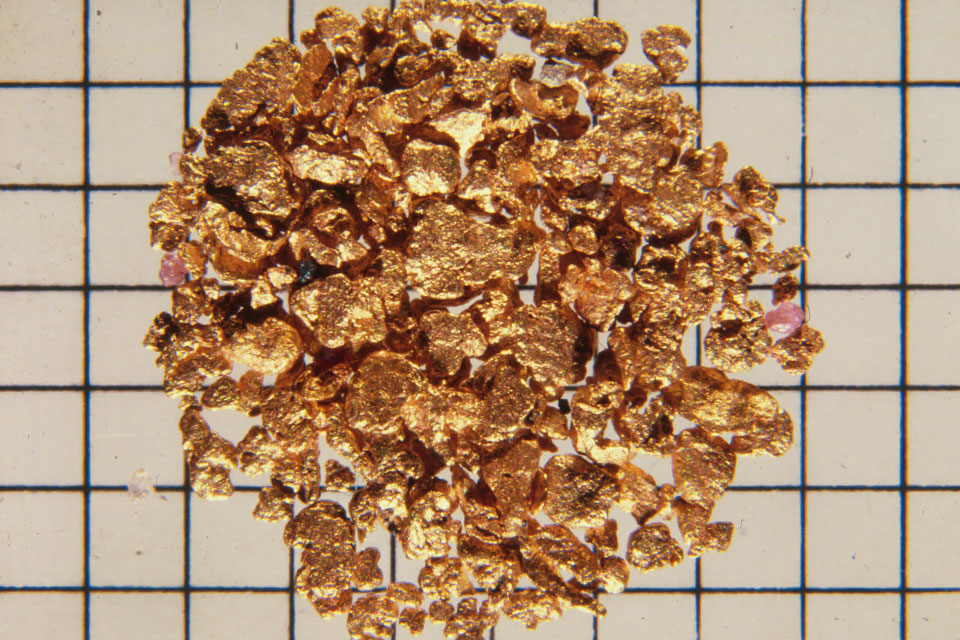
From archive to discovery: historical mineral reports support gold exploration in Scotland
25/06/2026
Digitised geological records show potential to unlock untapped mineral resources in Ardlochan, Argyllshire.
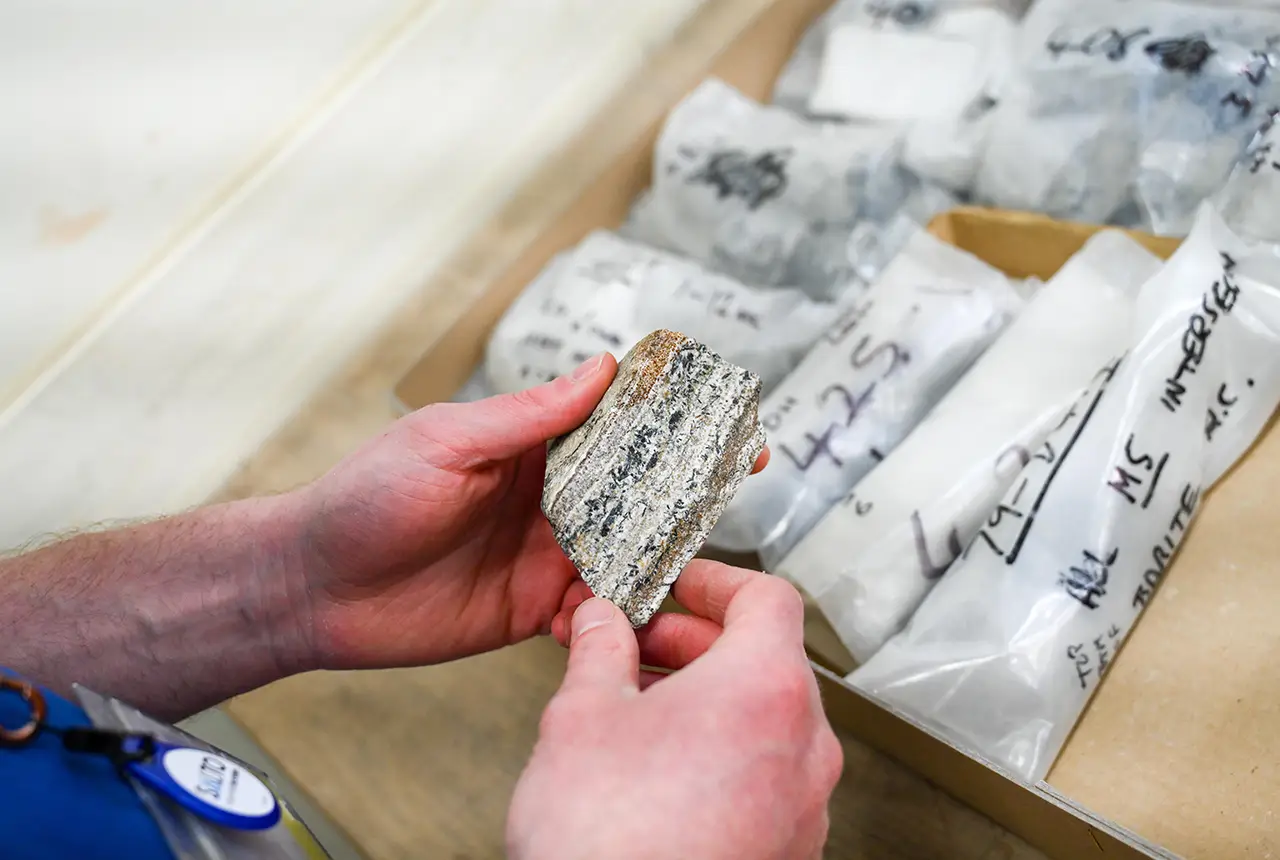
Newly released core could hold clues on potential mineral prospectivity in Perthshire
05/06/2026
A comprehensive collection of geological samples from the vicinity of a former mine in Scotland is now available to scientists for further research.
Scientists gain access to ‘once in a lifetime’ core from Great Glen Fault
01/12/2025
The geological core provides a cross-section through the UK’s largest fault zone, offering a rare insight into the formation of the Scottish Highlands.

GSNI project wins multiple awards at RegioStars event
17/10/2025
The AGEO project enjoyed a double success at the RegioStars awards, hosted at the European Commission in Brussels.

Dr Angela Lamb appointed as honorary professor by the University of Nottingham
02/10/2025
Dr Lamb will take up the position of honorary professor of environmental geochemistry, with a focus on collaborative research.
BGS-led paper scoops prestigious award
16/09/2025
New research providing earlier warnings of landslides has been awarded the British Geotechnical Association medal.
Why do we store geological core?
11/09/2025
With space at a premium and the advance of new digitisation techniques, why does retaining over 600 km of physical specimens remain of national importance?