

Mystery of one of the earliest recorded space weather impacts solved
BGS scientists were part of an international team that has solved a 178-year-old mystery surrounding one of the earliest recorded examples of space weather affecting technology.
17/09/2026 By BGS Press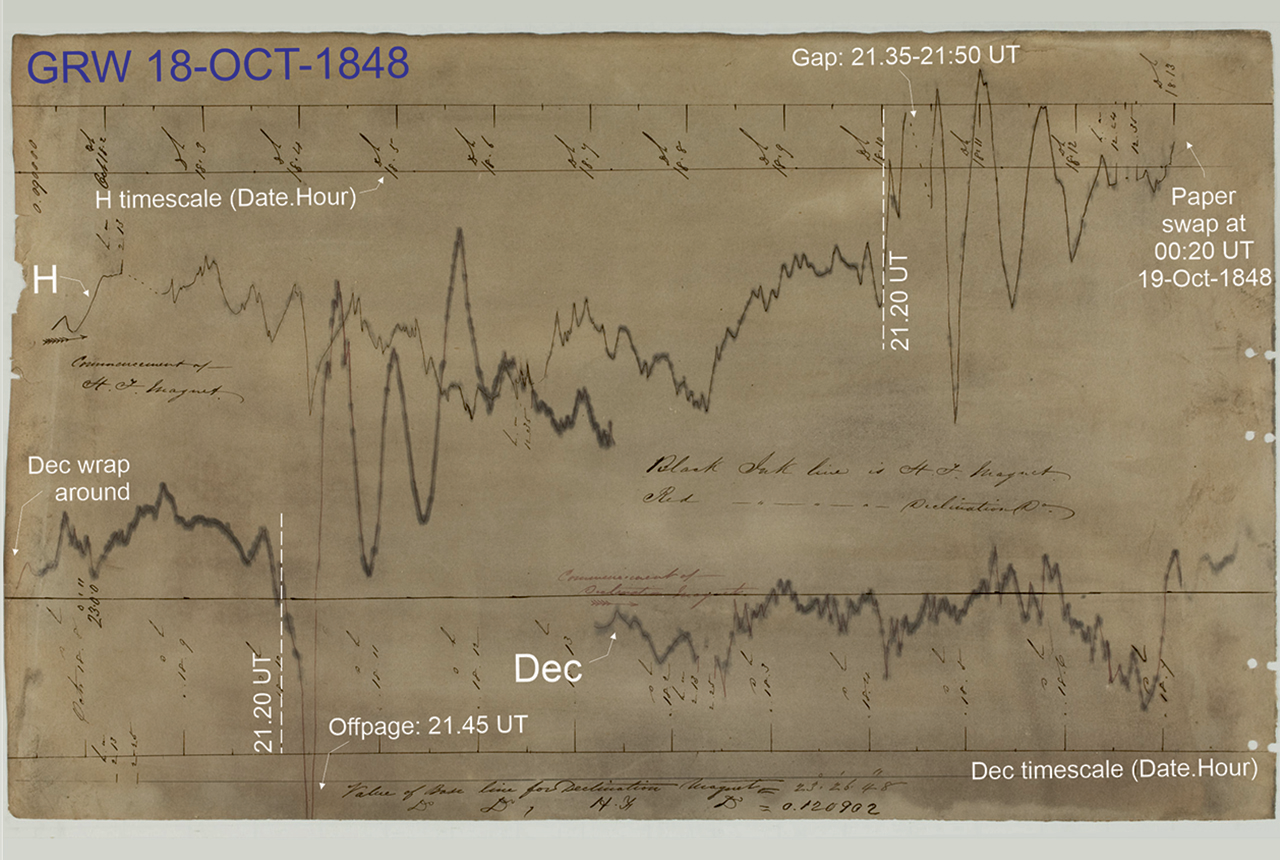

The first practical electric telegraph networks were deployed during the 1840s and, as solar activity increased during the following years, Victorian telegraph operators began to experience unexplained electrical effects caused by geomagnetic disturbances.
An international group of researchers, led by Lancaster University and including BGS, has re-examined a widely cited account of a train delay in Exeter that was reportedly caused by geomagnetic disturbance from the Sun interfering with railway’s telegraph systems. The event has previously been cited as potentially the earliest recorded example of space weather affecting human technology, but the team’s research contradicts this assumption.
The original account described how the 22:05 train departing Exeter in Devon on 18 October 1841 was delayed by 16 minutes when a ‘very intense magnetic disturbance’ interfered with the electric signalling telegraph equipment used to determine whether the railway line ahead was clear. However, the researchers found a critical problem: the railway line referenced in the account did not open until 1846, almost five years after the alleged 1841 incident.
To discover what really happened, the team combined evidence from railway timetables, historical newspapers, solar observations, aurora reports and digitised geomagnetic records. The BGS magnetogram archive shows a strong geomagnetic disturbance on 18 October 1848, alongside reports of sunspots and aurorae seen across the UK and Europe, providing compelling evidence that the date in the original account was a typographical error.
The findings show that, while the Exeter incident remains one of the earliest documented examples of space weather disrupting technology, it was not the first. The earliest credible report currently known to be due to interference with telegraph systems was actually on the Midland Railway in March 1847.

Using BGS’s historic archive of magnetic records from Greenwich Observatory in London, we were able to confirm that 18 October 1848 experienced very large auroral disturbances. Preserving long-term records is vital for informing research on the vulnerabilities of modern technology.
Dr Ciarán Beggan, geophysicist, BGS.
Space weather is often discussed as a modern challenge because of our dependence on technologies such as satellites, communications systems and electricity networks. What this study shows is that society has been experiencing the effects of space weather on technology for almost as long as electrical technologies have existed.
Prof Jim Wild, Lancaster University School of Physics and Astronomy and lead author of the study.
The research paper is available to read on the American Geophysical Union’s journal Space Weather.
Relative topics
Related news
Mystery of one of the earliest recorded space weather impacts solved
17/09/2026
BGS scientists were part of an international team that has solved a 178-year-old mystery surrounding one of the earliest recorded examples of space weather affecting technology.
‘Three norths’ set to leave England and not return for hundreds of years
12/12/2025
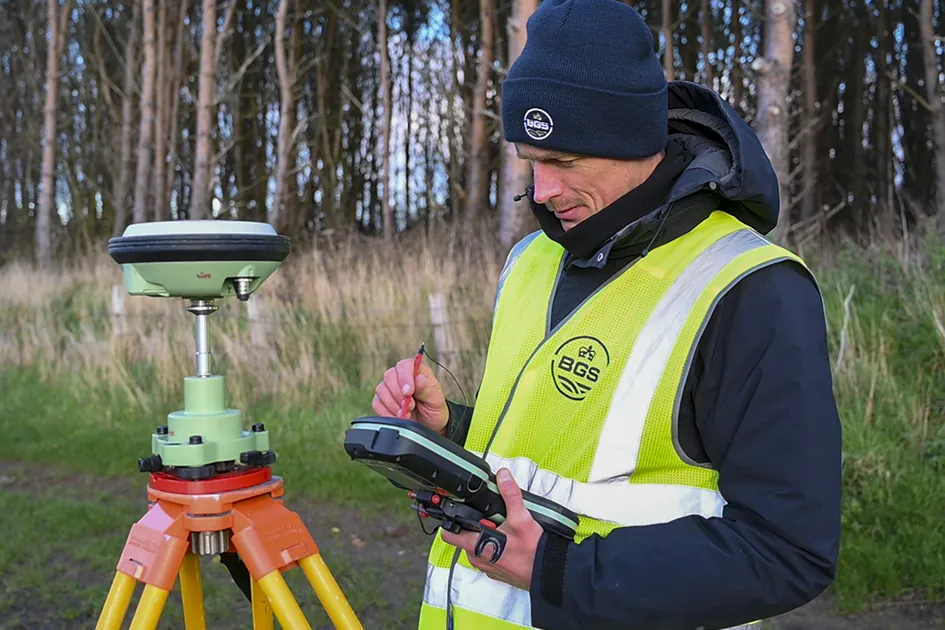
The historic alignment of true, magnetic, and grid north is set to leave England, three years after they combined in the country for the first time since records began.
UK braced for what could be the largest solar storm in over two decades
12/11/2025
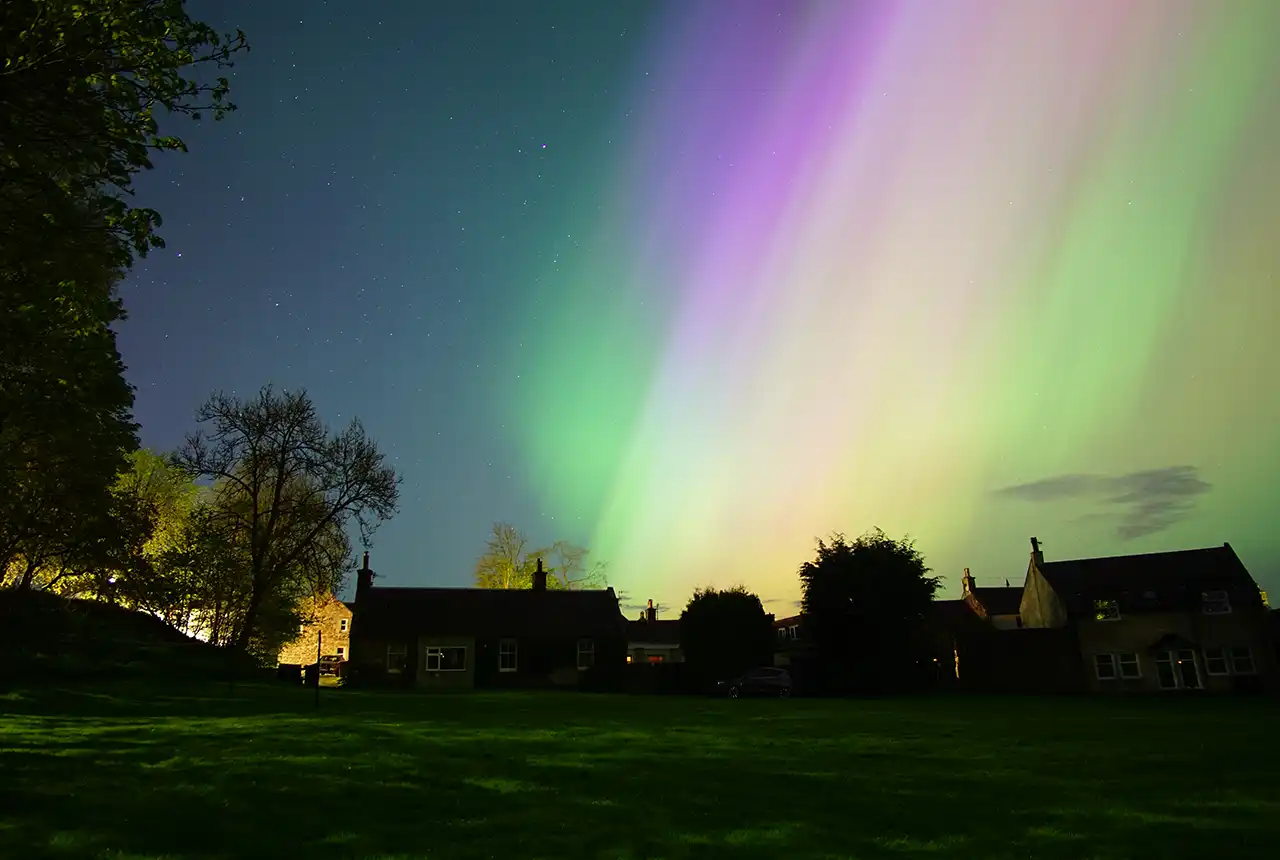
Intense geomagnetic activity could disrupt technology such as communication systems, global positioning systems and satellite orbits.
First distributed acoustic sensing survey completed at UK Geoenergy Observatory
12/11/2025
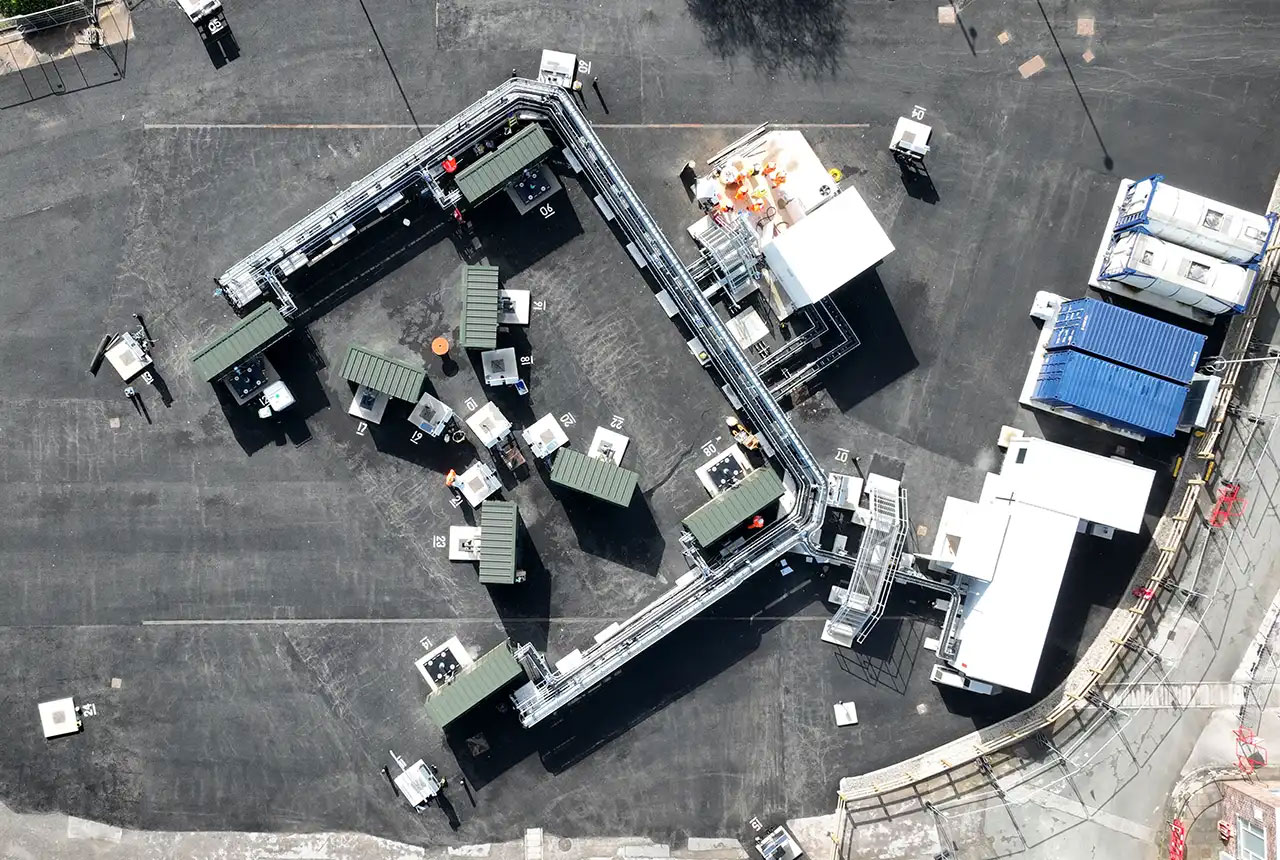
New research at the Cheshire Observatory has shown the potential for mapping thermal changes in the subsurface using sound waves.
Fieldwork on Volcán de Fuego
13/10/2025
Understanding how one of the world’s most active volcanoes builds up material, and how they collapse to feed hot flows
UK scientists in awe-rora as national coverage of magnetic field complete for the first time
23/09/2025
New sensors being installed across the UK are helping us understand the effects that extreme magnetic storms have on technology and national infrastructure.
BGS-led paper scoops prestigious award
16/09/2025
New research providing earlier warnings of landslides has been awarded the British Geotechnical Association medal.
New global space weather hazard index launched
17/01/2025
The new index provides a near-real time, global picture of geomagnetic variations helping to highlight the effects of space weather.
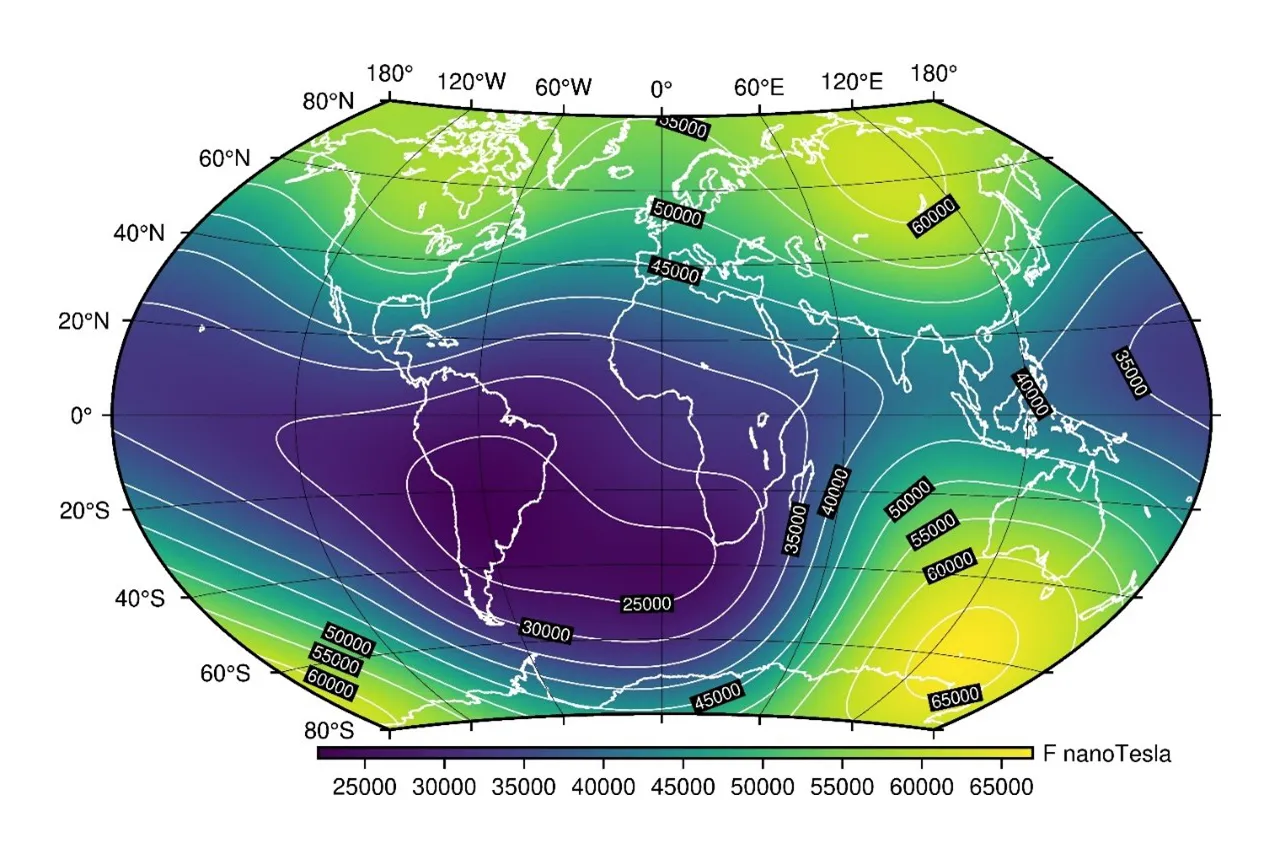
Update to essential scientific reference maps reveals new movement of the Earth’s magnetic field
01/01/2025
The international science community has released an update to the International Geomagnetic Reference Field, a model created for the public good and used by scientists around the world.
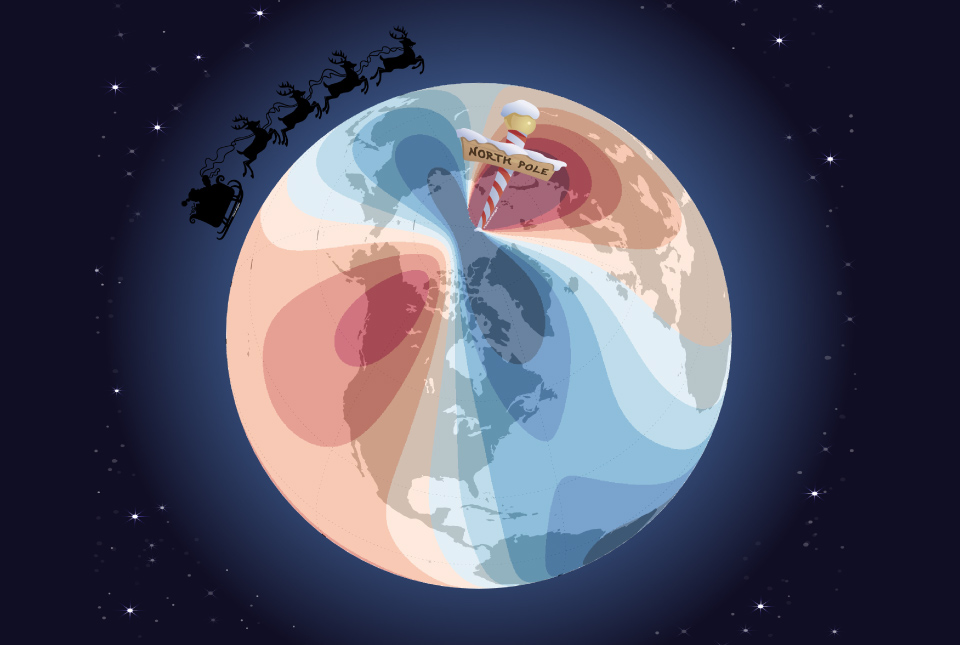
Airlines, shipping companies and sleigh drivers rush to update crucial navigation systems ahead of Christmas rush
17/12/2024
Release of major upgrade to a new model tracking magnetic north prompts global reset of satellite tracking systems across trade and passenger transport routes.

Electromagnetic geophysics in Japan: a conference experience
23/10/2024
Juliane Huebert took in the fascinating sights of Beppu, Japan, while at a geophysics conference that uses electromagnetic fields to look deep into the Earth and beyond.
New research hub announced as part of £160 million investment
08/10/2024
Focusing on quantum sensing, imaging and timing, the hub will be launched at the end of this year as part of an investment announced by the Science Secretary.