

Newly released core could hold clues on potential mineral prospectivity in Perthshire
A comprehensive collection of geological samples from the vicinity of a former mine in Scotland is now available to scientists for further research.
05/06/2026 By BGS Press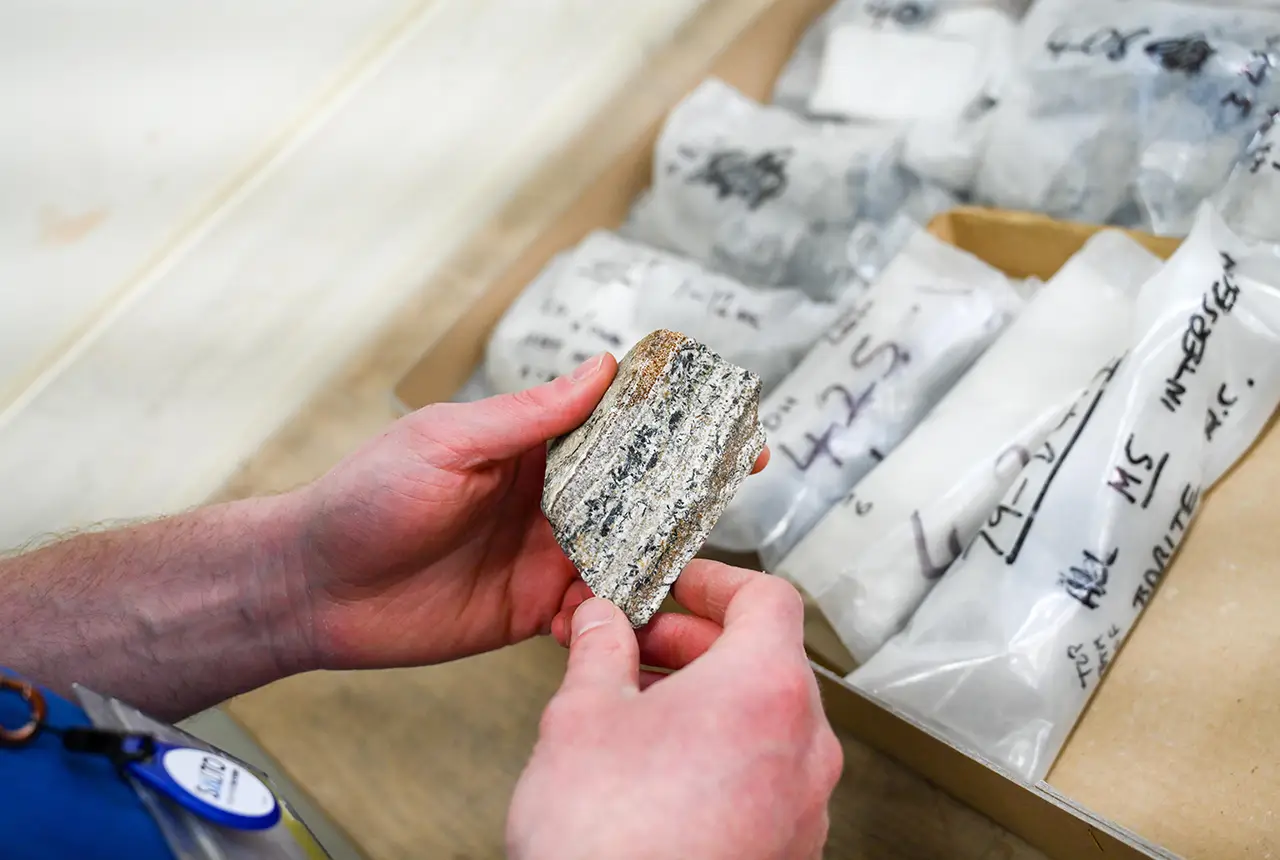

More than 700 additional geological samples from the vicinity of the ceased Foss Mine near Aberfeldy, Perthshire, are now available for study at the National Geological Repository (NGR), located at BGS’s headquarters near Nottingham. The sample set, comprising outcrop and drillcore, was originally collected in the 1980s by Dr Norman Moles, who was undertaking research on the Foss deposit for his PhD at the University of Edinburgh. The samples complement existing NGR holdings of runs of drillcore from exploration drilling of the Foss and Ben Eagach–Duntanlich baryte deposits in the 1980s.
The fully catalogued collection of 717 specimens will be of interest to scientists for a range of further studies. Such studies could include investigations of critical metal potential, following a 2023 report by BGS that highlighted the central Perthshire region as one of the UK’s prospective areas for critical raw materials. The mine was the main source of baryte, or barium sulfate (BaSO4), in the UK from the early 1980s until its closure in 2021. Baryte is primarily used in the oil and gas industry to help stabilise boreholes during drilling and was extensively used in the North Sea. Associated with the bedded baryte deposits are rocks rich in barium feldspars and micas, as well as sulfide and carbonate minerals.
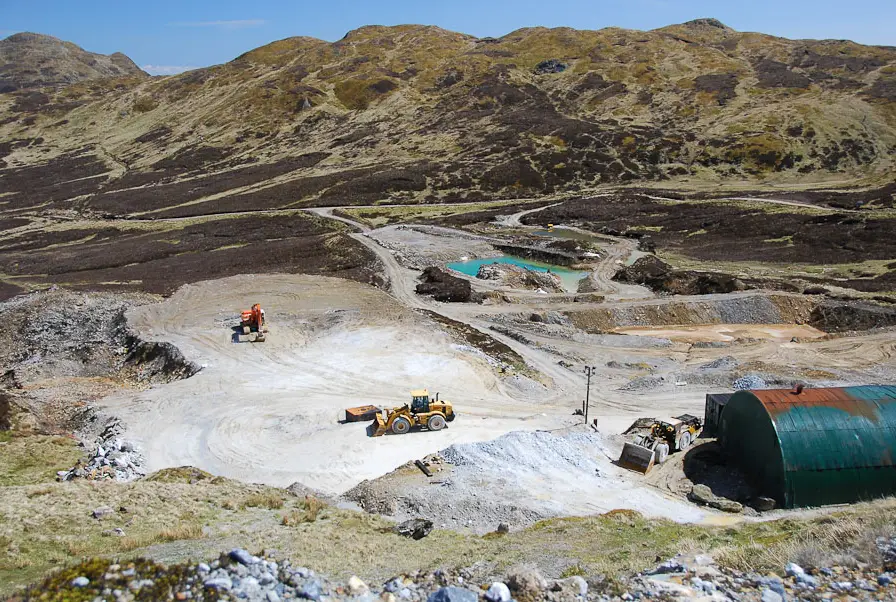
Foss Mine near Aberfeldy, Perthshire. © Dr Norman Moles.
Alongside the Foss material, the NGR houses the UK’s foremost collection of geological samples. This includes over 16 million geological specimens, including 600 km of drillcore and 200 000 thin sections. Boreholes take time to drill and can be very costly, so a shared repository of ground information, such as the collection held within the NGR, provides scientists access to pre-drilled samples for further research and analysis, saving significant project costs and accelerating timelines. The core from the site of the former Foss Mine is another example of how our relationship with the subsurface is ever evolving, sometimes in ways that can be hard to predict.

Cores from the Foss Mine, once used for the oil and gas industry, could now be a valuable resource for future research, potentially holding the secrets of critical mineral prospectivity that are essential for the clean energy transition.
Mark Fellgett, NGR facility lead at BGS.
Beyond mineral prospectivity, the nature of the rock formations in this region holds wider scientific value. Due to its age dating back to the Ediacaran Period of the Precambrian, approximately 539 to 635 million years ago, the material can also be used to study a marine environment that was very different to the present.
The core could be used for stratigraphical studies of the Ediacaran Period following the ‘snowball Earth’ of the Marinoan glaciation [at least 654.5 million years ago]. Analytical techniques developed since my PhD research, such as transitional metal stable-isotope analysis and laser ablation inductively coupled plasma mass spectrometry, could be applied to gain further knowledge of the hydrothermal processes and local and global environments at this pivotal time in the Earth’s history.
Dr Norman Moles.
BGS is progressively scanning and digitising the NGR collections and some of them are now available online. The GeoIndex is an easy-to-use, searchable map interface that enables users to find all data and information held by the BGS for any part of the UK, both onshore and offshore.
To arrange a visit to access this material, go to the accessing the NGR material collections page. You can also download the electronic resources accompanying the Foss Mine deposit.
For general enquiries, please contact BGS Enquiries (enquiries@bgs.ac.uk) or call 0115 936 3100.
Relative topics
Related news

Demand for data centres presents challenges and opportunities for UK critical mineral supply chains
02/09/2026
Government-backed research finds that vulnerabilities in raw material supply chains must be addressed to secure the critical minerals needed to expand the UK’s digital infrastructure and boost economic growth.
UK Critical Minerals Intelligence Centre makes recommendations for the next UK criticality assessment
01/07/2026
CMIC has outlined the enhancements made to the next assessment update to ensure it is better tailored to the structure of the UK economy.
From archive to discovery: historical mineral reports support gold exploration in Scotland
25/06/2026
Digitised geological records show potential to unlock untapped mineral resources in Ardlochan, Argyllshire.
Newly released core could hold clues on potential mineral prospectivity in Perthshire
05/06/2026
A comprehensive collection of geological samples from the vicinity of a former mine in Scotland is now available to scientists for further research.

Extractive Industry Geology (EIG) Conference 2026
Event from 08/09/2026 to 11/09/2026
University of Liverpool
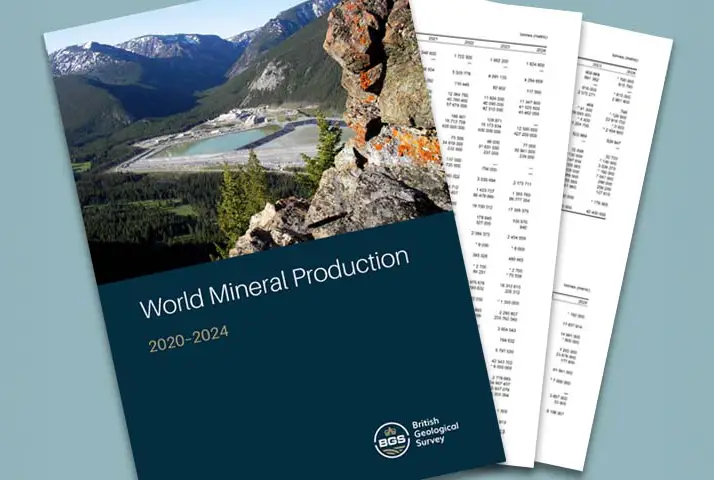
Latest data on world mineral production now available
25/05/2026
BGS has released the updated statistics on the global production of over 70 commodities between 2020 and 2024.

BGS contributes to UN sand and sustainability report
19/05/2026
The new report highlights the impact of poor governance and unsustainable sand mining practices, calling on policymakers to take action.
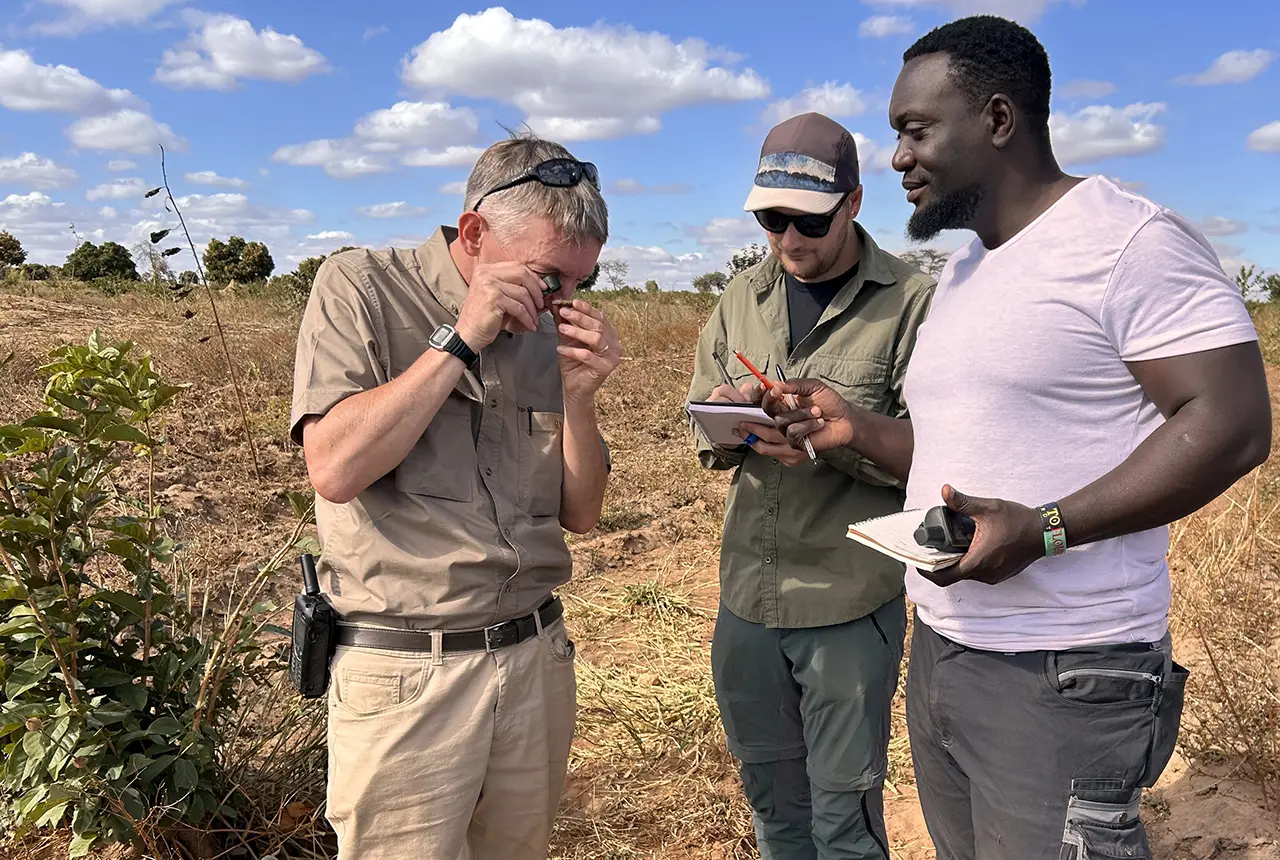
Strengthening capacity through partnership: a critical minerals perspective
28/04/2026
BGS has been working in partnership with the Geological Survey Department of Zambia (GSD) to build national capacity, improve data accessibility and support long-term, sustainable development.
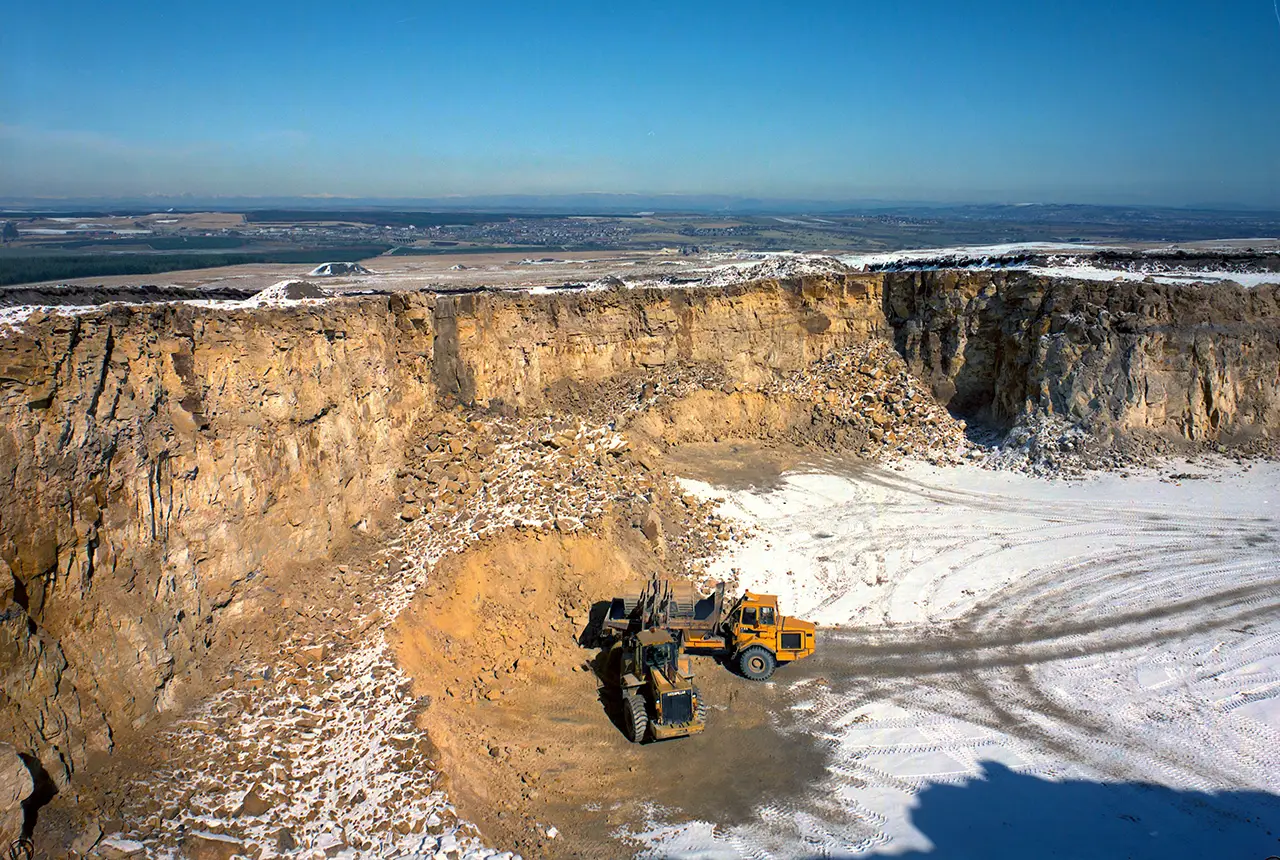
UK Minerals Yearbook 2025 now available
21/04/2026
The annual publication provides essential information about the production, consumption and trade of UK minerals up to 2025.
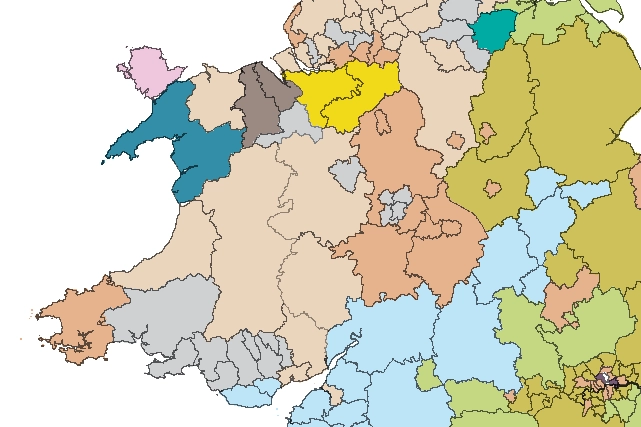
Map of BGS BritPits showing the distribution of worked mineral commodities across the country
18/02/2026
BGS’s data scientists have generated a summary map of the most commonly extracted mineral commodities by local authority area, demonstrating the diverse nature of British mineral resources.

Funding awarded to map the stocks and flows of technology metals in everyday electronic devices
12/02/2026
A new BGS project has been awarded Circular Electricals funding from Material Focus to investigate the use of technology metals in everyday electrical items.

New 3D model to help mitigate groundwater flooding
08/12/2025
BGS has released a 3D geological model of Gateshead to enhance understanding of groundwater and improve the response to flooding.