

Extensive freshened water confirmed beneath the ocean floor off the coast of New England for the first time
BGS is part of the international team that has discovered the first detailed evidence of long-suspected, hidden, freshwater aquifers.
09/02/2026 By BGS Press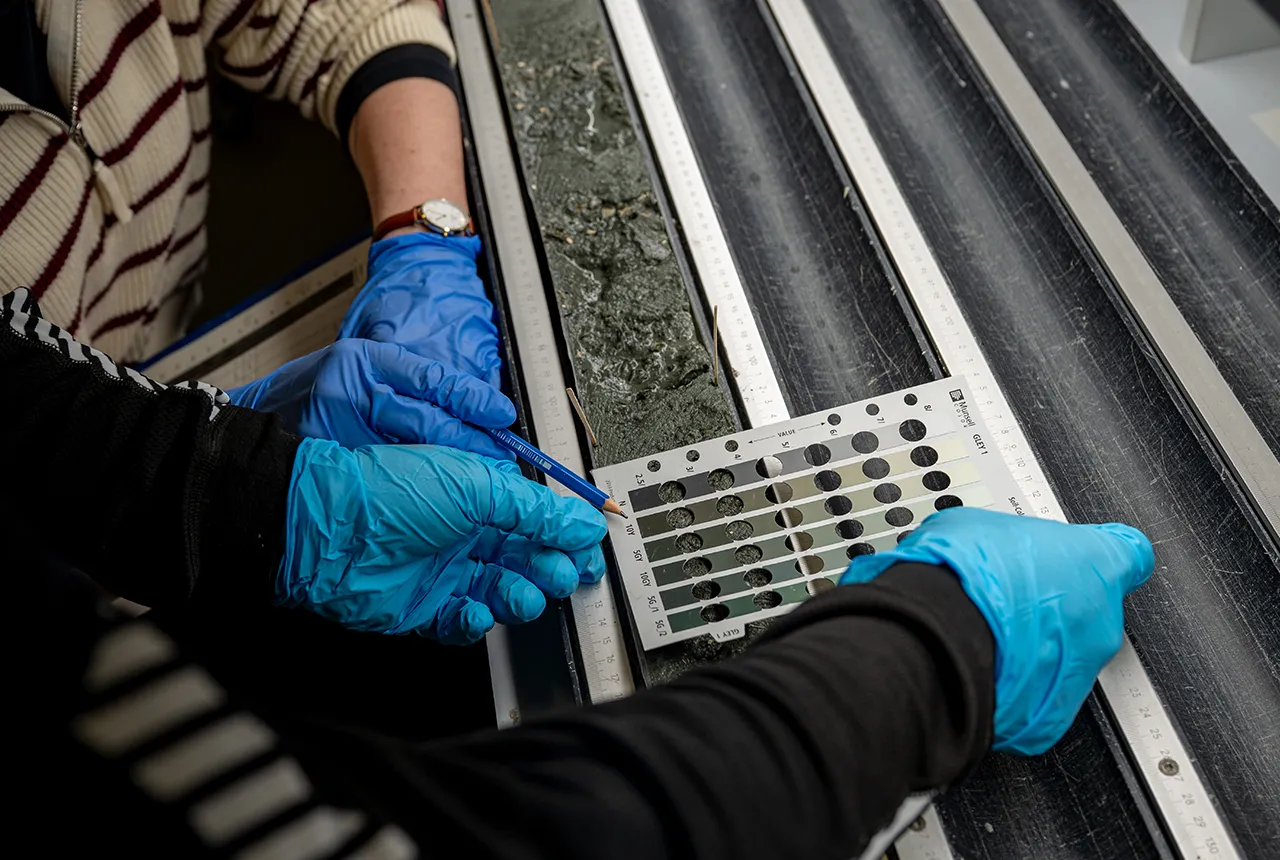

For the first time, a science team has directly documented and extensively sampled a freshened water system beneath the ocean floor off the coast of New England in the USA. This major discovery comes from the initial analyses of sediment cores recovered during the International Ocean Drilling Programme (IODP3) Expedition 501, led by Co-Chief Scientists Professor Brandon Dugan (Colorado School of Mines, Golden, USA) and Professor Rebecca Robinson (Graduate School of Oceanography, University of Rhode Island, USA.
The 872 m of core, retrieved from deep below the sea floor, is now being opened, analysed and sampled by the science team, during almost a month of intensive, collaborative work. The expedition’s scientists are working side by side during January and February 2026 to uncover new insights into the formation, evolution and significance of this newly documented, sub-seabed, freshwater system.
Five BGS staff members are part of the operational team: Jeremy Everest, Margaret Stewart, Raushan Arnhardt (expedition project managers), Mary Mowat (database manager) and Bentje Brauns (hydrogeology). Their role is to coordinate and support the science team to process the core according to IODP3 standards and protocols.
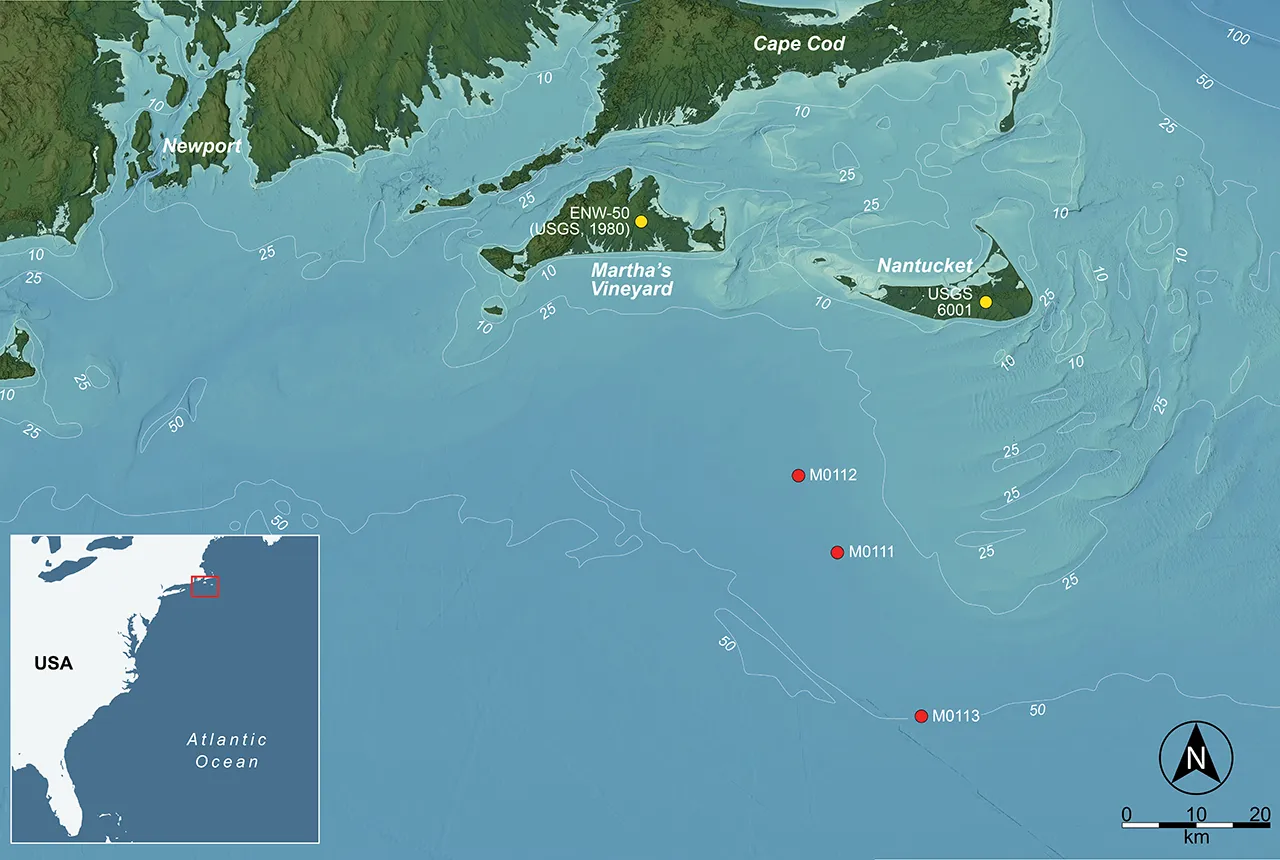
The cores were retrieved during offshore operations between May and August 2025 from these locations. Credit: @ECORD_IODP3_NSF
The goal of this expedition went far beyond collecting sediment cores. Scientists also set out to sample the water stored within the sediments, including from sandy layers that act as aquifers and from clay layers known as aquitards that usually keep the water in place beneath the sea floor.
Although roughly 70 per cent of Earth’s surface is covered by water, significant volumes of water also move and are stored below ground. Many coastal communities depend on land-based aquifers for their freshwater supply. What fewer people realise is that, in many parts of the world, the aquifers continue offshore and contain zones of ‘freshened’ water beneath the ocean floor. Scientists have known these offshore systems existed since 1976, but they have remained virtually unexplored until now. During the expedition, the science team successfully documented and sampled freshened water within a zone nearly 200 m thick below the sea floor.

We were excited to see that freshened water exists in multiple kinds of sediments – both marine and terrestrial. Freshened water in such different materials will help us understand the conditions that emplaced the water.
Prof Brandon Dugan, Colorado School of Mines, Golden, USA.
Further analyses, such as age models, conducted by the science team will help to find out where and especially when the water was placed here.
The cores contain sediment with a wide range of composition and ages. It was surprising to see sediment, not rocks, throughout the section. The sediment has not yet transformed into rock – I did not expect to see that and it will be an interesting component of our future work.
Prof Rebecca Robinson, Graduate School of Oceanography, University of Rhode Island, USA.
After a successful coring, sampling and downhole logging campaign last summer, the BGS team is incredibly excited to be supporting the science team to begin the scientific analysis the material collected. The cores have been safely held in their plastic liners since they were drilled out of the seabed and, at the Onshore Operation in Bremen, they are being opened and split, revealing the fresh split-core surfaces for the first time.
The BGS team are contributing to the detailed sampling and analysis of the cores that, when combined with the groundwater samples taken from the borehole, will improve our understanding of the development of the New England shelf and the freshened water reservoirs underlying it. It is such a satisfying moment, after years of effort to acquire the cores, to be rewarded with new data and insights in such an important and societally relevant subject.
David McInroy, marine geoscientist, BGS.
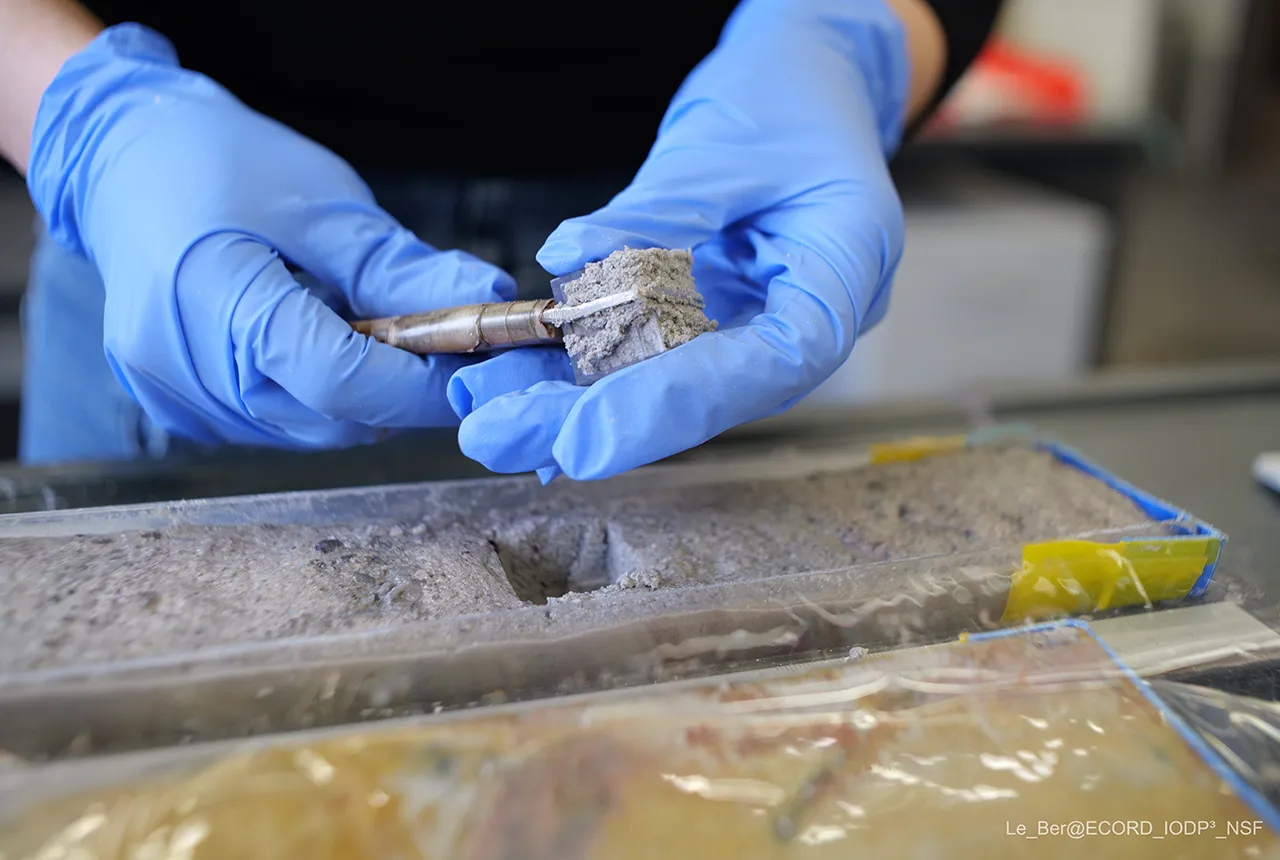
Taking samples. Credit: Le_Ber@ECORD_IODP3_NSF
Shedding light on similar water aquifers around the world
The approach used during IODP³-NSF Expedition 501 will not only deepen understanding of offshore freshened groundwater systems off the coast of New England, but will also shed light on similar hidden water aquifers around the world. Because many coastal regions rely on groundwater for their freshwater supply, the expedition’s initial findings are highly relevant to society. The research will also reveal how nutrients such as nitrogen cycle through continental shelf sediments and how these processes influence the abundance and diversity of microbes living in these environments.
These goals align closely with the 2050 Science Framework for Ocean Research Drilling – one of the foundations of the IODP³ scientific programme. Ultimately, the expedition’s research will help to decipher how sediments and fluids cycle through the Earth system and improve our knowledge about sea level changes and freshwater flow beneath the seabed along our coastal shelves. “The researchers will continue to work on and with the samples to decipher more – for example, to date the groundwater more accurately which is critical to advancing our knowledge,” adds Rebecca Robinson.
Background
The expedition is a joint collaboration between the International Ocean Drilling Programme (IODP³) and the US National Science Foundation (NSF). The cores were retrieved during offshore operations between May and August 2025. For onshore operations the science team have met at the Bremen Core Repository, at MARUM – Center for Marine Environmental Sciences of the University of Bremen (Germany). “We greatly appreciate being able to conduct this advanced research at MARUM, supported by its world-class laboratories, exceptional facilities, and dedicated staff,” adds Brandon Dugan
The cores will be archived and made accessible for further scientific research for the scientific community after a one year-moratorium period. All expedition data will be open access in the IODP³ Mission Specific Platform (MSP) data portal in PANGAEA, and resulting outcomes will be published.
International approach
Forty science team members from 13 nations (Australia; China; France; Germany; India; Italy; Japan; the Netherlands; Portugal; Sweden; Switzerland; UK; USA) are taking part in this MSP expedition that consists of two phases: offshore and onshore operations. Offshore operations took place between May and early August 2025.
The expedition is conducted by the European Consortium for Ocean Research Drilling (ECORD) as part of IODP³, funded by IODP³ and the US National Science Foundation (NSF).
More information
- About the expedition
- Scientific prospectus
- IODP3 international research collaboration
- European part of the programme
- MSP expeditions
- Frequently asked questions
Relative topics
Related news

What lies beneath Europe’s sinking ground?
01/09/2026
Land subsidence is becoming increasingly visible across Europe. New research examines how better monitoring, shared data and a deeper understanding of the subsurface can help assess and manage its impacts.
Experiences from our Commonwealth Fellowship at the British Geological Survey
24/08/2026
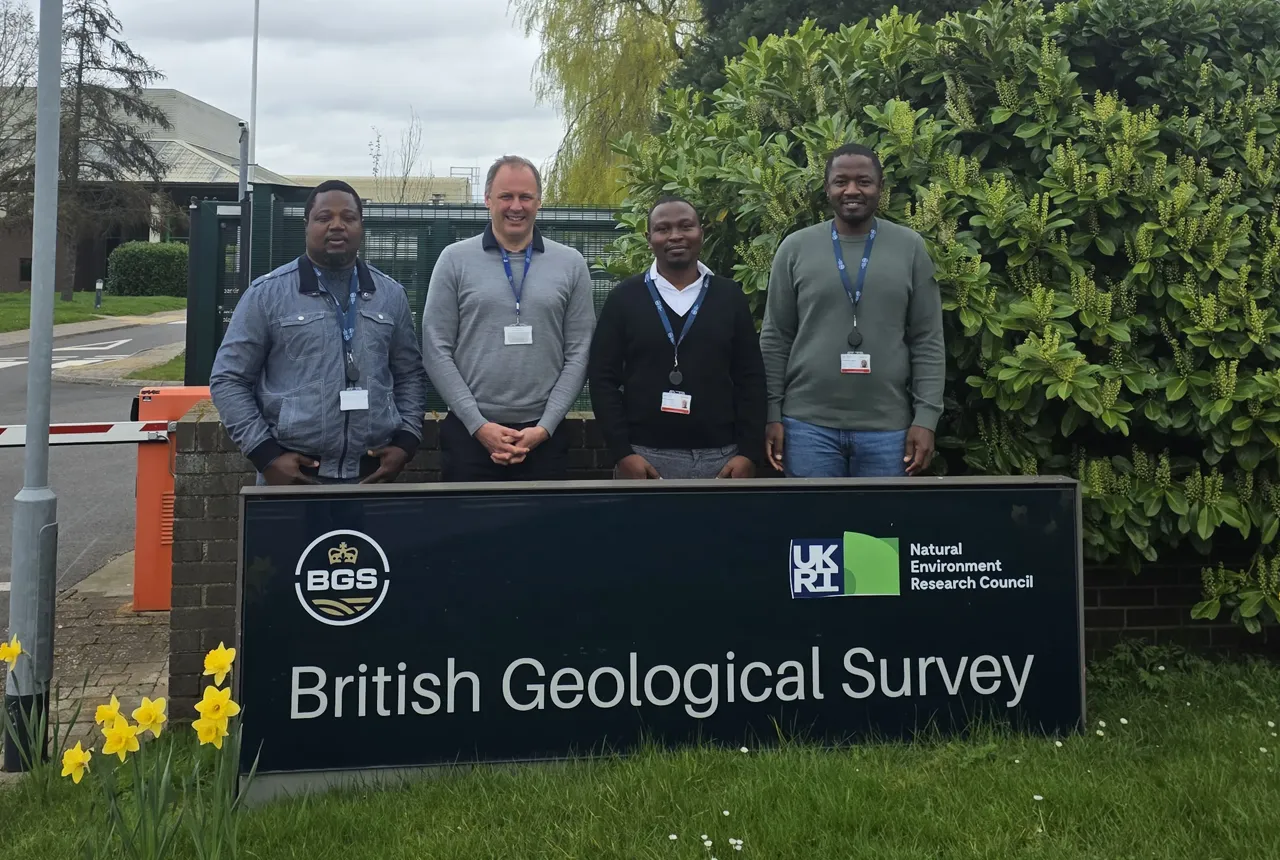
Scientific fellowships foster professional growth, international collaboration and exposure to world-class research environments. A group of visiting Commonwealth Fellowship researchers share their experience of being hosted at the BGS Inorganic Geochemistry Facility.
Building Europe’s geological future
20/07/2026
BGS scientists are contributing to a continent-wide initiative that is strengthening collaboration across borders to tackle shared subsurface challenges and unlock new opportunities.
Delving deep into mountains for future water security
16/07/2026
A BGS-led project is using new water-tracing investigation methods, geophysics and modelling to understand how water moves from mountains to the lowlands, helping to improve water security for billions of people.
Ukraine and the UK strengthen their commitment to geological cooperation
10/06/2026
A new Memorandum of Understanding reaffirms the UK’s support of Ukraine’s ambitions to develop its critical mineral resources, paving the way for collaboration through capacity-building programmes.
International science consortium to survey the health, economic value and social importance of Lake Victoria
22/05/2026
The project will replicate the 1927 survey to assess changes in the lake’s health, economic value and social importance.
New geological maps of Berwick-upon-Tweed to help future-proof natural water supply
20/05/2026
Scientists have mapped the geology under the town to better understand the groundwater system to inform decisions around abstraction.
BGS contributes to UN sand and sustainability report
19/05/2026
The new report highlights the impact of poor governance and unsustainable sand mining practices, calling on policymakers to take action.
BGS engineering geologist elected to CCOP
29/04/2026
Marcus Dobbs has been elected as vice-chair of the advisory group for the Coordinating Committee for Geoscience Programmes in East and Southeast Asia.
Strengthening capacity through partnership: a critical minerals perspective
28/04/2026
BGS has been working in partnership with the Geological Survey Department of Zambia (GSD) to build national capacity, improve data accessibility and support long-term, sustainable development.
New research could help provide a more reliable water supply for millions in rural Africa
24/03/2026
A new BGS-led study has revealed crucial insights into the longstanding challenges affecting the reliability and performance of rural water supply infrastructure in sub-Saharan Africa.
New UK/Chile partnership prioritises sustainable practices around critical raw materials
09/02/2026
BGS and Chile’s Servicio Nacional de Geología y Minería have signed a bilateral scientific partnership to support research into critical raw materials and sustainable practices.