

bluedot 2023: the importance of geological outreach
Staff members from various disciplines across BGS worked over the weekend to engage festivalgoers with BGS’s work, specifically critical raw materials.
10/08/2023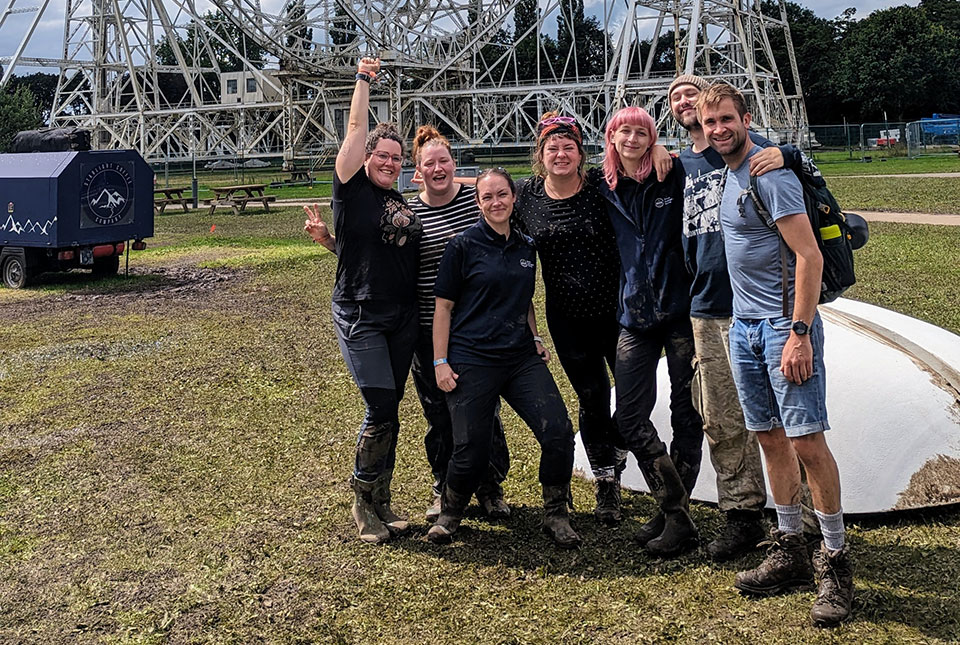

In July, six intrepid BGS adventurers and one giant tree left on a mission to revolutionise the way people think about geology. Their mission? The Future Fields area of the bluedot festival at Jodrell Bank in Cheshire.
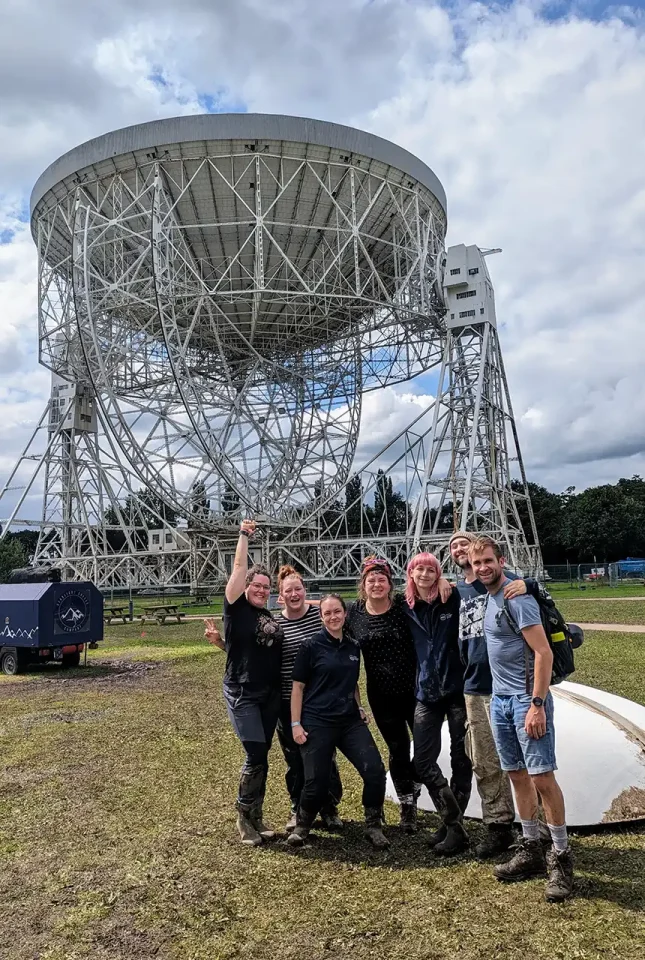
The team at bluedot. BGS © UKRI.
A matter of reputation
Most people with an interest in geology are probably aware that it has an image problem, an issue nicely illustrated in the 2023 paper, ‘“You just look at rocks and have beards”: perceptions of geology from the UK’. So it is perhaps unsurprising then that, when teachers of a local school asked children to draw an image of a geologist before BGS’s director, Karen Hanghøj, visited earlier this year the pictures largely featured older, white males — although exceptions included various creative differences, including a prosthetic leg.
The authors of the paper recommended that geologists ‘take more responsibility for supporting the development and promotion of a modern, inclusive, important and respected discipline’. This core value is recognised by BGS and, in our most recent strategy, public engagement is one of our six strategic pillars that have a fundamental, cross-cutting role in the delivery and impact of our science.
#TheCommoditree (that giant tree)
Our new public outreach tool is a three-metre-tall tree called The Commoditree, which was funded through the Critical Minerals Intelligence Centre (CMIC). It was launched at this year’s Glastonbury Festival and had its second outing at bluedot.
The interactive installation asks people to consider the critical raw materials (placed around the roots of the tree) required to make many of the commodities (found in the branches) we enjoy as part of modern life. It reminds us that items such as our electronic devices, medical equipment and cosmetics don’t just grow on trees. (Plus, Commoditree is a great pun.)
The Commoditree wasn’t the only focus of the stand, however, although the critical raw materials theme remained. When festivalgoers stepped inside our tent they were able to see, touch and even smell an array of critical raw materials up close, as well as maps of metal extraction and deconstructed mobile phones. If they answered questions correctly they also got to take home stickers and temporary tattoos, many of which were waved at us from all around the festival grounds over the course of the weekend.
Public engagement through a BGS lens
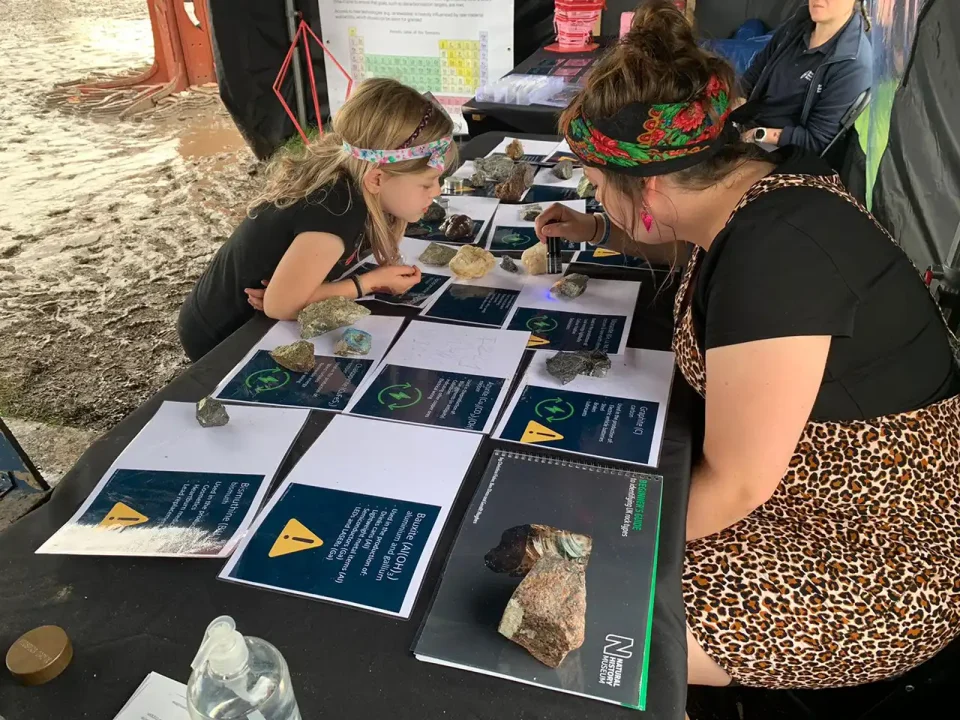
Public engagement manager Rose Want at the bluedot stand. BGS © UKRI.
Engaging members of the public in geology is a sometimes challenging but always rewarding task. Throughout the weekend, my approach to introducing people to our stand was ever changing so I could refine how I engaged with the public. I found that a lot of adults wanted to be taught something, whereas the children often wanted to show me what they knew about rocks and crystals. Whilst chatting to people of all ages was brilliant, engaging with kids to help foster their love for earth science was particularly rewarding.
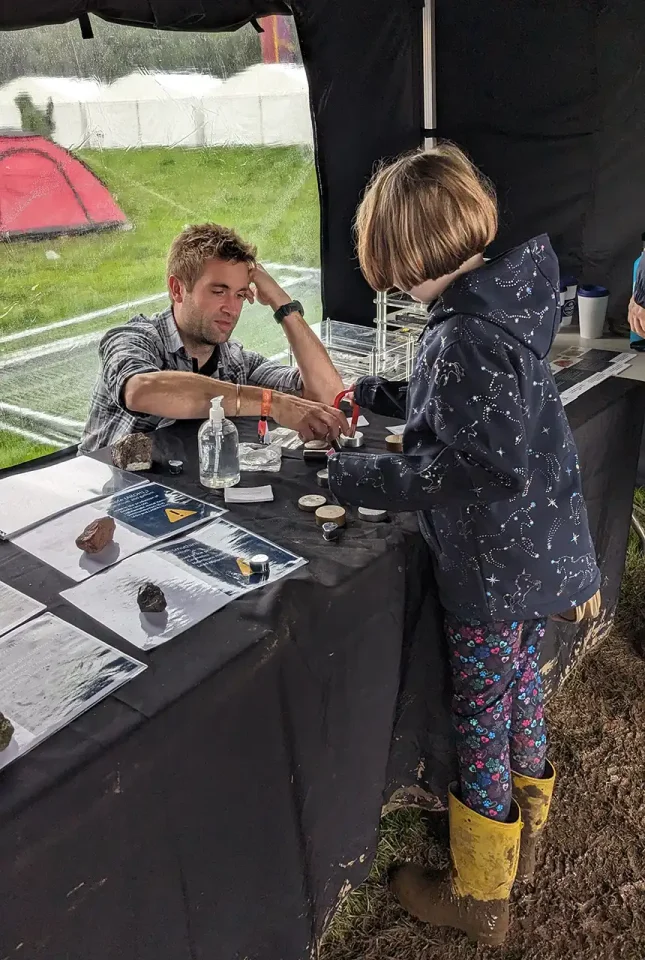
Hydrogeologist Jon MacKay interacting with the public at the bluedot stand. BGS © UKRI.
We had a variety of staff on the site, including someone with bright pink hair. One of the aims of public engagement is to show our audience that anyone can be involved with geology, no matter who they are. Our one stumbling block here is the aforementioned image problem and lack of diversity in our field. However, the more we chat to future geologists and show them that geologists can spend their time getting muddy, or hitting rocks, or climbing glaciers, the more we move towards a more open and accessible discipline. We’re also showing how relevant earth science is and how geology is absolutely essential to daily life. Don’t believe me? Time yourself for ten minutes and try not to use any mined materials (hint: plastic is one of them).
Public engagement is not only valuable for the public; it’s equally important for BGS staff members to get involved. Fostering love for your discipline with others is a valuable experience, but it’s equally important to pose a question to a member of the public and have them share their opinions with you — you never know what you might learn. One of our pieces at both Glastonbury and bluedot was an art installation reflecting views on potential lithium mining in the UK. We weren’t trying to shill for an answer but rather laid out both positive and negative facts that allowed festivalgoers to decide for themselves whether they wanted to vote pink (positive) or red (negative). The resulting artwork was only half of the point: the ability to allow our audience to think critically about the importance of mineral mining was the aim.No one is an island and this is true when covering such a vast topic as geology. We had a hydrogeologyist, a survey geologist and a public engagement officer with a degree in geology to answer any questions. For me as a communications manager, it was important to speak with other members of the team and learn their thoughts on communications and public outreach, and how we could improve our future output.
Team building
Finally, we can’t forget the team building aspect of public outreach events. We worked hard at bluedot this year, but the evening also gave us a chance to bond. When we faced removing a huge installation from a muddy quagmire at the end of the weekend, we had a foundation of team spirit that saw us band together to get the job done.
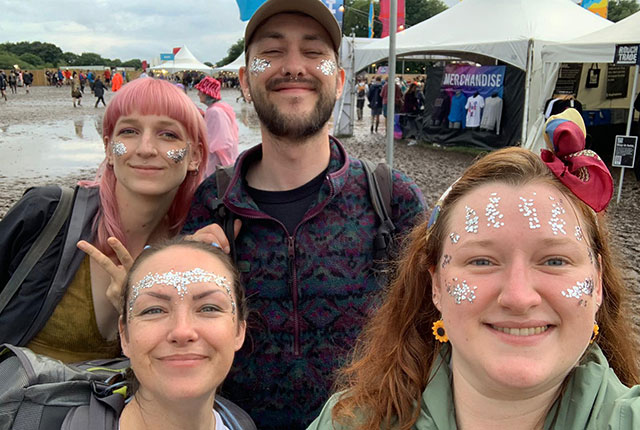
The team having some bonding time together. BGS © UKRI.
In a big organisation that covers various locations across the country, connecting with staff from other offices is important. bluedot was a wonderful, fun and at times challenging experience, but I’m so glad I got to take part with such a great team,whose passion for geology and learning managed to shine through the storm clouds of the weekend.
The future of public engagement
As the festival season draws to a close, BGS will continue its public engagement strategy with public engagement events around the UK. Our installation, ‘Clean Energy Beneath Our Feet’, is also touring the UK: it’s at the National Mining Museum Scotland at the time of writing (July 2023) and will make its way to Dynamic Earth in Edinburgh throughout October.
The final word
I’ll leave you with a quote from a child visiting the BGS tent, amid the music and the giant telescope, who picked up a hand lens and sighed, ‘Finally, life is interesting.’
Contact
If you have an event coming up and would like us to take part, please email the BGS public engagement team (bgsengage@bgs.ac.uk).
About the author

Penelope Reeve
Digital communications manager
Relative topics
Related news
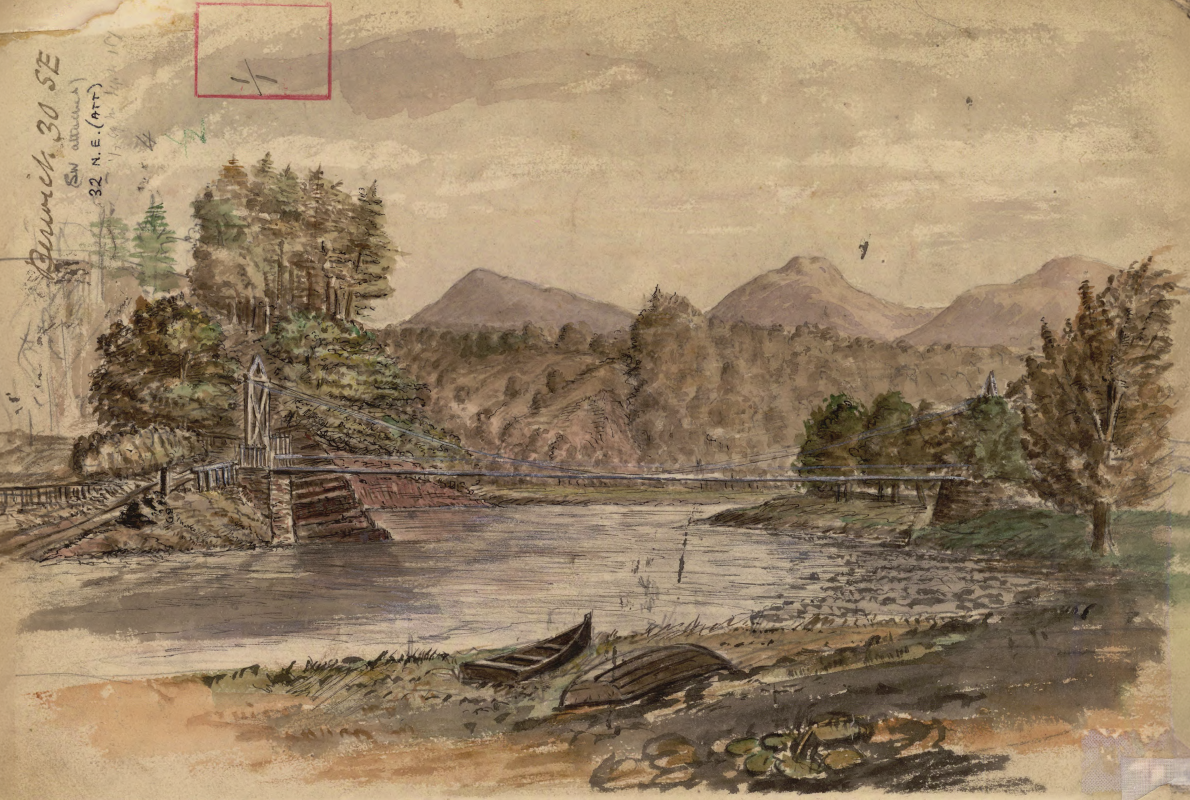
Historic watercolour unearthed on back of Dryburgh geological field map
05/10/2026
A 150-year-old painting of Dryburgh Suspension Bridge and the River Tweed offers an insight into the Scottish Borders landmark shortly after it was built in the 1870s.
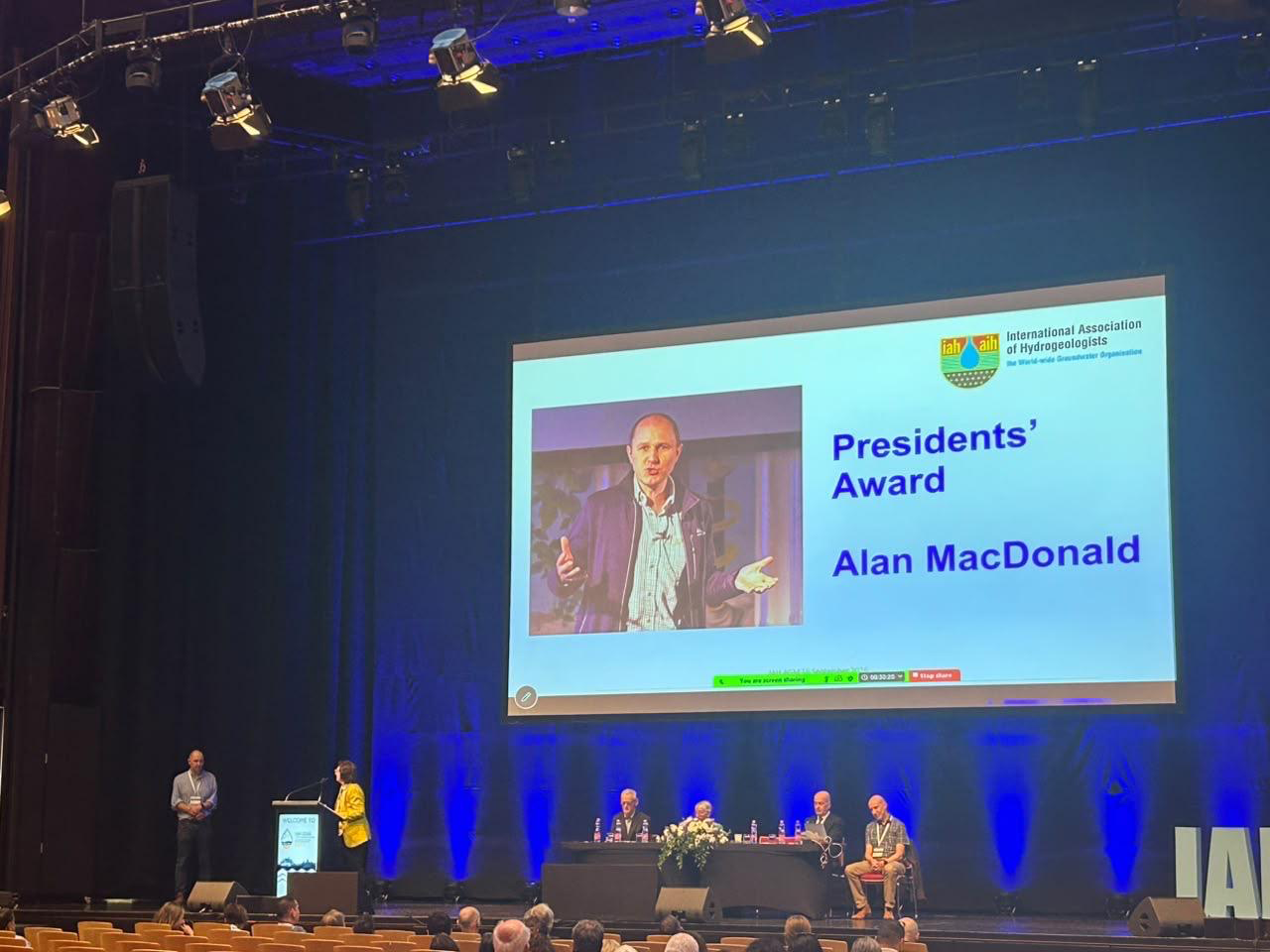
Professor Alan MacDonald presented with Presidents’ Award at 2026 World Groundwater Congress
21/09/2026
The BGS Head of Groundwater has been recognised with this prestigious award by the International Association of Hydrogeologists for his extensive contributions to groundwater science.
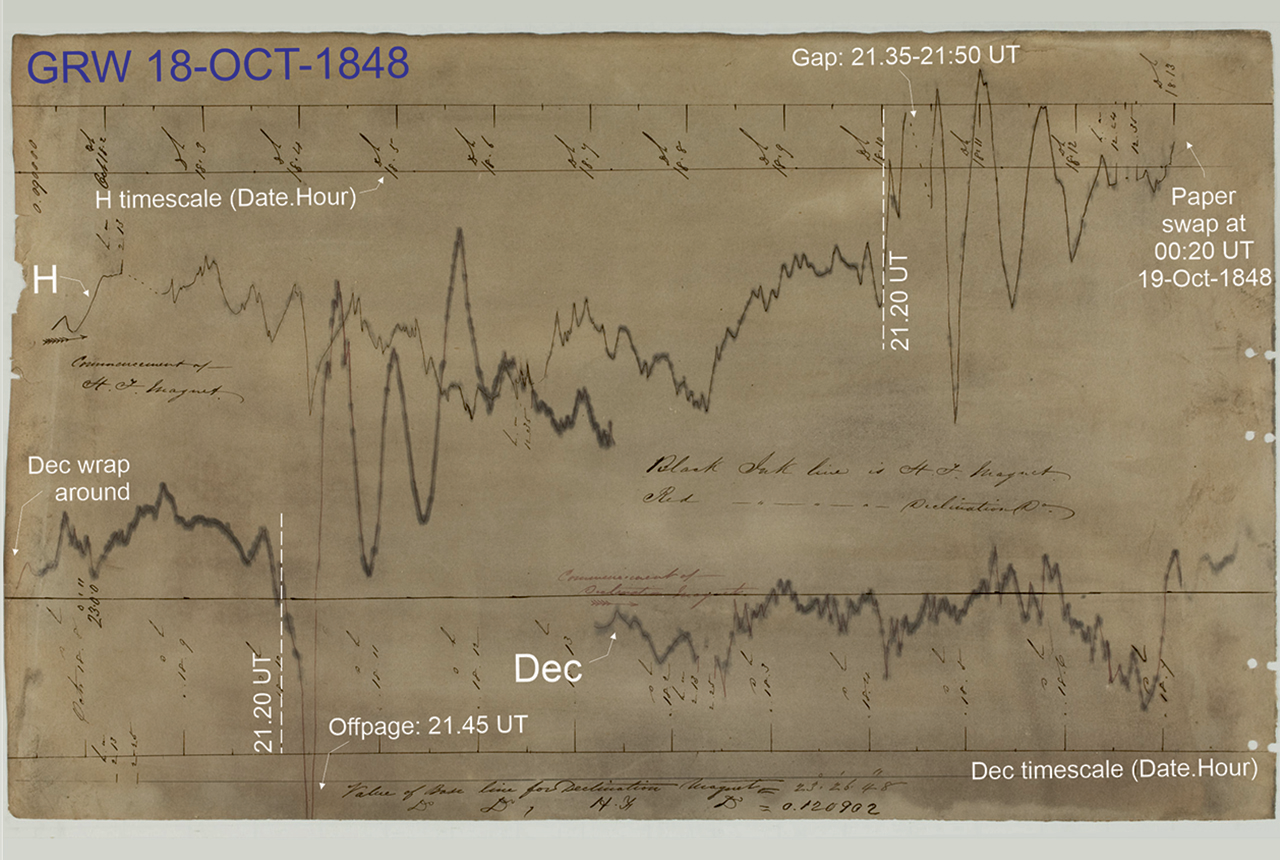
Mystery of one of the earliest recorded space weather impacts solved
17/09/2026
BGS scientists were part of an international team that has solved a 178-year-old mystery surrounding one of the earliest recorded examples of space weather affecting technology.
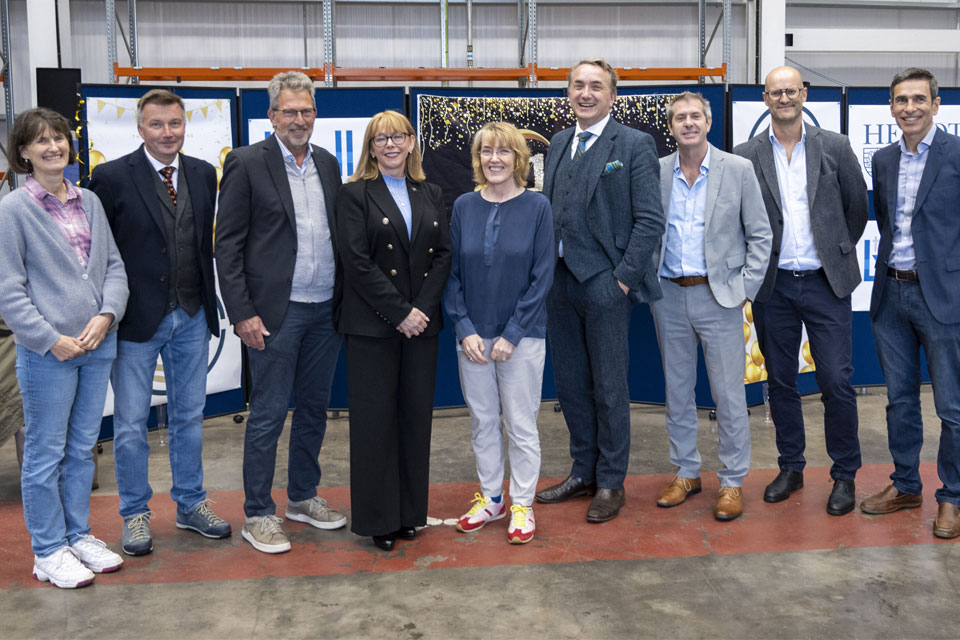
The Lyell Centre celebrates 10 years of world-leading earth and marine science research
07/09/2026
The Lyell Centre for Earth and Marine Sciences, a strategic partnership between Heriot-Watt University and BGS, is celebrating its 10th anniversary, marking a decade of world-leading research, innovation and collaboration in earth and marine sciences.
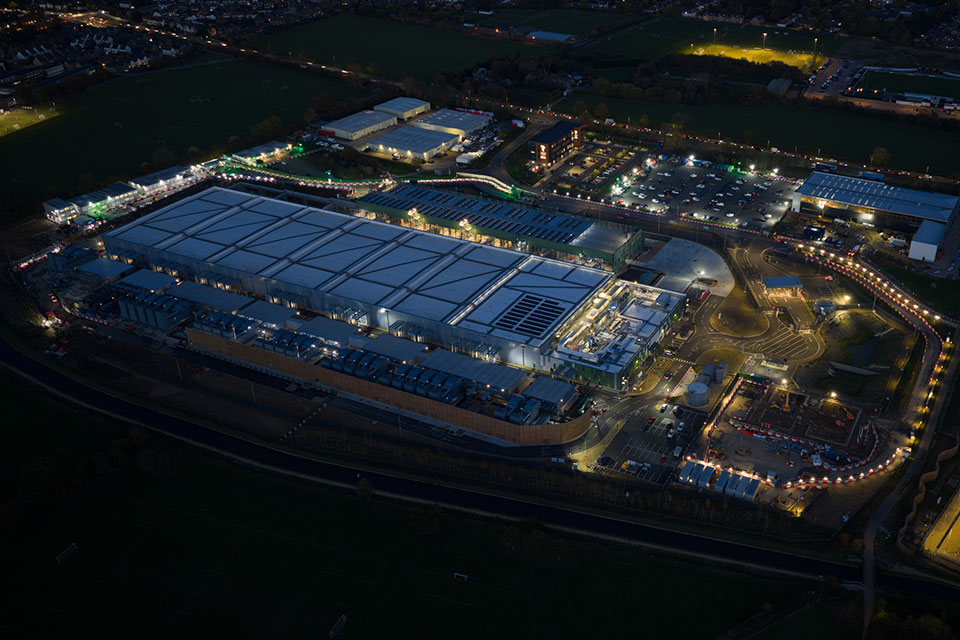
Demand for data centres presents challenges and opportunities for UK critical mineral supply chains
02/09/2026
Government-backed research finds that vulnerabilities in raw material supply chains must be addressed to secure the critical minerals needed to expand the UK’s digital infrastructure and boost economic growth.

What lies beneath Europe’s sinking ground?
01/09/2026
Land subsidence is becoming increasingly visible across Europe. New research examines how better monitoring, shared data and a deeper understanding of the subsurface can help assess and manage its impacts.
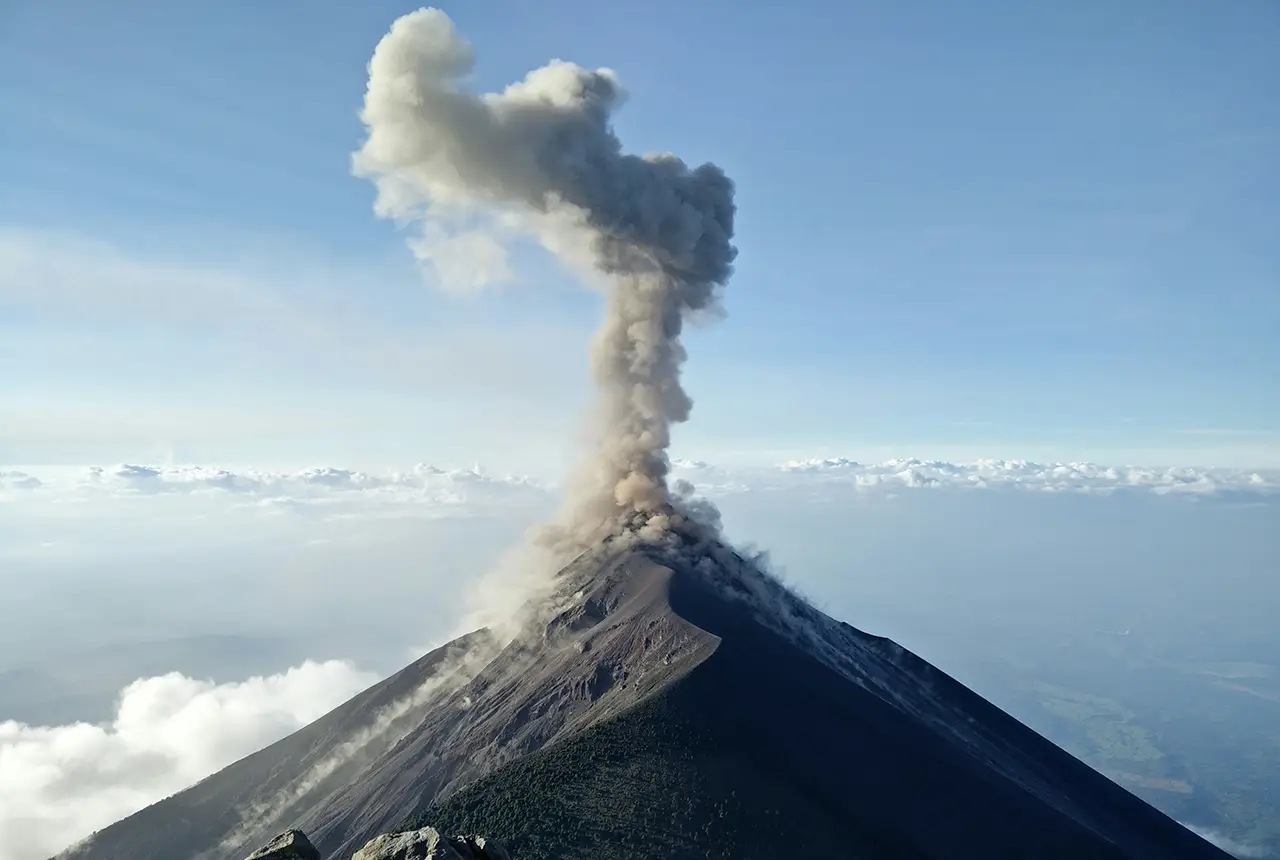
Secrets of an ancient supervolcano uncovered that change our understanding of England’s geological past
28/08/2026
Scientists have found evidence of a long-hidden link between an ancient buried ash layer in Scandinavia and a concealed supervolcano in eastern England.
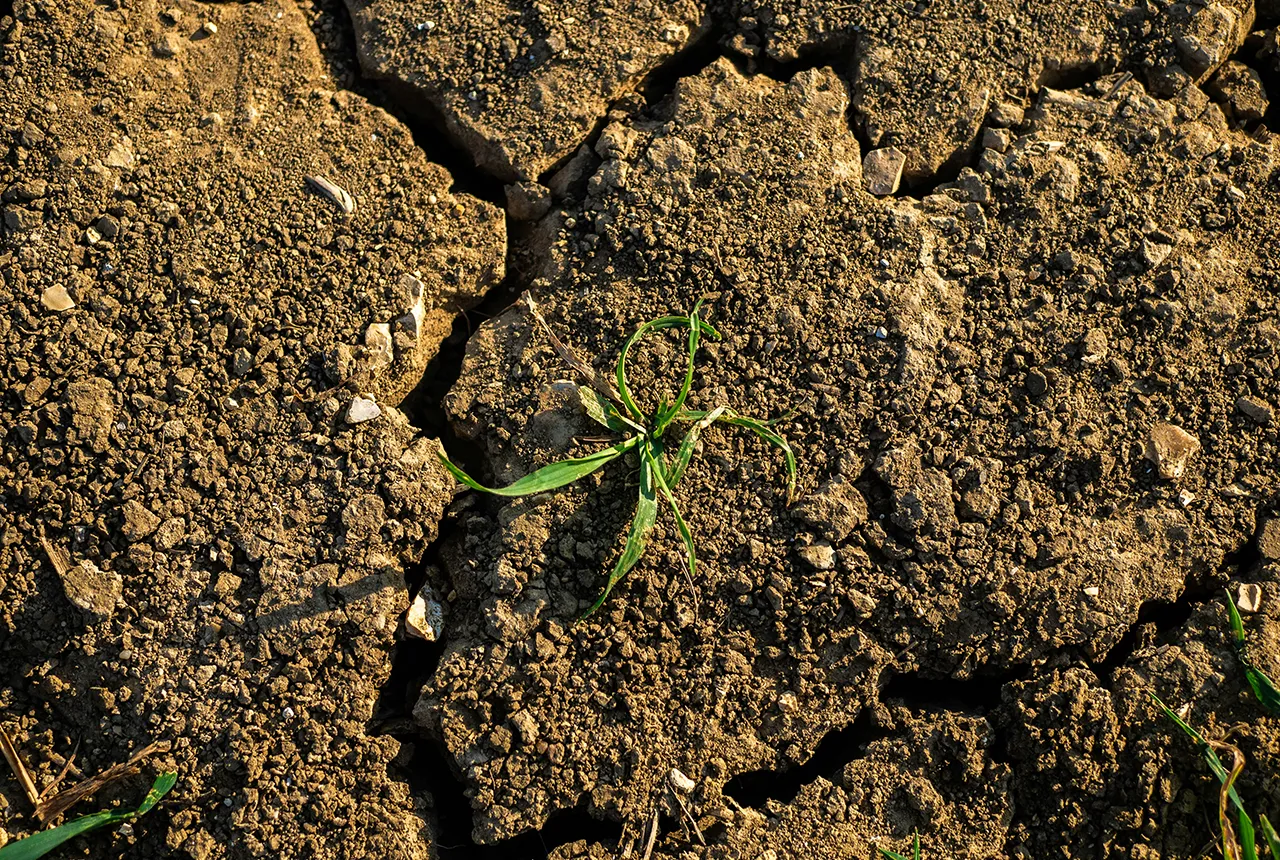
BGS research into drought-exposed soils wins award
26/08/2026
A research paper investigating how temperate soils respond to drought has been announced as the winner of the Land Best Paper Award.
UK aquifers robust despite driest July on record
16/08/2026
In a summer experiencing widespread drought, groundwater levels around the country are showing resilience, demonstrating their value as a crucial resource and indicating they could play a more significant role in mitigating the impacts of extreme weather.
New NERC-funded project empowers young people to engage with environmental science
23/07/2026
BGS is part of a new, collaborative project, funded through NERC’s ‘Opening up the environment’ programme, helping the environmental research community become more accessible.
Delving deep into mountains for future water security
16/07/2026
A BGS-led project is using new water-tracing investigation methods, geophysics and modelling to understand how water moves from mountains to the lowlands, helping to improve water security for billions of people.
Updated national 3D model will determine the depth to the solid bedrock beneath our feet
13/07/2026
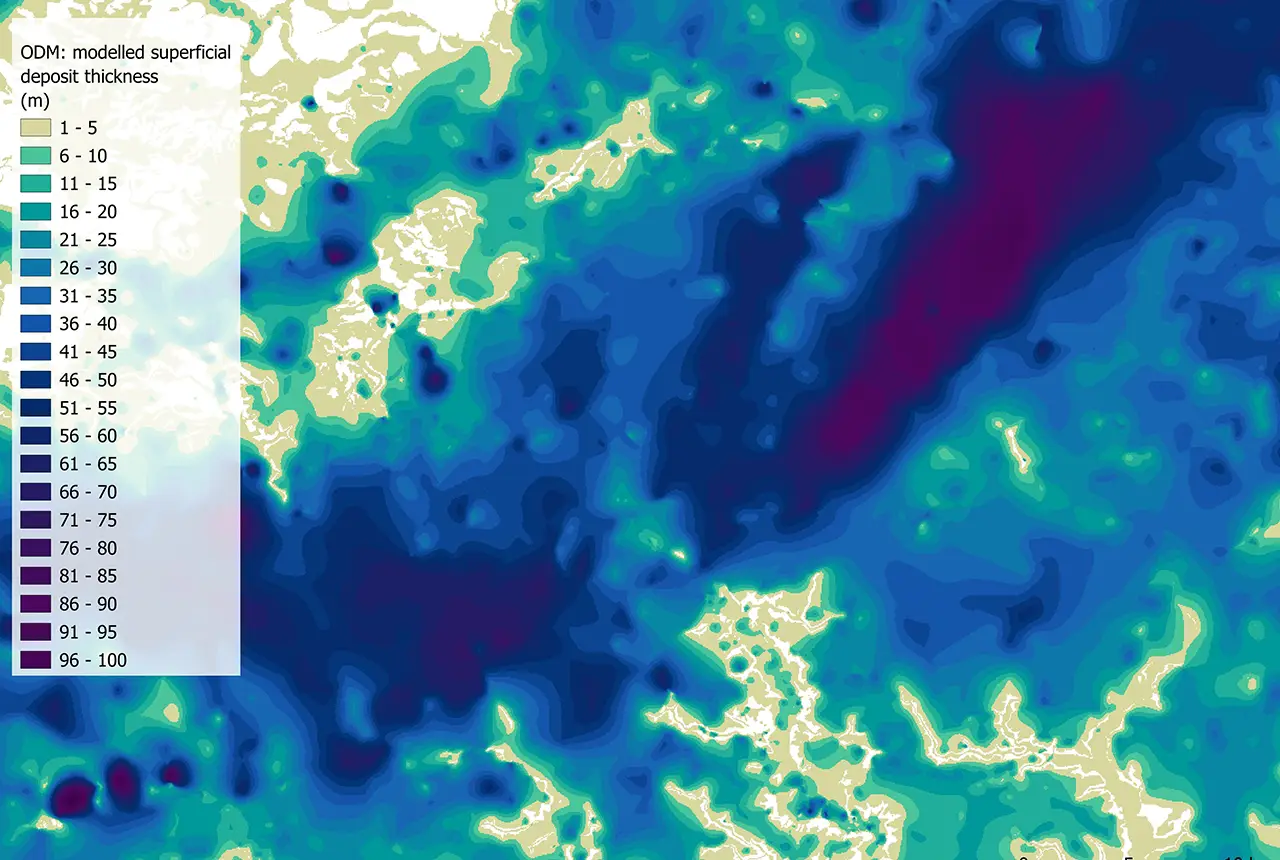
The BGS Superficial Deposit Thickness Model now includes an elevation model of geological rockhead for the first time, providing important data for civil engineers, geoscientists and environmental scientists.