

Uncovering microplastics underground
PhD student Syeda visited Poole’s Cavern in Derbyshire to discover if tourists could be a source of microplastics in local watercourses.
20/11/2026 By BGS Press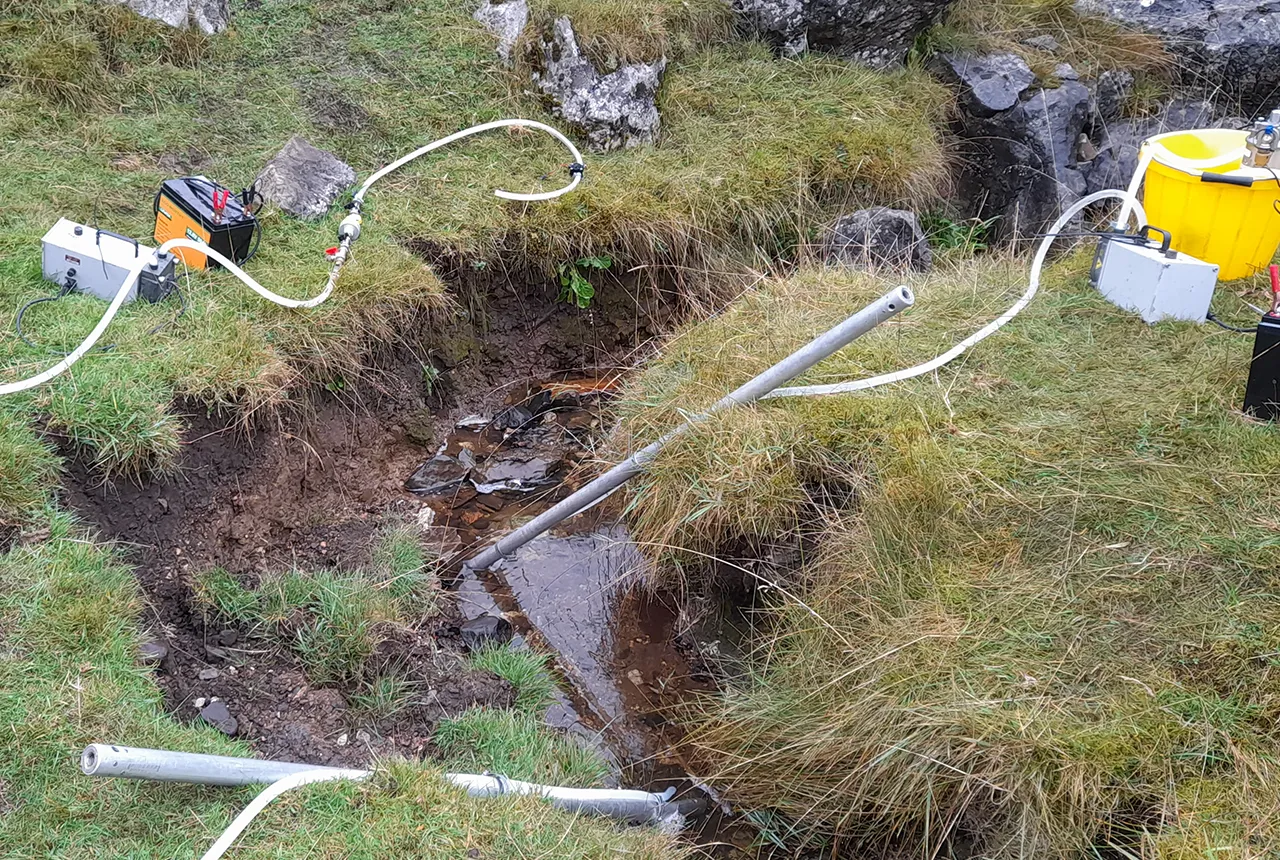

The first cave I ever stepped into was not a remote system or hidden entrance in the hills: it was Poole’s Cavern, a well-known show cave in Derbyshire.
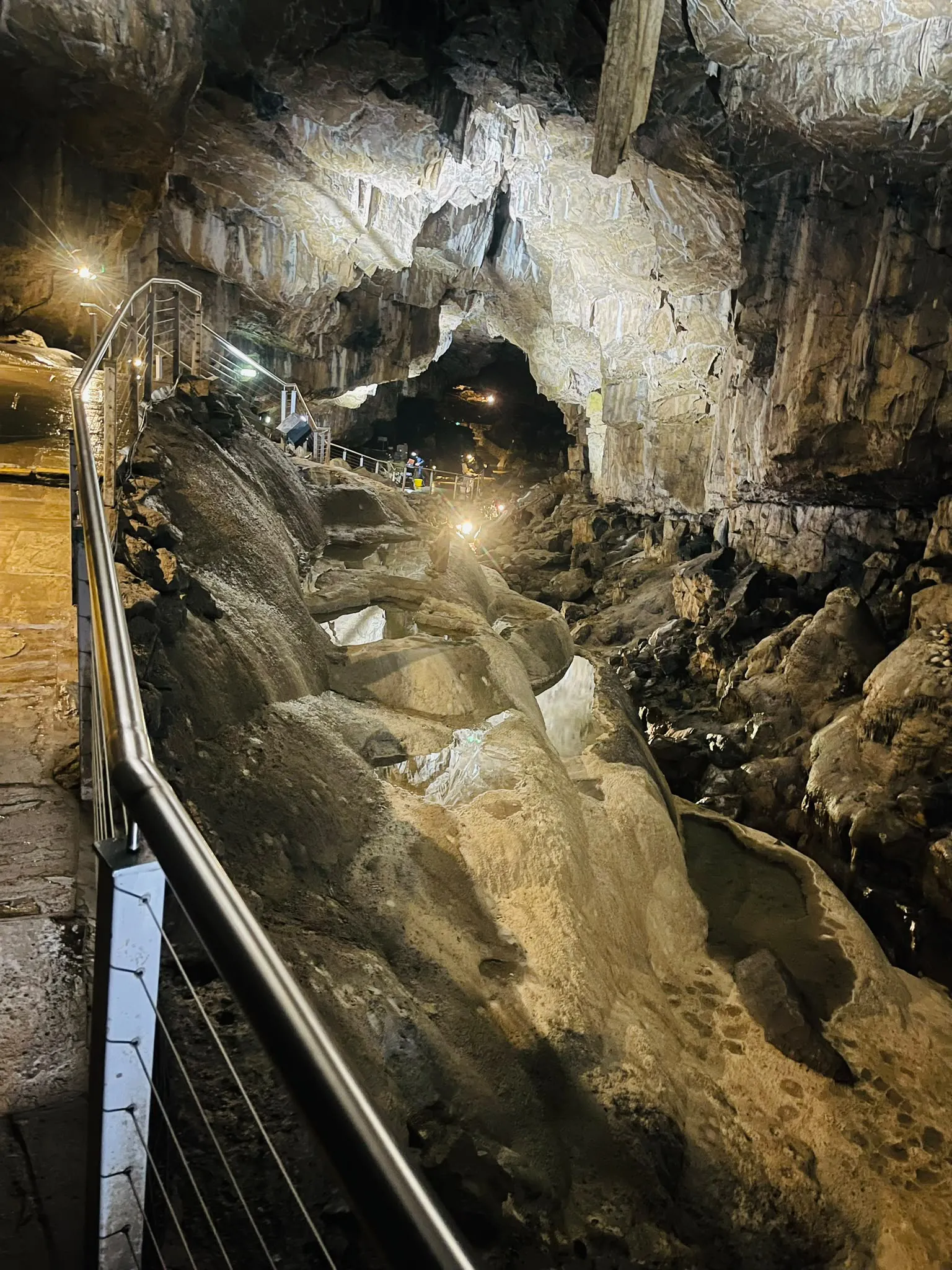
Poole’s Cavern, Buxton, Derbyshire is a show cave and the site of my first microplastic sampling campaign. © Syeda Maria Zainab.
I remember walking past the visitors, listening to the guide’s voice echoing through the cave, and feeling a mix of curiosity and awe. Even with a lot of tourists around, the cave held its atmosphere: cool air, the steady drip of water, a stream running quietly over limestone and the sense that the underground moves at its own pace.
Despite the age of the cave, my PhD research means studying a very contemporary problem: microplastics and how they move through karst systems. The reason for my trip was to collect samples, and this was my first time doing so inside a cave.
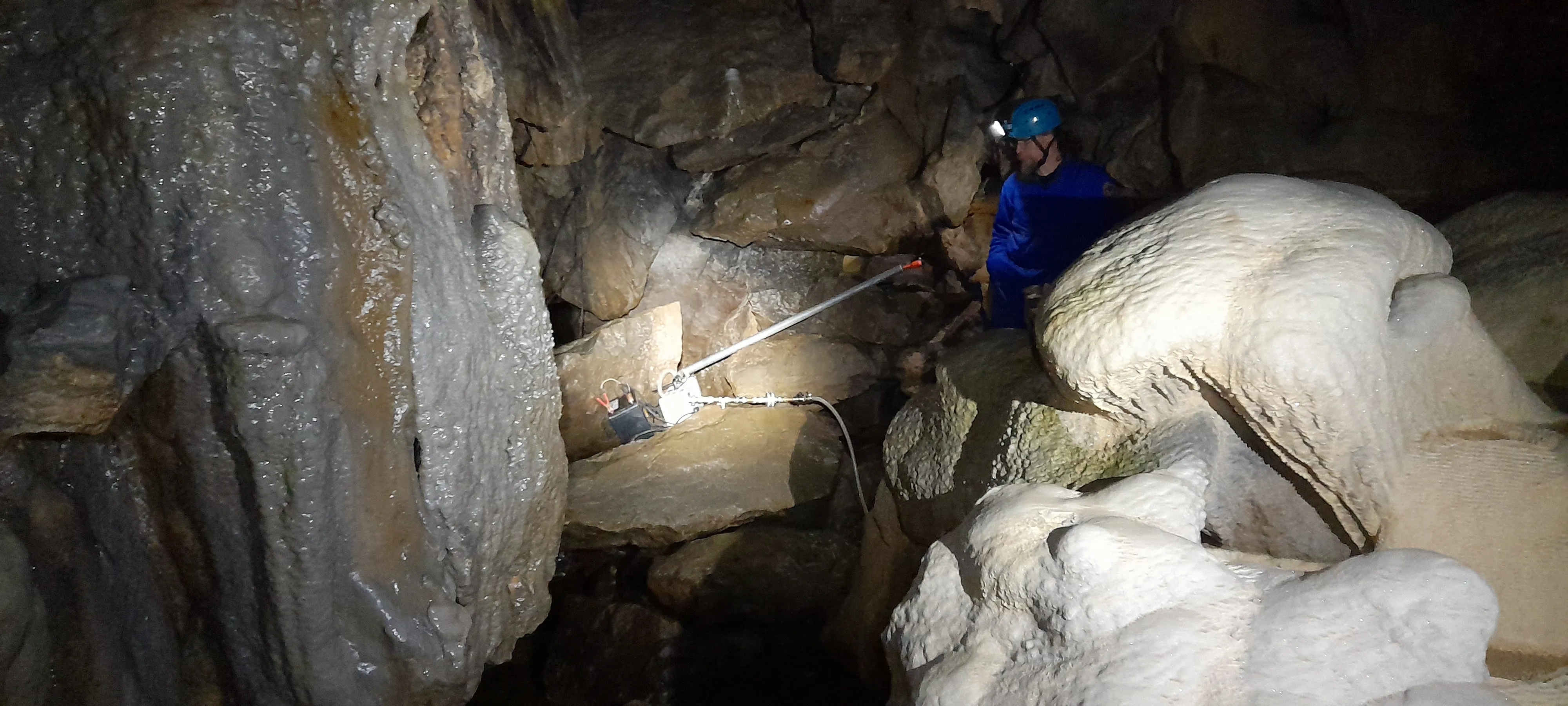
Water sampling in Poole’s Cavern at an upstream sample point. © Lou Maurice.
How do microplastics reach caves?
Microplastics are plastic particles smaller than 5 mm. They are the fibres and fragments shed by clothing, packaging, tyres and everything else plastic that we use daily. Microplastics have been found in oceans, rivers, soil, rain and caves around the world.
Karst aquifers are particularly vulnerable to pollution as rainwater does not filter slowly through soil and rock the way it does in a sandstone aquifer, for example. It enters through sinkholes (dolines), swallow holes or swallets and open fissures, and travels much more quickly through conduits, carrying whatever it picks up on the way. Once plastic particles are underground, they either move on within groundwater flow or settle out into sediments that can eventually emerge again at springs.
My research question
The Buxton area has many stream sinks in the catchment that resurge as springs. The use of dye tracing, originally undertaken in the in area by Prof John Gunn, meant we already knew which sinks feed which springs around the cave. This meant we could follow microplastics through the whole karst system, from the stream sinks through the caverns to the springs.
The ability to isolate a specific area within the system allowed us to test an idea. Studies in Italian show caves have found that there are more microplastics along tourist paths than in the sections that visitors never reach, which suggests that people visiting the underground are an important source of microplastics. If visitors are the dominant source at Poole’s Cavern, the pattern should be clear: lower concentrations of microplastics at the stream sinks, higher concentrations in the cave, and more in a spring fed by the cave than in a spring that is not.
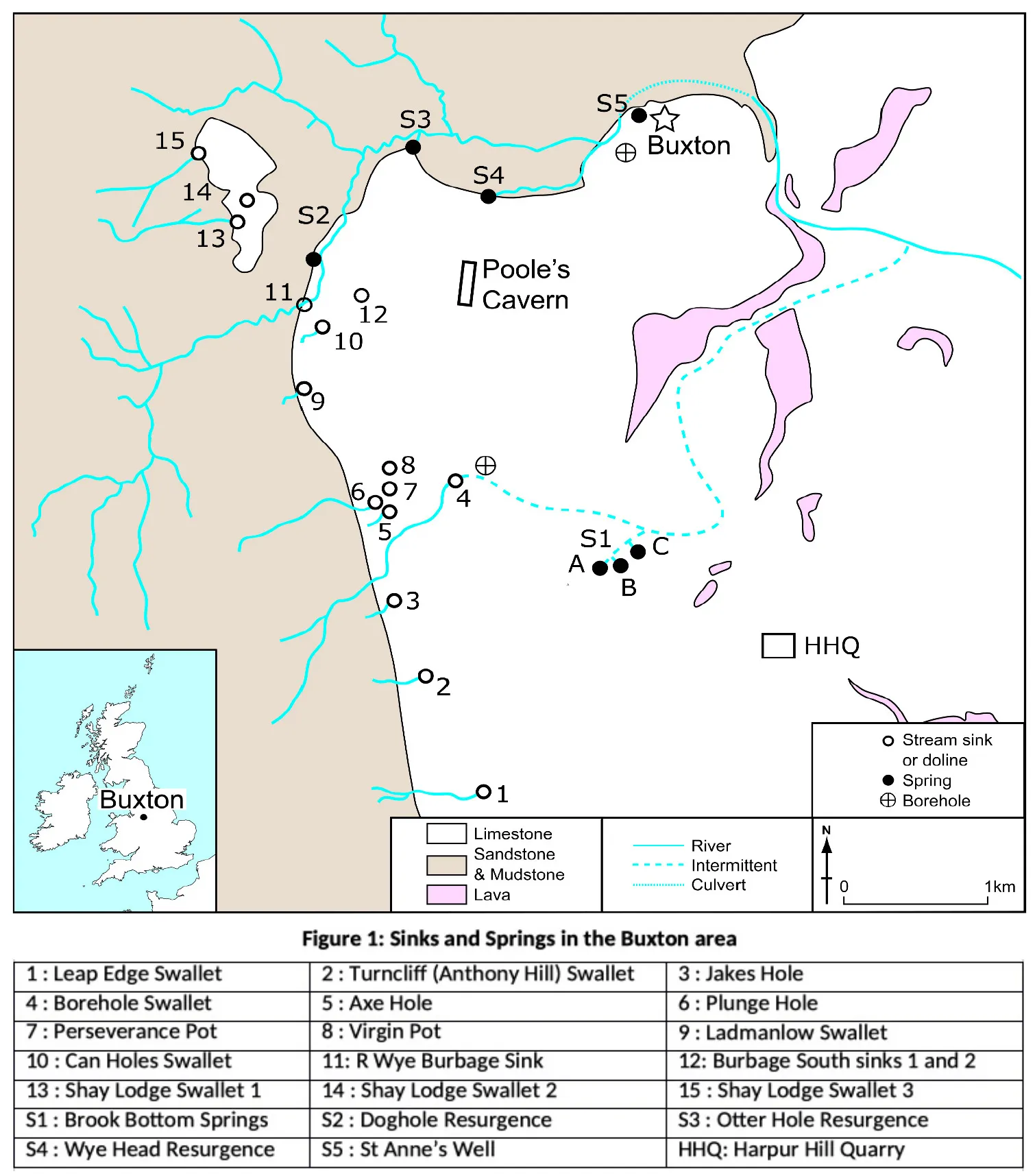
Catchment map with dye-traced sink-spring connections (map from Gunn, J. 2023 The Sinks and Springs at the Source of the River Wye. The Buxtonian, Vol. 2(1), 5–14).
Sampling inside Poole’s Cavern
John Gunn arranged access for us to collect samples at the cave and met us there to show us around and provide any assistance through the process. I went in with my PhD supervisor, Louise Maurice, a karst specialist and experienced caver, and a former colleague from BGS, Barry Townsend.
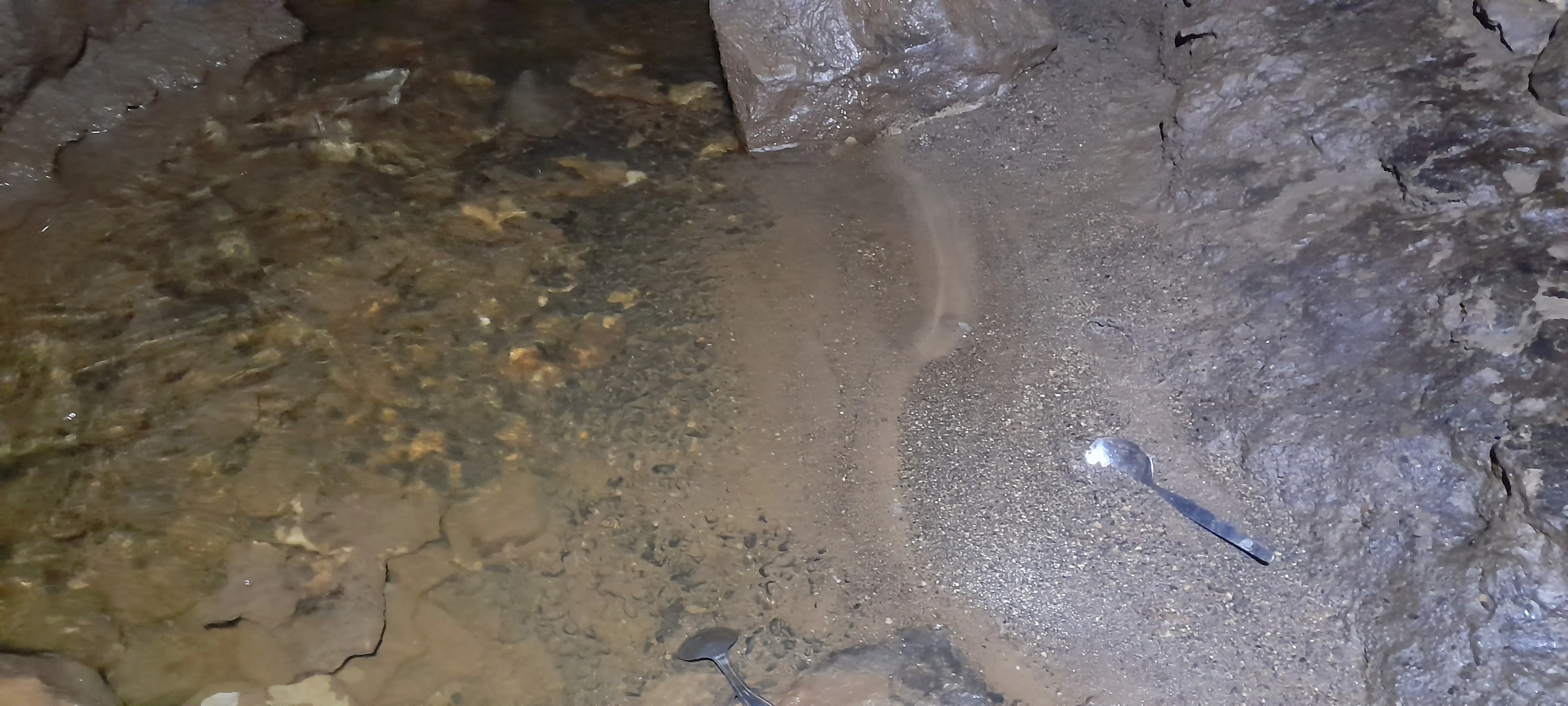
Sediment beneath and adjacent to the cave stream in Poole’s Cavern. © Lou Maurice.
The hardest part of this work wasn’t collecting the samples; it is avoiding plastic contamination. We had to avoid plastic in the field kit, with equipment including a custom-made steel rig, glass jars and metal spoons to collect sediment samples from the cave. We wore cotton boiler suits, because fleece sheds microplastic fibres easily. Every sample was sealed with aluminium foil straight away to avoid contamination.
Other sampling and sample analysis
We then collected samples at the Wye Head resurgence, the largest spring in the area, where water from Poole’s Cavern re-emerges and connects to the River Wye and the Otter Hole resurgence, which is not cave-fed. With the help of Rob Eavis, we also sampled at two stream sinks known to be connected to the cave (Plunge Hole and Borehole Swallet).
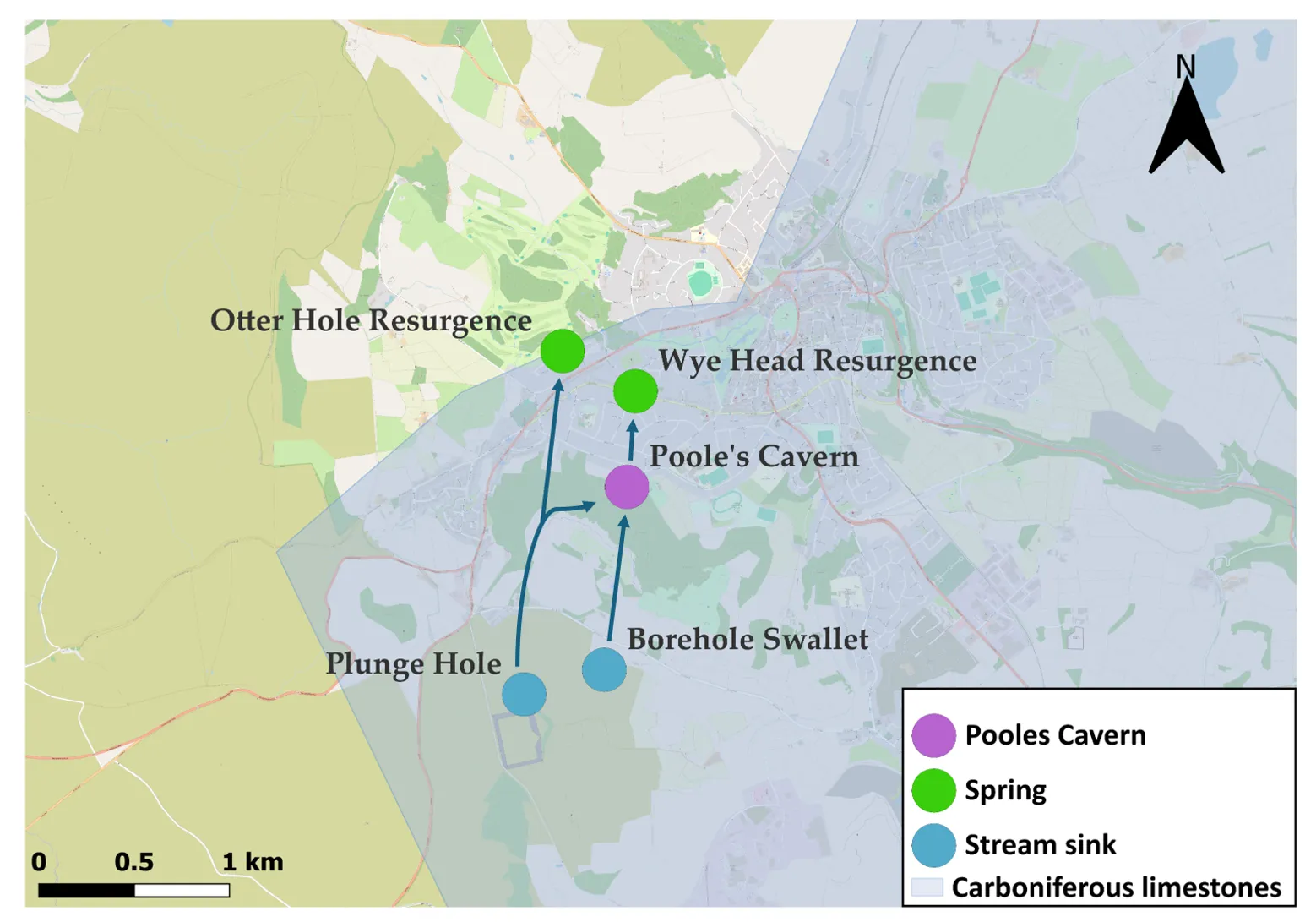
Map of study sites. Surface stream sinks feed the cave stream, which resurges at Wye Head. Otter Hole, which is not cave-fed, was sampled for comparison. © Syeda Maria Zainab.
Once the samples had been collected, all the laboratory work was done at the microplastics laboratory at the UK Centre for Ecology & Hydrology (UKCEH) in Wallingford, in a clean and plastic-free environment. It took two months of laboratory work to process and analyse the small number of water and sediment samples we collected from the Poole’s Cavern system, but we used recently developed protocols to maximise the confidence in our data and minimise the risk and impact of sample contamination.
What we found
Microplastics were present in every sample we took. This is perhaps unsurprising, given how prevalent microplastics are in so many diverse environments, but seeing plastic in all samples brought home the reality of the situation.
On a positive note, the concentrations were lower than we expected. This may be because the wider catchment in this study is less contaminated compared to earlier studies; another possibility is that our lower values relate to differences in laboratory methodology and contamination controls. When I reviewed previous karst studies on microplastics, it was clear that many different laboratory methods, instruments and contamination protocols were used in the different studies and there were many factors that could lead to over- or under-estimation the levels of microplastics, making comparisons between studies very difficult.
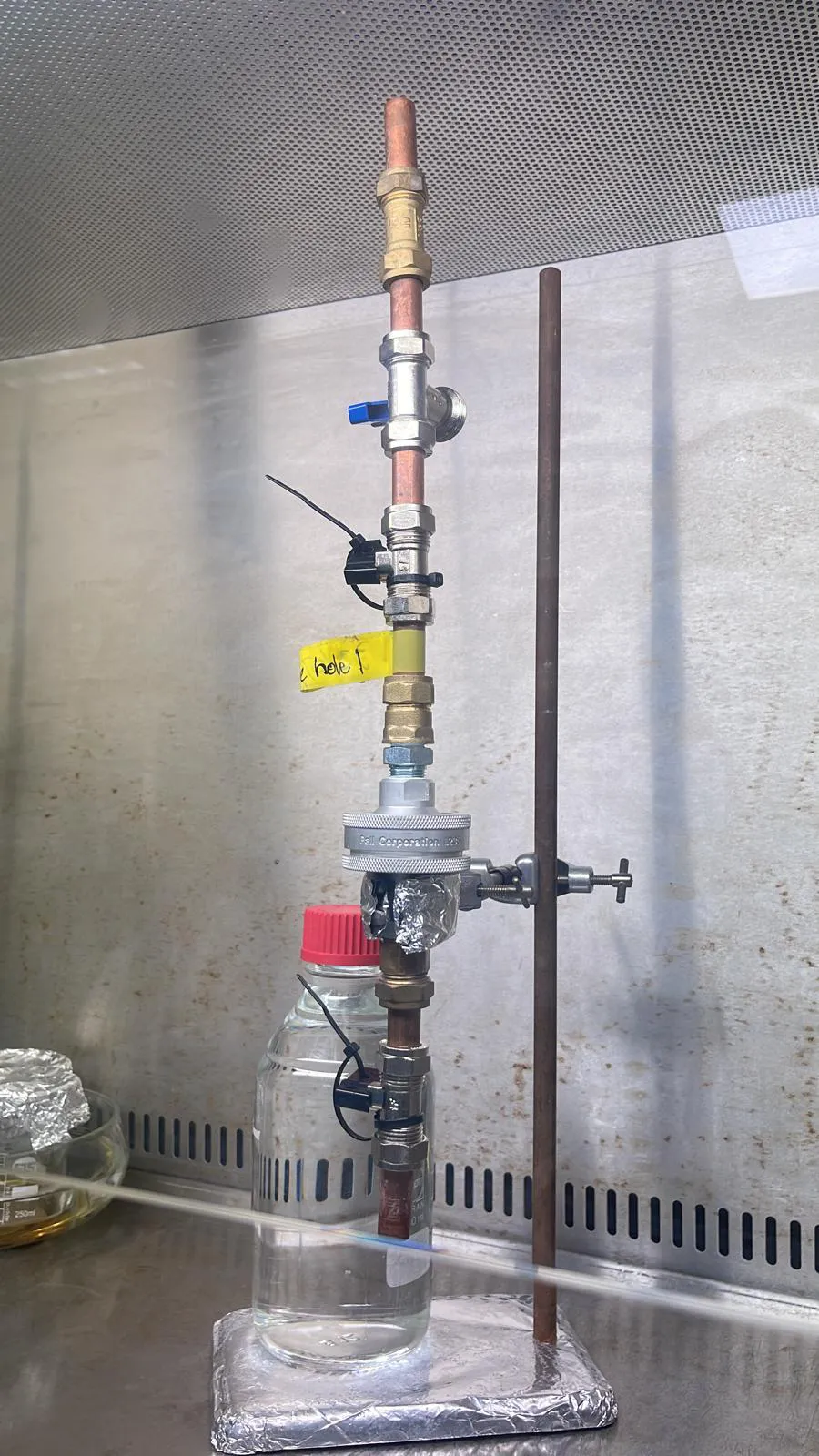
Sampling rig mounted on the stand in the fume hood. © Syeda Maria Zainab.
The results from the two springs were particularly interesting. If the cave was adding microplastics to the water passing through it, then the spring that is fed by the cave (Wye Head) should have carried more than the spring that is not (Otter Hole). In fact, Otter Hole had slightly higher concentrations. Under the conditions we sampled, the cave was not adding a detectable signal to the water discharging the aquifer. The catchments cover large areas and have many stream sinks, and the water sample results suggest that there are multiple sources of microplastics within the catchment that are contributing to the springs, rather than a concentrated input from activities in the show cave.
This was one cave that was sampled in one campaign, so these results should not be over-interpreted. However, it is clear that microplastics are present in all parts of the system (stream sinks, the cave stream water and sediment, and springs). While the show cave was not obviously contributing microplastics to the spring under the sampled conditions, microplastics are being stored within the sediment in the streambed.
Why microplastics in caves matter
Plastic pollution is not just an aesthetic problem. Laboratory and field studies have found microplastics in aquatic invertebrates and cave fauna (stygobites). Plastic particles can alter how fine sediments behave and can become incorporated into mineral deposits. Most importantly, they can reach karst springs that supply drinking water and sustain important ecological habitats.
Looking ahead
My first visit to Poole’s Cavern taught me something simple: even caves that feel ancient and untouched are connected to the surface in a way we cannot always see. The water can look clean, but the sediment quietly records what has passed through.
The full results of my sampling are being written for publication. As the research continues, we will learn more about how these particles move through karst and how we can reduce their impacts.
This work benefited greatly from the support of many colleagues. I am grateful to Louise Maurice for her support during sample collection, assistance with sampling design, and guidance in selecting field sites, and to Richard Cross, Dan Lapworth, Kathy Pond and Monica Felipe-Sotelo for their continued supervision and support throughout this work. I also thank Prof John Gunn for arranging access to the cave, showing us around on site and sharing his knowledge of stream sinks and springs within the catchment. I am appreciative of the field support provided by Barry Townsend and Rob Eavis. I am especially grateful to Percy Vernon (Aberystwyth University) for his assistance with sediment analysis and to Alexandra Howard (UKCEH) for her training in laboratory methods.
Author
Syeda Maria Zainab, PhD student
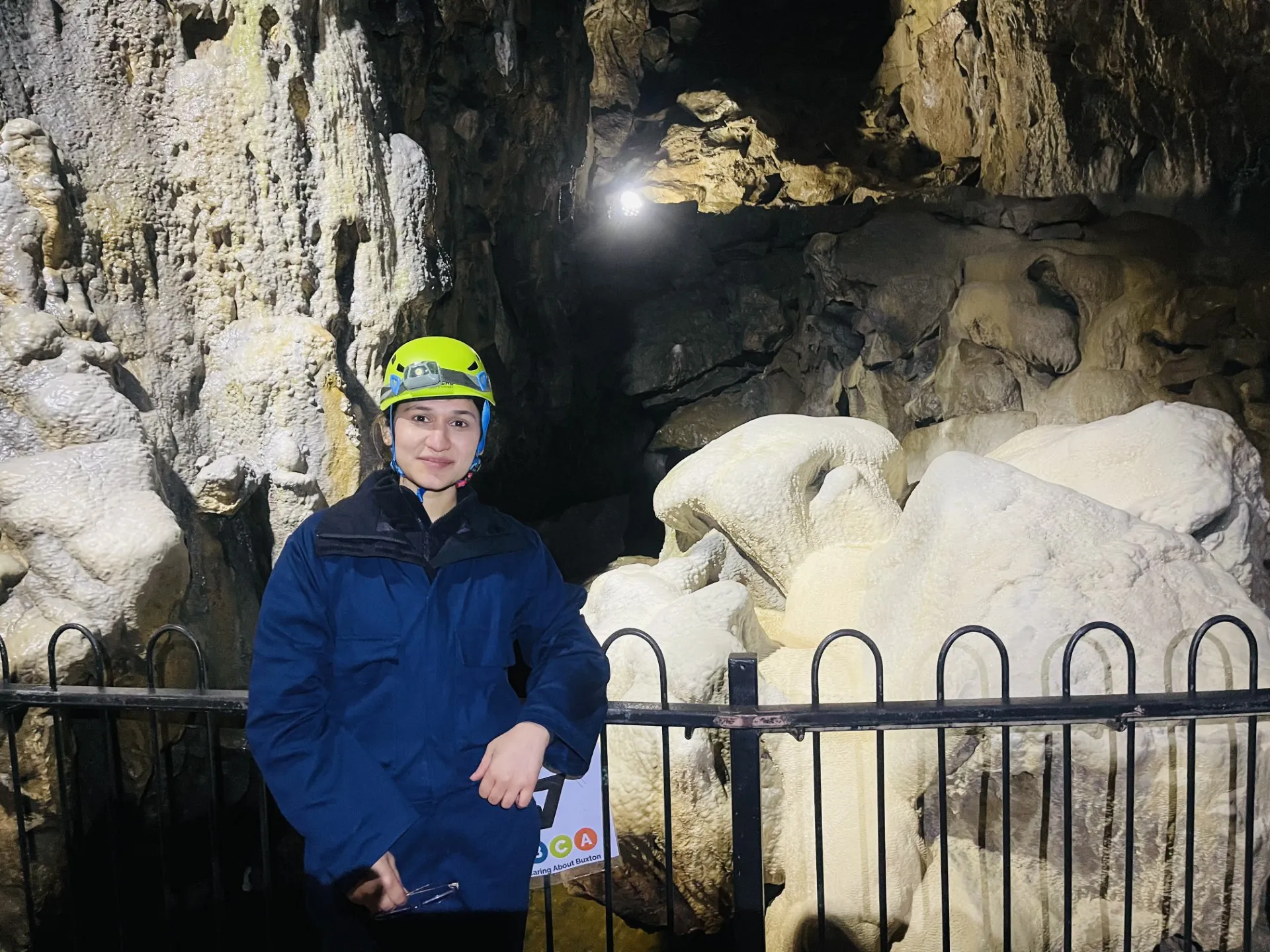
Maria at the upstream sampling location. © Syeda Maria Zainab.
Relative topics
Related news
Uncovering microplastics underground
20/11/2026
PhD student Syeda visited Poole’s Cavern in Derbyshire to discover if tourists could be a source of microplastics in local watercourses.
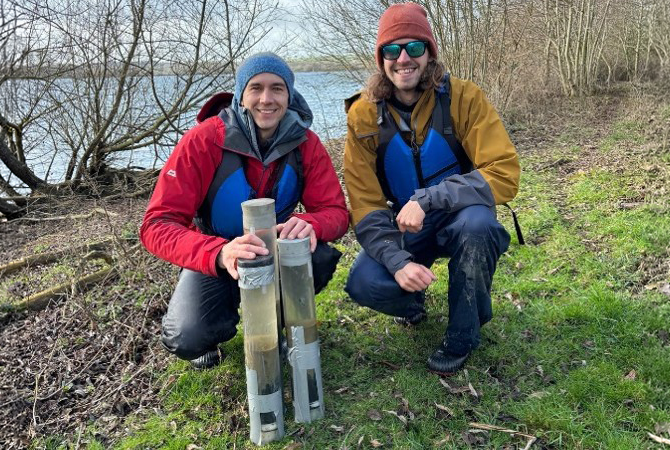
New research demonstrates stability of phosphate oxygen isotope in lake sediments
29/10/2026
The discovery could boost research into past environmental conditions, tracking nutrient pollution and examining the impacts of freshwater management.
Improving bioaccessibility testing for contaminated soils
15/10/2026
BGS has been trialling a novel bioaccessibility tracing technique to ascertain if it offers more analytical precision over traditional methods of detecting chemicals in contaminated soils.

Professor Alan MacDonald presented with Presidents’ Award at 2026 World Groundwater Congress
21/09/2026
The BGS Head of Groundwater has been recognised with this prestigious award by the International Association of Hydrogeologists for his extensive contributions to groundwater science.
Delving deep into mountains for future water security
16/07/2026
A BGS-led project is using new water-tracing investigation methods, geophysics and modelling to understand how water moves from mountains to the lowlands, helping to improve water security for billions of people.
New geological maps of Berwick-upon-Tweed to help future-proof natural water supply
20/05/2026
Scientists have mapped the geology under the town to better understand the groundwater system to inform decisions around abstraction.
Isotopes and science: my student placement at BGS
08/04/2026
Industrial placements at BGS for undergraduate students give real-life experience of working in laboratories and learning different analytical techniques.
New research could help provide a more reliable water supply for millions in rural Africa
24/03/2026
A new BGS-led study has revealed crucial insights into the longstanding challenges affecting the reliability and performance of rural water supply infrastructure in sub-Saharan Africa.
MARC Conference 2025: highlighting the importance of conferences to PhD students
16/02/2026
BGS and University of Nottingham PhD student Paulina Baranowska shares her experience presenting her research on nuclear forensics at her first international conference.
Extensive freshened water confirmed beneath the ocean floor off the coast of New England for the first time
09/02/2026
BGS is part of the international team that has discovered the first detailed evidence of long-suspected, hidden, freshwater aquifers.

Hole-y c*@p! How bat excrement is sculpting Borneo’s hidden caves
23/12/2025
BGS researchers have delved into Borneo’s underworld to learn more about how guano deposited by bats and cave-dwelling birds is shaping the subsurface.
New geological maps of the Yorkshire Wolds to better inform groundwater management and policy decisions
17/12/2025
The new mapping provides crucial data on localised geological issues that may assist in protecting water supplies.