

BGS celebrates half a century in Keyworth
2026 marks 50 years since BGS, the world's oldest national geological survey, relocated to the site of our current headquarters, just outside Nottingham.
28/10/2026 By BGS Press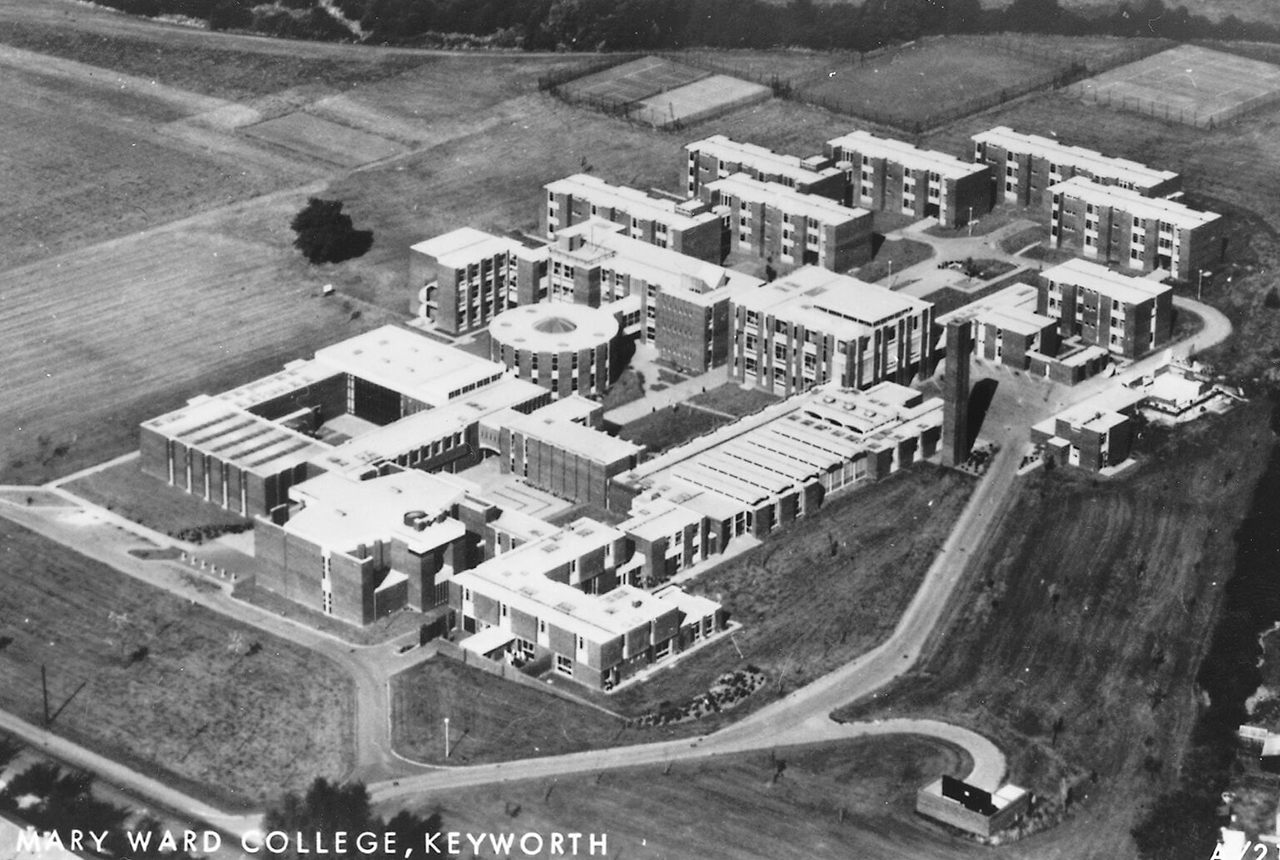

On 1 September 1976, after years of planning and numerous site visits, the Institute of Geological Sciences (which was re-named the British Geological Survey in 1984) finalised the purchase of Mary Ward College, a teacher training institute in Keyworth, Nottinghamshire. The aim was to create a centralised office to suit a multinational geological survey and global geoscience organisation. Fifty years ago this month, the first 30 members of staff moved from their offices in London and Leeds to begin BGS’s life in Keyworth.
Since moving to the Keyworth site, BGS’s headquarters, which is now home to around 500 staff, has seen many changes and milestones. One of these was the opening of the National Geological Repository (NGR) in 1985, the UK’s most comprehensive collection of geological materials, which includes more than 600 km of drillcore and 16 million specimens from the UK and its continental shelf. In 2010, the NGR underwent another transformation, with a large extension and the installation of high-density mobile racking for storing drillcore.
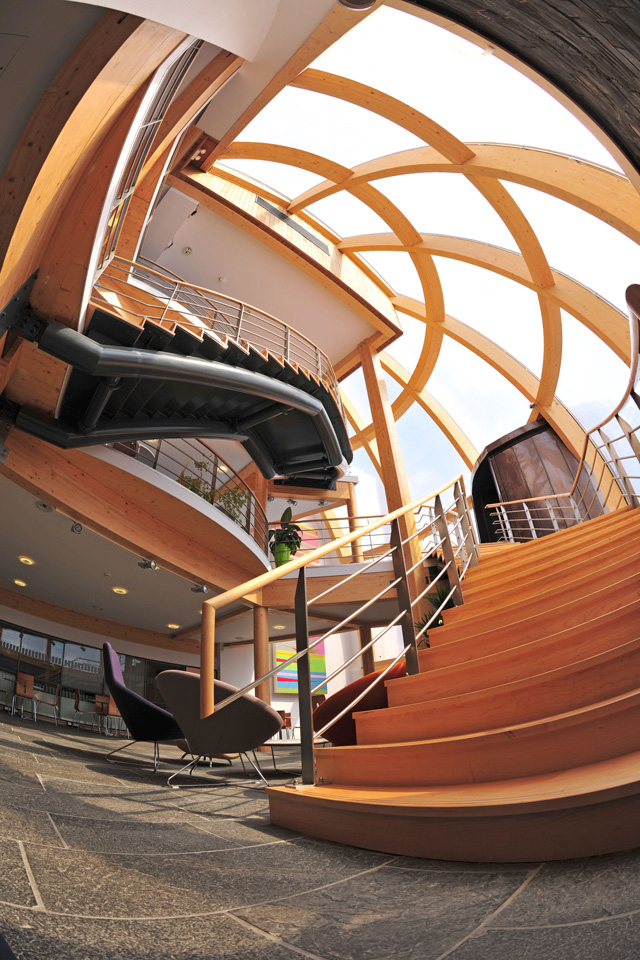
2009: The William Smith Building was officially opened in 2009 by HRH The Princess Royal. The building was designed by Pick Everard and, at 3000 m², the structure was recognised upon its opening as the UK’s largest woodenframed, open-plan office building. BGS © UKRI.
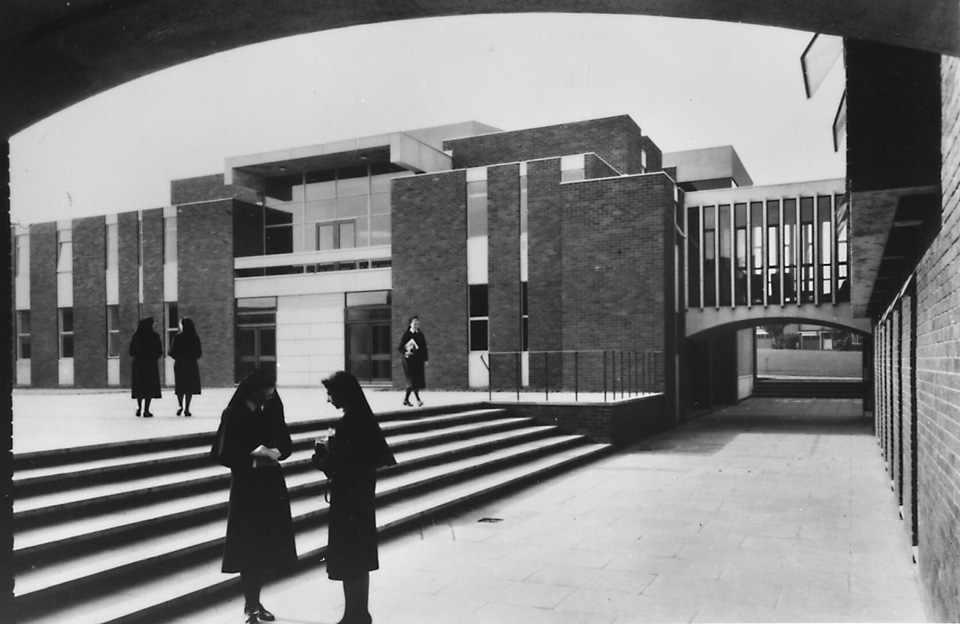
1976: Mary Ward College, a teacher training institute in the village of Keyworth in Nottinghamshire, came on the market in February 1975 and, after numerous visits by BGS (then known as the Institute of Geological Sciences) and NERC senior staff, the site was purchased on 1 September 1976. BGS © UKRI.
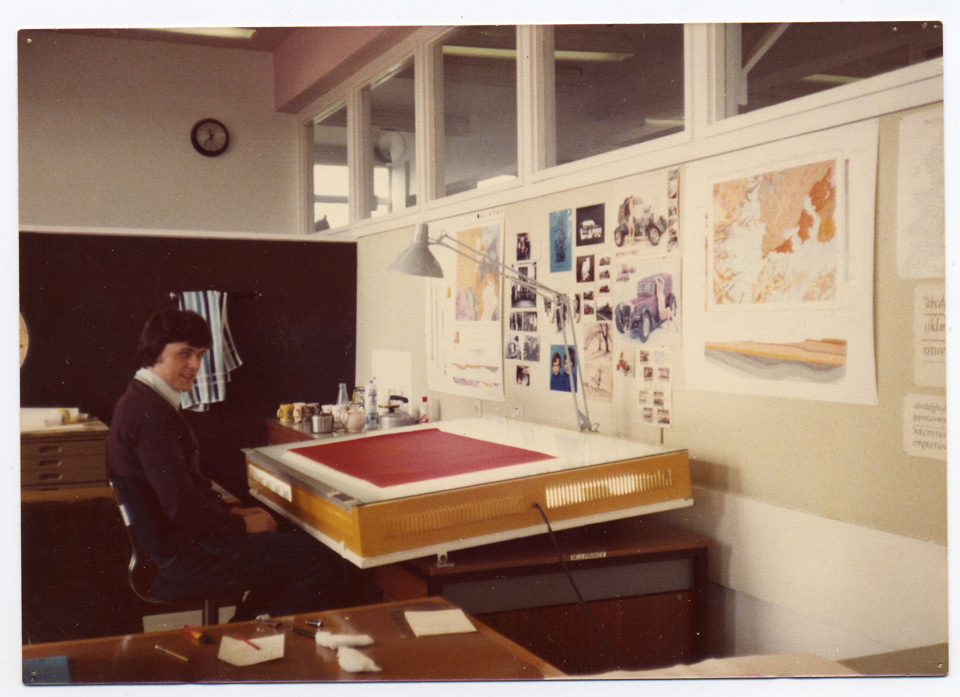
1979: First BGS staff arrived on site in the late 1970s – pictured here is the Drawing Office in 1979. BGS © UKRI.
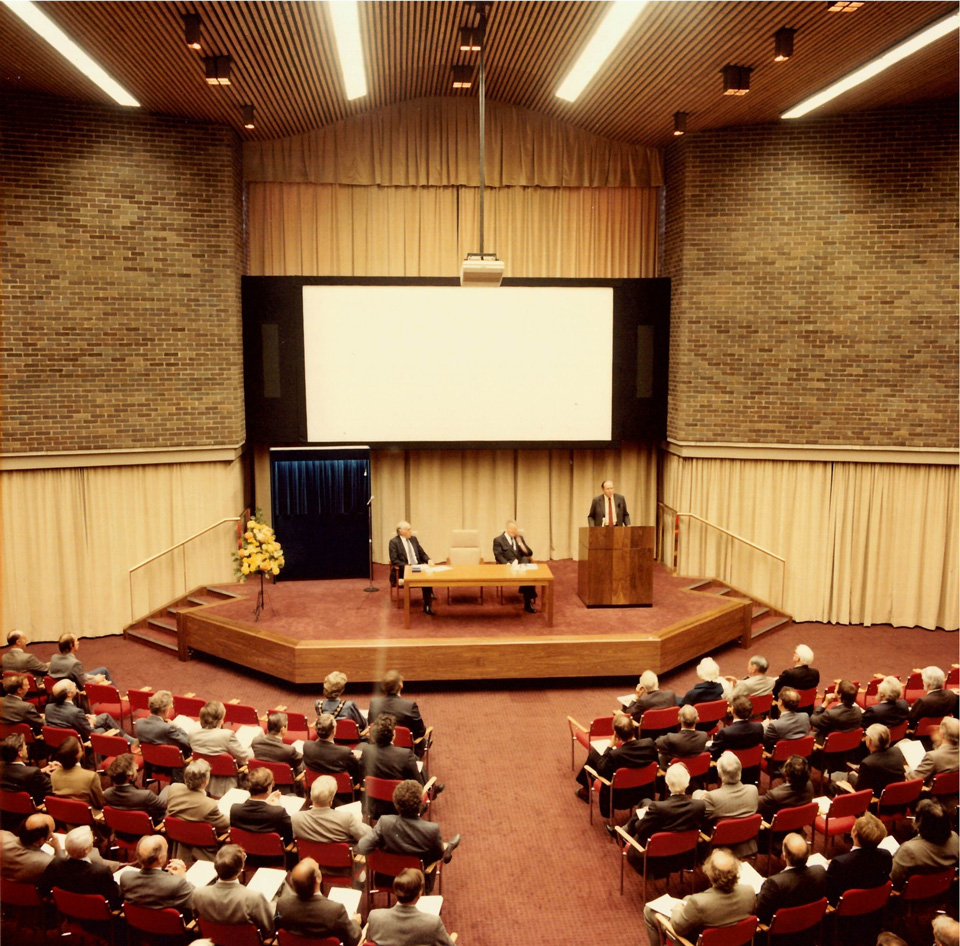
1985: The Hon. Peter Brooke MP, parliamentary undersecretary of state for education and science, speaking on 8 October 1985 to an invited audience in the new De La Beche Conference Centre before officially declaring the BGS headquarters at Keyworth open. The official opening also coincided with the 150th anniversary of the BGS. BGS © UKRI.
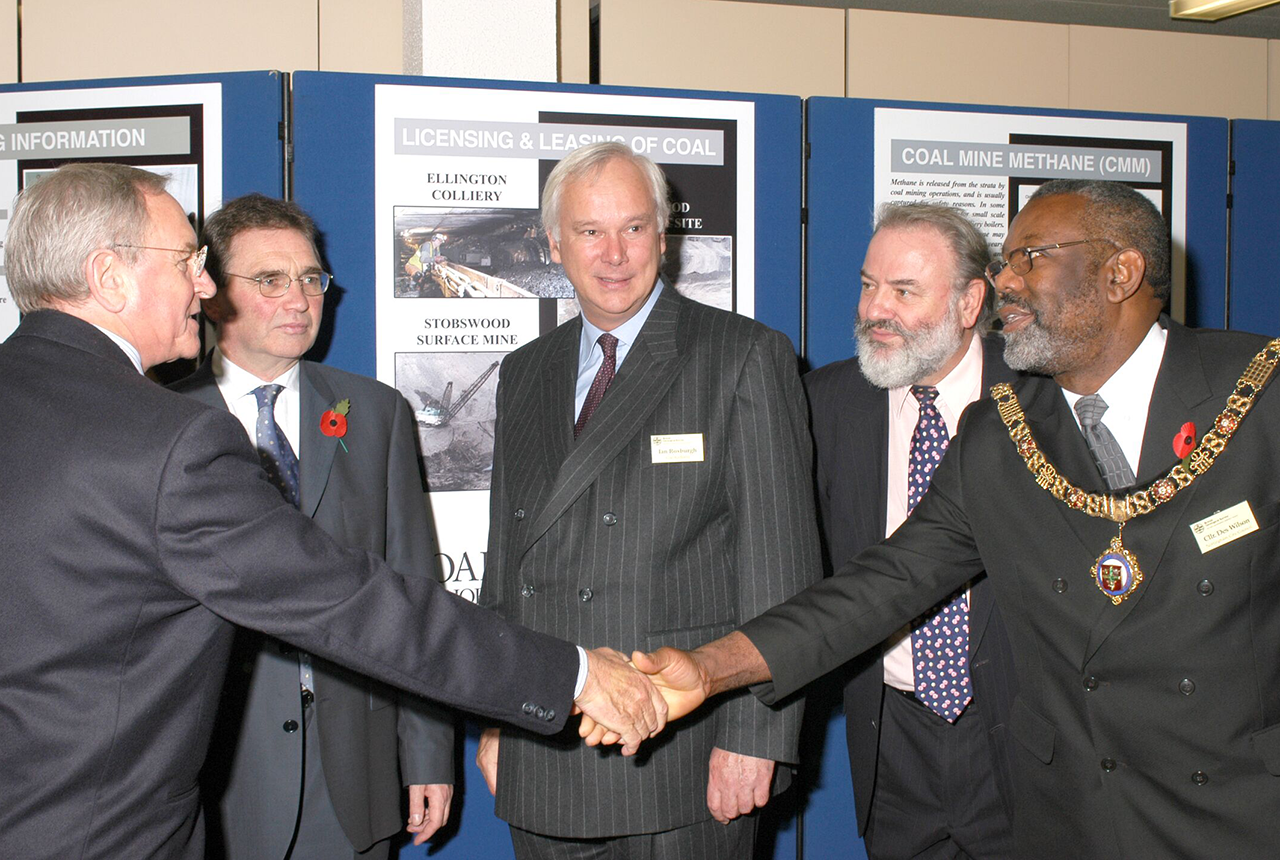
2002: The Minister for Energy, the Lord Mayor of Nottingham, the Mayor of Rushcliffe and representatives of the Coal Authority and UK Nirex were among the attendees of the official opening of the new Core Store in 2002. BGS © UKRI.
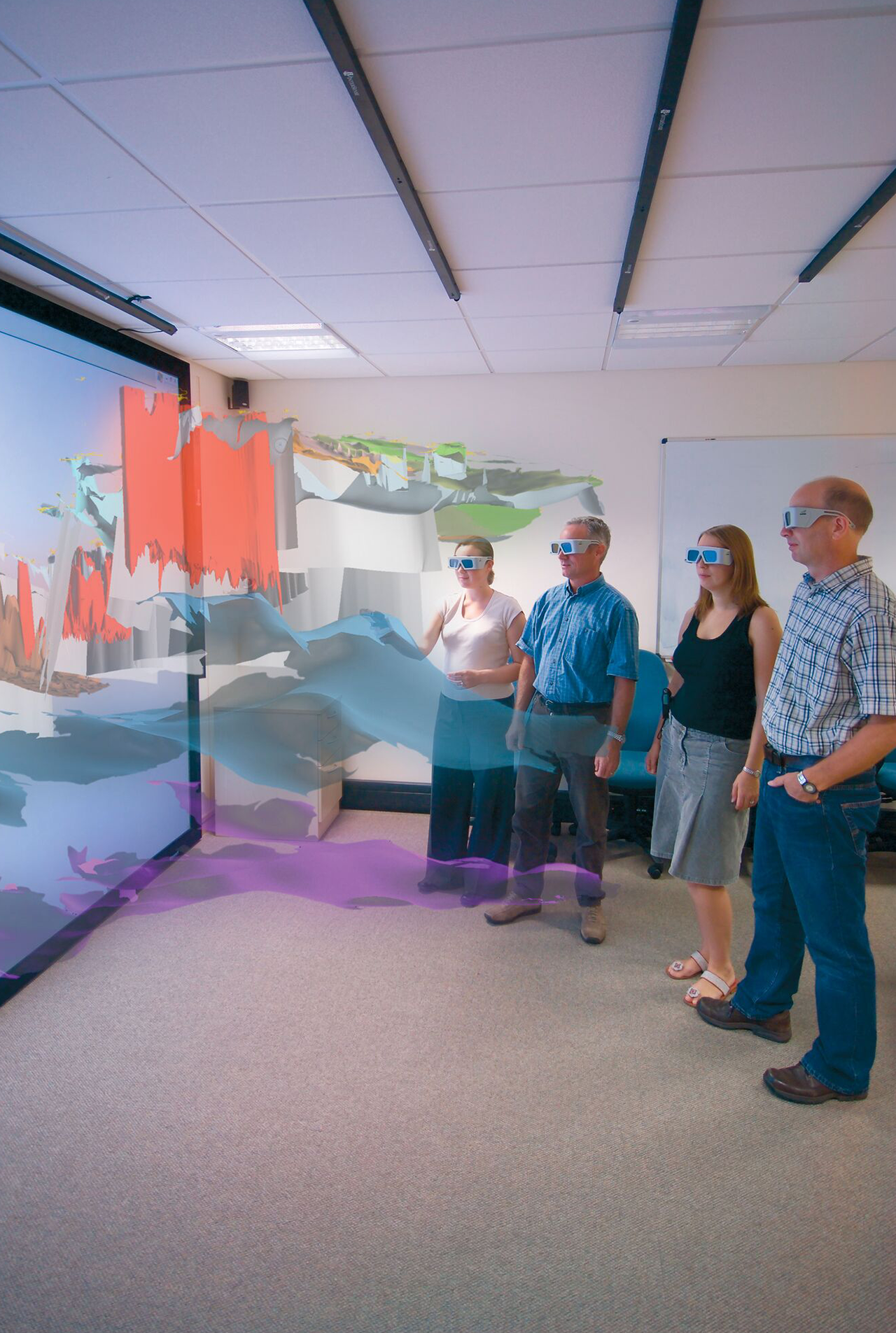
2005: In 2005, BGS took a bold step into the world of virtual reality (VR), pioneering 3D visualisation in geological surveying when Virtalis Ltd. installed BGS’s first 3D visualisation facility in Keyworth. BGS © UKRI.
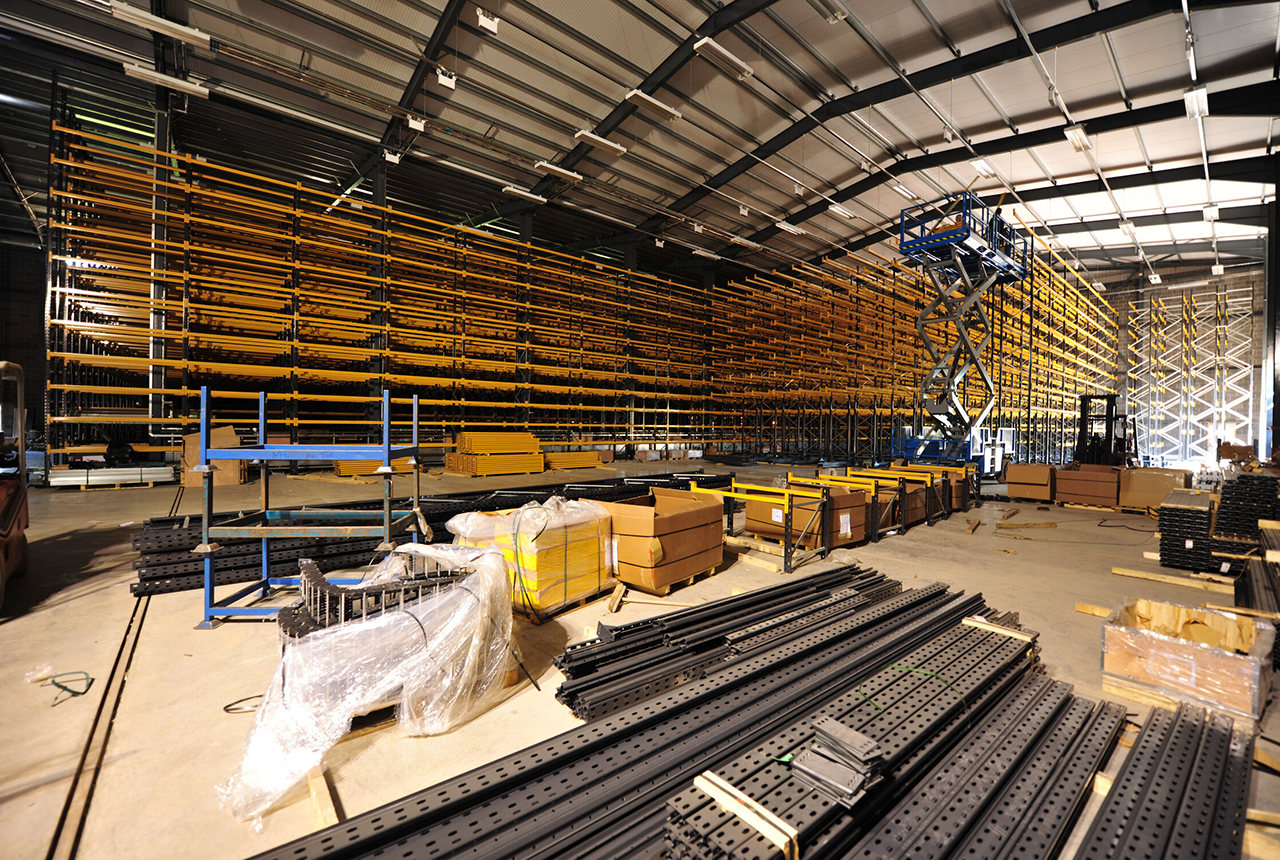
2010: The National Geological Repository extension taking place in 2010, with the installation of high-density mobile racking for storing drillcore. BGS © UKRI.
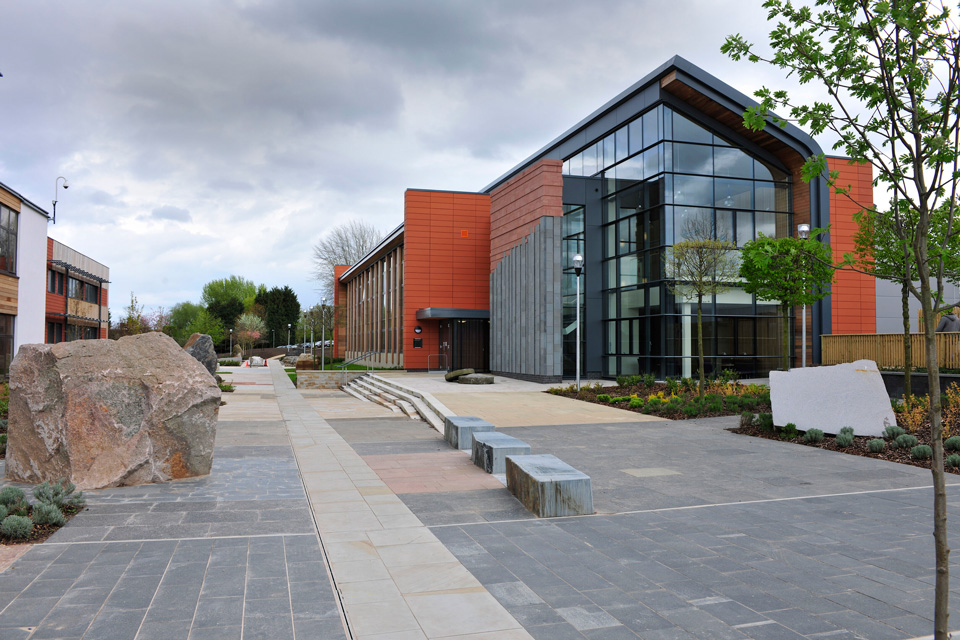
2012: The James Hutton Building, was officially opened alongside the Geological Walk on 17 May 2012 by Sir John Beddington, Government Chief Scientific Adviser. The façade of the building resembles the famous unconformity at Siccar Point, which gave James Hutton the proof that the ‘present is the key to the past’ and that our geological past can be explained with reference to present-day processes.

2022: Solar panels installed in Keyworth as part of a solar car port project. BGS © UKRI.
The Core Store and records areas were extended in 2002 using funding provided by Nirex, the Coal Authority (now the Mining Remediation Authority) and BGS’s parent body, the Natural Environment Research Council (NERC). The funding included a contribution to the building of the new extension, the transfer of data and its re-housing, with an additional contribution to the staffing required to carry out agreed indexing and digitisation. New racking and shelving were also installed.
In 2005, BGS took a bold step into the world of virtual reality (VR), pioneering 3D visualisation in geological surveying with the installation of BGS’s first 3D visualisation facility in Keyworth, enhancing our understanding of geological formations. The site has also benefited from major sustainability investments over the past five decades, including the installation of more than 1700 solar panels in 2021 and 2022 as part of a solar carport array in the main car park.
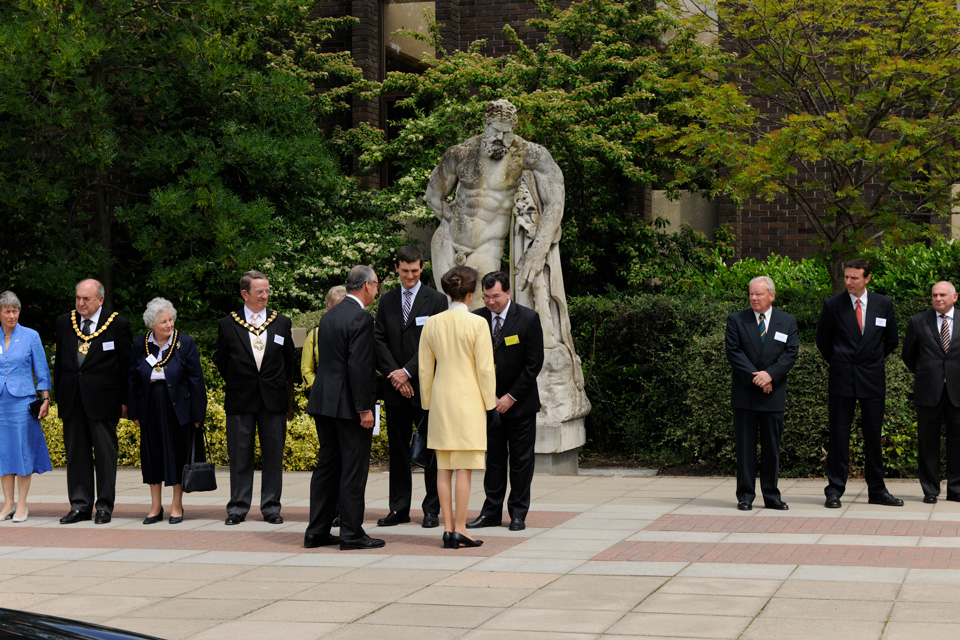
The William Smith Building was officially opened in 2009 by HRH The Princess Royal. BGS UKRI
The site has also welcomed several famous faces over the years, including broadcasters, government officials and even royalty. In 1997, HRH The Princess Royal made a visit to the BGS cartography team and she returned in 2009 to officially open the William Smith Building. In 2004, Alan Titchmarsh visited Keyworth whilst filming the BBC TV series British Isles: A Natural History and, in 2010, Sir David Attenborough was a guest speaker at the BGS 175 Symposium and celebrations, which saw BGS commemorate its 175th anniversary.
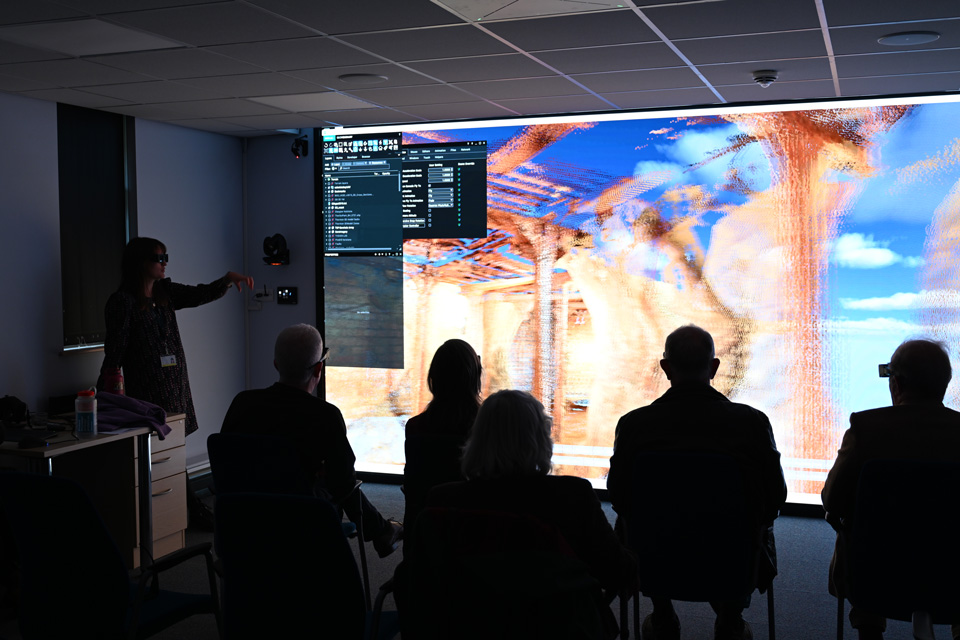
As part of the 50 year celebrations, BGS welcomed around 70 former members of staff to the Keyworth site. Attendees enjoyed tours of the new facilites and a demonstration of the 3D visualisation facility. BGS © UKRI.
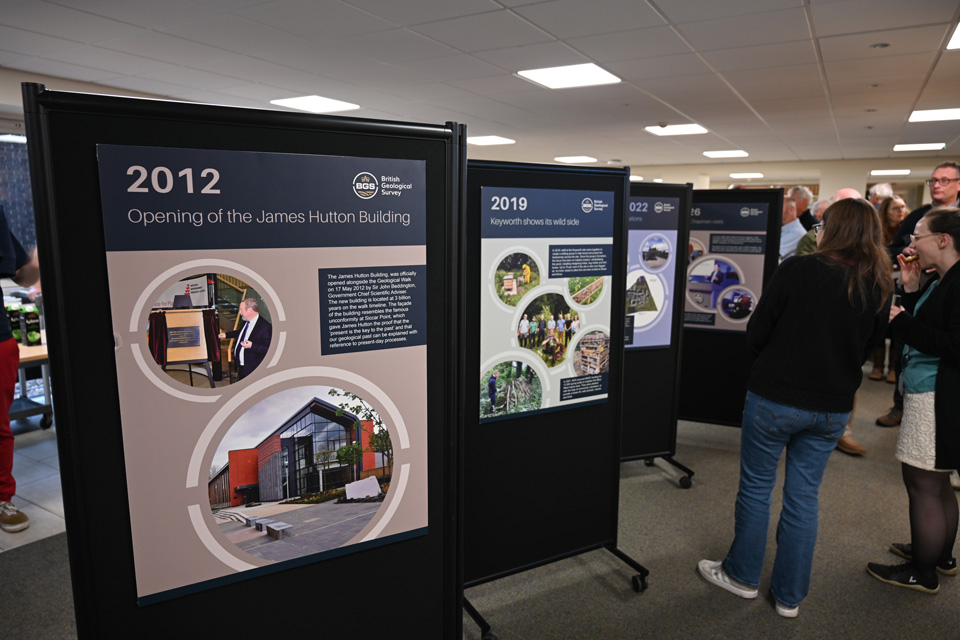
A special exhibition was on display showcasing some of the many highlights from the 50 years on the Keyworth site. BGS © UKRI.
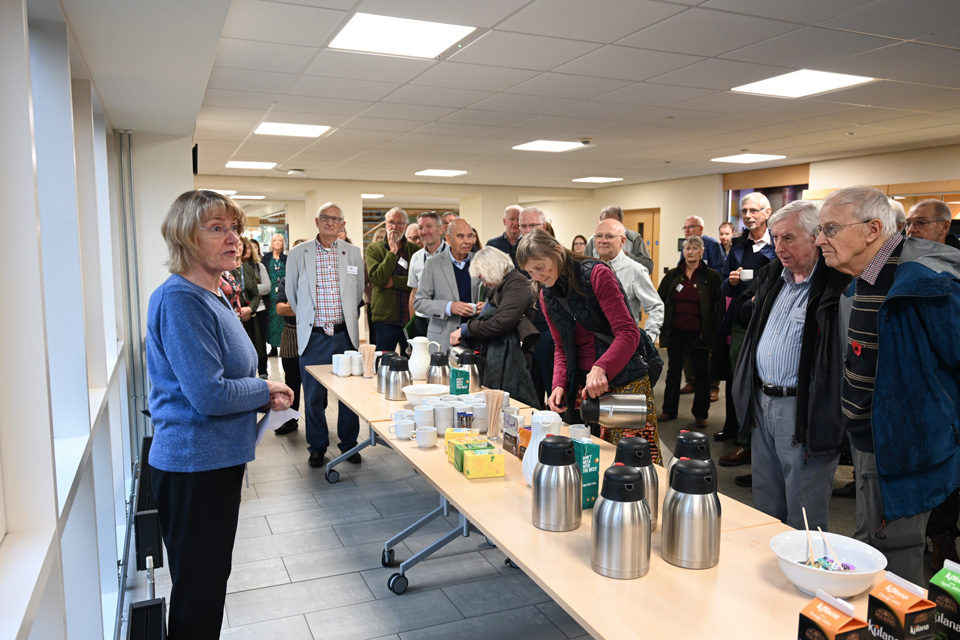
Dr Karen Hanghøj, BGS director, giving a speech at the 50 years of Keyworth anniversary event. BGS © UKRI.
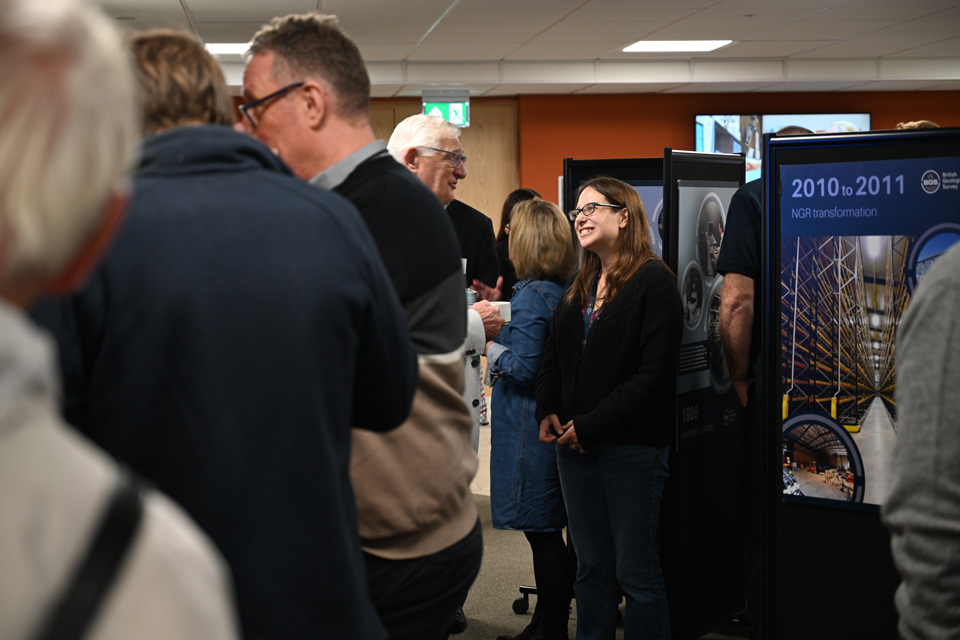
Attendees at the BGS headquarters in Keyworth to mark the anniversary. BGS © UKRI.
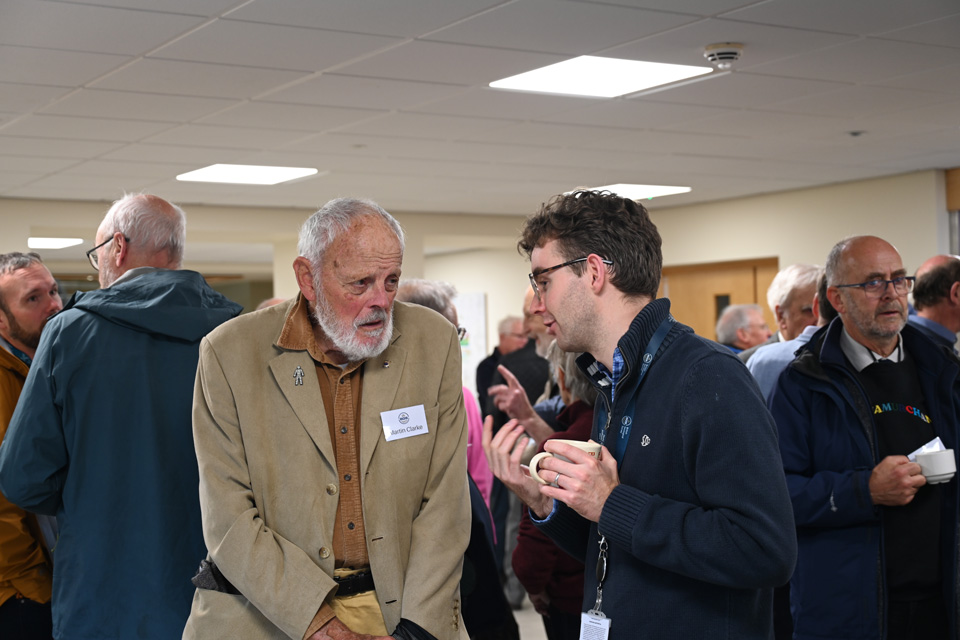
Attendees at the BGS headquarters in Keyworth to mark the anniversary. BGS © UKRI.
For many, BGS’s role in the Keyworth community has been central to every part of their lives.

I grew up in Keyworth and my first memory of the site was the glass window, which was part of the Mary Ward College chapel. In the winter, the window would be lit up in the dark, which you could see from the road as you drove down Nicker Hill, and this was such a sight that every Sunday we would take a detour on our way home from our grandparents’ in West Bridgford, just to see it illuminated. At this time, I didn’t yet know that this site would become BGS and that one day I would work here.
Nichola McCaugherty, BGS Enquiries assistant.
To mark the anniversary, BGS welcomed retired colleagues back to the site to launch a temporary exhibition featuring archive photographs that capture a few highlights from the organisation’s journey across the 50 years on site.
During the half-century of BGS’s presence in Keyworth, generations of staff have undertaken research that has improved understanding of the UK’s geology and helped address challenges including natural hazards and environmental change.
We are proud of our long connection with Keyworth and Nottinghamshire, and grateful for the support of the local community over the past five decades. As we celebrate this milestone, we look forward to the next 50 years of scientific discovery and innovation delivered as part of a vibrant and growing community.
Dr Karen Hanghøj, BGS Director.
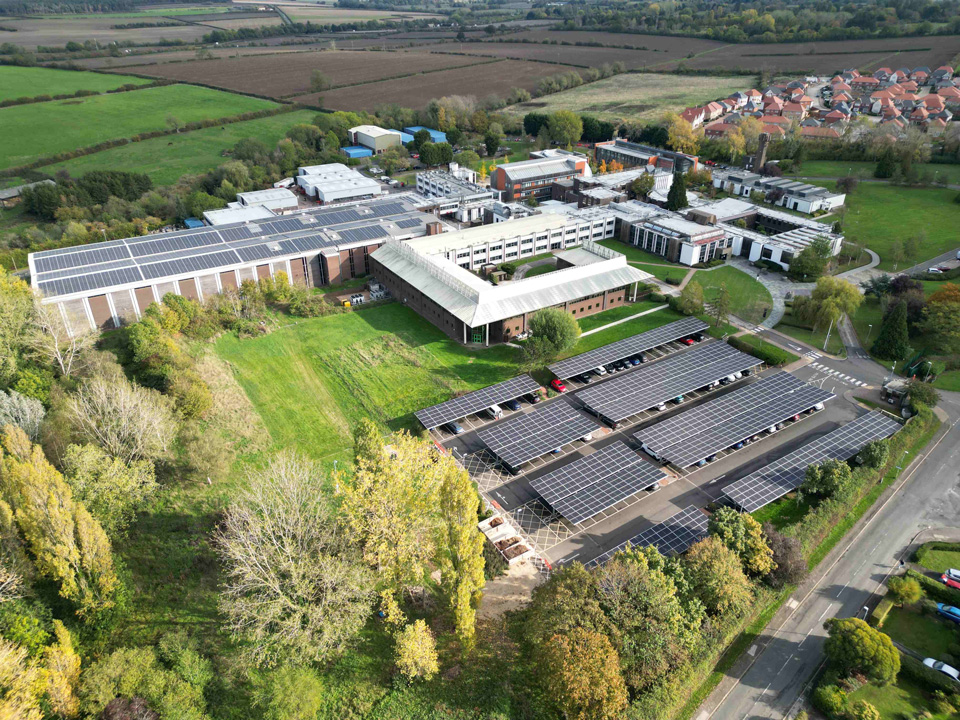
Aerial view of the BGS Keyworth site today. BGS © UKRI
Relative topics
Related news
BGS celebrates half a century in Keyworth
28/10/2026
2026 marks 50 years since BGS, the world’s oldest national geological survey, relocated to the site of our current headquarters, just outside Nottingham.
Forties at 56: the North Sea discovery that’s informing the energy transition five decades later
26/10/2026
Geological samples recovered from the UK’s first giant oil field in the 1970s continue to inform industry and researchers aiming to support the UK’s energy security needs.
Historic watercolour unearthed on back of Dryburgh geological field map
05/10/2026
A 150-year-old painting of Dryburgh Suspension Bridge and the River Tweed offers an insight into the Scottish Borders landmark shortly after it was built in the 1870s.
From archive to discovery: historical mineral reports support gold exploration in Scotland
25/06/2026
Digitised geological records show potential to unlock untapped mineral resources in Ardlochan, Argyllshire.
Scientists make new discovery in the history of the Giant’s Causeway
15/06/2026
New research is changing our scientific understanding of the formation of one of the UK’s most iconic landmarks and has revealed that Northern Ireland’s volcanic past occurred over a much shorter period than previously thought.
Newly released core could hold clues on potential mineral prospectivity in Perthshire
05/06/2026
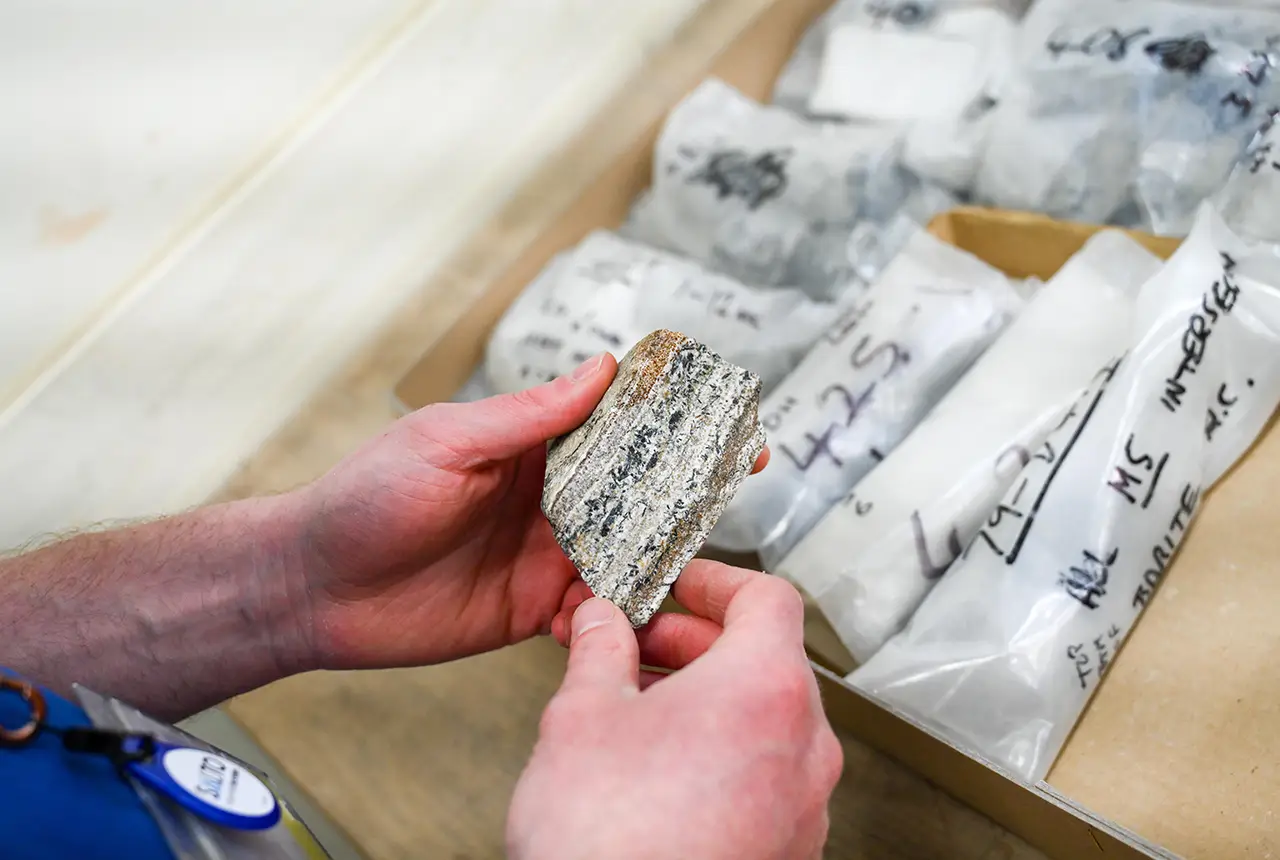
A comprehensive collection of geological samples from the vicinity of a former mine in Scotland is now available to scientists for further research.
Scientists gain access to ‘once in a lifetime’ core from Great Glen Fault
01/12/2025
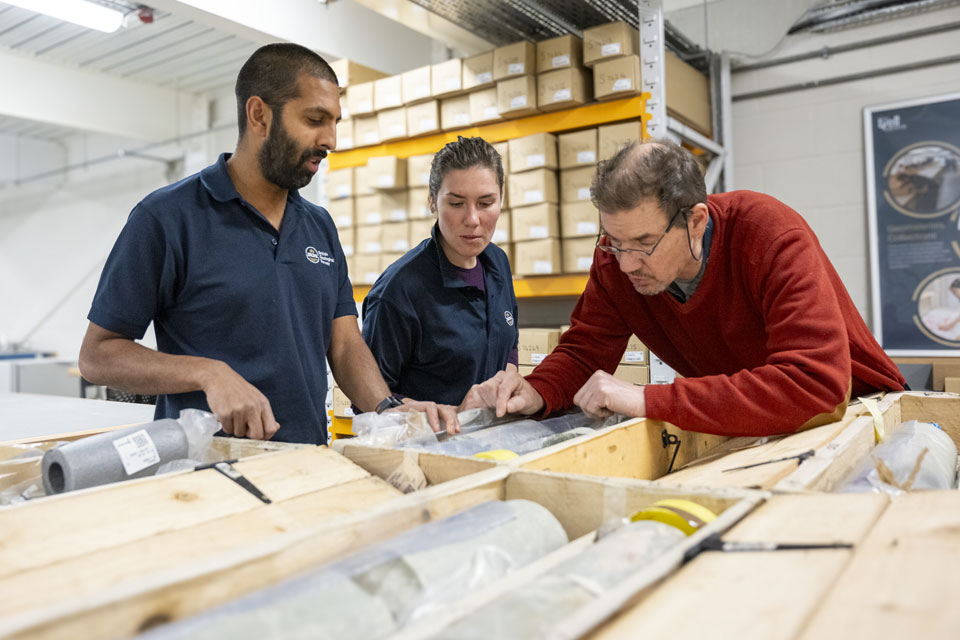
The geological core provides a cross-section through the UK’s largest fault zone, offering a rare insight into the formation of the Scottish Highlands.
Why do we store geological core?
11/09/2025
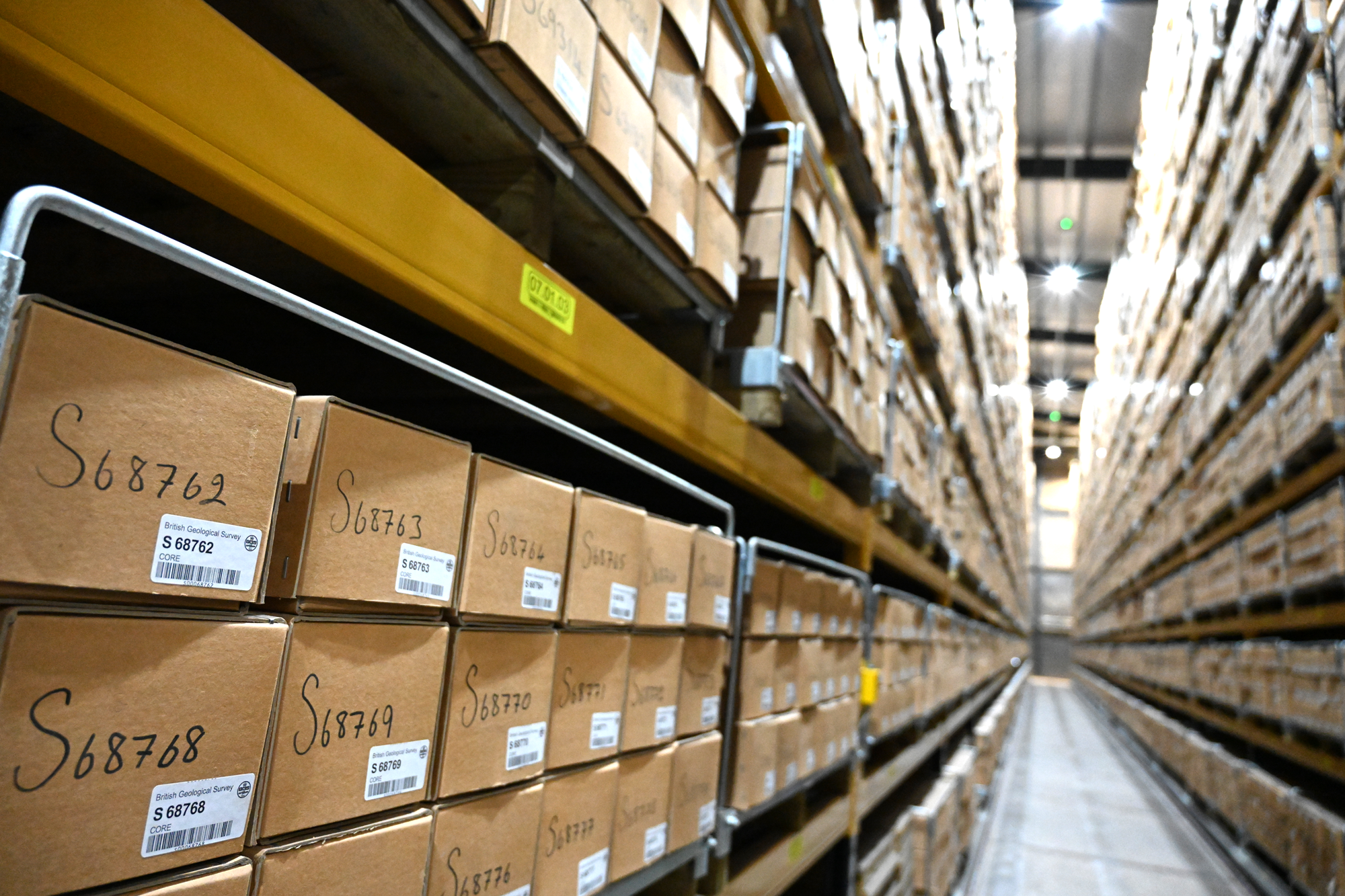
With space at a premium and the advance of new digitisation techniques, why does retaining over 600 km of physical specimens remain of national importance?
New study reveals geological facility’s value to UK economy
19/08/2025
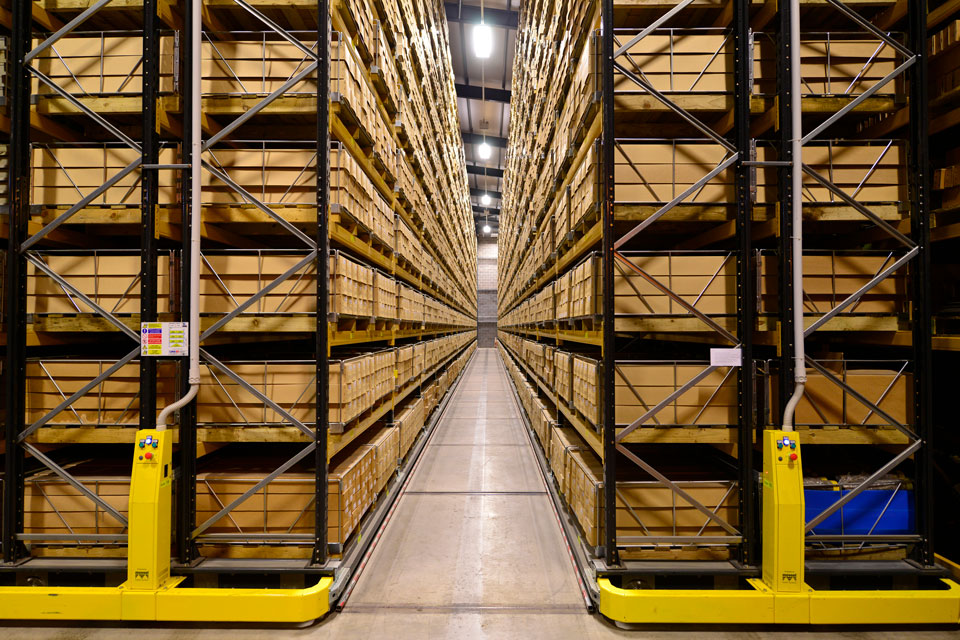
For the first time, an economic valuation report has brought into focus the scale of the National Geological Repository’s impact on major infrastructure projects.
Release of over 500 Scottish abandoned-mine plans
24/06/2025
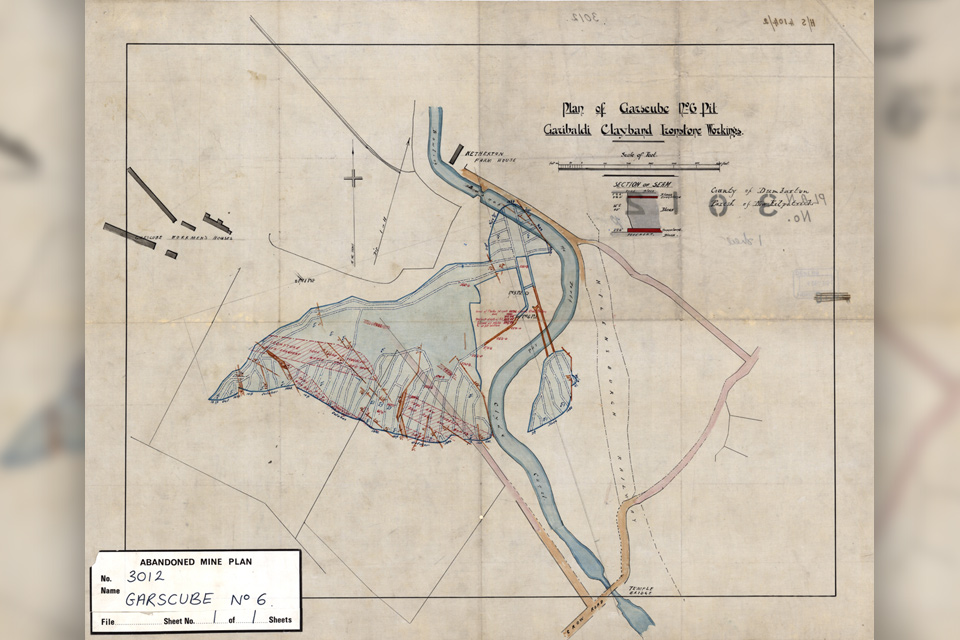
The historical plans cover non-coal mines that were abandoned pre-1980 and are available through BGS’s plans viewer.
How can Scotland re-establish its building stone industry?
14/11/2024
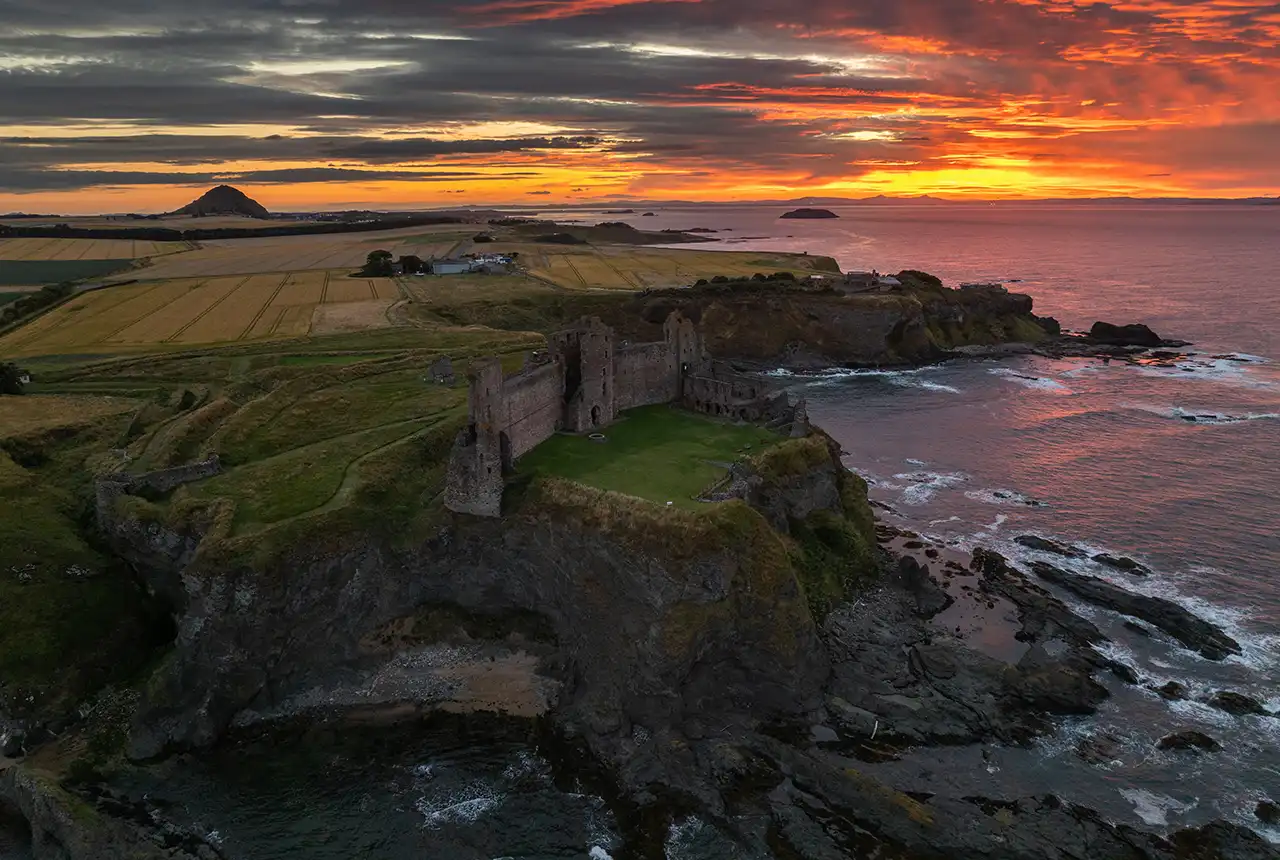
British Geological Survey research, commissioned by Historic Environment Scotland, reveals an opportunity to re-establish the Scottish building stone market in order to maintain the country’s historic buildings.
BGS’s National Geoscience Data Centre releases over 8000 technical reports
05/06/2024
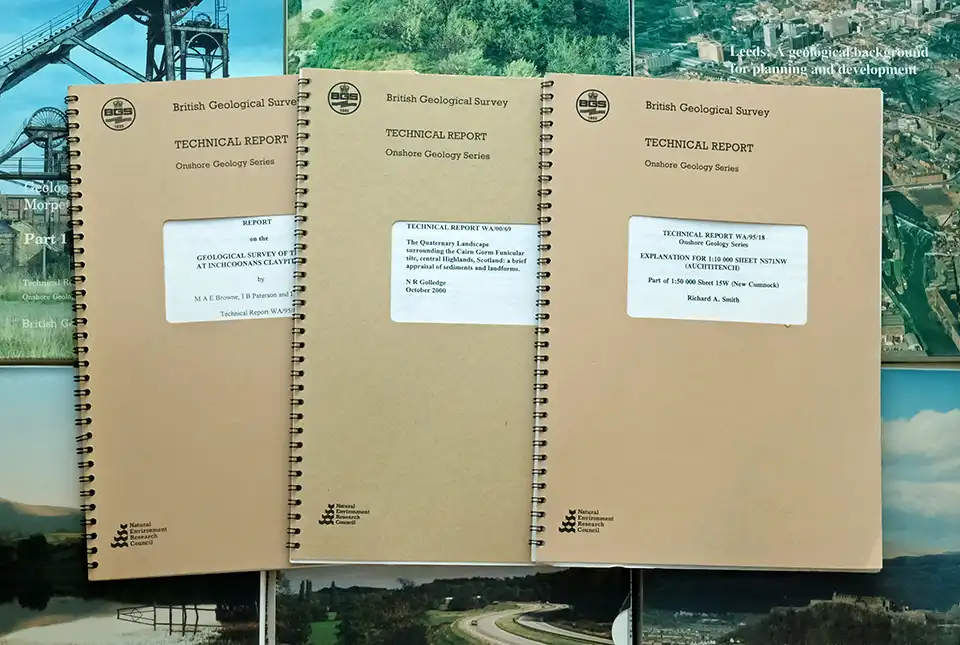
The technical reports, covering the full spectrum of BGS activities and subjects, were produced between 1950 and 2000.