

Building Europe’s geological future
BGS scientists are contributing to a continent-wide initiative that is strengthening collaboration across borders to tackle shared subsurface challenges and unlock new opportunities.
20/07/2026 By BGS Press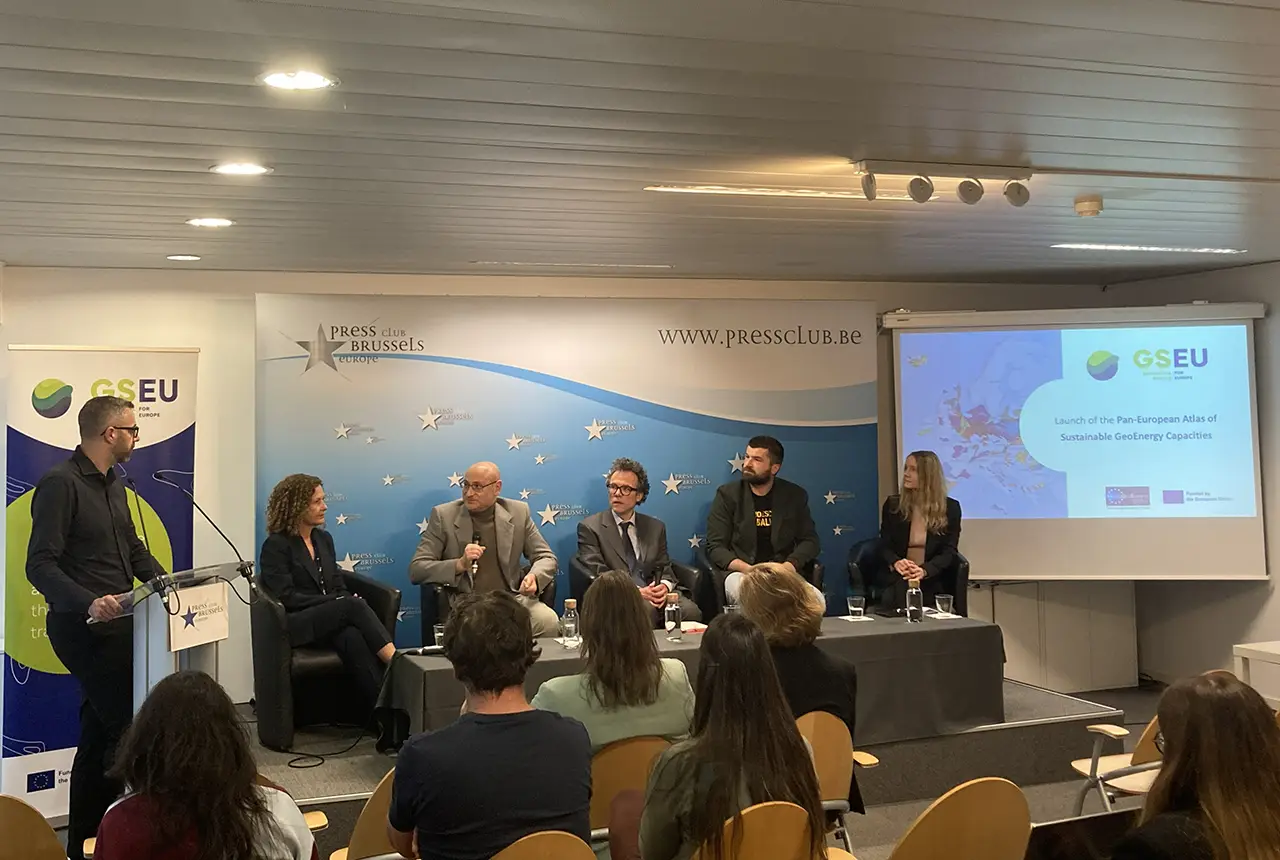

Across Europe, the subsurface is increasingly being recognised as a strategic asset that is critical for energy transition, resource security and environmental resilience. At the heart of efforts to harness this potential is the Geological Service for Europe (GSEU), a major pan-European initiative working closely with national geological surveys such as BGS. Together, we are reshaping how geological knowledge is generated, shared and applied for societal benefit.
A shared European vision beneath our feet
Launched in 2022 under Horizon Europe, GSEU aims to establish a permanent geological service for Europe. Its core premise is simple yet transformative: geological challenges do not stop at national borders and therefore must be addressed through harmonised data and collaboration.
Through a partnership of nearly 50 organisations across more than 35 countries, GSEU is developing integrated pan-European datasets and services that address Europe’s most pressing challenges, such as:
- securing the critical raw materials needed for green technologies
- managing groundwater resources under increasing climate pressure
- expanding renewable energy solutions, including geothermal
- planning subsurface use
- coastal management to avoid conflicts between infrastructure, storage and environmental protection
Rather than treating these domains separately, GSEU recognises that they interact within a complex and interconnected subsurface system that requires a holistic and coordinated approach to support policymaking, environmental protection and the transition to a low-carbon economy. Through shared standards, interoperable data models and coordinated research agendas, GSEU aims to create a unified geological knowledge base capable of supporting these goals.
From data to knowledge: the power of publications
One of the most tangible outputs of GSEU is its growing body of open-access publications that translate complex geoscientific work into actionable knowledge. The GSEU publications portal showcases a diverse range of outputs, such as scientific papers, factsheets and strategic position papers.
Recent highlights include:
- a 2026 position paper on subsurface geospatial planning, emphasising the need for coordinated approaches to achieve resilience and strategic autonomy
- scientific studies advancing the understanding of critical raw materials, including deposit mapping and predictive modelling approaches
- practical factsheets on groundwater and coastal erosion, supporting evidence-based environmental management
- the Strategic Research and Innovation Agenda 2025 to 2034, a strategic roadmap outlining the long-term vision for a sustainable geological service across Europe
- the Geo-Assessment Matrix, a pan-European catalogue of key parameters for offshore wind farm siting
These publications form part of a broader effort to move beyond isolated datasets and towards the integrated European Geological Data Infrastructure (EGDI), a platform that makes harmonised geological data accessible for research, policy and industry.
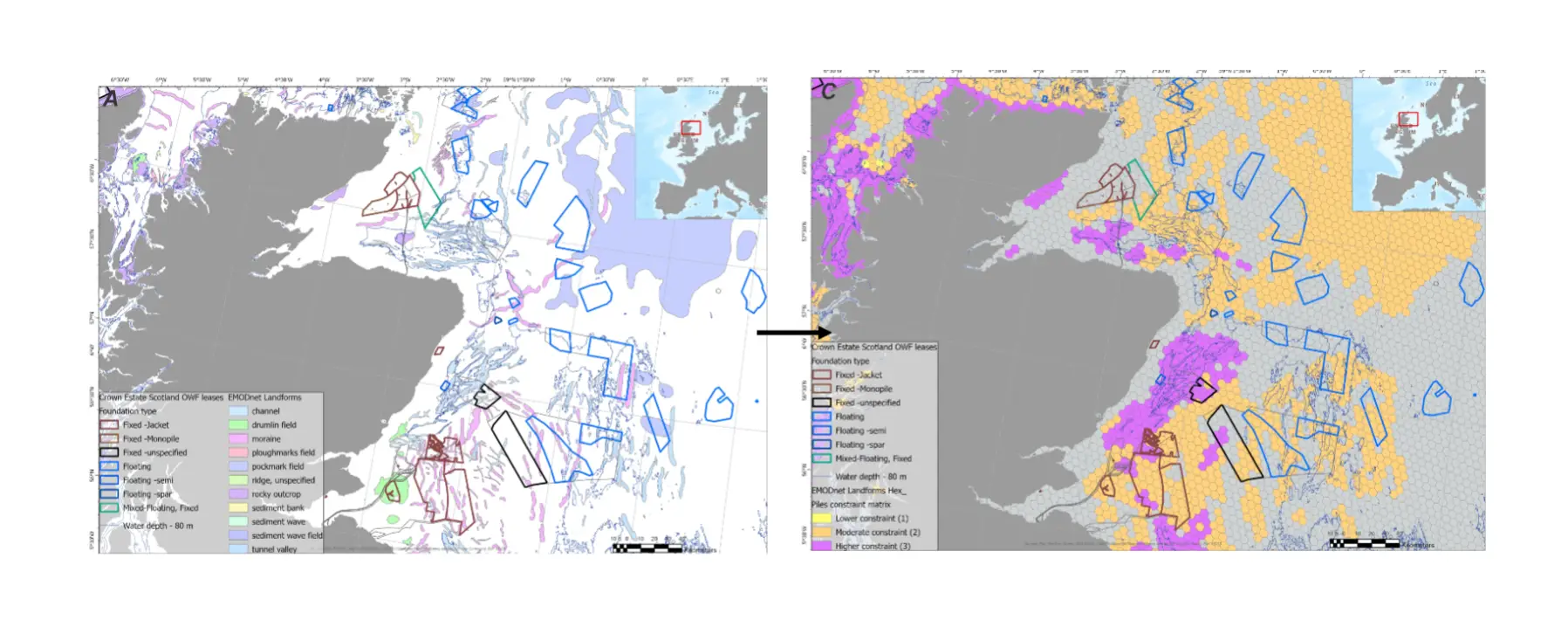
Pan-European catalogue of key parameters for offshore windfarm citing BGS © UKRI.
The role of BGS
As the UK’s national geological survey, BGS is a key contributor to GSEU. Our involvement reflects a longstanding commitment to international collaboration and data sharing. Through GSEU, our scientists contribute expertise in areas such as:
- critical raw materials and resource assessment
- groundwater systems, including leadership in groundwater drought and trend analysis
- geothermal energy and geoenergy systems
- subsurface storage
- coastal vulnerability assessment
- offshore renewable energy, including task leadership in developing pan-European geological datasets and methodologies for offshore windfarm siting, stability assessment and marine spatial planning
- geological data harmonisation and modelling
This breadth of involvement ensures that UK expertise is embedded within the development of interoperable, pan-European datasets and services.
Another example of BGS’s contribution is the European CO₂ Storage Atlas, which was developed through GSEU and launched in May 2025. By integrating geological datasets and subsurface characterisation from across Europe, the atlas provides a harmonised assessment of carbon dioxide (CO₂) storage capacity and injectivity potential, demonstrating how detailed national expertise, including petrophysical and rock physics insights, can be translated into a coherent framework to support carbon capture and storage deployment at European scale.
BGS played a key role through its leadership in UK storage assessments and is continuing this work through the recently launched CO2SITE project, funded by the European Union. Over the next three years, CO2SITE will develop an open-access atlas of CO₂ storage opportunities across Europe, bringing together the geological, regulatory and other data needed to help advance projects towards implementation. As a key project partner, BGS will develop the database underpinning the CO2SITE atlas, providing an important resource for researchers, policymakers and investors to support informed decision making on geological CO₂ storage.
More broadly, BGS continues to deliver high-impact science that feeds into international initiatives, such as new findings on the formation timeline of the Giant’s Causeway, and developments in national geothermal data resources. Together, these contributions reinforce BGS’s role as a trusted provider of high-quality geoscientific knowledge.

Initiatives like GSEU are essential, because geology does not stop at borders. By understanding that continuity is key to tackling shared challenges and building a common knowledge base, we can support decisions that balance energy needs, environmental protection and long-term sustainability across Europe.
Audrey Ougier-Simonin, project lead at BGS.
Collaboration in action
Beyond data integration, the project is actively strengthening professional networks, firstly by bringing together all Europe’s national geological surveys through EuroGeoSurveys and now enabling new forms of collaboration.
These include:
- research exchanges and short-term visits, such as collaboration with TNO (Netherlands) researchers
- student placements, including visiting researchers from organisations such as IGME (Spain)
- development of joint proposals and future research initiatives, building on new relationships formed through GSEU
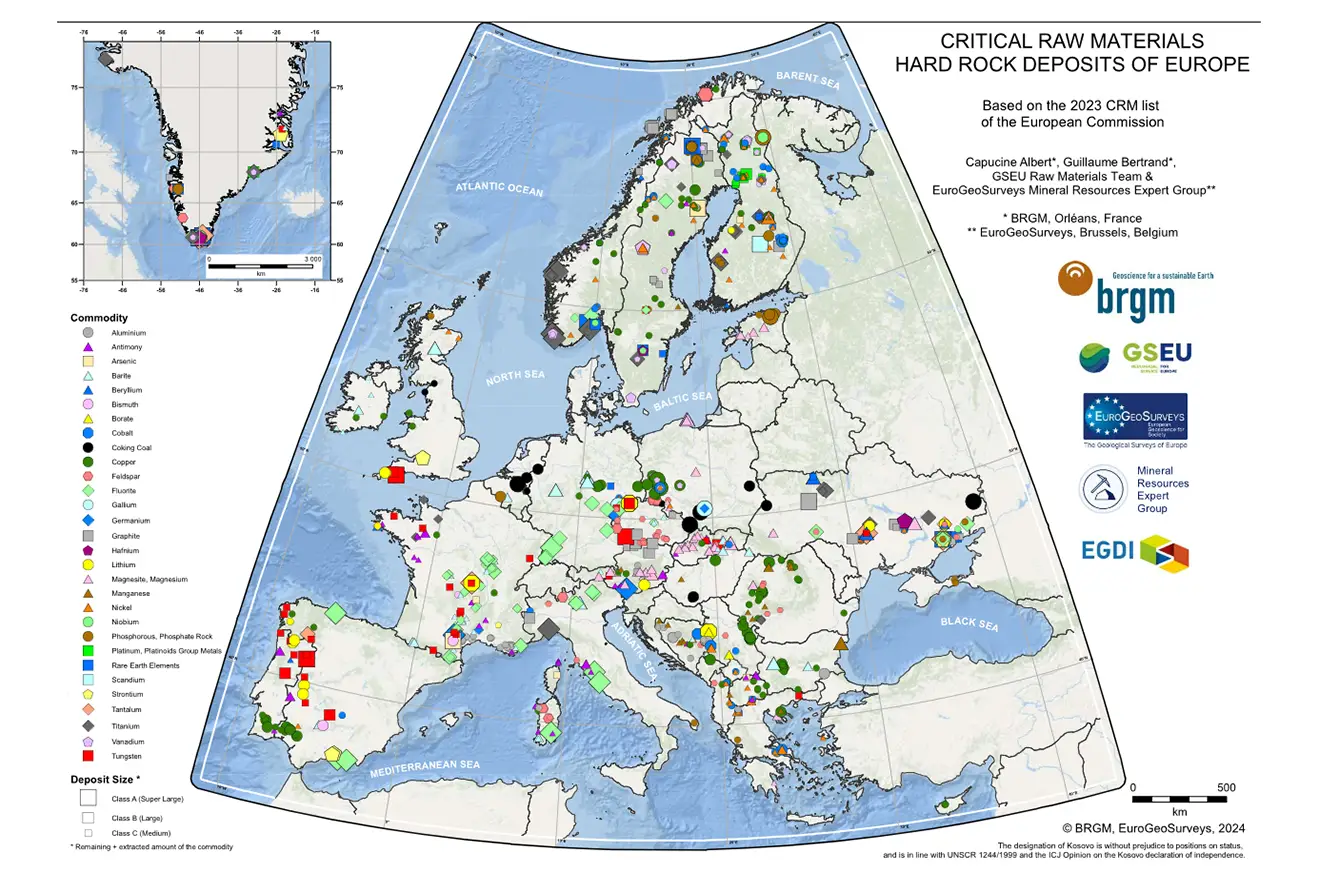
Critical raw materials hard rock deposits in Europe BGS © UKRI.
Looking ahead
As Europe navigates the complexities of the energy transition and environmental change, initiatives like GSEU will be indispensable. By transforming fragmented geological data into a coherent, accessible and actionable resource, they are enabling better decisions at every level, from local land-use planning to EU-wide policy.
The message emerging from both GSEU publications and community engagement is clear: understanding the subsurface is key to building a resilient and sustainable future. Through continued collaboration, innovation and knowledge sharing, Europe is steadily bringing that future into focus.
Relative topics
Related news

What lies beneath Europe’s sinking ground?
01/09/2026
Land subsidence is becoming increasingly visible across Europe. New research examines how better monitoring, shared data and a deeper understanding of the subsurface can help assess and manage its impacts.
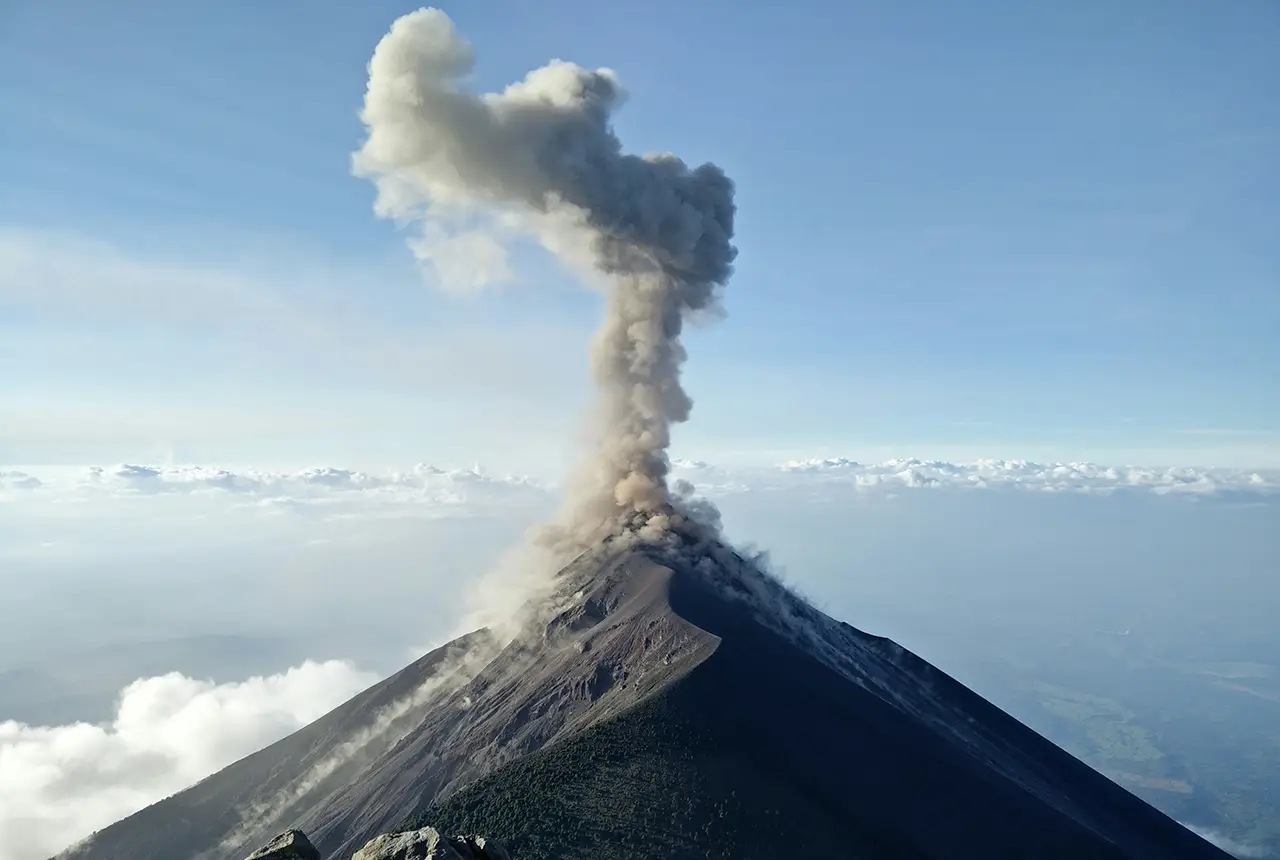
Secrets of an ancient supervolcano uncovered that change our understanding of England’s geological past
28/08/2026
Scientists have found evidence of a long-hidden link between an ancient buried ash layer in Scandinavia and a concealed supervolcano in eastern England.
Experiences from our Commonwealth Fellowship at the British Geological Survey
24/08/2026
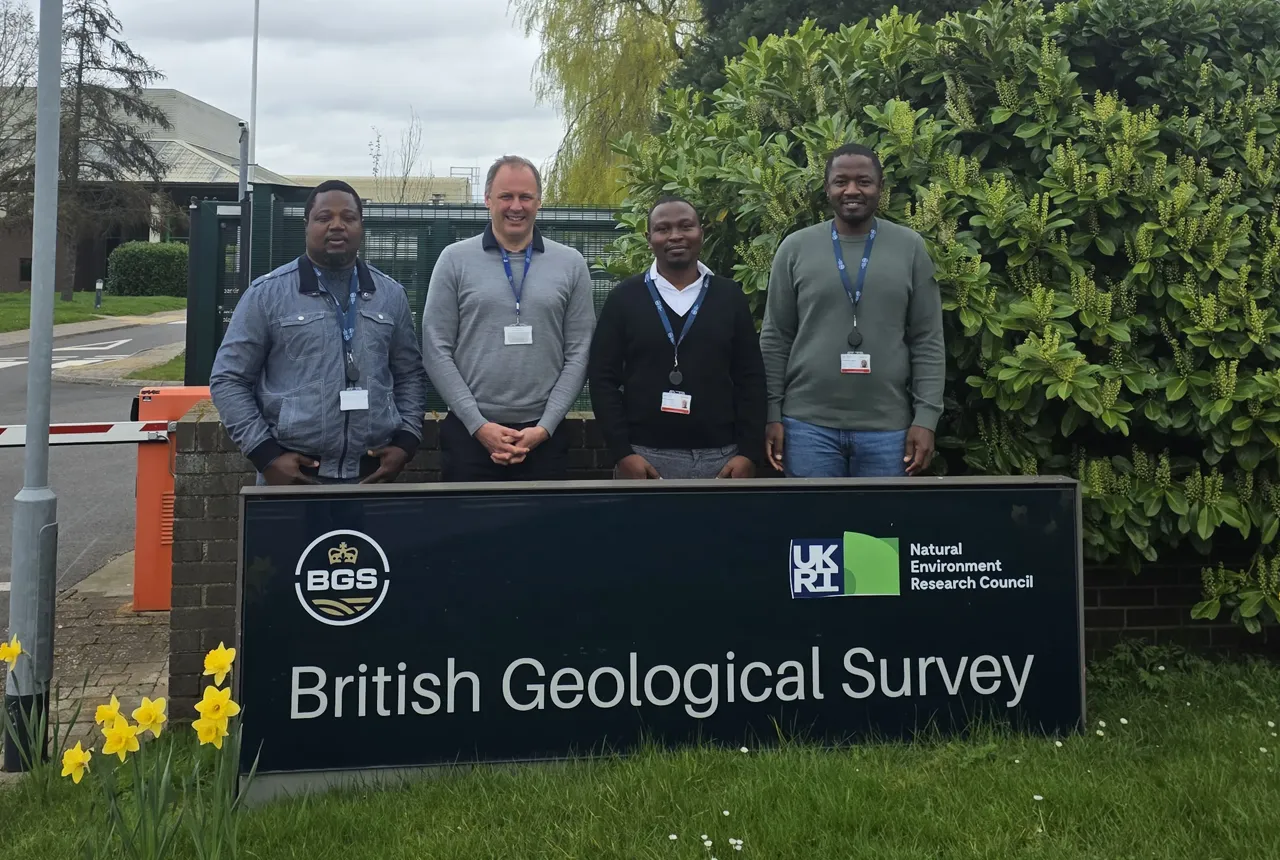
Scientific fellowships foster professional growth, international collaboration and exposure to world-class research environments. A group of visiting Commonwealth Fellowship researchers share their experience of being hosted at the BGS Inorganic Geochemistry Facility.
Building Europe’s geological future
20/07/2026
BGS scientists are contributing to a continent-wide initiative that is strengthening collaboration across borders to tackle shared subsurface challenges and unlock new opportunities.
Delving deep into mountains for future water security
16/07/2026
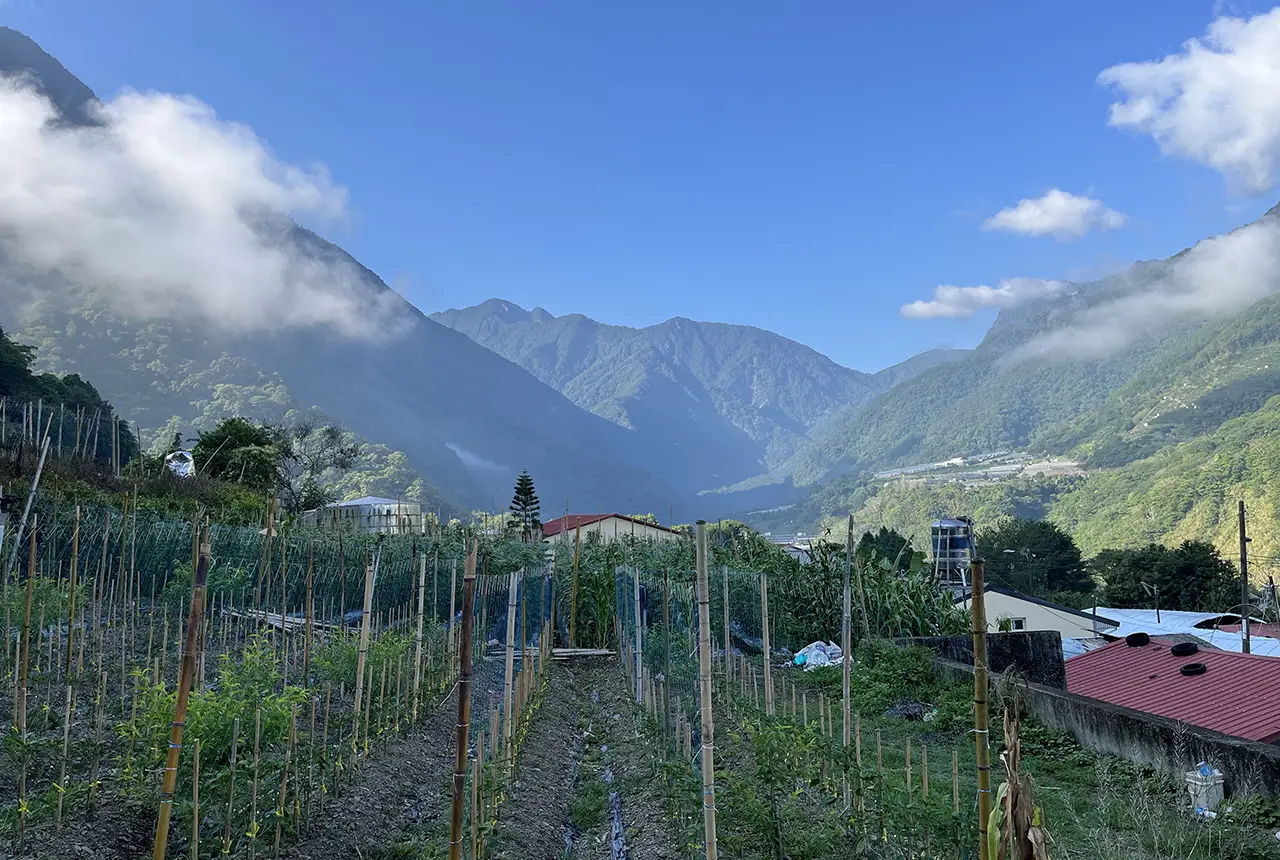
A BGS-led project is using new water-tracing investigation methods, geophysics and modelling to understand how water moves from mountains to the lowlands, helping to improve water security for billions of people.
Ukraine and the UK strengthen their commitment to geological cooperation
10/06/2026
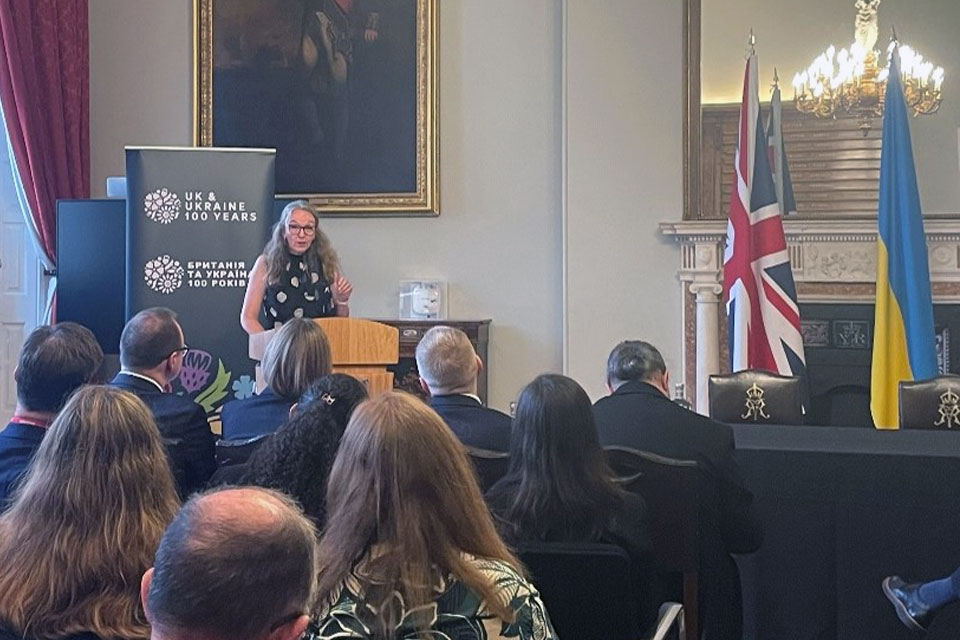
A new Memorandum of Understanding reaffirms the UK’s support of Ukraine’s ambitions to develop its critical mineral resources, paving the way for collaboration through capacity-building programmes.

International science consortium to survey the health, economic value and social importance of Lake Victoria
22/05/2026
The project will replicate the 1927 survey to assess changes in the lake’s health, economic value and social importance.

BGS contributes to UN sand and sustainability report
19/05/2026
The new report highlights the impact of poor governance and unsustainable sand mining practices, calling on policymakers to take action.
BGS engineering geologist elected to CCOP
29/04/2026
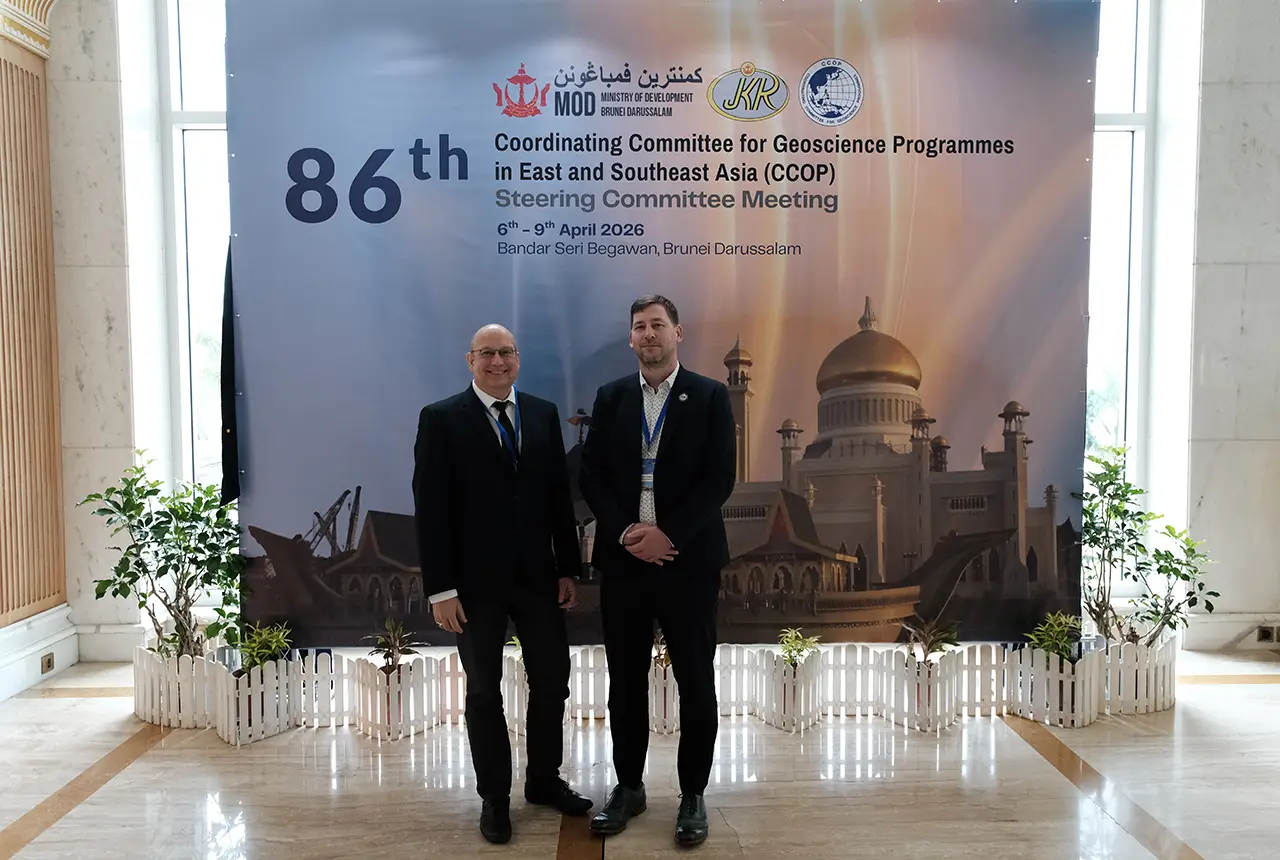
Marcus Dobbs has been elected as vice-chair of the advisory group for the Coordinating Committee for Geoscience Programmes in East and Southeast Asia.
Strengthening capacity through partnership: a critical minerals perspective
28/04/2026
BGS has been working in partnership with the Geological Survey Department of Zambia (GSD) to build national capacity, improve data accessibility and support long-term, sustainable development.
New research could help provide a more reliable water supply for millions in rural Africa
24/03/2026
A new BGS-led study has revealed crucial insights into the longstanding challenges affecting the reliability and performance of rural water supply infrastructure in sub-Saharan Africa.
New UK/Chile partnership prioritises sustainable practices around critical raw materials
09/02/2026
BGS and Chile’s Servicio Nacional de Geología y Minería have signed a bilateral scientific partnership to support research into critical raw materials and sustainable practices.