
Groundwater in England and Wales
Groundwater provides approximately a third of public water supply in England, and makes an important contribution in Wales.


Figure 1 Water company areas in England and Wales. BGS © UKRI.
Current groundwater use
The volumes of groundwater used daily for public supply in England and Wales are shown in Figure 2. Some of the water supply regions are large, such as the area supplied by Anglian Water. The data covers the whole region and thus aggregate areas that are more dominated by groundwater supply (in the case of Anglian Water, this is mainly from the Chalk aquifer) with those that are more dominated by surface water (for example, Rutland Water and Grafham Water reservoirs or the River Trent).

Figure 2 Groundwater for public supply in England and Wales. BGS © UKRI.
The percentage of total public water supply (‘deployable output’) that is from groundwater is shown in Figure 3. This varies from 5 per cent (Dŵr Cymru Welsh Water) to 100 per cent (Cambridge Water).
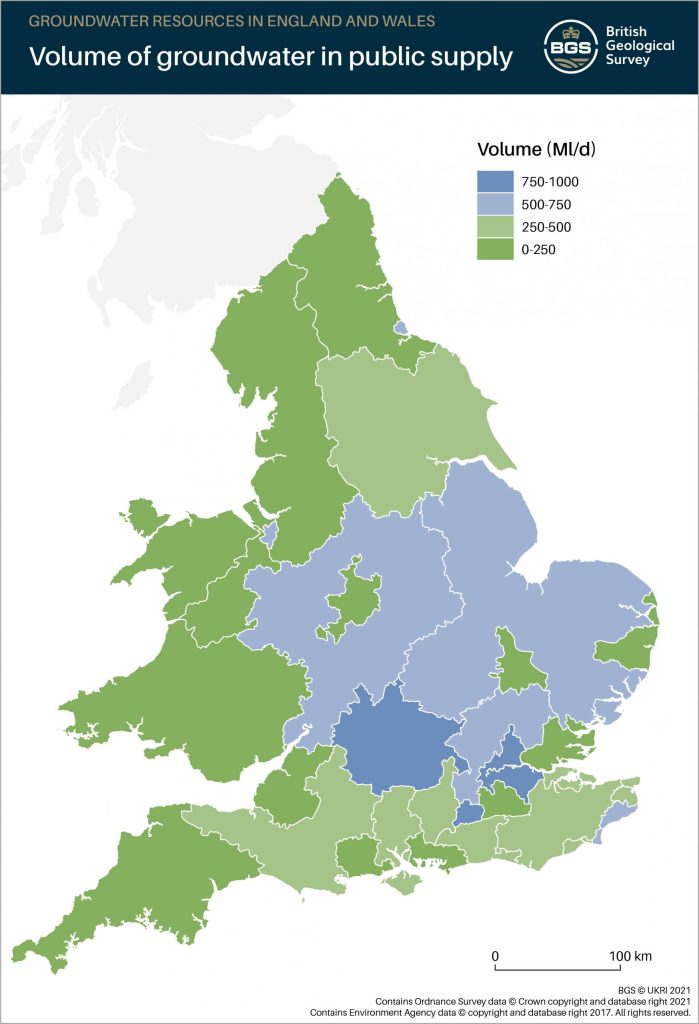
Figure 3 Groundwater deployable output in Ml/day. BGS © UKRI.
The regional variations are largely controlled by geology and availability of groundwater and surface water. The highly productive Chalk and Permo–Triassic sandstones are the major sources of groundwater for public supply. Water companies in south-east England, where groundwater contributes over 75 per cent of total public water supply, are heavily reliant on the Chalk.
Regional groundwater studies
We prepared a series of hydrogeological reviews of regional aquifers, including the Chalk aquifers of:
BGS has also produced a summary of the hydrogeology of Wales.
Future changes in public water supply
Water companies are planning to reduce abstraction from some public supply water sources (surface water and groundwater) where it affects the environment. These reductions, known as ‘sustainability reductions’, are intended to alleviate low river flows or water levels in wetland areas, usually in order to protect habitats.
Figure 4 shows planned sustainability reductions (both groundwater and surface water) as a percentage of total deployable output in 2019. Three companies planned to reduce existing abstractions by between 5 and 10 per cent (Severn Trent Water, South East Water and Cambridge Water).
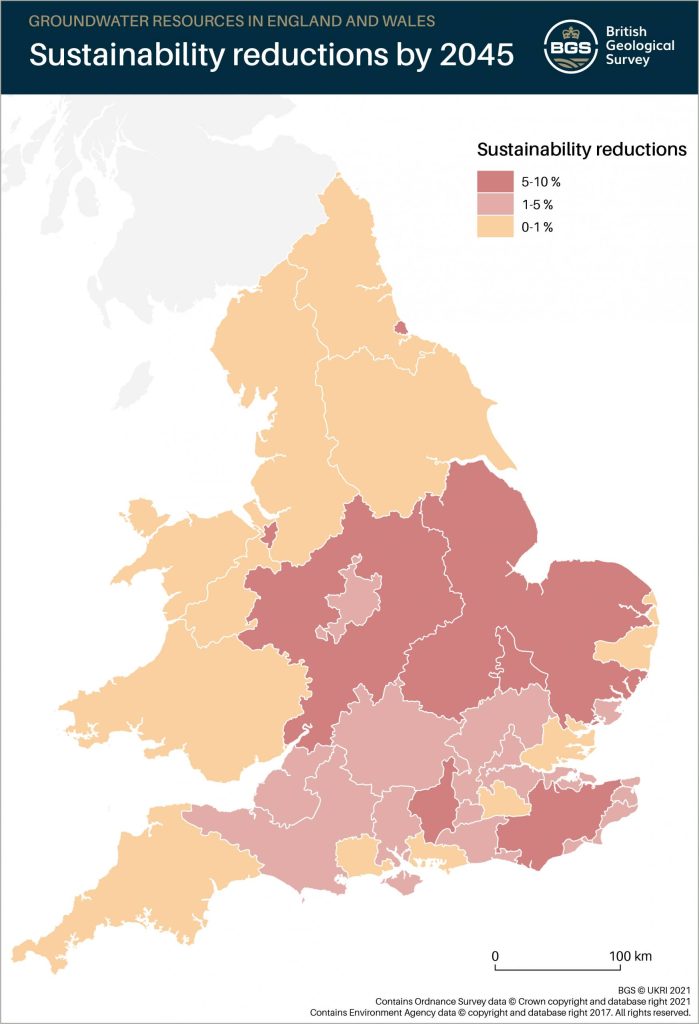
Figure 4 Sustainability reductions by 2045 in England and Wales. BGS © UKRI.
As part of the water resources management planning process, water companies also estimate the effect that climate change might have on the availability of water in their supply areas. Figure 5 shows projections of the impact of climate change on total public water supply (groundwater and surface water) in 2045.
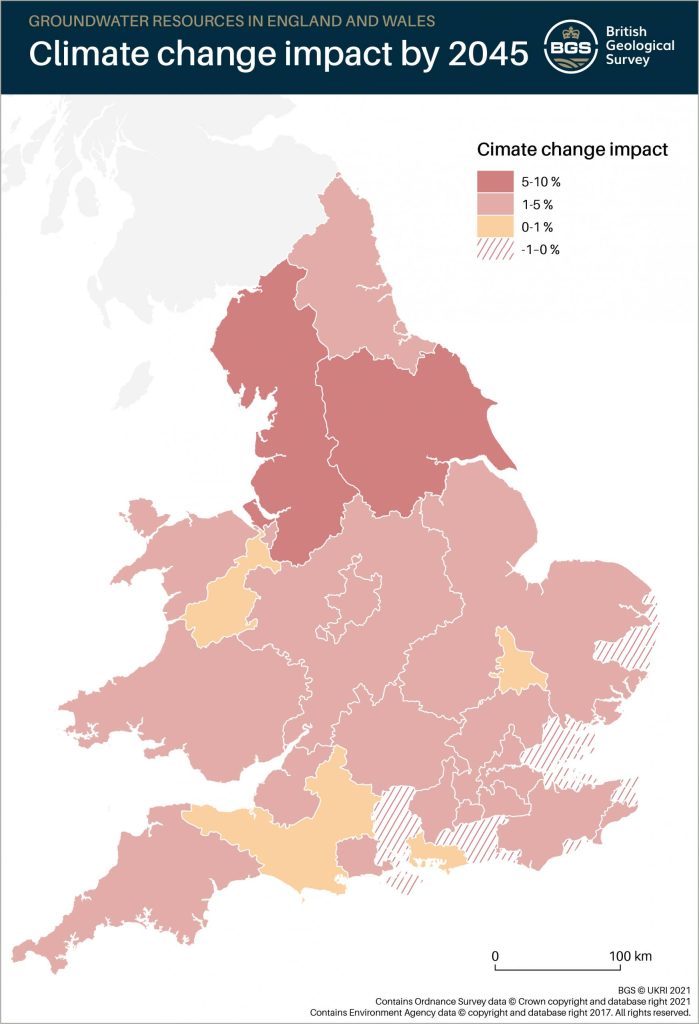
Figure 5 Climate change impact by 2045 in England and Wales. BGS © UKRI.
Whilst two companies (Essex and Suffolk Water; Southern Water) expect increases in deployable output, the remaining 17 companies foresee reductions due to climate change. These are generally less than 5 per cent of total deployable output in 2019, but between 5 and 10 per cent for two water companies in northern England (United Utilities; Yorkshire Water). Figure 6 shows the combined impact of sustainability reductions and climate change on public water supply in 2045.
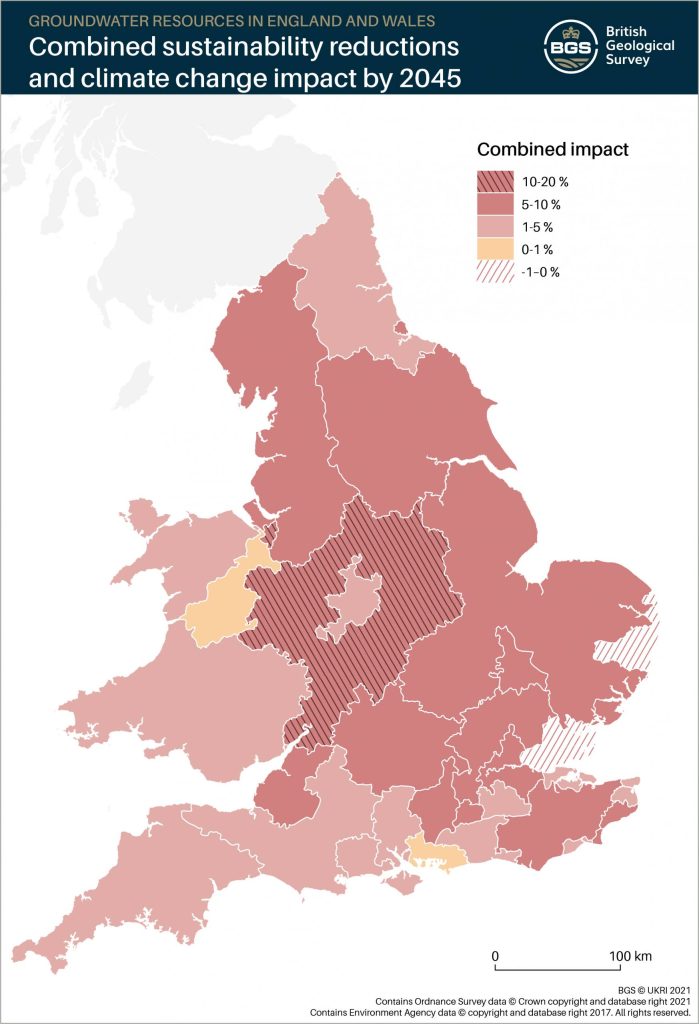
Figure 6 Combined sustainability reductions and climate change impact by 2045 in England and Wales. BGS © UKRI.
- You can download all these groundwater resources of the UK maps
Recent developments in water resources planning in England and Wales
The analysis presented here is based on the latest water resources management plans, published in 2019. Water resources planning in England and Wales is currently in a period of significant change. Following work by Water UK and the National Infrastructure Commission (now the National Infrastructure and Service Transformation Authority), the Environment Agency published their National Framework for Water Resources in 2020. This marks a move from company level planning to planning at the regional scale.
Karst aquifers in England
BGS work on karst aquifers focused on the Chalk and Jurassic and Permian limestones of England, soluble carbonate aquifers in which caves are uncommon and karst was generally not well recognised. These aquifers provide vital water supplies and sustain rivers and wetlands.
Groundwater in Scotland
Groundwater underpins Scotland’s private drinking water supplies and provides reliable strategic public water supply to many rural towns; it also sustains the bottled water and whisky industries and is relied upon for irrigation by many farmers. Groundwater also provides many important environmental functions, providing at least 30% of the flow in most Scottish rivers, and maintaining many precious ecosystems.
BGS has published an overview of Scotland’s aquifers and groundwater bodies and produced two reports on regional aquifers:
Groundwater in Northern Ireland
Groundwater has made a significant contribution to the industrial and economic development of Northern Ireland: some settlements developed where they are because of the presence of local groundwater sources that provided them with reliable water supplies. Advancements in drilling technology in the late 18th century allowed deep boreholes to be drilled into bedrock aquifers such as the Sherwood Sandstone Formation in the Lagan Valley, contributing to the industrial boom of late Victorian times. At the start of the 20th century, Belfast was the largest exporter of bottled carbonated water in the world, all of which came from groundwater pumped from the Sherwood Sandstone aquifer.
The Geological Survey of Northern Ireland has published a book on Northern Ireland’s groundwater environment.